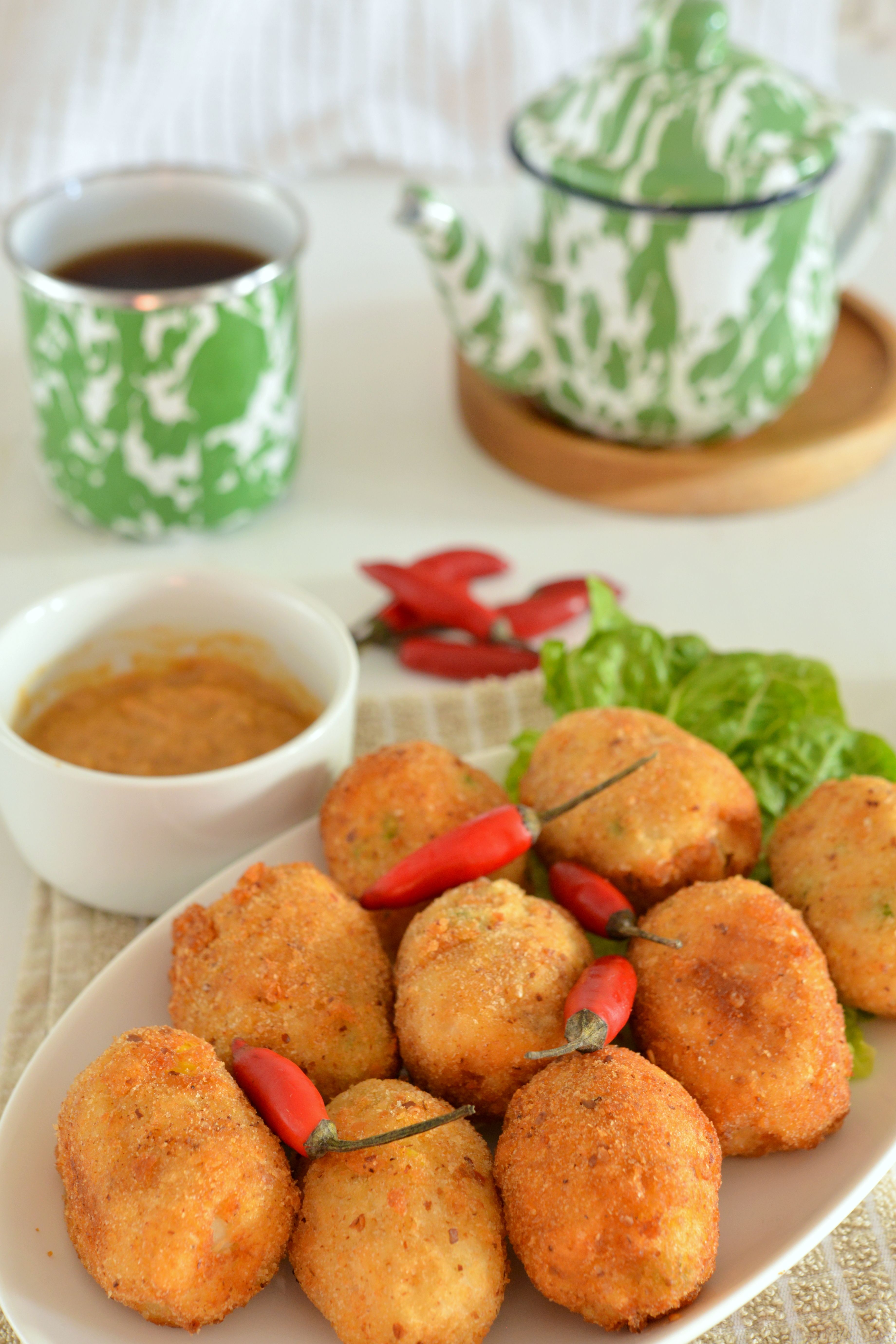
Photo: Nonik Yench / Pexels
The diets react (see scores below)
Common Ingredients
- beef
- butter
- flour
- beef broth
- breadcrumbs
- eggs
- nutmeg
- parsley
Specific recipes may vary.
Incompatible with 10 of 11 diets
Diet Ratings
Kroket is a Dutch deep-fried snack that is fundamentally incompatible with a ketogenic diet. The filling (ragout) is made with a flour-based roux (butter + flour), and the exterior is coated in breadcrumbs before frying. Both flour and breadcrumbs are high-carbohydrate grain products. A single kroket typically contains 15-20g of net carbs, and eating even one or two could easily exhaust or exceed a day's keto carb budget. While the beef filling itself is keto-friendly, the structural carbohydrate components (flour roux + breadcrumb coating) are essential to the dish and cannot be removed without fundamentally changing what a kroket is.
Kroket is a Dutch deep-fried snack made from a thick ragout filling. This version contains multiple animal-derived ingredients: beef (meat), butter (dairy), beef broth (animal-derived), and eggs (used in the breading process). It is entirely incompatible with a vegan diet.
Kroket is a traditional Dutch deep-fried snack that contains multiple non-paleo ingredients. Flour is a grain-based product, explicitly excluded from the paleo diet. Breadcrumbs are made from wheat bread, another grain-based exclusion. Butter is a dairy product, also excluded. Beef broth may contain added salt or additives. The deep-frying process typically uses seed oils. While the beef, eggs, nutmeg, and parsley are paleo-compliant, the core structure of the dish — the roux (butter + flour), the breaded coating (breadcrumbs), and the frying method — fundamentally disqualifies it. There is no meaningful way to consider this dish paleo-compatible without a complete reformulation.
Kroket is a deep-fried Dutch snack that conflicts with Mediterranean diet principles on multiple levels. It features beef as the primary protein, which is limited to a few times per month in the Mediterranean diet. The dish uses butter rather than olive oil as the fat base, and is made with refined white flour and breadcrumbs — both refined grain products discouraged in the diet. Deep-frying further compounds the issue, adding significant unhealthy fat and calories. This is a highly processed snack with no meaningful plant-forward components, far removed from the whole, minimally processed foods the Mediterranean diet emphasizes.
Kroket is fundamentally incompatible with the carnivore diet. While it contains beef and eggs — both carnivore-approved ingredients — the dish is structurally dependent on multiple plant-based components. Flour is used to make the béchamel-style roux base, breadcrumbs form the entire outer crust, nutmeg is a plant spice, and parsley is a plant herb. This is not a case of trace contamination; flour and breadcrumbs are load-bearing ingredients that define the dish. The kroket is essentially a grain-breaded, grain-thickened meat snack — a processed food by carnivore standards. No meaningful adaptation is possible while keeping the dish recognizable as a kroket.
Kroket contains multiple excluded ingredients that make it clearly non-compliant with Whole30. Flour (a grain product) is used to make the roux base, breadcrumbs (also grain-based) form the coating, and butter (regular dairy) is used in the filling. Any one of these three ingredients alone would disqualify the dish. Additionally, even if substitutions were attempted, the kroket is essentially a breaded, fried snack food — a category explicitly prohibited under Whole30's 'no recreating junk food/snack food' rule.
Kroket is a Dutch deep-fried snack made with a thick roux-based ragout (béchame-style sauce) using wheat flour as a thickener, and wheat-based breadcrumbs for the coating. Both of these wheat-containing components are high in fructans, which are a key FODMAP. The beef broth used may also contain onion or garlic (common in commercial and homemade stocks), adding further fructan load. The roux alone — butter plus wheat flour — combined with the breadcrumb coating means fructans are present in significant quantities in every standard serving. The remaining ingredients (beef, butter, eggs, nutmeg, parsley) are individually low-FODMAP, but they do not offset the wheat components. During the elimination phase, this dish is not safe as traditionally prepared.
Kroket is a Dutch deep-fried snack made from a beef ragout (beef, butter, flour, beef broth) coated in breadcrumbs and eggs, then deep-fried. This preparation conflicts with DASH diet principles on multiple fronts. The dish is deep-fried, adding substantial saturated and total fat. The roux base uses butter (saturated fat) and the beef broth is typically high in sodium. Commercial and restaurant versions routinely contain 600–900mg+ sodium per piece. Red meat (beef) is a protein source DASH recommends limiting. The breaded, fried format is characteristic of heavily processed snack foods that DASH explicitly discourages. There are no meaningful offsetting DASH-positive nutrients — no significant fiber, potassium, calcium, or magnesium contribution. This is fundamentally incompatible with DASH dietary goals regardless of portion size.
A Dutch kroket is a deep-fried ragout snack made from a butter-flour roux (béchamel base) with beef and beef broth, coated in breadcrumbs and fried. From a Zone perspective, it presents multiple challenges: (1) The roux base uses refined flour and butter — both 'unfavorable' Zone ingredients that contribute high-glycemic, high-saturated-fat calories with little nutritional value. (2) The breadcrumb coating is refined carbohydrate, adding more high-glycemic load. (3) Deep frying typically uses omega-6-heavy seed oils, which Sears explicitly discourages for their pro-inflammatory effects. (4) The beef used is not specified as lean, and the butter adds saturated fat, pushing well beyond Zone fat guidelines. (5) The macro ratio is badly skewed — heavy on refined carbs (coating + roux) and saturated fat, with relatively modest protein payoff. As a snack, it lacks the low-glycemic vegetables and lean protein that Zone snacks require. It could technically be consumed in very small portions as an 'unfavorable' block trade-off, which prevents it from being a full 'avoid,' but it cannot reasonably be built into a Zone-balanced meal without significant dietary gymnastics. A score of 4 reflects that it is 'usable' only in the loosest sense.
Some Zone practitioners apply a relaxed 80/20 approach endorsed in Sears' later writings, where occasional indulgent snacks are acceptable if the surrounding meals maintain proper block ratios. In that context, a single small kroket as an occasional treat would not derail Zone compliance. Additionally, if made at home with leaner beef, a whole-wheat or almond-flour coating, and baked rather than fried in olive oil, the macro profile improves meaningfully — illustrating that the traditional recipe, not the concept, is the primary issue.
Kroket is a Dutch deep-fried snack made from a thick roux-based ragout of beef, butter, and flour, coated in breadcrumbs and eggs, then deep-fried. From an anti-inflammatory perspective, this dish is problematic on multiple fronts. The primary protein is red beef, which is already recommended to be limited due to its saturated fat and arachidonic acid content. The base sauce (béchamel-style roux) relies on butter — a saturated fat source explicitly flagged as pro-inflammatory — combined with refined white flour, a refined carbohydrate. The deep-frying process typically uses high-omega-6 seed oils (sunflower or frying shortening are standard in Dutch commercial and home preparation), adding oxidized fats and further inflammatory load. The breadcrumb coating adds more refined carbohydrates with minimal nutritional benefit. While nutmeg and parsley offer minor anti-inflammatory micronutrients, and beef broth contains some beneficial compounds, these are far outweighed by the overall profile. The cooking method (deep frying), the fat quality (butter + frying oil), the refined carbohydrate load (flour + breadcrumbs), and the red meat base combine to make this a strongly pro-inflammatory dish with virtually no redeeming anti-inflammatory properties at scale.
A Dutch kroket is a deep-fried snack consisting of a thick, butter-and-flour-based ragout (roux) filled with beef, coated in breadcrumbs and egg, then deep-fried. This profile hits nearly every GLP-1 avoid criterion simultaneously: it is deep-fried (high fat, worsens nausea and reflux), built on a refined-flour roux thickened with butter (low fiber, high saturated fat, empty starch calories), and delivers relatively little usable protein per serving given the high proportion of roux and breading. The frying process adds substantial fat that slows digestion further on top of already-slowed GLP-1 gastric emptying, significantly increasing the risk of nausea, bloating, and reflux. The breadcrumb coating is refined and low-fiber. As a snack-category item it also competes for limited stomach capacity that should be reserved for nutrient-dense foods. There is no meaningful fiber contribution and the saturated fat load from butter and frying oil is high. It scores a 2 rather than 1 only because beef does contribute some protein and the dish is not alcoholic or carbonated.
*See how scores were generated at our methodology page.
Nutritional profile
Six traits that cut across every diet.
Fiber & Plants
How much whole-plant food and fiber it delivers.
Healthy Fats
The quality of its fats (unsaturated, omega-3).
Whole / Unprocessed
How close it is to its natural, unprocessed form.
Gut Gentle
How easy it is on digestion (low FODMAP, few irritants).
Low Glycemic
How little it spikes your blood sugar.
Protein Density
How much protein it packs per calorie.
Controversy Index
Higher controversy = more disagreement between diets.
Diet-Specific Tips
 Zone — 4/10
View tips
- Refined flour roux base adds high-glycemic, nutritionally poor carbohydrates
- Breadcrumb coating is high-glycemic refined carbohydrate
- Deep-frying typically uses omega-6 seed oils — pro-inflammatory and discouraged by Sears
- Butter contributes saturated fat beyond Zone guidelines
- Macro ratio is skewed toward carbs and saturated fat with insufficient lean protein
- As a snack, it lacks Zone-required low-glycemic vegetables and lean protein pairing
- Very small portions could technically fit as an 'unfavorable' carb block trade-off