Photo: Gustavo Peres / Pexels
American
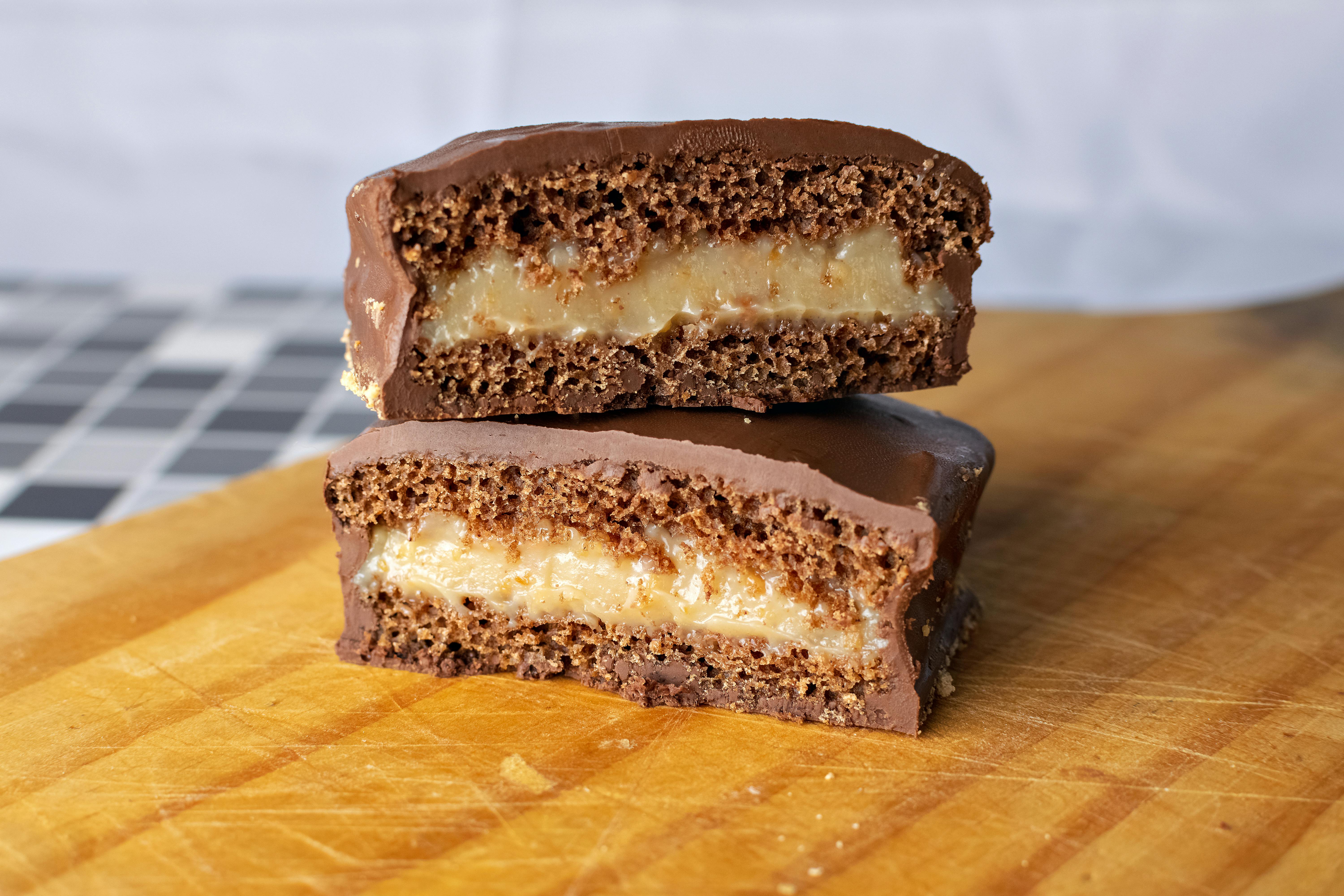
Eclair Cake
The diets react (see scores below)
Common Ingredients
- flour
- sugar
- butter
- eggs
- baking powder
- vanilla extract
- milk
- cornstarch
- chocolate
- cocoa powder
Specific recipes may vary.
Incompatible with 11 of 11 diets
Diet Ratings
Eclair Cake is fundamentally incompatible with ketogenic dietary principles. The dish is built on a foundation of flour (high-carb grain), sugar (pure glucose/fructose), milk (lactose carbs), and cornstarch (a dense starch used as thickener) — all of which are primary keto-excluded ingredients. A single serving would deliver far more than the entire daily net carb allowance of 20-50g, making ketosis impossible to maintain. There is no meaningful modification possible without completely replacing the core structure of the dish.
Eclair Cake contains multiple animal-derived ingredients that disqualify it from vegan compliance. Butter and milk are dairy products, eggs are an animal product, and these are all core structural ingredients — not trace contaminants or optional additions. All three are central to the recipe's function: eggs provide structure and lift, butter adds richness and texture, and milk forms the base of the pastry cream filling. There is no vegan version of this dish as listed; it would require complete substitution of all three animal ingredients to become vegan-compliant.
Eclair Cake is fundamentally incompatible with the Paleo diet. The recipe is built on flour (a refined grain product), sugar (refined), milk (dairy), baking powder (processed leavening agent), and cornstarch (derived from corn, a grain). These are core excluded categories under every mainstream paleo framework. Butter and chocolate add further dairy and processed-food concerns. Nearly every primary ingredient violates Paleo principles, making this one of the clearest possible avoid verdicts.
Eclair Cake is a highly processed American dessert that directly contradicts Mediterranean diet principles on multiple fronts. It is built on refined white flour, substantial added sugar, and butter as the primary fat — the opposite of the whole grains and extra virgin olive oil the Mediterranean diet emphasizes. The chocolate and cocoa powder components are paired with sugar rather than consumed as minimally processed dark chocolate. There is no meaningful plant-forward nutritional value, no legumes, no vegetables, no whole grains, and no olive oil. This is a classic Western-style indulgent sweet snack that the Mediterranean diet explicitly minimizes.
Eclair Cake is entirely incompatible with the carnivore diet. The dish is overwhelmingly plant-based and processed: flour (grain), sugar (processed plant-derived sweetener), baking powder (plant-based leavening), vanilla extract (plant-derived), cornstarch (grain derivative), cocoa powder (plant-derived), and chocolate (plant-derived with added sugar) constitute the majority of ingredients. While eggs, butter, and milk are animal-derived, they are minor components embedded in a fundamentally plant-grain-sugar dessert. No carnivore practitioner of any tier — strict Lion Diet, standard carnivore, or even the more permissive 'animal-based' approach — would consider this food acceptable. The primary structure is wheat flour and sugar, which are explicitly excluded by every carnivore framework.
Eclair Cake is excluded on multiple grounds. First, it contains flour (a grain), which is explicitly prohibited on Whole30. Second, it contains added sugar, another excluded ingredient. Third, it contains butter (dairy, not ghee/clarified butter), which is also excluded. Fourth, and perhaps most importantly, even if all ingredients were somehow made compliant, Eclair Cake falls squarely into the 'no recreating baked goods/junk food' rule — cakes are explicitly the type of treat the program forbids regardless of ingredient swaps. This dish fails the Whole30 program on nearly every axis.
Eclair Cake contains multiple high-FODMAP ingredients that make it unsuitable during the elimination phase. Regular wheat flour is the primary structural ingredient and is high in fructans, a key FODMAP. Milk is used in significant quantities for the pastry cream/custard filling and contains lactose, a disaccharide FODMAP. Together, these two ingredients alone make this dish high-FODMAP at any standard serving size. Sugar, butter, eggs, vanilla extract, cornstarch, chocolate, and cocoa powder are generally low-FODMAP at typical serving amounts, but they cannot offset the problematic wheat flour and milk components. There is no realistic standard serving of Eclair Cake that would be low-FODMAP without fundamentally reformulating the recipe using gluten-free flour and lactose-free milk.
Eclair Cake is a dessert built on refined flour, butter, sugar, and chocolate — ingredients that directly conflict with DASH diet principles. It is high in added sugar, saturated fat (from butter and whole milk), and refined carbohydrates with minimal fiber, potassium, magnesium, or calcium in meaningful DASH-relevant amounts. DASH explicitly limits sweets, added sugars, and saturated fats, and emphasizes whole grains over refined flour. This dish offers little nutritional value aligned with DASH goals and is best categorized as an occasional indulgence at most, not a DASH-compatible snack.
Eclair Cake is a dessert built almost entirely on high-glycemic, Zone-unfavorable ingredients. The base is refined flour and sugar, the custard filling is thickened with cornstarch and sweetened milk, and the topping combines chocolate and cocoa powder with more sugar and butter. This creates a macro profile that is overwhelmingly carbohydrate-heavy (and high-glycemic at that), with significant saturated fat from butter, and virtually no lean protein. There is no realistic way to portion this food into a Zone block structure — you cannot separate the sugar and refined starch from the rest of the dish, and even a small portion will spike insulin far beyond Zone targets. With no meaningful protein block contribution, no low-glycemic carbohydrate content, and saturated fat rather than monounsaturated fat, this dish fails on every Zone criterion simultaneously. It is not a food that can be incorporated into a Zone meal even with careful portioning, placing it firmly in the 'avoid' category.
Eclair Cake is a dessert built almost entirely around pro-inflammatory ingredients. Refined white flour and sugar form the base, delivering a high glycemic load that drives insulin spikes and promotes inflammatory cytokine production. Butter contributes saturated fat, and the milk-and-cornstarch pastry cream adds more refined starch and full-fat dairy. While the chocolate and cocoa powder offer a minor redeeming quality — cocoa contains flavanols with anti-inflammatory properties — the quantity is almost certainly insufficient to offset the inflammatory burden of the surrounding ingredients, and commercial chocolate used in this context is typically high in added sugar. There are no omega-3 sources, no colorful vegetables or fruits, no whole grains, no legumes, and no meaningful anti-inflammatory herbs or spices. Vanilla extract is negligible. This dish represents a concentrated delivery of refined carbohydrates, added sugar, and saturated fat — the trifecta most consistently associated with elevated CRP and IL-6 in the research literature. Occasional consumption is a personal choice, but from a strict anti-inflammatory diet perspective, this dish offers very little benefit.
Eclair Cake is a dessert built almost entirely on nutritional red flags for GLP-1 patients. The ingredient list — refined flour, sugar, butter, chocolate, and cornstarch — delivers high refined carbohydrates, significant saturated fat, and sugar with virtually no protein or fiber. Appetite suppression on GLP-1 medications means every calorie must count nutritionally, and this dish offers almost none. The high fat and sugar content are likely to worsen GLP-1 side effects including nausea, bloating, and delayed gastric emptying discomfort. As a snack category item, it displaces an opportunity to meet critical protein and fiber targets. There is no meaningful redeeming nutritional value in the context of a GLP-1 dietary framework.
*See how scores were generated at our methodology page.
Nutritional profile
Six traits that cut across every diet.
Fiber & Plants
How much whole-plant food and fiber it delivers.
Healthy Fats
The quality of its fats (unsaturated, omega-3).
Whole / Unprocessed
How close it is to its natural, unprocessed form.
Gut Gentle
How easy it is on digestion (low FODMAP, few irritants).
Low Glycemic
How little it spikes your blood sugar.
Protein Density
How much protein it packs per calorie.
Controversy Index
Higher controversy = more disagreement between diets.