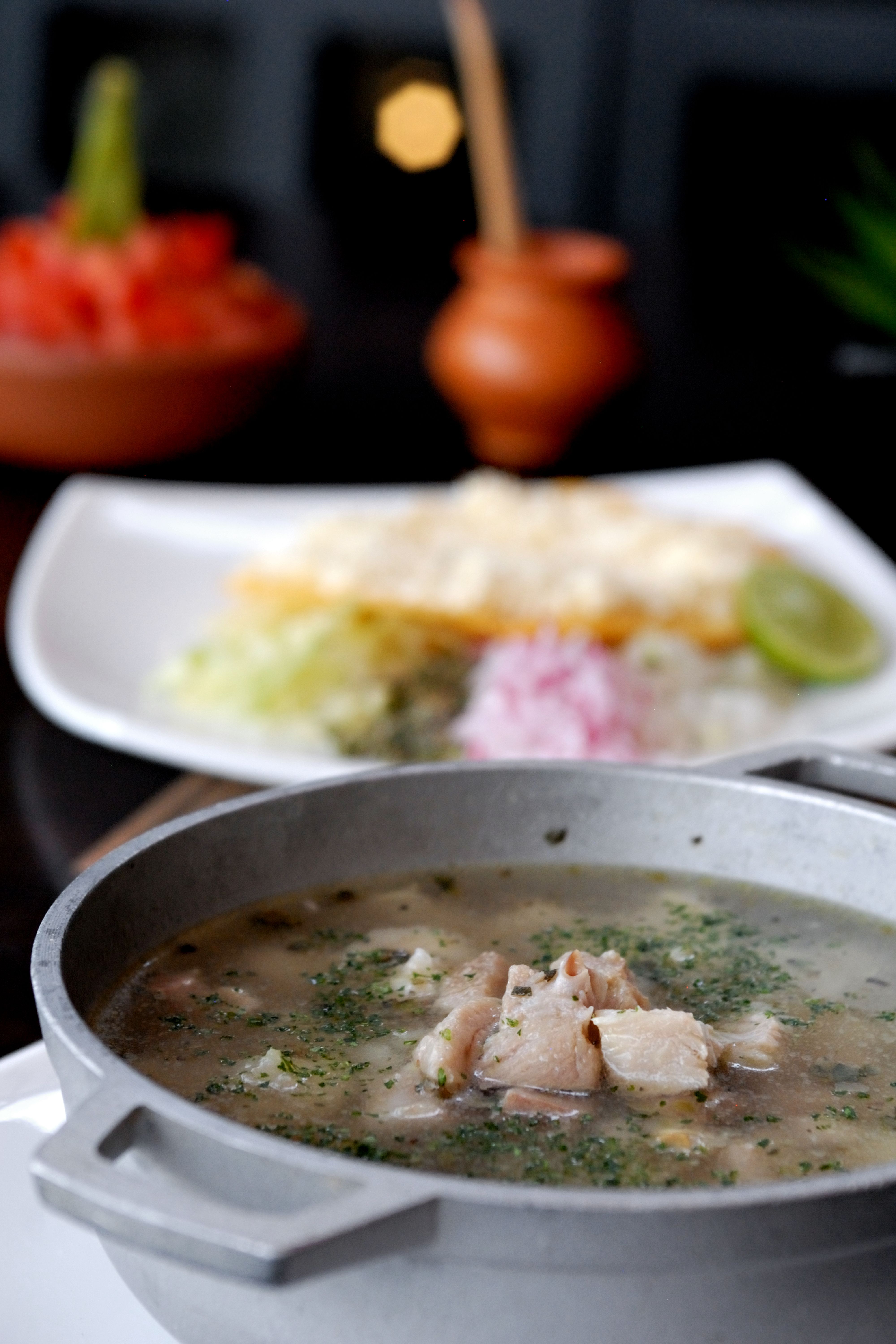
Photo: DΛVΞ GΛRCIΛ / Pexels
Ecuadorian
Encebollado
The diets react (see scores below)
Common Ingredients
- tuna
- cassava
- onion
- tomato
- lime
- cilantro
- cumin
- chili
Specific recipes may vary.
Incompatible with 4 of 11 diets
Diet Ratings
Encebollado is built around cassava (yuca), a starchy root vegetable that is one of the highest-carb foods available — a single serving (roughly 100g cooked) contains approximately 27g net carbs, and a soup portion typically uses 150-200g or more. This alone can blow a full day's keto carb budget. While the other ingredients — tuna, onion, tomato, lime, cilantro, cumin, and chili — are relatively low-carb in soup quantities, the cassava is structural to the dish and cannot be reduced to a token portion without fundamentally changing the recipe. The dish as traditionally prepared is incompatible with ketosis.
Encebollado contains tuna as its primary protein, which is a fish and therefore an animal product. Fish is unambiguously excluded from a vegan diet. The remaining ingredients (cassava, onion, tomato, lime, cilantro, cumin, chili) are all plant-based, but the presence of tuna makes this dish entirely incompatible with veganism.
Encebollado is a traditional Ecuadorian fish soup built almost entirely from whole, unprocessed ingredients that align closely with Paleolithic eating. Tuna is a lean, nutrient-dense protein fully approved in paleo. Cassava (yuca) is a starchy tuber that is broadly accepted in paleo as a whole-food carbohydrate source. Onion, tomato, lime, cilantro, cumin, and chili are all vegetables, fruits, or spices with clear hunter-gatherer availability. There are no grains, legumes, dairy, seed oils, refined sugars, or processed additives present in the base recipe. This dish is a strong example of a naturally paleo-compatible meal.
Encebollado is an Ecuadorian fish soup built around tuna and cassava with abundant vegetables and aromatics — ingredients that align well with Mediterranean dietary principles. Tuna is a core Mediterranean protein, consumed at least 2-3 times weekly. Onion, tomato, lime, cilantro, cumin, and chili are all whole, plant-based ingredients strongly encouraged in the Mediterranean pattern. Cassava (yuca) is a starchy root not traditional to the Mediterranean but functions as a whole-food carbohydrate comparable to potato, which does appear in some Mediterranean regional cuisines. The dish is minimally processed, free of added sugars, and low in saturated fat. The main caveat is whether canned tuna (common in this dish) is used versus fresh, as canned tuna with high sodium or additives slightly reduces its alignment.
Some Mediterranean diet purists may flag cassava as a non-traditional, higher-glycemic starch compared to preferred whole grains or legumes, and recommend substituting or pairing it with fiber-rich additions; however, traditional Mediterranean cuisines from coastal regions also include starchy vegetables in soups, so this is a minor interpretive concern rather than a substantive objection.
Encebollado is a traditional Ecuadorian fish soup that, despite containing carnivore-approved tuna as its primary protein, is loaded with multiple plant-based ingredients that are strictly excluded from the carnivore diet. Cassava is a starchy root vegetable, onion and tomato are plant foods, lime provides citrus, and cilantro, cumin, and chili are all plant-derived spices or vegetables. The dish is fundamentally a plant-forward soup that happens to contain fish — the majority of its ingredients and flavor profile are entirely incompatible with carnivore principles. Only the tuna itself would be carnivore-approved; everything else must be excluded.
Encebollado is a traditional Ecuadorian fish soup made with entirely Whole30-compliant ingredients. Tuna (fish/seafood) is explicitly allowed, cassava (yuca) is a whole root vegetable and fully compliant, and all remaining ingredients — onion, tomato, lime, cilantro, cumin, and chili — are vegetables, fruits, or spices that are unambiguously permitted. There are no grains, legumes, dairy, added sugars, alcohol, or any other excluded ingredients in this dish as described. It is a whole-food, minimally processed meal that aligns perfectly with the spirit and letter of the Whole30 program.
Encebollado contains two significant high-FODMAP ingredients that make it problematic during the elimination phase. Onion is one of the highest-FODMAP foods tested by Monash University, containing large amounts of fructans at any serving size — even small amounts cooked into a broth can leach FODMAPs into the liquid, making the entire soup high-FODMAP. Chili (depending on type) can also be a concern in larger quantities. The remaining ingredients are generally low-FODMAP: tuna (plain, canned or fresh) is low-FODMAP, cassava/yuca is low-FODMAP at a standard ~100g serving, tomato is low-FODMAP at up to 1 medium tomato, lime juice is low-FODMAP, cilantro is low-FODMAP, and cumin is low-FODMAP in culinary amounts. However, onion is a core, non-optional structural ingredient in Encebollado — it is not a garnish but an essential flavor base cooked into the soup. Since FODMAPs (fructans from onion) are water-soluble, they readily leach into the broth, meaning even removing onion pieces does not make the soup safe. This dish cannot be made FODMAP-compliant without fundamentally altering the recipe.
Monash University clearly rates onion as high-FODMAP at any serving with no safe threshold, which is well-established. However, some clinical FODMAP practitioners acknowledge that individual tolerance to fructans varies considerably, and patients in the personalization phase who have tested well against fructans may tolerate onion-containing dishes in small portions. The score reflects the strict elimination phase standard.
Encebollado is a traditional Ecuadorian fish soup that aligns well with DASH diet principles. The primary protein is tuna (a lean, omega-3-rich fish that DASH explicitly encourages), paired with cassava (a starchy root vegetable providing potassium and fiber), onion, tomato, cilantro, and lime — all DASH-friendly vegetables and aromatics. Cumin and chili are sodium-free flavor enhancers that support DASH's strategy of using herbs and spices instead of salt. The dish contains no saturated fat sources, no added sugars, no full-fat dairy, and no processed ingredients. The main caution is sodium: if prepared with canned tuna or added table salt (as is common in restaurant or home cooking), sodium can climb significantly. When made with fresh or low-sodium tuna and minimal added salt, this soup is an excellent DASH meal.
NIH DASH guidelines broadly approve fish-based soups with vegetables and whole-food ingredients at low sodium levels. However, some DASH clinicians note that canned tuna — the most commonly used form — can contribute 200–400mg sodium per serving before any additional seasoning, which warrants portion awareness and preference for fresh or low-sodium canned tuna in hypertensive individuals.
Encebollado is a nutrient-dense Ecuadorian fish soup with a solid Zone foundation but one notable concern: cassava (yuca). Tuna is an excellent lean protein source, rich in omega-3 fatty acids, strongly favored by Dr. Sears for its anti-inflammatory properties. The supporting cast — onion, tomato, lime, cilantro, cumin, and chili — are all low-glycemic, polyphenol-rich vegetables and spices that align perfectly with Zone principles. However, cassava is a high-glycemic, starchy root vegetable with minimal fiber relative to its carbohydrate load, making it an 'unfavorable' carb in Zone terminology — similar in concern to white potato. A traditional serving of encebollado contains a substantial portion of cassava, which can spike the glycemic load and throw off the 40/30/30 ratio by delivering too many fast-acting carbs. To fit the Zone, the cassava portion would need to be significantly reduced (roughly 1/4 to 1/3 of a typical serving) and supplemented with additional non-starchy vegetables. The dish has no added fats mentioned, so a small serving of avocado or a drizzle of olive oil would be needed to complete the Zone fat block. With portion adjustment, this is a workable Zone meal; as traditionally served, the cassava load pushes it into caution territory.
Some Zone practitioners would rate this more favorably, noting that cassava, while higher glycemic, still provides more fiber than refined grains and sits within a broth-based soup that slows gastric emptying. The tuna's omega-3 content and the dish's anti-inflammatory spice profile (cumin, chili, cilantro) align strongly with Sears' later anti-inflammatory Zone writings. A moderate-portioned bowl could be argued to fall within acceptable Zone blocks without dramatic modification.
Encebollado is a traditional Ecuadorian fish soup built almost entirely from anti-inflammatory ingredients. Tuna is an excellent source of omega-3 fatty acids (EPA and DHA), which are among the most well-studied anti-inflammatory nutrients and directly reduce inflammatory markers like CRP and IL-6. Cassava (yuca) is a whole-food starchy root that provides resistant starch and fiber; while not as nutrient-dense as some vegetables, it is unrefined and well-tolerated. Onion and tomato are rich in quercetin, lycopene, and other polyphenols with established antioxidant and anti-inflammatory activity. Lime juice provides vitamin C and bioflavonoids. Cilantro contributes antioxidant compounds including quercetin and kaempferol. Cumin contains thymoquinone and has shown anti-inflammatory and antioxidant properties in research. Chili pepper provides capsaicin, which actively inhibits NF-κB inflammatory signaling. The dish is naturally low in saturated fat, free of refined carbohydrates, added sugars, trans fats, or processed additives. The broth-based preparation preserves nutrients well. The only modest consideration is that canned tuna (commonly used) may contain added sodium, but the overall profile remains strongly anti-inflammatory. This dish aligns closely with the principles of Dr. Weil's Anti-Inflammatory Food Pyramid.
Encebollado is a strong GLP-1-friendly dish overall. Tuna is a lean, high-protein fish with minimal saturated fat and beneficial omega-3s, directly supporting the #1 priority of muscle preservation during weight loss. The broth base makes it easy to digest and hydrating — both important given slowed gastric emptying and reduced thirst sensation on GLP-1 medications. Cassava (yuca) provides digestible carbohydrates and some fiber, and the vegetable and herb components (onion, tomato, cilantro, lime) add micronutrient density without adding fat or empty calories. Cumin is well-tolerated. The chili component is the one flag: if mild (common in Ecuadorian encebollado), it is fine; if prepared spicy, it may worsen reflux or nausea in GLP-1 patients. Portion size is naturally moderate as a soup. Overall, this is a nutrient-dense, protein-forward, low-fat, easy-to-digest meal that aligns well with GLP-1 dietary priorities.
Some GLP-1 nutrition practitioners flag cassava as a high-glycemic starch that may cause blood sugar spikes in patients with concurrent insulin resistance or type 2 diabetes, and would recommend limiting portion size of the cassava component or substituting a lower-glycemic vegetable. Individual tolerance to the chili and cumin also varies among GLP-1 patients experiencing GI sensitivity.
*See how scores were generated at our methodology page.
Nutritional profile
Six traits that cut across every diet.
Fiber & Plants
How much whole-plant food and fiber it delivers.
Healthy Fats
The quality of its fats (unsaturated, omega-3).
Whole / Unprocessed
How close it is to its natural, unprocessed form.
Gut Gentle
How easy it is on digestion (low FODMAP, few irritants).
Low Glycemic
How little it spikes your blood sugar.
Protein Density
How much protein it packs per calorie.
Controversy Index
Higher controversy = more disagreement between diets.
Diet-Specific Tips
 Paleo — 9/10
View tips
- Tuna is a fully paleo-approved lean fish protein
- Cassava is a whole starchy tuber widely accepted in paleo
- All vegetables and aromatics (onion, tomato, cilantro) are paleo-approved
- Lime, cumin, and chili are natural flavor enhancers with no paleo concerns
- No grains, legumes, dairy, or seed oils present
- No refined sugar or added salt in the base recipe ingredients
- Dish is unprocessed and made from whole foods
 Mediterranean — 8/10
View tips
- Tuna is a core Mediterranean fish protein — strongly encouraged
- All vegetables and aromatics (onion, tomato, lime, cilantro, cumin, chili) are whole plant foods
- Cassava is a whole-food carbohydrate not traditional to Mediterranean but acceptable as a starchy vegetable
- No refined grains, added sugars, or processed ingredients
- Minimal saturated fat; dish is naturally low in unhealthy fats
- Canned vs. fresh tuna may affect sodium content and overall quality
 Whole30 — 9/10
View tips
- Tuna is explicitly allowed as seafood/protein
- Cassava (yuca) is a compliant whole root vegetable
- Onion, tomato, and lime are compliant vegetables/fruits
- Cilantro, cumin, and chili are compliant herbs and spices
- No grains, legumes, dairy, or added sugars present
- Whole-food soup that honors the spirit of Whole30
 DASH — 8/10
View tips
- Tuna is a DASH-approved lean fish rich in omega-3 fatty acids
- Cassava provides potassium and fiber but is higher in starchy carbohydrates — portion control advised
- Onion, tomato, cilantro, lime are core DASH vegetables and flavor enhancers
- Cumin and chili add flavor without sodium, supporting DASH's herb/spice-over-salt strategy
- Sodium risk is preparation-dependent: canned tuna adds significant sodium vs. fresh
- No saturated fat, no added sugar, no processed ingredients in base recipe
- Dish naturally rich in potassium from multiple vegetable sources
 Zone — 6/10
View tips
- Tuna is a top-tier Zone protein: lean, high omega-3, anti-inflammatory
- Cassava is a high-glycemic 'unfavorable' carb — the primary Zone concern
- Onion, tomato, lime, and chili are low-glycemic, polyphenol-rich Zone-favorable carbs
- No added fats — a fat block (avocado, olive oil) would be needed to complete Zone balance
- Broth-based preparation is Zone-friendly; no processed ingredients or seed oils
- Portion control of cassava is critical — traditional serving likely exceeds Zone carb allotment
 Anti-Inflammatory — 8/10
View tips
- Tuna provides omega-3 fatty acids (EPA/DHA), directly reducing inflammatory markers
- Cumin and chili pepper contribute active anti-inflammatory compounds (thymoquinone, capsaicin)
- Tomato and onion supply lycopene and quercetin — well-documented polyphenols
- No refined carbohydrates, added sugars, trans fats, or processed ingredients
- Cassava is a whole-food carbohydrate source; unrefined and fiber-containing
- Lime and cilantro add vitamin C and flavonoids
- Broth-based soup with no inflammatory fats or oils
 GLP-1 Friendly — 8/10
View tips
- Tuna provides lean, high-quality protein with omega-3 fatty acids — strongly aligned with GLP-1 protein priority
- Broth-based soup supports hydration, a key need on GLP-1 medications
- Easy to digest due to broth base and lean protein — appropriate for slowed gastric emptying
- Cassava is a moderate-glycemic starch; portion size matters, especially for patients with insulin resistance
- Chili ingredient is a mild flag — spice level should be kept low to avoid worsening nausea or reflux
- Low saturated fat profile overall — no fried components, no heavy cream or cheese
- Vegetable and herb components (onion, tomato, cilantro, lime) add micronutrients without empty calories
- Naturally portion-friendly as a soup — works well with reduced appetite