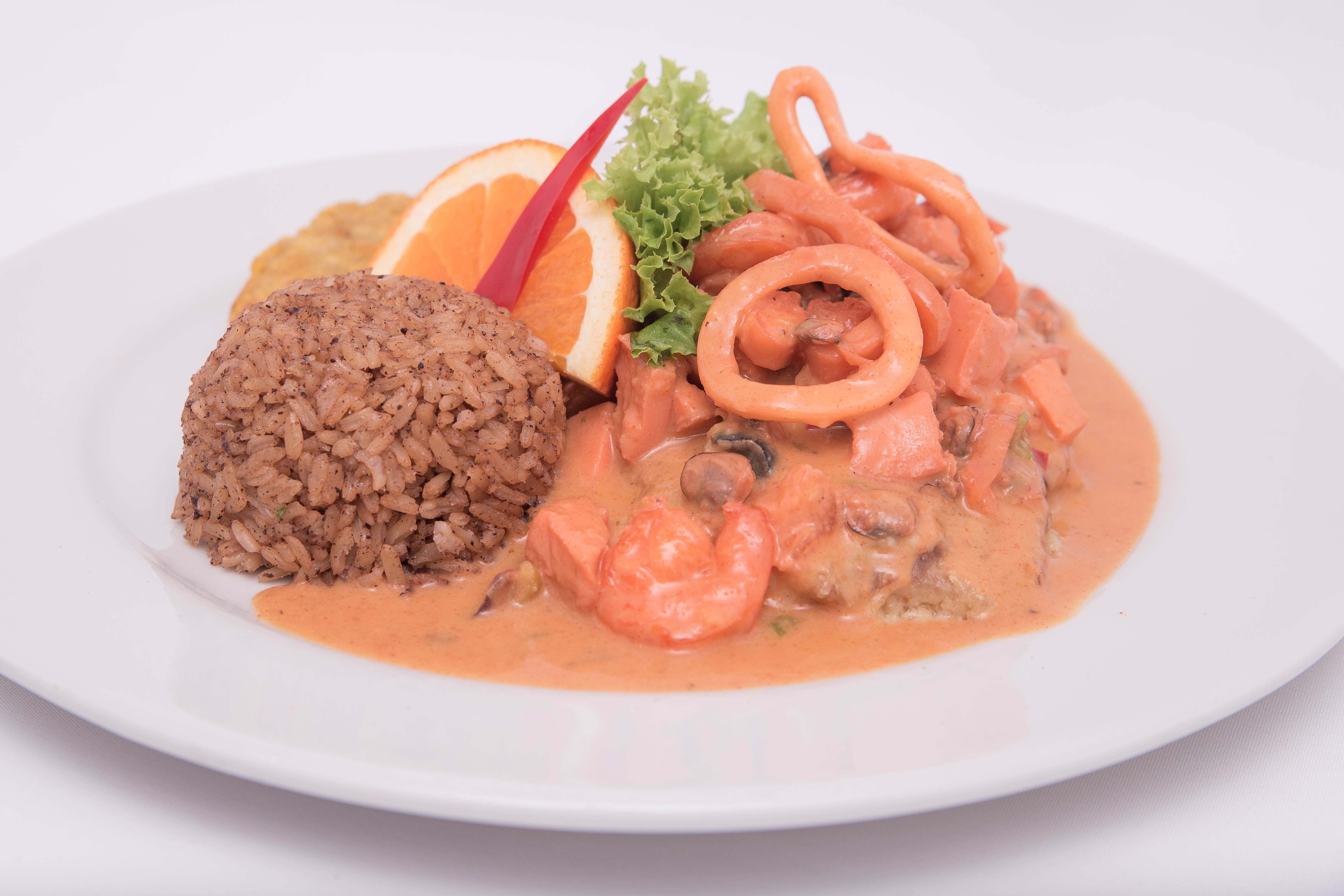
Photo: Jesus Cabrera / Pexels
Ecuadorian
Encocado
The diets react (see scores below)
Common Ingredients
- fish
- shrimp
- coconut milk
- bell pepper
- onion
- tomato
- garlic
- cilantro
- lime
Specific recipes may vary.
Incompatible with 3 of 11 diets
Diet Ratings
Encocado is a coconut milk-braised fish and shrimp dish that is largely keto-compatible. The primary ingredients — fish, shrimp, and full-fat coconut milk — are excellent keto foods high in protein and healthy fats. Garlic, cilantro, and lime are low-carb in typical culinary quantities. The caution arises from bell pepper, onion, and tomato, which add moderate net carbs. A standard serving with one medium onion, one tomato, and one bell pepper across multiple portions could contribute 8–15g net carbs per serving depending on portion size, pushing it toward the daily limit if other carbs are consumed. As long as portions of those vegetables are controlled and rice (a traditional accompaniment) is omitted, this dish fits well within keto.
Some stricter keto practitioners flag coconut milk for its moderate carb content (roughly 3–4g net carbs per 100ml) and warn that restaurant or home recipes using larger quantities can quietly push carb counts higher than expected, making this a dish to track carefully rather than eat freely.
Encocado is an Ecuadorian seafood stew that contains fish and shrimp as its primary proteins. Both are animal products (seafood), which are explicitly excluded under vegan dietary rules. The remaining ingredients — coconut milk, bell pepper, onion, tomato, garlic, cilantro, and lime — are all plant-based, but the presence of fish and shrimp makes this dish non-vegan. There is no meaningful debate within the vegan community about whether fish or shrimp are acceptable; both are animals and are universally excluded.
Encocado is an excellent paleo-compliant dish. All ingredients align well with Paleolithic eating principles: fish and shrimp are unprocessed animal proteins, coconut milk is a paleo-approved fat source, and bell pepper, onion, tomato, garlic, cilantro, and lime are all whole vegetables, aromatics, and fruits available to hunter-gatherers. There are no grains, legumes, dairy, refined sugars, seed oils, or processed additives in the traditional preparation. The dish is naturally flavorful through whole-food ingredients, requiring no non-paleo additions.
Encocado features fish and shrimp as primary proteins, which are strongly encouraged in the Mediterranean diet (2-3 times weekly). The vegetable base — bell pepper, onion, tomato, garlic, cilantro, and lime — is exemplary and fully aligned with Mediterranean principles. However, the dish's defining ingredient is coconut milk, which is non-traditional to the Mediterranean diet. Coconut milk is high in saturated fat, which conflicts with the diet's emphasis on unsaturated fats from olive oil and nuts. Unlike olive oil, coconut milk has no place in traditional Mediterranean cuisines. The absence of olive oil as the fat source is a notable gap. That said, the overall dish is whole-food-based, minimally processed, and protein-forward with seafood, which partially offsets the coconut milk concern.
Some modern Mediterranean diet interpreters argue that coconut milk, as a plant-derived fat in a whole-food context, is preferable to processed fats and can be accommodated occasionally — particularly when the rest of the dish is aligned (seafood, vegetables, aromatics). Conversely, strict Mediterranean diet authorities such as those following Ancel Keys' original framework would reject coconut milk outright due to its high saturated fat profile, which is antithetical to the diet's cardiovascular protective rationale.
Encocado is fundamentally incompatible with the carnivore diet. While it contains carnivore-approved animal proteins (fish and shrimp), the dish is built around a base of multiple plant foods: coconut milk, bell pepper, onion, tomato, garlic, cilantro, and lime. These plant-derived ingredients are all explicitly excluded from the carnivore diet. The coconut milk alone constitutes a major plant-based component forming the sauce. The animal proteins themselves are fine, but this dish as prepared cannot be considered carnivore-compatible in any tier of the diet.
Encocado is an Ecuadorian seafood stew made with fish and shrimp in a coconut milk base, seasoned with bell pepper, onion, tomato, garlic, cilantro, and lime. Every ingredient in this dish is explicitly compliant with Whole30 guidelines. Fish and shrimp are approved proteins, coconut milk is a compliant natural fat, and all the vegetables and aromatics (bell pepper, onion, tomato, garlic, cilantro, lime) are whole, unprocessed foods fully allowed on the program. The dish is a whole-food, savory stew — not a recreation of a junk food or baked good. No excluded ingredients are present.
Encocado contains three high-FODMAP ingredients that make it unsafe during the elimination phase regardless of portion size adjustments. Garlic is one of the highest-fructan foods tested by Monash University and must be avoided entirely during elimination. Onion is similarly high in fructans and is a top trigger for IBS symptoms — it cannot be made safe by portion reduction at any culinary quantity. Coconut milk is dose-dependent: Monash rates it as low-FODMAP at 1/2 cup (125ml) but high-FODMAP at larger amounts; however, in a stew like Encocado, coconut milk is typically used in quantities of 1–2 cans, and even if the dish is divided into servings, the per-serving coconut milk content frequently exceeds the safe threshold. Fish, shrimp, bell pepper, tomato, cilantro, and lime are all low-FODMAP and unproblematic. The dish cannot reasonably be modified without removing garlic and onion entirely, which would fundamentally alter the recipe. Without those modifications, this dish is a clear avoid during the FODMAP elimination phase.
Encocado features several DASH-friendly ingredients — lean fish, shrimp, bell pepper, onion, tomato, garlic, cilantro, and lime — that align well with DASH principles by providing lean protein, potassium, fiber, and antioxidants with naturally low sodium. However, the dish's defining ingredient is coconut milk, which is high in saturated fat (primarily from lauric acid and other medium-chain triglycerides). DASH guidelines explicitly limit saturated fat and call out tropical oils — coconut being one — as foods to restrict. A typical serving of full-fat coconut milk can deliver 10–15g of saturated fat, which can approach or exceed the DASH daily saturated fat ceiling (~7% of total calories). The combination of two proteins (fish + shrimp) keeps overall sodium moderate if prepared without added salt, but restaurant or packaged versions may add significant sodium. The dish lands in 'caution' territory: the base is nutritious, but the coconut milk volume is a meaningful concern under strict DASH guidelines.
NIH DASH guidelines explicitly flag coconut as a tropical oil to limit due to its high saturated fat content. However, some updated clinical interpretations note that the saturated fat in coconut milk (largely medium-chain triglycerides) may have a neutral or even modestly favorable effect on HDL cholesterol, and a growing number of DASH-oriented dietitians allow moderate coconut milk use when overall dietary saturated fat remains within target — particularly when the dish is otherwise rich in vegetables and lean protein.
Encocado is an Ecuadorian seafood stew featuring fish and shrimp as lean protein sources — both are Zone-favorable proteins rich in omega-3 fatty acids, which aligns perfectly with Sears' anti-inflammatory emphasis. The vegetable base (bell pepper, onion, tomato, garlic, cilantro, lime) is composed largely of low-glycemic, polyphenol-rich ingredients that Zone considers favorable carbohydrates. The primary concern is coconut milk, which is high in saturated fat — a fat source that early Zone writings discouraged in favor of monounsaturated fats like olive oil and avocado. The protein and carb sides of the equation are well-balanced, but the fat profile skews toward saturated (lauric acid from coconut), which pulls the dish away from Zone's preferred fat profile. Portioning is key: a smaller quantity of coconut milk can bring the fat block into Zone range, but traditional Encocado uses a generous amount, making the saturated fat load difficult to control. The dish has no problematic high-glycemic carbohydrates and excellent lean protein content, landing it firmly in 'caution' territory — usable with portion awareness rather than avoid.
Dr. Sears' later writings, particularly in 'The Zone Diet' updates and his research on anti-inflammatory nutrition, acknowledged that medium-chain triglycerides (MCTs) in coconut milk, particularly lauric acid, may have a more neutral or even beneficial metabolic profile compared to long-chain saturated fats. Some Zone practitioners therefore treat coconut milk more leniently, especially in the context of an otherwise anti-inflammatory, omega-3-rich seafood dish. Under this more modern interpretation, Encocado with moderate coconut milk could approach a score of 7.
Encocado is an Ecuadorian coconut-based seafood stew with a strongly anti-inflammatory ingredient profile overall. Fish and shrimp provide lean protein and, particularly with fatty fish varieties (e.g., corvina, snapper), meaningful omega-3 fatty acids. Garlic, onion, tomato, and bell pepper are rich in antioxidants, quercetin, lycopene, and vitamin C, all associated with reduced inflammatory markers. Cilantro and lime add polyphenols and vitamin C. The primary point of discussion is coconut milk: it is high in saturated fat (mainly lauric acid), which is a point of genuine debate. Dr. Weil's framework categorizes coconut oil and full-fat coconut milk as a 'use sparingly' item due to saturated fat content, yet other anti-inflammatory researchers (e.g., Terry Wahls, functional medicine practitioners) consider medium-chain triglycerides in coconut anti-inflammatory or metabolically neutral. The remaining ingredients — aromatics, tomatoes, peppers, herbs, lime — are collectively pro-resolution and antioxidant-rich. As a whole dish, the anti-inflammatory benefits of the seafood and vegetable base meaningfully outweigh the moderate saturated fat contribution of coconut milk in a typical serving, placing this solidly in 'approve' territory with a score of 8.
Coconut milk's high saturated fat content (lauric acid) is a sticking point: Dr. Weil's Anti-Inflammatory Pyramid recommends limiting coconut products due to saturated fat, and some mainstream anti-inflammatory protocols would flag this dish as 'caution' rather than 'approve' on that basis. Conversely, functional medicine practitioners and Wahls Protocol advocates view MCTs in coconut as neutral or even beneficial, supporting the approve rating.
Encocado is a flavorful Ecuadorian fish and shrimp stew built on a coconut milk base with nutrient-dense vegetables (bell pepper, onion, tomato, garlic, cilantro, lime). The protein profile is a strong positive — fish and shrimp together provide lean, high-quality, easily digestible protein well-suited to GLP-1 patients. The vegetable base contributes fiber, micronutrients, and hydration. The primary concern is full-fat coconut milk, which is high in saturated fat and calories and can worsen GLP-1 side effects including nausea, bloating, and reflux, particularly around injection day. A standard coconut milk-based encocado can contain 15–25g of fat per serving depending on the coconut milk volume, which is high relative to GLP-1 dietary targets. If prepared with light coconut milk or a reduced coconut milk quantity, this dish moves closer to an approve. As served traditionally, the fat load warrants caution. The lime, garlic, cilantro, and vegetables are all beneficial and unproblematic.
Some GLP-1-focused dietitians may rate this higher given that coconut milk provides medium-chain triglycerides (MCTs), which are metabolized differently than long-chain saturated fats and may be somewhat better tolerated; however, the overall saturated fat content remains a concern for patients experiencing GI side effects, and clinical GLP-1 nutrition guidance consistently flags high-fat meals as a nausea trigger regardless of fat source.
*See how scores were generated at our methodology page.
Nutritional profile
Six traits that cut across every diet.
Fiber & Plants
How much whole-plant food and fiber it delivers.
Healthy Fats
The quality of its fats (unsaturated, omega-3).
Whole / Unprocessed
How close it is to its natural, unprocessed form.
Gut Gentle
How easy it is on digestion (low FODMAP, few irritants).
Low Glycemic
How little it spikes your blood sugar.
Protein Density
How much protein it packs per calorie.
Controversy Index
Higher controversy = more disagreement between diets.
Diet-Specific Tips
 Keto — 6/10
View tips
- Fish and shrimp are zero-carb, high-quality proteins
- Full-fat coconut milk is a keto-approved fat source but adds ~3–4g net carbs per 100ml
- Bell pepper, onion, and tomato are moderate-carb vegetables that require portion control
- Lime juice and garlic contribute minimal net carbs in culinary amounts
- Dish is traditionally served with rice — must be omitted for keto
- No grains, added sugars, or starchy ingredients in the core recipe
 Paleo — 9/10
View tips
- Fish and shrimp are unprocessed, high-quality animal proteins fully approved on paleo
- Coconut milk is a paleo-approved fat source rich in medium-chain triglycerides
- All vegetables and aromatics (bell pepper, onion, tomato, garlic, cilantro) are whole, unprocessed paleo staples
- Lime provides natural acidity with no compliance concerns
- No grains, legumes, dairy, seed oils, or refined sugars present
- Traditional preparation relies on whole-food flavor — no hidden additives required
 Mediterranean — 5/10
View tips
- Fish and shrimp are strongly encouraged Mediterranean proteins
- Rich vegetable base (bell pepper, onion, tomato, garlic) is fully aligned
- Coconut milk is non-traditional and high in saturated fat
- No olive oil as primary fat source
- Dish is whole-food-based and minimally processed
- Lime, cilantro, and garlic add nutritional value with no downside
 Whole30 — 9/10
View tips
- Fish and shrimp are compliant Whole30 proteins
- Coconut milk is an approved natural fat source
- All vegetables (bell pepper, onion, tomato, garlic) are fully compliant
- Cilantro and lime are approved herbs/seasonings
- No grains, legumes, dairy, or added sugars in the ingredient list
- Dish is a traditional savory stew, not a junk food recreation
- Label-reading advised if using canned coconut milk to ensure no non-compliant additives
 DASH — 5/10
View tips
- Coconut milk is high in saturated fat (~10–15g per serving), which conflicts with DASH saturated fat limits
- DASH guidelines specifically restrict tropical oils including coconut
- Fish and shrimp provide excellent lean protein aligned with DASH
- Bell pepper, onion, tomato, garlic, and cilantro contribute potassium, fiber, and micronutrients
- Lime juice adds flavor without sodium, reducing need for added salt
- Sodium is naturally moderate if home-prepared without added salt — restaurant versions may be higher
- Reducing coconut milk quantity or using light coconut milk would improve DASH compatibility
 Zone — 6/10
View tips
- Excellent lean protein sources: fish and shrimp are Zone-ideal, omega-3-rich proteins
- Low-glycemic vegetable base (bell pepper, onion, tomato, garlic) aligns with Zone favorable carbs
- Coconut milk is high in saturated fat, conflicting with Zone's preference for monounsaturated fats
- No high-glycemic carbohydrates present — no rice, potatoes, or refined grains in the dish itself
- Anti-inflammatory profile strengthened by omega-3s from seafood and polyphenols from vegetables and cilantro
- Portion control of coconut milk is essential to keep fat blocks Zone-compliant
- Traditional preparation likely uses generous coconut milk, making saturated fat difficult to moderate
 Anti-Inflammatory — 8/10
View tips
- Fish and shrimp provide lean protein and omega-3 fatty acids (especially if fatty fish like corvina or snapper is used)
- Garlic is a potent anti-inflammatory with allicin and organosulfur compounds
- Onion, tomato, and bell pepper are rich in quercetin, lycopene, and vitamin C — all antioxidant and anti-inflammatory
- Cilantro and lime contribute polyphenols, flavonoids, and vitamin C
- Coconut milk is high in saturated fat (lauric acid), which is debated within anti-inflammatory nutrition
- No refined grains, added sugars, processed ingredients, or inflammatory seed oils present
- Overall dish is minimally processed with whole-food ingredients
 GLP-1 Friendly — 5/10
View tips
- Lean dual-protein source (fish and shrimp) supports GLP-1 protein targets
- Coconut milk is high in saturated fat and may worsen nausea, bloating, and reflux
- Vegetable ingredients (bell pepper, onion, tomato, garlic) add fiber and micronutrients
- Easy digestibility of fish and shrimp is GLP-1-friendly
- Dish can be improved significantly by substituting light coconut milk to reduce fat load
- No fried components, no added sugar, no carbonation — structurally GLP-1 compatible outside the fat concern
- Lime and cilantro support palatability without GI risk