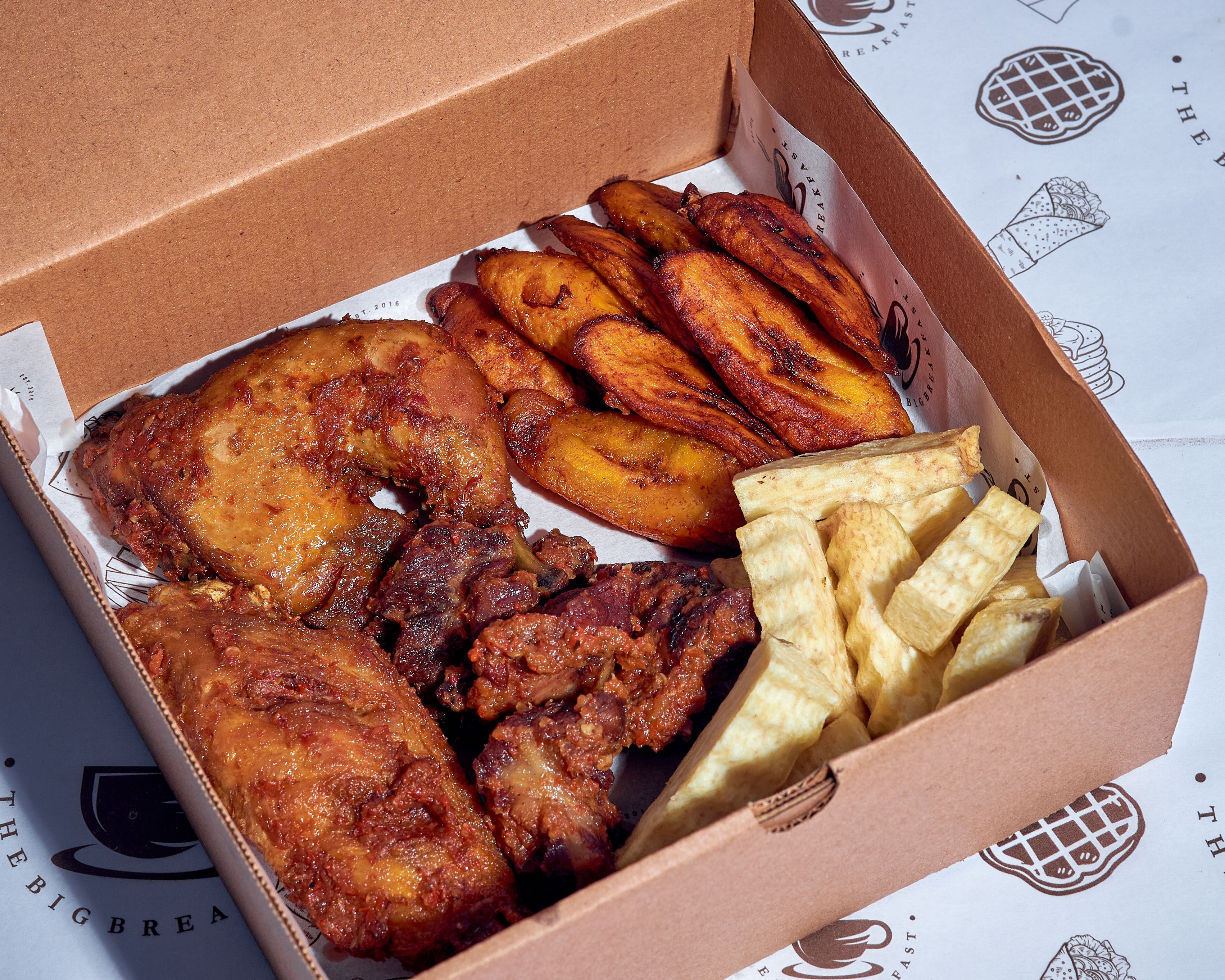
Photo: Tochukwu Ekeh / Pexels
The diets react (see scores below)
Common Ingredients
- pork
- garlic
- cumin
- orange juice
- onion
- hominy
- plantain
- corn
Specific recipes may vary.
Incompatible with 9 of 11 diets
Diet Ratings
Fritada is fundamentally incompatible with ketogenic eating. While the core pork component is keto-friendly and the spices (garlic, cumin, onion) are acceptable in small amounts, the dish is traditionally served with multiple high-carb accompaniments that make it unavoidable in its standard form. Hominy (processed dried corn) is extremely high in net carbs (~26g per half cup), plantains are starchy and sugar-rich (~24g net carbs per half cup), and corn adds further carbohydrate load. Orange juice used in the marinade also contributes sugars. Together, these ingredients easily push a single serving well past the entire daily keto carb limit of 20-50g. The non-pork components of this dish represent grains, starchy vegetables, and high-sugar fruit that are categorically excluded from ketogenic diets.
Fritada is a traditional Ecuadorian dish centered on pork as its primary protein — pork is an animal product and is entirely incompatible with a vegan diet. While several accompanying ingredients (garlic, cumin, orange juice, onion, hominy, plantain, corn) are fully plant-based, the core and defining ingredient of this dish is meat. No vegan substitution can make this dish 'fritada' in any traditional sense.
Fritada contains two clear paleo violations: hominy (nixtamalized corn, a grain) and corn. Both are grains explicitly excluded from the paleo diet. These are not incidental ingredients — hominy is a defining component of the dish. The remaining ingredients (pork, garlic, cumin, orange juice, onion, plantain) are all paleo-compatible, but the grain content disqualifies the dish as a whole. Plantain is a paleo-approved starchy fruit, and pork with the listed aromatics would otherwise be acceptable, but the dish cannot be meaningfully prepared without its grain components.
Fritada is a traditional Ecuadorian dish of deep-fried pork, which directly conflicts with Mediterranean diet principles on multiple fronts. Pork is a red meat that the Mediterranean diet limits to a few times per month, and deep-frying in rendered animal fat (rather than olive oil) adds significant saturated fat. The cooking method itself — rendering and frying pork in its own fat — is antithetical to the Mediterranean approach. While some accompanying ingredients (garlic, cumin, onion, hominy, plantain, corn) are plant-based and acceptable, they do not redeem the dish's core protein and preparation method. The dish is defined by its fatty fried pork, making it a poor fit regardless of the vegetable accompaniments.
Fritada is fundamentally incompatible with the carnivore diet. While pork is an approved animal protein, the dish is built around multiple plant-based ingredients that are all excluded: hominy (processed corn), plantain, corn, onion, garlic, cumin, and orange juice. The majority of this dish by ingredient count and likely by volume consists of plant foods. Hominy, plantain, and corn are starchy carbohydrate-heavy plant foods — among the worst offenders on a carnivore diet. Orange juice adds fruit sugar. The pork component alone would be acceptable, but the overall dish as prepared is entirely off-plan.
Fritada contains two excluded ingredients: hominy and corn. Hominy is a processed form of corn (a grain), and corn itself is explicitly listed as an excluded grain on the Whole30 program. Both are central, traditional components of this dish and cannot simply be omitted without fundamentally changing it. The remaining ingredients — pork, garlic, cumin, orange juice, onion, and plantain — are all Whole30-compliant, but the presence of grains makes this dish a clear avoid.
Fritada contains multiple high-FODMAP ingredients that make it unsuitable during the elimination phase. Garlic is a major fructan source and is high-FODMAP at any amount. Onion is similarly one of the highest fructan-containing foods and must be avoided entirely during elimination. Orange juice, while low-FODMAP in small amounts (100ml), is often used in larger quantities as a marinade base and can accumulate excess fructose. Hominy (nixtamalized corn) has limited Monash testing but is derived from corn, which is low-FODMAP in small serves; however, the GOS content in hominy is uncertain. Plantain is low-FODMAP at small servings (unripe more so than ripe). Pork itself is low-FODMAP, as are cumin and corn tortilla-style corn. The critical disqualifiers are garlic and onion, which are used as core aromatics in this dish and cannot be avoided or reduced to safe levels in a traditional preparation. Even if garlic-infused oil were substituted, onion remains a hard stop during elimination.
Some FODMAP-aware cooks modify fritada by substituting garlic-infused oil and omitting onion (using green onion tops only), which could make a modified version potentially low-FODMAP — but traditional fritada as prepared cannot be considered safe. Monash University rates both garlic and onion as high-FODMAP at any culinary serving size, so elimination-phase compliance requires full ingredient substitution.
Fritada is a traditional Ecuadorian dish of pork (typically fatty cuts like pork belly or shoulder) slow-cooked in its own fat, rendering it very high in saturated fat — directly contradicting core DASH principles. DASH explicitly limits red meat and high-fat meats, and pork prepared in this style (confit-like, fried in lard or its own drippings) represents one of the least DASH-compatible protein preparations. While individual ingredients like garlic, onion, orange juice, cumin, hominy, plantain, and corn are DASH-friendly and even beneficial (potassium, fiber, magnesium), they cannot offset the primary protein source and cooking method. The fatty pork dominates the dish's nutritional profile with high saturated fat and likely high caloric density. Accompaniments like fried plantain (tostones) can add additional fat. The dish as commonly consumed is a poor fit for DASH dietary goals.
Fritada is a traditional Ecuadorian dish of deep-fried pork cooked in its own fat, served with hominy, plantains, and corn. From a Zone perspective, this dish presents multiple challenges. The protein source — pork — is not inherently disqualifying, but fritada typically uses fatty cuts (shoulder, belly) that are deep-fried, resulting in high saturated fat content and a fat profile dominated by lard rather than monounsaturated fats. The carbohydrate side is problematic: hominy (processed corn), ripe plantains, and corn are all high-glycemic or starchy carbohydrates that Zone classifies as 'unfavorable.' The orange juice marinade adds sugar load. Taken together, the dish skews heavily toward high-glycemic carbs and saturated fats — the opposite of Zone's preferred low-GI carbs and monounsaturated fats. However, the dish is not categorically impossible to adapt: a smaller portion of lean pork with onion and spices, paired with a large salad instead of hominy/plantain/corn, could approximate Zone ratios. As served traditionally, though, the macro balance is far from the 40/30/30 ideal, with carb quality and fat quality both off-target.
Some Zone practitioners note that in Sears' later writings (The OmegaRx Zone, The Mediterranean Zone), the anti-inflammatory framework became more nuanced — small portions of pork are acceptable, and the spices (cumin, garlic) and orange juice polyphenols add anti-inflammatory value. A carefully portioned serving of fritada with lean pork, with the starchy sides minimized and replaced by vegetables, could technically be assembled into Zone blocks. The dish's unfavorable elements are primarily about traditional preparation and sides, not the core concept.
Fritada is a traditional Ecuadorian dish of pork slow-cooked (and often finished by frying) in its own fat with garlic, cumin, and orange juice, served with hominy, plantain, and corn. The inflammatory profile is genuinely mixed. On the positive side, garlic and cumin are well-recognized anti-inflammatory spices with documented effects on inflammatory markers. Orange juice provides vitamin C and flavonoids. Hominy, plantain, and corn are whole or minimally processed plant carbohydrates with fiber and phytonutrients — plantains in particular offer resistant starch and antioxidants. On the negative side, pork is a red meat and the traditional preparation involves cooking the pork in its own rendered lard, contributing significant saturated fat. High saturated fat intake is consistently associated with elevated inflammatory markers (CRP, IL-6) in the anti-inflammatory literature. The pork here is not lean poultry or fish — it is the primary protein and fat source. That said, the dish is not heavily processed, contains no trans fats, refined sugars, or artificial additives, and the anti-inflammatory spice and vegetable components provide meaningful counterbalance. As an occasional meal rather than a dietary staple, this falls in the caution/moderate range rather than a hard avoid.
Some anti-inflammatory researchers, including proponents of traditional whole-food diets, argue that unprocessed pork from well-raised animals is meaningfully different from industrially processed red meat, and that the saturated fat concern is overstated when consumed within a vegetable-rich dietary pattern — a view supported by certain ancestral diet advocates. Conversely, stricter anti-inflammatory protocols (such as those aligned with Dr. Andrew Weil's pyramid, which lists red meat as a 'limit' category) would flag the high pork fat content and red meat classification as a significant concern, potentially scoring this lower.
Fritada is a traditional Ecuadorian dish of pork pieces slow-cooked and then fried in their own fat until crispy — this cooking method produces a high-fat, high-saturated-fat final product that directly conflicts with GLP-1 dietary guidelines. Pork as prepared here is a fatty cut cooked in rendered lard, not a lean protein source. The high fat content is likely to worsen core GLP-1 side effects including nausea, bloating, and reflux, since slowed gastric emptying means fatty foods sit in the stomach far longer than usual. The accompaniments — hominy (pozole) and fried or pan-cooked plantain — add refined starch and additional fat with low fiber and protein density per calorie. Orange juice in the marinade is fine, and cumin, garlic, and onion are all acceptable, but the cooking method overwhelms any redeeming qualities of the other ingredients. While the dish does contain some protein, the protein-to-fat ratio is poor compared to what GLP-1 patients need, and the overall caloric density and fat load make this a high-risk dish for significant GI distress.
*See how scores were generated at our methodology page.
Nutritional profile
Six traits that cut across every diet.
Fiber & Plants
How much whole-plant food and fiber it delivers.
Healthy Fats
The quality of its fats (unsaturated, omega-3).
Whole / Unprocessed
How close it is to its natural, unprocessed form.
Gut Gentle
How easy it is on digestion (low FODMAP, few irritants).
Low Glycemic
How little it spikes your blood sugar.
Protein Density
How much protein it packs per calorie.
Controversy Index
Higher controversy = more disagreement between diets.
Diet-Specific Tips
 Zone — 4/10
View tips
- Pork in fritada is typically fatty cuts deep-fried in lard — high saturated fat, not Zone-preferred monounsaturated fat
- Hominy, plantain, and corn are all high-glycemic/starchy carbs classified as 'unfavorable' in Zone terminology
- Orange juice adds glycemic load via sugar content
- No low-glycemic vegetables present in the traditional dish
- Cumin, garlic, and onion are Zone-friendly flavor components with anti-inflammatory polyphenols
- Dish is heavily carb-skewed and fat-skewed in the wrong directions for Zone 40/30/30 ratios
- Could theoretically be portioned into Zone blocks with significant modification, but as traditionally served it is difficult to balance
 Anti-Inflammatory — 4/10
View tips
- Pork is red meat — categorized as 'limit' in anti-inflammatory frameworks due to saturated fat and arachidonic acid content
- Traditional preparation involves cooking in lard/rendered pork fat, increasing saturated fat load
- Garlic and cumin are evidence-backed anti-inflammatory spices
- Orange juice contributes vitamin C and flavonoids, though adds natural sugars
- Hominy, plantain, and corn are whole plant foods providing fiber and phytonutrients
- No trans fats, refined sugars, or artificial additives — minimally processed
- Dish is not a processed food — traditional whole-ingredient preparation is a net positive