Photo: Gera Cejas / Pexels
The diets react (see scores below)
Common Ingredients
- pork
- garlic
- cumin
- beer
- achiote
- onion
- potatoes
- hominy
Specific recipes may vary.
Incompatible with 9 of 11 diets
Diet Ratings
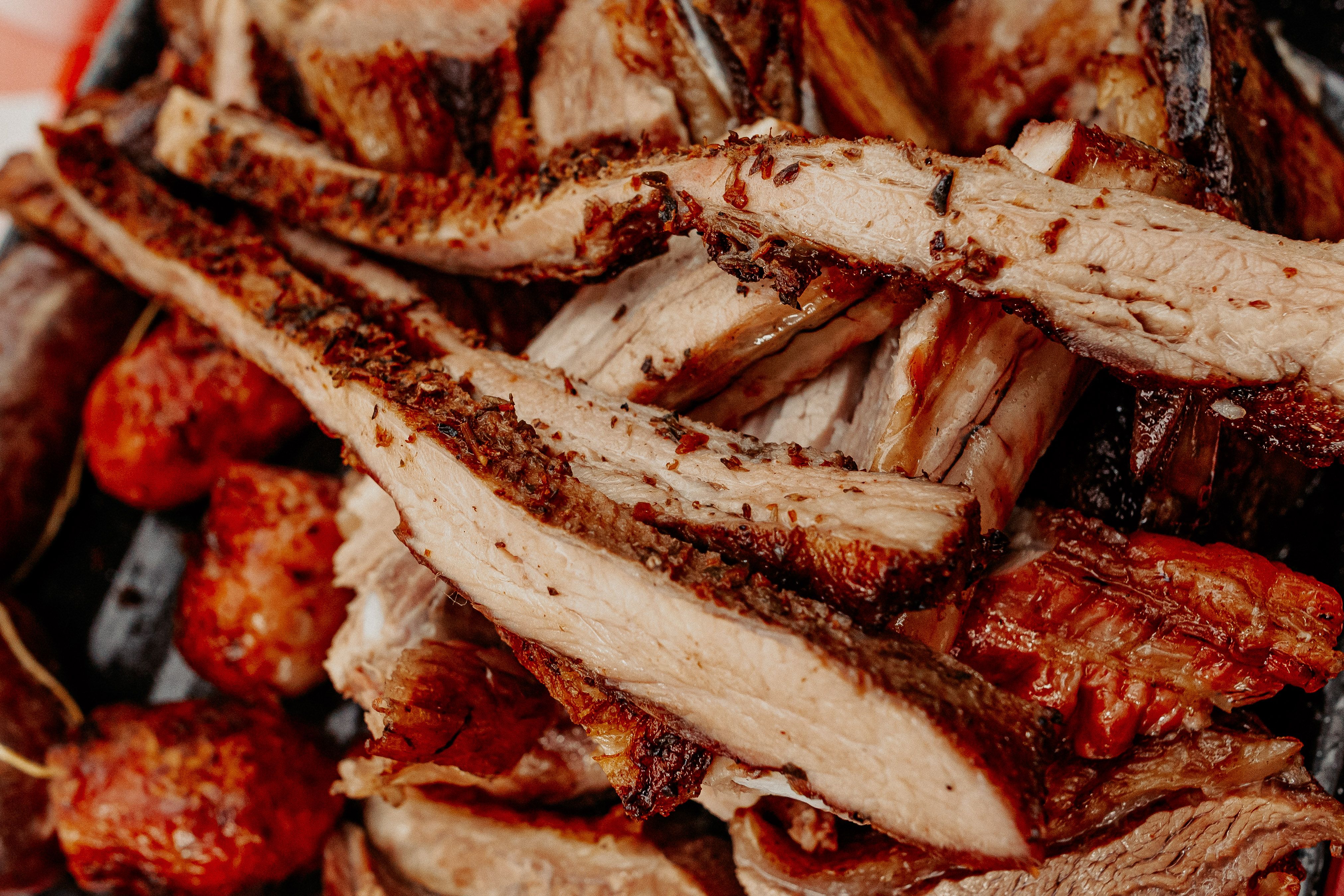
Hornado is a traditional Ecuadorian roasted pork dish that, in its classic form, includes potatoes and hominy (mote) as integral components. While the pork itself is highly keto-compatible, the combination of potatoes and hominy makes this dish incompatible with ketogenic eating. Potatoes are a starchy vegetable with roughly 15-17g net carbs per 100g, and hominy (nixtamalized corn) contains approximately 18g net carbs per 100g. A standard serving of Hornado with its traditional accompaniments could easily deliver 40-80g of net carbs, far exceeding the daily keto threshold. Beer used in the marinade adds additional carbs. The pork, garlic, cumin, achiote, and onion components are acceptable, but the dish cannot be considered keto-compatible as traditionally prepared.
Hornado is a traditional Ecuadorian roasted pork dish. Pork is a direct animal product — the muscle flesh of a pig — making this dish fundamentally incompatible with a vegan diet. There is no ambiguity here: the primary protein and central ingredient is meat. The remaining ingredients (garlic, cumin, beer, achiote, onion, potatoes, hominy) are all plant-based, but they do not offset the core animal ingredient. No vegan version of hornado exists under the same name, as the dish is defined by its pork.
Hornado contains two clear paleo violations that are non-negotiable: hominy (processed corn, a grain) and beer (fermented grain/gluten-containing alcohol). Hominy is nixtamalized corn — doubly disqualifying as both a grain and a processed food. Beer is brewed from barley and/or wheat, both grains explicitly excluded from the paleo diet. Potatoes add a third problematic ingredient — white potatoes are discouraged in strict paleo (per Cordain and The Paleo Diet's own guide), though this is debated in the broader community. The remaining ingredients — pork, garlic, cumin, achiote, and onion — are all paleo-compliant. However, the hominy and beer are fundamental, irreplaceable components of authentic Hornado, not optional garnishes, making this dish incompatible with paleo as traditionally prepared.
Hornado is a traditional Ecuadorian dish of whole roasted pork, which directly conflicts with Mediterranean diet principles. Pork is a red meat that the Mediterranean diet restricts to only a few times per month. The dish is centered entirely on a large portion of pork as its primary and dominant component, with no olive oil as the fat base and no emphasis on plant-forward ingredients. While the accompaniments (garlic, onion, cumin, potatoes, hominy) include some vegetables and legumes, they play a secondary role to a large quantity of fatty roasted pork. Beer as a cooking liquid adds minimal concern, and achiote is a neutral spice. The core issue is that this is an unambiguously red-meat-centered dish designed to be eaten as a main course, placing it firmly in the 'avoid' category under Mediterranean diet guidelines.
Hornado is a traditional Ecuadorian roasted pork dish that is fundamentally incompatible with the carnivore diet. While the primary protein (pork) is carnivore-approved, the dish contains numerous plant-based ingredients that disqualify it entirely. Cumin and achiote are plant-derived spices, garlic and onion are vegetables, beer is a grain-based fermented beverage, and most critically, potatoes and hominy (processed corn) are starchy plant foods that are strictly excluded from any tier of carnivore eating. The pork itself would be fine, but as prepared in this traditional recipe, the dish cannot be considered carnivore-compatible.
Hornado contains two clearly excluded ingredients. Beer is alcohol and also contains grains (barley), both of which are explicitly excluded on Whole30. Hominy is a processed form of corn, which is a grain and therefore also excluded. These two ingredients alone disqualify the dish regardless of the otherwise compliant components (pork, garlic, cumin, achiote, onion, potatoes).
Hornado contains multiple high-FODMAP ingredients that make it unsuitable during the elimination phase. Garlic is one of the highest-FODMAP foods tested by Monash University (very high in fructans, no safe serving size in whole form). Onion is similarly high in fructans and a major FODMAP trigger — there is no safe serving size during elimination. Hominy (nixtamalized corn kernels) contains GOS and fructans at typical serving sizes and is not rated as low-FODMAP by Monash. Beer contains fructans (from barley/wheat malt) and is high-FODMAP. Even though pork, cumin, achiote, and potatoes are individually low-FODMAP, the combination of garlic, onion, beer, and hominy makes this dish clearly high-FODMAP as traditionally prepared. There is no realistic way to consume a standard serving of Hornado in its traditional form without significant FODMAP exposure from at least two or three of these trigger ingredients.
Hornado is a traditional Ecuadorian whole roasted pork dish, typically using a full pig or large pork cuts including fatty skin (crackling/chicharrón). The primary protein is pork cooked in a way that retains substantial saturated fat and skin fat. DASH guidelines explicitly limit red meat and high-saturated-fat foods. Roasted whole pork with skin delivers very high saturated fat and cholesterol per serving. While some individual ingredients are DASH-friendly (garlic, onion, cumin, achiote, potatoes, hominy), the core of the dish — fatty pork roasted with its skin — is fundamentally at odds with DASH principles. Beer-based marinades add minimal concern but pork fat is the dominant issue. Portions as commonly served are large, compounding the saturated fat load. The potatoes and hominy (starchy carbs) are acceptable but do not offset the primary concern.
Hornado is a traditional Ecuadorian slow-roasted pork dish with several Zone Diet concerns. The pork itself can be lean (loin cuts) but is traditionally made with fattier cuts (shoulder, whole pig), bringing substantial saturated fat that conflicts with Zone's preference for lean proteins and monounsaturated fats. The dish's two primary carbohydrate sources — potatoes and hominy — are both high-glycemic and explicitly 'unfavorable' in Zone terminology: potatoes spike blood sugar rapidly, and hominy (processed corn) has a moderate-to-high glycemic load. These carbs dominate the plate and make achieving the 40/30/30 ratio very difficult without significant restructuring. The spices (cumin, garlic, achiote, onion) and beer used in marinating are Zone-neutral or beneficial (polyphenols in onion/garlic). However, the overall dish as traditionally served is carbohydrate-heavy with unfavorable glycemic carbs and protein that tends toward high saturated fat. To incorporate into Zone, one would need to substitute or drastically minimize potatoes and hominy, select lean pork cuts, and add monounsaturated fat instead of relying on pork fat — essentially a significant reformulation of the dish.
Hornado is a traditional Ecuadorian roasted pork dish with a mixed anti-inflammatory profile. The primary protein — whole roasted pork — is the main concern: pork (especially skin-on, fatty cuts typical of hornado) is higher in saturated fat and arachidonic acid, both of which are pro-inflammatory in excess. Anti-inflammatory frameworks recommend limiting red meat and high-fat pork falls in a similar category. However, several ingredients redeem the dish meaningfully. Garlic and cumin are well-regarded anti-inflammatory spices. Achiote (annatto) contains bixin and norbixin, carotenoid antioxidants with documented anti-inflammatory properties. Onion provides quercetin. Beer contributes some polyphenols but also adds refined carbohydrates and alcohol — a wash at best, and a mild negative under most anti-inflammatory frameworks. Potatoes are neutral to modestly positive (resistant starch, vitamin C, potassium) though they are a starchy carbohydrate. Hominy (nixtamalized corn) is a whole grain with fiber and has a reasonable nutritional profile. Overall, the dish is not inherently processed or additive-laden, and the aromatic and spice base offers genuine anti-inflammatory value — but the dominant protein (fatty pork) and the alcohol content keep this firmly in the 'caution' zone. Occasional consumption for a generally healthy person is reasonable; not a dish to eat regularly on a strict anti-inflammatory protocol.
Some anti-inflammatory practitioners, particularly those following Dr. Weil's more permissive framework, would note that whole, unprocessed pork in a dish rich with anti-inflammatory spices (garlic, cumin, achiote) and vegetables is contextually acceptable in moderation — significantly better than processed meats. Conversely, stricter anti-inflammatory and autoimmune protocols (e.g., AIP) would flag pork fat, arachidonic acid content, and alcohol from beer as clearly pro-inflammatory, potentially pushing this toward 'avoid' for sensitive individuals.
Hornado is a traditional Ecuadorian dish of whole roasted pork, typically prepared with the skin on and slow-roasted until the fat renders and the skin crisps. The result is a very high-fat, high-saturated-fat meal dominated by fatty pork cuts including skin and subcutaneous fat layers. This directly conflicts with GLP-1 dietary priorities: high fat content worsens nausea, bloating, and reflux — already common GLP-1 side effects — and slowed gastric emptying means fatty foods sit in the stomach far longer, amplifying discomfort. The beer used in marinating adds alcohol-derived compounds and contributes to the overall concern. Side accompaniments of potatoes and hominy are high-glycemic, starchy carbohydrates with low protein density per calorie. While pork does provide protein, the fat-to-protein ratio in hornado is highly unfavorable compared to lean protein sources. The dish is also typically served in large, celebratory portions, which conflicts with small-portion eating recommendations. Cumin, garlic, and achiote are fine, and onion adds mild fiber, but these do not meaningfully offset the core concerns. This dish is a poor fit for GLP-1 patients in any standard serving.
*See how scores were generated at our methodology page.
Nutritional profile
Six traits that cut across every diet.
Fiber & Plants
How much whole-plant food and fiber it delivers.
Healthy Fats
The quality of its fats (unsaturated, omega-3).
Whole / Unprocessed
How close it is to its natural, unprocessed form.
Gut Gentle
How easy it is on digestion (low FODMAP, few irritants).
Low Glycemic
How little it spikes your blood sugar.
Protein Density
How much protein it packs per calorie.
Controversy Index
Higher controversy = more disagreement between diets.
Diet-Specific Tips
 Zone — 4/10
View tips
- Potatoes are explicitly 'unfavorable' high-glycemic carbs in Zone Diet protocol
- Hominy (processed corn) is a high-glycemic unfavorable carb that Dr. Sears discourages
- Traditional pork cuts used are fatty, contributing excess saturated fat beyond Zone targets
- Spices and aromatics (garlic, cumin, onion, achiote) are Zone-friendly anti-inflammatory ingredients
- Dish as served makes 40/30/30 macro balance very difficult to achieve without major modification
- Beer marinade contributes minimal glycemic impact in cooking but adds some carbohydrate context
 Anti-Inflammatory — 4/10
View tips
- Fatty pork (saturated fat, arachidonic acid) is pro-inflammatory and in the 'limit' category
- Garlic provides allicin and organo-sulfur compounds with anti-inflammatory activity
- Cumin is a modestly anti-inflammatory spice with antioxidant properties
- Achiote (annatto) contains bixin/norbixin — carotenoid antioxidants
- Onion provides quercetin, a flavonoid with anti-inflammatory properties
- Beer adds alcohol (caution) and refined carbohydrates (mild negative)
- Potatoes are starchy but whole and unprocessed — neutral
- Hominy is a whole grain with fiber — mildly positive
- Dish is unprocessed with no artificial additives — a meaningful positive
- Cooking method (roasting with fat/skin) likely increases saturated fat load