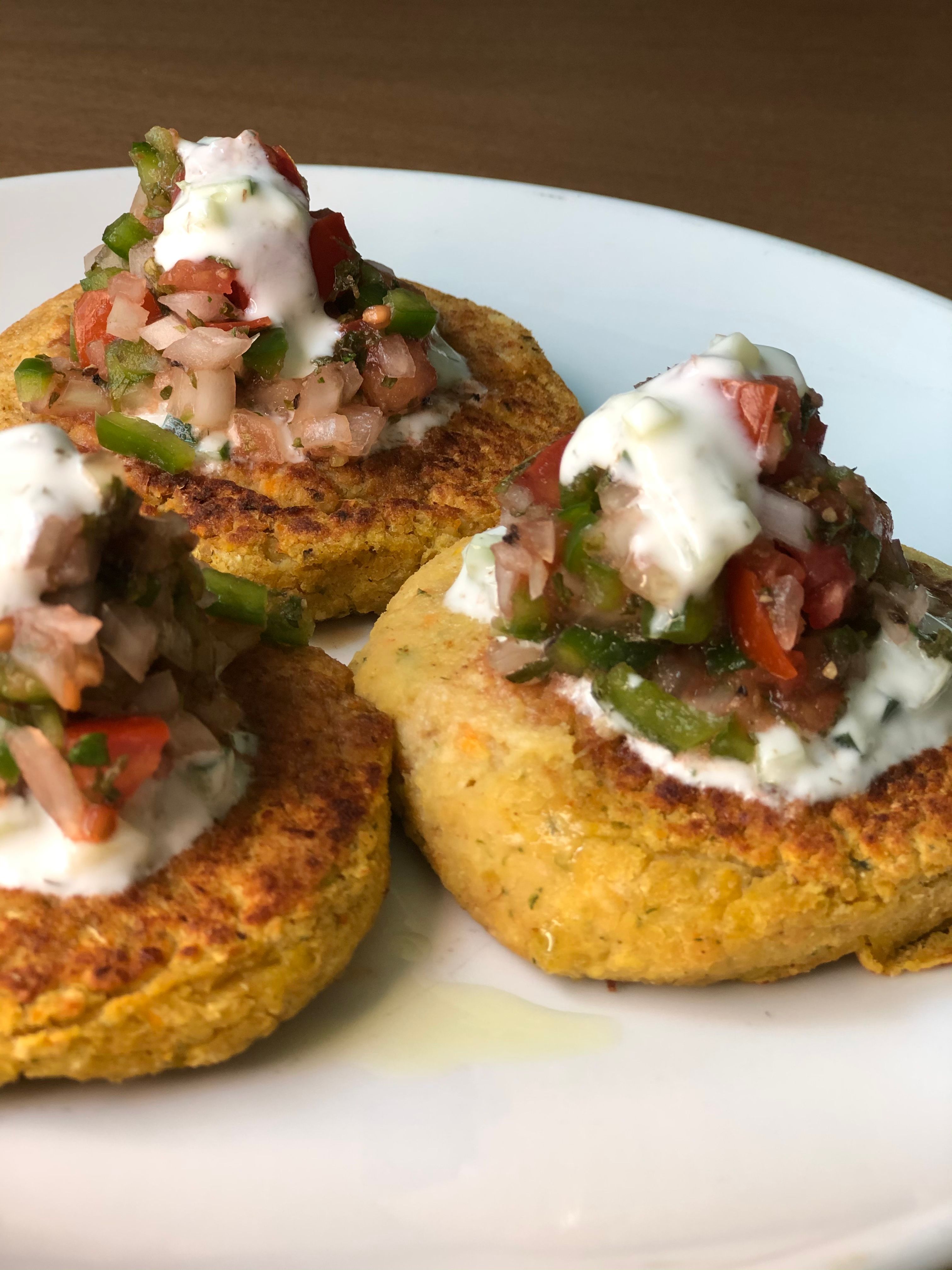
Ecuadorian
Llapingachos
The diets react (see scores below)
Common Ingredients
- potatoes
- cheese
- onion
- achiote
- peanuts
- milk
- eggs
- scallions
Specific recipes may vary.
Incompatible with 6 of 11 diets
Diet Ratings
Llapingachos are potato-based stuffed pancakes, and potatoes are extremely high in net carbs — a single medium potato contains roughly 30-35g of net carbs, easily exceeding a strict keto daily limit in one serving. This dish is fundamentally built around potatoes as the primary ingredient, making it incompatible with ketosis regardless of portion size. The cheese filling and eggs are keto-friendly, and peanuts add some fat, but these do not offset the massive carbohydrate load from the potato base. Achiote and onion add minimal carbs but are not a concern. There is no practical way to modify this dish and still call it llapingachos — the potato is structural to the recipe.
Llapingachos are traditional Ecuadorian potato cakes that contain multiple animal-derived ingredients. Cheese and milk are dairy products, and eggs are also animal products — all three are explicitly excluded from a vegan diet. These ingredients are not incidental or trace; they are structural components of the dish (cheese is even listed as the primary protein). Potatoes, onion, achiote, peanuts, and scallions are all plant-based, but the animal ingredients disqualify the dish entirely. A vegan version could theoretically be made by substituting dairy cheese with plant-based cheese, omitting eggs, and using plant milk, but the traditional dish as described is not vegan-compatible.
Llapingachos are Ecuadorian potato-and-cheese patties that fail paleo standards on multiple fronts. Cheese is a dairy product, explicitly excluded from paleo. Milk is likewise dairy and excluded. Peanuts are legumes, not true nuts, and are clearly excluded from paleo. White potatoes are debated within paleo — originally excluded by Cordain but increasingly accepted in modern paleo circles — though here they are mashed and formed into patties, a processed preparation that leans further from ancestral eating. Achiote (annatto) is a natural seed-based spice generally considered paleo-acceptable. Eggs, onion, and scallions are paleo-approved. However, the dish's core identity relies on cheese, milk, and peanuts — three clearly non-paleo ingredients — making the overall dish an avoid regardless of the potato debate.
Some modern paleo frameworks (Mark Sisson's Primal Blueprint) permit full-fat dairy and accept white potatoes, which would rehabilitate two of the problematic ingredients. However, even under the most permissive primal interpretation, peanuts as legumes remain excluded, keeping the dish non-compliant.
Llapingachos are stuffed potato patties with cheese, typically pan-fried. The ingredients are largely whole and minimally processed — potatoes, onion, scallions, eggs, milk, peanuts, and cheese all have a place in the Mediterranean diet in moderation. Potatoes are acceptable though not as preferred as whole grains or legumes. Cheese and eggs fall into the 'moderate' dairy/egg category. Peanuts (legumes) are a positive element. The main concern is the cooking method: llapingachos are traditionally pan-fried, often in lard or oil. If prepared with olive oil, the dish aligns reasonably well; if fried in saturated fats, it diverges. Achiote is a spice with no Mediterranean equivalent but no nutritional concern. Overall, this is a vegetable-and-dairy-forward side dish that fits within Mediterranean principles at the moderate/caution level.
Some Mediterranean diet practitioners would rate this more favorably, noting that potato-based dishes with eggs, cheese, and legumes (peanuts) are consistent with traditional Mediterranean peasant cooking patterns where simple whole ingredients were combined — especially if cooked in olive oil rather than lard.
Llapingachos are Ecuadorian potato patties stuffed with cheese, and this dish is overwhelmingly plant-based. The primary ingredients — potatoes, onion, achiote, peanuts, and scallions — are all entirely plant-derived and strictly excluded from any version of the carnivore diet. Potatoes are a starchy carbohydrate, peanuts are legumes, and the aromatics are vegetables. While the dish does contain small amounts of carnivore-compatible ingredients (cheese, milk, eggs), these are minor components in what is fundamentally a plant-based dish. No reinterpretation or modification could make this carnivore-appropriate without completely reconstructing it from scratch.
Llapingachos contain multiple Whole30-excluded ingredients. Cheese is dairy and explicitly excluded. Milk is dairy and explicitly excluded. Peanuts are legumes and explicitly excluded. These are not edge cases — all three are clearly prohibited by official Whole30 rules. Additionally, llapingachos are potato cakes/patties, which falls into the category of recreating a starchy comfort food 'junk food' analog (similar to hash browns or potato pancakes), which the program discourages even when ingredients might otherwise be compliant. The combination of cheese, milk, and peanuts makes this dish firmly off-limits.
Llapingachos are Ecuadorian potato-cheese patties that contain several high-FODMAP ingredients. The primary concerns are: (1) Onion — a major fructan source and one of the highest-FODMAP ingredients per Monash; even small amounts cooked into the dish make it high-FODMAP. (2) Peanuts — moderate to high in GOS; Monash rates them as low-FODMAP only at a very small serving (around 28g/10 peanuts), but they are commonly used in larger quantities in llapingacho-accompanying peanut sauce. (3) Milk — contains lactose, which is a disaccharide FODMAP; even moderate amounts used in the filling or sauce can be problematic. (4) Cheese — the type matters greatly; many fresh or soft cheeses are high in lactose, while hard aged cheeses are low-FODMAP. The cheese type is unspecified here, but Ecuadorian queso fresco is typically a fresh cheese with moderate-to-high lactose content. (5) Scallions (green onions) — the green tops are low-FODMAP, but the white bulb portions are high in fructans. If only green parts are used, this ingredient is safe, but traditional recipes often use both parts. Potatoes, eggs, and achiote (annatto) are low-FODMAP and not concerning. The combination of onion, likely fresh cheese, milk, and peanuts makes this dish very difficult to render low-FODMAP without significant modification.
A modified version using only scallion greens, lactose-free milk, hard aged cheese (e.g., cheddar), and a controlled portion of peanuts could potentially be reduced to a 'caution' rating, but the standard traditional recipe as made in Ecuadorian cuisine almost universally includes onion and fresh cheese, keeping it in the 'avoid' category for elimination phase. Some FODMAP practitioners note that very small quantities of onion cooked in oil might reduce fructan load, though Monash does not support this distinction — fructans are water-soluble and remain in the food even when cooked.
Llapingachos are Ecuadorian potato patties stuffed with cheese and pan-fried, typically served with peanut sauce. Several DASH-positive elements are present: potatoes are a good source of potassium and fiber, onions and scallions add beneficial phytonutrients, and peanuts provide healthy unsaturated fats and magnesium. However, the dish raises DASH concerns: cheese (typically a full-fat variety like queso fresco) contributes saturated fat and sodium; eggs add some cholesterol (though DASH clinicians are increasingly permissive); and the frying method adds fat. The peanut sauce component can also add significant sodium depending on preparation. Overall, this is a moderately acceptable dish in DASH terms — the base ingredients have nutritional merit, but the saturated fat from cheese, sodium content, and frying method prevent a full approval. Portion control is essential, and preparation modifications (reduced-fat cheese, minimal added salt, baking instead of frying) would improve the DASH compatibility significantly.
NIH DASH guidelines explicitly limit full-fat dairy and fried foods due to saturated fat and caloric density concerns, which would push this dish toward caution or avoid. However, updated clinical interpretations note that the potassium-rich potato base, beneficial unsaturated fats from peanuts, and modest serving sizes can make llapingachos compatible with a DASH-aligned dietary pattern when prepared with lower-fat cheese and minimal added sodium.
Llapingachos are traditional Ecuadorian potato patties filled with cheese, which presents significant Zone Diet challenges. Potatoes are explicitly classified as an 'unfavorable' carbohydrate in Dr. Sears' Zone framework due to their high glycemic index, and they form the dominant macronutrient base of this dish. The macro profile skews heavily toward high-GI carbohydrates with insufficient lean protein relative to carbs. Cheese provides some protein but also brings saturated fat rather than the preferred monounsaturated fats. Peanuts do add some monounsaturated fat value, though they're not ideal Zone fat sources. Eggs contribute lean protein, and onions/scallions are favorable Zone vegetables. However, the foundational ingredient — white potato — makes it very difficult to construct a Zone-balanced meal around this dish without drastically reducing portion size to near-meaningless levels. As a side dish, it would compound carbohydrate imbalance unless paired with a very protein-heavy main and essentially no other carbohydrates. The score of 3 reflects that while not categorically impossible to fit into a Zone day, the dish is built around an unfavorable high-GI starch base with limited lean protein and suboptimal fat profile, making it a poor Zone choice in any realistic portion.
Some Zone practitioners argue that small portions of even high-GI carbs can be incorporated as a fraction of a carbohydrate block, particularly when the overall meal is carefully balanced with lean protein and favorable fats. The eggs and peanuts in llapingachos do contribute Zone-compatible protein and fat, and a very small serving (half a patty) could theoretically be worked into a Zone meal plan. Sears' later writings also emphasize anti-inflammatory polyphenols, and achiote (annatto) does have polyphenol content. However, this is a difficult case to defend given the potato-dominant structure.
Llapingachos are Ecuadorian potato-and-cheese patties, typically pan-fried and served with peanut sauce. The ingredient profile is mixed from an anti-inflammatory standpoint. Potatoes are a whole food with reasonable nutrient density, though they are starchy and high-glycemic. Peanuts provide some monounsaturated fats and resveratrol, but also carry a higher omega-6 load than tree nuts, placing them in a moderate category. Achiote (annatto) is notable — it contains bixin and norbixin, carotenoid antioxidants with emerging anti-inflammatory evidence, which is a positive. Onion and scallions contribute quercetin and other polyphenols, also beneficial. Eggs are acceptable in moderation. The main inflammatory concerns are the cheese and milk (full-fat dairy is in the 'limit' category due to saturated fat) and the cooking method — llapingachos are often fried in oil, which depending on the oil used (frequently refined vegetable oil) could add pro-inflammatory omega-6 fats. The dish lacks omega-3 sources, significant fiber diversity, or the kind of polyphenol density that would tip it into 'approve' territory. Overall, this is a moderate dish — not particularly harmful but not anti-inflammatory either, landing firmly in the 'caution' zone.
Some anti-inflammatory practitioners, particularly those following autoimmune or low-glycemic protocols, would rate this lower due to the combination of starchy high-glycemic potatoes and saturated fat from cheese and dairy — a pairing that may promote insulin spikes and subsequent inflammatory signaling. Others following a more Mediterranean-style anti-inflammatory approach (closer to Dr. Weil's framework) would view potatoes, eggs, and even moderate dairy as acceptable whole-food components that don't meaningfully undermine an otherwise diverse anti-inflammatory diet.
Llapingachos are pan-fried potato and cheese patties — a starch-dominant, moderate-fat side dish with limited protein density per calorie. The primary ingredients are potatoes (high-glycemic refined starch, minimal protein, low fiber compared to whole grains or legumes) and cheese (moderate protein but high saturated fat). Eggs and peanuts add some protein and beneficial fats but not enough to shift the overall profile significantly. The pan-frying preparation adds fat and can worsen GLP-1 GI side effects (nausea, reflux, bloating). Achiote and scallions are fine. Milk adds a small amount of protein. The dish is calorie-dense relative to its nutrient return, with the bulk of calories coming from starch and fat — not an ideal combination for GLP-1 patients eating small volumes. It is not as egregious as deep-fried or ultra-processed foods, but it falls clearly short of approve criteria due to low protein density, high glycemic load, moderate-to-high fat content, and frying preparation.
Some GLP-1-focused dietitians may rate this more favorably as an occasional small-portion side, noting that eggs and cheese together do provide meaningful protein and that peanuts contribute unsaturated fat and satiety — arguing the dish is more nutrient-dense than plain white bread or rice. Others in the obesity medicine space would flag the starch-plus-saturated-fat combination and frying method as reliably problematic for patients already prone to slowed gastric emptying and nausea.
*See how scores were generated at our methodology page.
Nutritional profile
Six traits that cut across every diet.
Fiber & Plants
How much whole-plant food and fiber it delivers.
Healthy Fats
The quality of its fats (unsaturated, omega-3).
Whole / Unprocessed
How close it is to its natural, unprocessed form.
Gut Gentle
How easy it is on digestion (low FODMAP, few irritants).
Low Glycemic
How little it spikes your blood sugar.
Protein Density
How much protein it packs per calorie.
Controversy Index
Higher controversy = more disagreement between diets.
Diet-Specific Tips
 Mediterranean — 5/10
View tips
- Potatoes are whole food but not a Mediterranean staple grain; acceptable in moderation
- Cheese and eggs fit the moderate dairy/egg allowance
- Peanuts (legumes) are a Mediterranean-compatible ingredient
- Cooking fat is critical — olive oil aligns; lard or shortening does not
- Onion and scallions are strongly encouraged vegetables
- No refined grains or added sugars
- Non-Mediterranean cuisine but ingredient profile is broadly compatible
 DASH — 5/10
View tips
- Potatoes provide potassium and fiber — DASH-positive
- Cheese contributes saturated fat and sodium — DASH concern
- Peanuts offer healthy unsaturated fats and magnesium — DASH-positive
- Pan-frying adds fat and calories — DASH concern
- Sodium content depends heavily on cheese type and preparation
- Eggs are a minor concern; most current DASH clinicians allow in moderation
- Portion control critical — high caloric density for a side dish
- Low-sodium cheese and baking method would improve DASH score
 Zone — 5/10
View tips
- Potatoes are explicitly 'unfavorable' high-glycemic carbohydrates in Zone terminology
- Macro profile is carbohydrate-dominant with insufficient lean protein to achieve 40/30/30 balance
- Cheese contributes saturated fat rather than preferred monounsaturated fats
- Peanuts provide some monounsaturated fat value
- Eggs are a favorable Zone protein source
- Onions and scallions are favorable Zone vegetables
- As a side dish, compounds carbohydrate imbalance in a meal
- Very small portions could theoretically be incorporated but defeat the culinary purpose of the dish
 Anti-Inflammatory — 5/10
View tips
- Potatoes are whole food but high-glycemic and starchy — neutral to mildly pro-inflammatory in excess
- Cheese and milk contribute saturated fat, placing them in the 'limit' category per anti-inflammatory guidelines
- Peanuts offer some monounsaturated fat but higher omega-6 than tree nuts
- Achiote (annatto) contains bixin/norbixin carotenoids with antioxidant and anti-inflammatory properties — a notable positive
- Onion and scallions provide quercetin and sulfur compounds, both anti-inflammatory
- Eggs are acceptable in moderation under anti-inflammatory frameworks
- Cooking method (pan-frying) and oil choice can significantly affect inflammatory profile — often uses refined vegetable oils
- No omega-3 sources present; limited polyphenol diversity overall
 GLP-1 Friendly — 4/10
View tips
- Starch-dominant base (potatoes) with high glycemic load and low fiber
- Low protein density per calorie — cheese and eggs present but insufficient to offset carbohydrate volume
- Pan-fried preparation increases fat content and GLP-1 GI side effect risk
- Saturated fat from cheese is a concern at typical serving sizes
- Peanuts add unsaturated fat and some protein but also calorie density
- Not portion-friendly — satisfying serving requires meaningful volume of a calorie-dense food
- No significant fiber contributors in the ingredient list