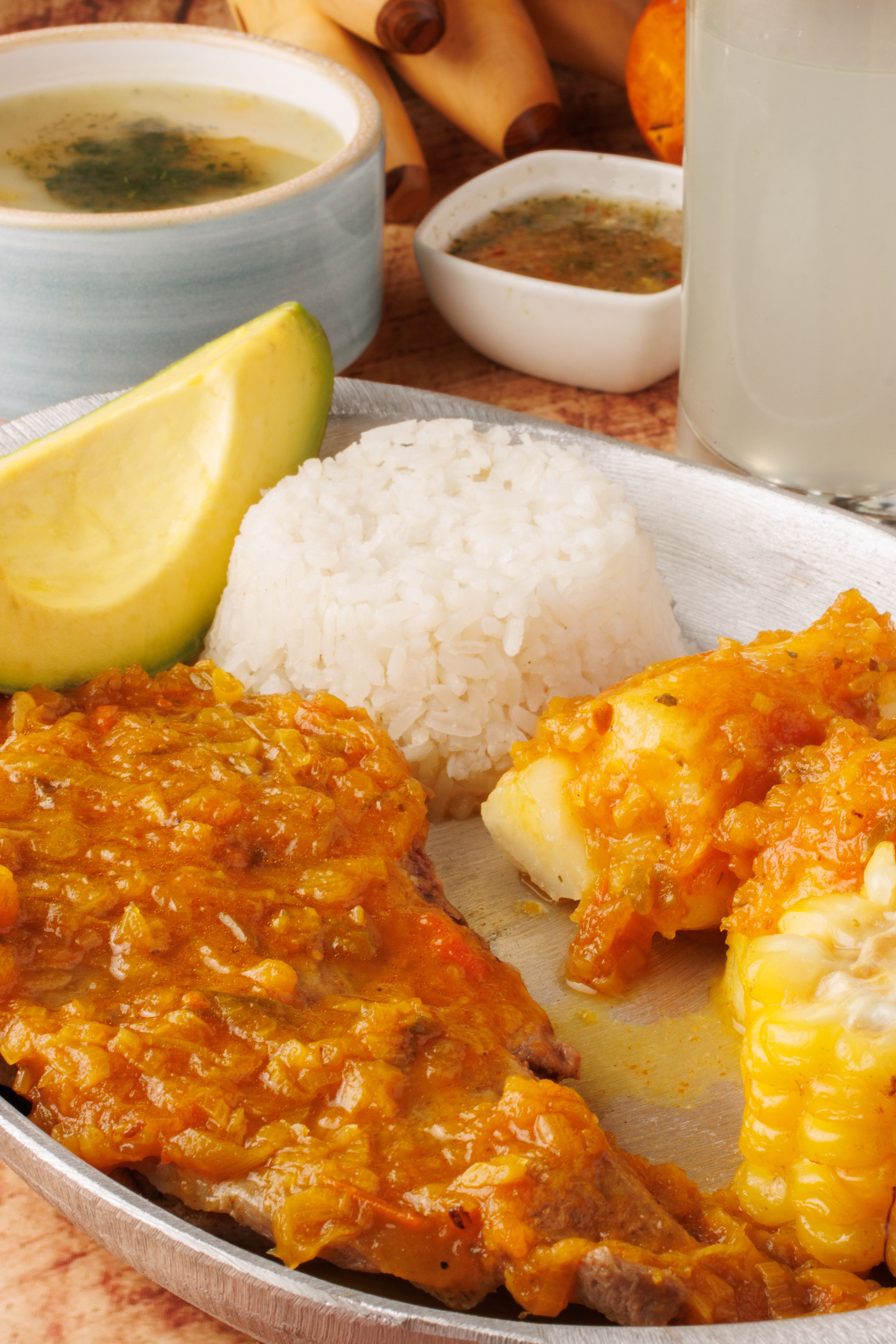
Photo: Christian Bolaños / Pexels
Ecuadorian
Seco de Chivo
The diets react (see scores below)
Common Ingredients
- goat
- naranjilla
- beer
- garlic
- cumin
- onion
- tomato
- cilantro
- achiote
Specific recipes may vary.
Incompatible with 5 of 11 diets
Diet Ratings
Seco de Chivo features goat as its primary protein, which is an excellent keto-friendly meat — lean but still compatible with keto when prepared with fat. The main keto concerns are the use of beer (contains maltose and significant carbs, though much may cook off) and naranjilla (a tart Andean fruit with moderate sugar content). Together these two ingredients add a meaningful carb load to the braising liquid that is hard to quantify precisely but likely pushes a standard serving into the caution zone. The aromatics — garlic, cumin, onion, tomato, cilantro, achiote — contribute modest carbs in cooking quantities and are generally acceptable. Tomato and onion add small amounts of net carbs. If the beer is swapped for bone broth and naranjilla is omitted or minimized, this dish would easily be keto-approved. As traditionally prepared, it sits in caution territory due to these carb-contributing liquids and fruit.
Some lazy keto or flexible keto practitioners argue that the beer and naranjilla carbs dilute substantially during long braising and that a standard serving of the goat meat with sauce contains manageable net carbs well under 10g, placing it in approve territory. Strict keto adherents counter that even trace sugars from beer and fruit concentrate in sauces and should be avoided entirely.
Seco de Chivo is an Ecuadorian braised goat stew. Goat is an animal product (meat), which is categorically excluded from a vegan diet. There is no ambiguity here — no vegan organization or school of thought permits the consumption of animal flesh. The remaining ingredients (naranjilla, beer, garlic, cumin, onion, tomato, cilantro, achiote) are all plant-based, but the dish as defined by its primary protein cannot be made vegan without fundamentally changing it.
Seco de Chivo is built on an otherwise paleo-friendly base — goat is an excellent unprocessed protein, and most of the aromatics and spices (garlic, cumin, onion, tomato, cilantro, achiote) are fully approved. Naranjilla, a South American fruit used for its tart juice, is also paleo-compatible. However, beer is a core structural ingredient in this dish, not a minor additive. Beer is a fermented grain product (typically barley and/or wheat), placing it squarely in the 'avoid' category under paleo rules. Its inclusion as a braising liquid means the dish cannot be approved without a fundamental reformulation — for example, substituting the beer with bone broth or additional naranjilla juice. The alcohol classification compounds the issue: even if a grain-free beer substitute were used, alcohol itself sits in the caution zone. As written, the beer disqualifies the dish.
Seco de Chivo features goat as its primary protein, which is a red meat. Mediterranean diet guidelines restrict red meat to a few times per month or once weekly at most, placing it in the 'avoid-to-caution' boundary. However, goat is a lean red meat historically consumed in traditional Mediterranean regions (particularly Greece, Southern Italy, and the Middle East), making it less problematic than processed or fatty red meats like sausage or beef. The supporting ingredients — garlic, onion, tomato, cumin, cilantro, and achiote — are all whole, plant-based aromatics that align well with Mediterranean principles. Beer adds minimal concern as an occasional cooking liquid. Naranjilla is a whole fruit used in stewing, which is neutral. The dish is not processed and contains no refined grains or added sugars. Overall, this is a whole-food preparation with a lean red meat at its core, warranting caution rather than outright avoidance, particularly if consumed infrequently.
Some Mediterranean diet interpretations, particularly those rooted in traditional Greek and Middle Eastern pastoral cuisine, accept goat meat as a semi-regular protein given its leanness and cultural heritage — distinct from fatty beef or processed meats. The Oldways Mediterranean diet pyramid, for example, acknowledges traditional goat consumption in Mediterranean communities, suggesting this dish could edge closer to acceptable with infrequent consumption.
Seco de Chivo is fundamentally incompatible with the carnivore diet despite featuring goat as its primary protein. The dish is heavily plant-forward in its preparation: naranjilla (a citrus-like fruit), beer (grain-derived), garlic, cumin, onion, tomato, cilantro, and achiote are all plant-based ingredients that are categorically excluded from carnivore. The beer alone disqualifies it as a processed, grain-derived fermented beverage. Cumin, achiote, cilantro, and the other aromatics are plant spices and vegetables. The goat meat itself would be carnivore-approved, but in this traditional Ecuadorian preparation it is inseparable from a marinade and braise built entirely on plant ingredients. There is no meaningful way to consume this dish as prepared while adhering to carnivore principles.
Seco de Chivo contains beer, which is explicitly excluded on the Whole30 program. Beer is an alcoholic beverage made from grains, violating both the alcohol rule and the grain rule simultaneously. All other ingredients — goat, naranjilla (a tropical fruit), garlic, cumin, onion, tomato, cilantro, and achiote — are fully Whole30-compliant. However, the presence of beer as a braising liquid is a disqualifying ingredient. The dish could theoretically be adapted by substituting the beer with compliant chicken or beef broth, coconut aminos, or fruit juice, but as traditionally prepared it is not Whole30-compatible.
Seco de Chivo contains multiple high-FODMAP ingredients that make it unsuitable during the elimination phase. Garlic is one of the highest-FODMAP foods tested by Monash (high in fructans even in tiny amounts). Onion is similarly high-FODMAP at any standard serving size, also due to fructans. Beer contains fructans (wheat/barley-based) and is rated high-FODMAP by Monash at typical serving sizes. These three ingredients alone would disqualify this dish. Tomato in large quantities can be moderate-FODMAP. Naranjilla (lulo) has not been extensively tested by Monash, introducing further uncertainty. The goat meat itself, cumin, cilantro, and achiote are low-FODMAP. However, the foundational aromatics — garlic and onion — are cooked into the braising liquid, meaning their FODMAPs are fully dissolved and distributed throughout the dish, making avoidance impossible without reformulation.
Some FODMAP-trained dietitians note that when garlic and onion are used as whole pieces that are later removed (not the case in a typical Seco de Chivo, where they are blended or cooked down into the sauce), FODMAP transfer to the dish is reduced. In practice, this dish cannot realistically be made low-FODMAP without substituting garlic-infused oil and omitting onion and beer, which would fundamentally alter its character.
Seco de Chivo is a traditional Ecuadorian goat stew with a mixed DASH profile. Goat meat is actually leaner than many other red meats (lower in saturated fat than beef or lamb), which gives it an advantage over typical red meat dishes. The vegetable-rich base — tomato, onion, garlic, cilantro — and the use of naranjilla (a fruit high in antioxidants) align well with DASH principles, contributing fiber, potassium, and phytonutrients. Spices like cumin and achiote add flavor without sodium, which is a DASH-positive feature. However, DASH generally limits red meat (including goat) to modest portions, and beer adds calories and some sodium. The preparation method (slow braising) can concentrate sodium if any salt is added during cooking. As commonly prepared at home or in restaurants, sodium content could vary significantly. The dish scores moderately — acceptable in controlled portions with attention to added salt.
NIH DASH guidelines broadly categorize red meat as a food to limit, which would place goat in a caution or even mild-avoid category. However, updated clinical interpretations note that goat is significantly leaner than beef or pork (comparable to chicken in fat content per some analyses), and some DASH-oriented nutritionists argue it should be treated more like lean poultry than conventional red meat when consumed in appropriate portions.
Seco de Chivo is a traditional Ecuadorian goat stew that presents a mixed Zone profile. Goat meat is actually quite lean relative to other red meats, with a favorable protein-to-fat ratio and lower saturated fat than beef or lamb, making it a reasonable Zone protein source. The vegetable-based aromatics (garlic, onion, tomato, cilantro, cumin, achiote) are all Zone-favorable low-glycemic ingredients. Naranjilla adds polyphenols and some carbohydrates but in modest amounts typical of cooking. The main Zone concerns are the beer used in braising (adds fermentable carbohydrates and some glycemic load, though much alcohol cooks off) and the overall fat content of goat, which while leaner than lamb, still carries more saturated fat than skinless chicken or fish. The dish lacks a complementary fat source (olive oil or avocado would need to be added) and the carbohydrate balance would require pairing with Zone-favorable vegetables rather than the traditional rice or potatoes often served alongside. As a protein-centric stew, it can fit into a Zone meal with careful portioning of a 3-oz serving and appropriate low-GI vegetable sides, but the beer and goat's saturated fat content prevent a full approval.
Some Zone practitioners and later Sears writings take a more permissive view of lean red meats including goat, particularly given its omega-6 to omega-3 profile, which is more favorable than grain-fed beef. The beer used in braising contributes minimal residual carbohydrates after cooking, so stricter Zone coaches might rate this higher (6-7) given goat's leanness and the dish's vegetable-forward flavor base. The classification of goat as 'unfavorable' protein is not explicitly addressed in Sears' published materials, creating some ambiguity.
Seco de Chivo is a traditional Ecuadorian goat stew with a mixed anti-inflammatory profile. On the positive side, the dish features several strongly anti-inflammatory ingredients: garlic and cumin are well-supported anti-inflammatory spices; tomato and onion provide antioxidants (lycopene, quercetin); cilantro offers polyphenols; achiote (annatto) contains bixin and norbixin, carotenoid-class antioxidants with emerging anti-inflammatory evidence. Naranjilla (lulo) is a vitamin C-rich Andean fruit that adds further antioxidant value. The use of beer in cooking is a moderate concern — most of the alcohol volatilizes during cooking, but any residual alcohol and the refined carbohydrates in beer are mildly pro-inflammatory; the anti-inflammatory framework generally limits alcohol (with red wine being the lone partial exception). The primary protein, goat, is the key variable. Goat is a lean red meat — leaner than beef or lamb, with a lower saturated fat content and a relatively favorable omega-6 to omega-3 ratio compared to conventional beef. The anti-inflammatory framework places lean red meat in the 'limit' category (not 'avoid'), making goat preferable to fattier red meats. Eaten occasionally, this dish is acceptable; as a frequent staple it tips more pro-inflammatory due to the red meat and beer base.
Some anti-inflammatory practitioners, particularly those following stricter protocols, would classify all red meat — including lean goat — as a consistent trigger of inflammatory markers (arachidonic acid, heme iron, advanced glycation end-products from cooking) and would rate this dish lower. Conversely, advocates of nose-to-tail and traditional food systems note that pasture-raised goat has a more favorable fatty acid profile than industrially raised beef, and that traditional stewing methods reduce AGE formation compared to grilling or frying, potentially warranting a more permissive view.
Seco de Chivo is a slow-braised Ecuadorian goat stew cooked with naranjilla juice, beer, aromatics, and spices. It has genuine nutritional strengths — goat is a lean red meat with solid protein content (roughly 25–27g per 100g cooked), lower in saturated fat than beef or lamb, and the tomato, onion, garlic, and cilantro base adds modest fiber and micronutrients. However, two ingredients are direct concerns for GLP-1 patients: beer is alcohol (empty calories, dehydration, and GI irritation risk), and goat falls into the contested red meat category. Even lean goat can have moderate saturated fat depending on the cut and preparation, and the braising liquid absorbs fat released during cooking. The naranjilla adds some acidity which may worsen reflux or nausea in sensitive GLP-1 patients. The dish is not fried, not ultra-processed, and is served in modest portions culturally, which helps. If prepared at home with alcohol-free substitutes (naranjilla juice or broth replacing beer) and fat-skimmed after braising, this dish could score higher. As traditionally prepared with beer, it lands in caution territory.
Some GLP-1-focused dietitians would approve a moderate portion of goat-based stew given its favorable protein-to-fat ratio compared to beef, arguing the alcohol in beer largely cooks off and the overall dish is nutrient-dense. Others flag any alcohol-containing ingredient as a categorical concern and would counsel patients to request or prepare a beer-free version, particularly given GLP-1s already slow gastric emptying and can amplify alcohol sensitivity.
*See how scores were generated at our methodology page.
Nutritional profile
Six traits that cut across every diet.
Fiber & Plants
How much whole-plant food and fiber it delivers.
Healthy Fats
The quality of its fats (unsaturated, omega-3).
Whole / Unprocessed
How close it is to its natural, unprocessed form.
Gut Gentle
How easy it is on digestion (low FODMAP, few irritants).
Low Glycemic
How little it spikes your blood sugar.
Protein Density
How much protein it packs per calorie.
Controversy Index
Higher controversy = more disagreement between diets.
Diet-Specific Tips
 Keto — 4/10
View tips
- Goat meat is keto-friendly protein with minimal carbs
- Beer adds fermentable sugars and maltose; carb content partially reduces during cooking but remains a concern
- Naranjilla is a fruit with moderate sugar content, adding net carbs to the braising liquid
- Garlic, onion, and tomato contribute small but cumulative net carbs
- Traditional preparation not optimized for keto; ingredient swaps (broth instead of beer) would improve compatibility
- Achiote, cumin, and cilantro are negligible in carb content
 Mediterranean — 4/10
View tips
- Goat is a red meat — restricted to a few times per month under Mediterranean guidelines
- Goat is lean and traditionally consumed in Mediterranean pastoral cultures (Greece, Middle East)
- All aromatics and vegetables (garlic, onion, tomato, cumin, cilantro) are Mediterranean-compatible
- No processed ingredients, refined grains, or added sugars
- Beer used as cooking liquid — minimal concern
- Not a Mediterranean dish but structurally similar to some traditional braised meat preparations
 DASH — 5/10
View tips
- Goat is a red meat — DASH recommends limiting red meat — but it is exceptionally lean compared to beef or lamb
- Vegetable-forward base (tomato, onion, garlic) supports DASH's emphasis on vegetables
- Naranjilla contributes antioxidants and fruit servings aligned with DASH
- Beer adds empty calories and modest sodium; alcohol is not emphasized in DASH
- No inherently high-sodium ingredients listed, but restaurant/home preparation may add significant salt
- Spices (cumin, achiote) provide flavor without sodium — a DASH-positive cooking strategy
- Portion control is key — a large serving of goat meat could exceed DASH red meat recommendations
 Zone — 5/10
View tips
- Goat is leaner than most red meats with lower saturated fat than beef or lamb, making it a more Zone-compatible protein than typical red meat
- Beer introduces fermentable carbohydrates and raises glycemic concerns, though cooking reduces alcohol and some carb content
- Vegetable aromatics (tomato, onion, garlic, naranjilla, cilantro) are all Zone-favorable low-glycemic ingredients
- Dish lacks monounsaturated fat — would need olive oil or avocado added to complete Zone block balance
- Traditional accompaniments (rice, potatoes, yuca) are Zone-unfavorable and must be swapped for non-starchy vegetables
- Achiote and cumin provide polyphenols consistent with Sears' anti-inflammatory dietary emphasis
- Protein portion control (approx. 3 oz / 25g protein per serving) is essential for Zone compliance
 Anti-Inflammatory — 5/10
View tips
- Goat is lean red meat — lower saturated fat than beef/lamb, but still in the 'limit' category for anti-inflammatory eating
- Garlic, cumin, and cilantro are well-supported anti-inflammatory spices and herbs
- Tomato and onion contribute lycopene and quercetin (antioxidants)
- Achiote (annatto) provides carotenoid antioxidants (bixin/norbixin)
- Naranjilla adds vitamin C and polyphenol antioxidant value
- Beer as a braising liquid introduces alcohol and refined carbohydrates — mildly pro-inflammatory, though much alcohol cooks off
- Slow-stewed preparation reduces advanced glycation end-products (AGEs) compared to dry-heat cooking methods
- Dish is moderate in anti-inflammatory terms — acceptable occasionally, not ideal as a dietary staple
 GLP-1 Friendly — 4/10
View tips
- Goat is a lean red meat with high protein density (~25-27g per 100g) and lower saturated fat than beef or lamb — a relative advantage
- Beer is an alcoholic ingredient: GLP-1 patients have heightened alcohol sensitivity; even cooking does not fully eliminate alcohol
- Naranjilla acidity may worsen nausea or reflux, both common GLP-1 side effects
- Slow-braised preparation concentrates fat in the liquid — fat-skimming recommended
- Aromatic vegetable base (onion, tomato, garlic, cilantro) adds micronutrients and modest fiber
- No frying, no ultra-processing, no added sugar — positives
- Alcohol-free home preparation would significantly improve the score
- Portion sensitivity: a modest serving (3-4 oz goat) is more manageable than a large restaurant portion