Photo: Yonko Kilasi / Pexels
Egyptian
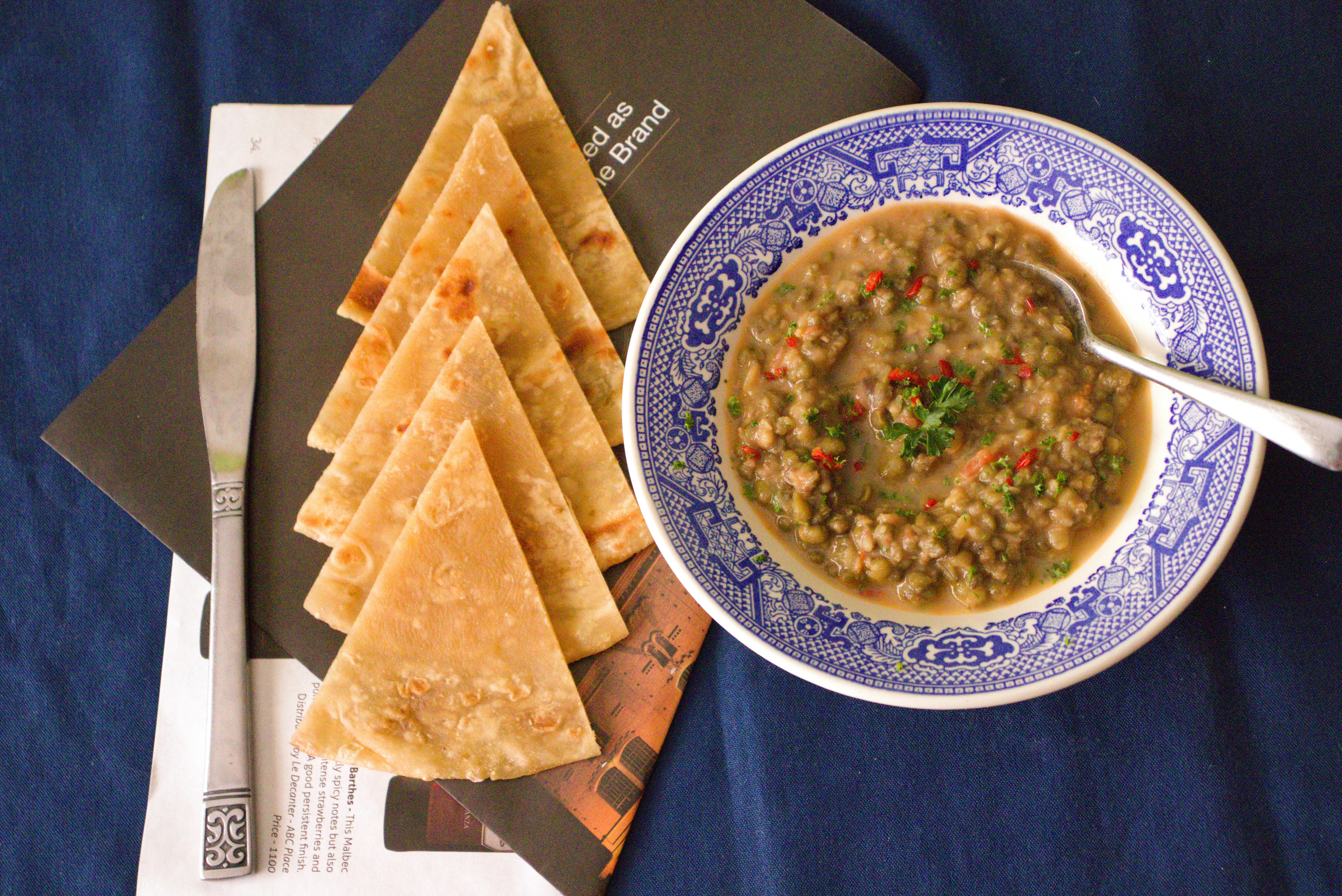
Ful Medames
The diets react (see scores below)
Common Ingredients
- fava beans
- olive oil
- garlic
- lemon
- cumin
- tomato
- parsley
Specific recipes may vary.
Incompatible with 5 of 11 diets
Diet Ratings
Ful Medames is fundamentally incompatible with a ketogenic diet. Fava beans are the primary ingredient and are extremely high in net carbs — approximately 26g of net carbs per 100g cooked, making even a small serving capable of exceeding the entire daily carb allowance for strict keto. Fava beans are a legume/starchy food with no place in a standard ketogenic framework. The other ingredients (olive oil, garlic, lemon, cumin, tomato, parsley) are relatively keto-friendly in small amounts, but they cannot offset the massive carbohydrate load from the fava beans. This dish is primarily a high-carb, moderate-protein meal that would immediately disrupt ketosis for virtually all practitioners.
Ful Medames is a traditional Egyptian fava bean dish that is entirely plant-based. Every ingredient — fava beans, olive oil, garlic, lemon, cumin, tomato, and parsley — is derived from plants with no animal products or animal-derived additives. As a whole-food, legume-centered dish, it aligns strongly with vegan dietary principles. Fava beans provide substantial protein and fiber, making this nutritionally robust rather than a processed vegan substitute. This is an excellent example of a naturally vegan traditional dish.
Ful Medames is built entirely around fava beans, which are legumes — one of the most clearly excluded food groups in the paleo diet. Legumes contain lectins, phytates, and other anti-nutrients that paleo authorities consistently cite as reasons for exclusion. While the supporting ingredients (olive oil, garlic, lemon, cumin, tomato, parsley) are all paleo-compliant, the primary ingredient and protein source is fundamentally non-paleo. There is no version of this dish that can be made paleo-compliant without removing the fava beans, at which point it is no longer Ful Medames.
Ful Medames is an exemplary Mediterranean diet dish. Fava beans are a nutrient-dense legume providing plant-based protein, fiber, and complex carbohydrates — exactly the type of food the Mediterranean diet emphasizes consuming multiple times daily. Extra virgin olive oil is the primary fat, aligning perfectly with the diet's core principle. Garlic, lemon, cumin, tomato, and parsley are all whole, plant-based ingredients that add micronutrients and phytochemicals without any processing. This dish contains zero red meat, no refined grains, no added sugars, and no processed ingredients. It is a traditional staple across the Eastern Mediterranean and North Africa, and its nutritional profile closely mirrors the dietary patterns studied in landmark Mediterranean diet research.
Ful Medames is entirely plant-based and contains zero animal products. Every single ingredient — fava beans, olive oil, garlic, lemon, cumin, tomato, and parsley — is explicitly excluded on the carnivore diet. Fava beans are legumes, one of the most anti-nutrient-dense foods (containing lectins, phytates, and tannins) that carnivore advocates like Paul Saladino and Shawn Baker specifically call out as harmful. Olive oil is a plant-derived fat with no place in strict carnivore eating. There is no ambiguity here whatsoever.
Ful Medames is built around fava beans, which are legumes — a category explicitly excluded on the Whole30 program for the full 30 days. Unlike green beans, sugar snap peas, or snow peas, fava beans receive no exception under the official Whole30 rules. All other ingredients (olive oil, garlic, lemon, cumin, tomato, parsley) are fully compliant, but the foundational ingredient disqualifies the dish entirely.
Ful Medames is built on fava beans, which are high in GOS (galacto-oligosaccharides) and fructans — both are major FODMAPs that must be avoided during the elimination phase. Fava beans are listed as high-FODMAP by Monash University at any standard serving size. Garlic adds a significant fructan load on top of this. Lemon juice, olive oil, cumin, tomato, and parsley are all low-FODMAP, but they cannot offset the dominant FODMAP burden from the fava beans and garlic. This dish is fundamentally incompatible with the FODMAP elimination phase.
Ful Medames is an excellent DASH-compatible dish. Fava beans are a DASH-ideal food: high in plant-based protein, dietary fiber, potassium, magnesium, and folate, with negligible saturated fat and no cholesterol. Olive oil is a heart-healthy unsaturated fat explicitly encouraged on DASH. Garlic, lemon, cumin, tomato, and parsley are all low-sodium, nutrient-dense additions that contribute antioxidants, vitamin C, and additional potassium without compromising DASH targets. The dish is naturally low in saturated fat, free of added sugar, and sodium is controlled at home preparation (unlike canned versions). As a legume-based breakfast, it fits squarely within DASH's emphasis on beans and legumes as a primary protein source. The main caution is that canned fava beans can be high in sodium (400-600mg per serving); home-cooked or low-sodium canned versions are strongly preferred.
Ful Medames is a nutritionally dense dish that aligns reasonably well with Zone principles but requires careful portioning. Fava beans serve as the primary protein and carbohydrate source simultaneously — a common Zone challenge with legumes. They provide moderate protein (~7g per 1/2 cup cooked) alongside significant carbohydrate (~15g net carbs per 1/2 cup), making them an 'unfavorable' but usable Zone carb block. The dish's fat component — olive oil — is ideal monounsaturated fat, a Zone favorite. Garlic, lemon, tomato, cumin, and parsley are all low-glycemic, polyphenol-rich additions that align with Sears' anti-inflammatory emphasis. The core Zone challenge: fava beans are moderately high glycemic (GI ~40-50) and calorie-dense for their protein yield. To fit Zone blocks properly, the protein from beans alone may be insufficient for a full meal without supplementation (e.g., an egg white on the side), and the carb load from beans can easily exceed one meal's carb allotment if portions aren't controlled. However, the overall ingredient profile — no processed foods, excellent fat choice, anti-inflammatory spices and vegetables — makes this a respectable Zone-compatible dish when portioned mindfully. A typical serving of ful medames (~3/4 cup beans) with a drizzle of olive oil and the listed vegetables could approximate a Zone meal, particularly if paired with a lean protein supplement to balance the blocks.
Some Zone practitioners and Sears' later writings treat legumes more favorably than early Zone materials suggested, particularly for their fiber content (which reduces net carbs and slows glucose absorption) and their role in Mediterranean and anti-inflammatory eating patterns. The Omega Rx Zone and later Sears works emphasize polyphenols and anti-inflammatory foods — a profile fava beans and this dish's ingredients fit well. Strict early Zone methodology, however, classifies beans as 'unfavorable' carbs requiring careful block accounting, which would keep this dish firmly in caution territory despite its wholesome ingredient list.
Ful Medames is an exceptionally well-aligned anti-inflammatory dish. Fava beans are rich in fiber, plant protein, folate, and polyphenols, and legumes as a category are strongly emphasized in anti-inflammatory frameworks for their ability to reduce CRP and support gut microbiome diversity. Extra virgin olive oil contributes oleocanthal, a compound with COX-inhibiting properties comparable to ibuprofen at culinary doses, and is one of the most celebrated anti-inflammatory fats. Garlic contains allicin and organosulfur compounds with well-documented anti-inflammatory and immunomodulatory effects. Lemon juice provides vitamin C and flavonoids. Cumin is an anti-inflammatory spice with antioxidant properties. Tomato contributes lycopene, a potent carotenoid associated with reduced inflammatory markers. Parsley is rich in flavonoids including apigenin and luteolin, and provides vitamin K and vitamin C. There are no pro-inflammatory ingredients — no refined carbohydrates, no seed oils, no added sugar, no processed components. The dish is also naturally low in saturated fat. This is a plant-forward, whole-food dish that checks nearly every box in anti-inflammatory dietary guidance.
Ful medames is a nutrient-dense, plant-based breakfast well-suited for GLP-1 patients. A standard serving (roughly 1 cup of cooked fava beans) provides approximately 13g of protein and 9g of fiber, supporting both the protein-first and fiber priorities. Fava beans are also relatively low in fat and easy to digest when well-cooked. The olive oil adds a modest amount of heart-healthy unsaturated fat, and the supporting ingredients — garlic, lemon, cumin, tomato, parsley — are GI-friendly, anti-inflammatory, and contribute micronutrients without adding empty calories. The dish is naturally small-portion friendly and highly nutrient-dense per calorie. The main limitation is that fava beans alone do not reach the 15-30g protein per meal target, so a GLP-1 patient would benefit from pairing with a boiled egg or small serving of Greek yogurt to close the protein gap. The olive oil quantity should be kept to 1 teaspoon or less per serving to minimize fat load.
Some GLP-1-focused dietitians flag legumes cautiously for patients in early medication phases, as the fermentable fiber in beans (FODMAPs) can exacerbate bloating and gas — side effects that GLP-1 medications already promote through slowed gastric emptying. Individual tolerance varies significantly, and patients with sensitive digestion may need to introduce fava beans gradually or avoid them during high-side-effect periods.
*See how scores were generated at our methodology page.
Nutritional profile
Six traits that cut across every diet.
Fiber & Plants
How much whole-plant food and fiber it delivers.
Healthy Fats
The quality of its fats (unsaturated, omega-3).
Whole / Unprocessed
How close it is to its natural, unprocessed form.
Gut Gentle
How easy it is on digestion (low FODMAP, few irritants).
Low Glycemic
How little it spikes your blood sugar.
Protein Density
How much protein it packs per calorie.
Controversy Index
Higher controversy = more disagreement between diets.
Diet-Specific Tips
 Vegan — 9/10
View tips
- Fava beans are the protein base — fully plant-derived
- All seven ingredients are whole, minimally processed plant foods
- No animal products, dairy, eggs, or animal-derived additives present
- High nutritional value: legume-based, rich in protein, fiber, and micronutrients
- Olive oil is plant-derived and uncontested in vegan communities
- Traditional preparation contains no hidden animal ingredients such as stock or lard
 Mediterranean — 9/10
View tips
- Fava beans are a high-fiber, plant-based protein — a Mediterranean diet cornerstone
- Extra virgin olive oil used as the primary fat source
- All ingredients are whole, unprocessed, and plant-based
- Traditional legume dish consistent with Eastern Mediterranean and Levantine eating patterns
- No red meat, refined grains, added sugars, or processed foods
- Rich in micronutrients from garlic, tomato, parsley, and lemon
 DASH — 8/10
View tips
- Fava beans are high in fiber, potassium, magnesium, and plant protein — core DASH nutrients
- Olive oil provides heart-healthy monounsaturated fat aligned with DASH guidelines
- All remaining ingredients (garlic, lemon, cumin, tomato, parsley) are low-sodium and nutrient-dense
- No saturated fat, no added sugar, no refined grains or processed components
- Sodium is low when prepared from scratch; canned fava beans may add significant sodium — opt for low-sodium or home-cooked
- Excellent legume-based protein source consistent with DASH's 4-5 servings of nuts/seeds/legumes per week
 Zone — 6/10
View tips
- Fava beans are simultaneously the protein AND carbohydrate source, complicating Zone block balance
- Fava beans are classified as 'unfavorable' carbs in classic Zone due to moderate glycemic index and carb density
- Olive oil is an ideal Zone fat — monounsaturated and anti-inflammatory
- Garlic, tomato, parsley, lemon, and cumin are polyphenol-rich, anti-inflammatory additions aligned with Sears' later work
- Protein yield from fava beans alone (~7g per 1/2 cup) may be insufficient for a full Zone meal — a lean protein addition improves Zone compliance
- No processed ingredients, seed oils, refined carbs, or added sugar — a clean, whole-food dish
- Portion control is key: a modest serving with olive oil and vegetables can approximate Zone ratios
 Anti-Inflammatory — 9/10
View tips
- Fava beans provide fiber, plant protein, and polyphenols — legumes are emphasized across anti-inflammatory frameworks
- Extra virgin olive oil supplies oleocanthal with COX-inhibiting anti-inflammatory activity
- Garlic contains allicin and organosulfur compounds with proven anti-inflammatory effects
- Cumin and parsley add antioxidant flavonoids and anti-inflammatory phytonutrients
- Tomato contributes lycopene, associated with reduced CRP in research
- No pro-inflammatory ingredients — no refined carbs, no seed oils, no added sugar
- Whole-food, minimally processed preparation maximizes bioavailability of anti-inflammatory compounds
 GLP-1 Friendly — 8/10
View tips
- Good plant-based protein (~13g per cup of cooked fava beans) but falls short of 15-30g per meal target without a pairing
- High fiber (~9g per serving) — strongly supports GLP-1 fiber priority and helps prevent constipation
- Olive oil is an approved unsaturated fat — quantity should be kept low (≤1 tsp) to limit fat load per serving
- No fried, sugary, carbonated, or highly processed components
- Fava beans may cause bloating/gas in sensitive patients due to fermentable fiber — a meaningful GLP-1 side effect concern
- Spice profile (garlic, cumin, lemon) is GI-friendly and anti-inflammatory at typical serving levels
- Nutrient-dense per calorie — fits the reduced-appetite context of GLP-1 use
- Best served with a protein complement (egg, yogurt) to meet per-meal protein targets