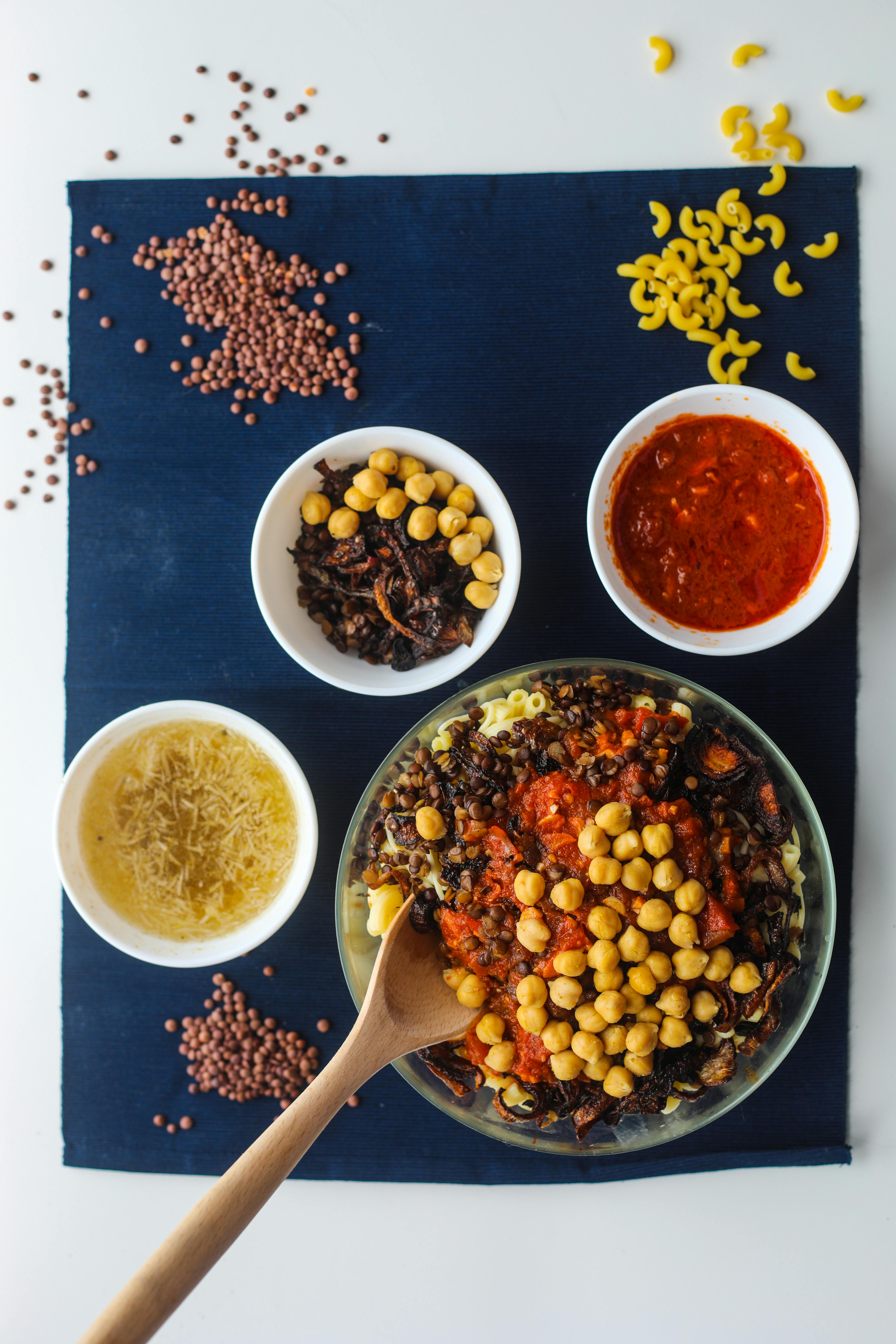
Photo: Omar Elsharawy / Pexels
The diets react (see scores below)
Common Ingredients
- rice
- lentils
- macaroni
- chickpeas
- tomato sauce
- fried onions
- garlic
- vinegar
- cumin
Specific recipes may vary.
Incompatible with 5 of 11 diets
Diet Ratings
Koshari is one of the most keto-incompatible dishes imaginable. It consists almost entirely of high-carbohydrate ingredients: rice, macaroni (pasta), lentils, and chickpeas — all of which are dense sources of net carbs. A standard serving easily contains 80-120g of net carbs, far exceeding the entire daily keto limit of 20-50g. There is no meaningful fat content and no animal protein. The tomato sauce and fried onions add marginal additional carbs. This dish fundamentally contradicts every macronutrient target of a ketogenic diet.
Koshari is a traditional Egyptian street food that is entirely plant-based by nature. Every ingredient listed — rice, lentils, macaroni, chickpeas, tomato sauce, fried onions, garlic, vinegar, and cumin — is derived from plants with no animal products involved. The dish is also nutritionally impressive for a vegan diet, combining complete protein sources through the complementary amino acid profiles of lentils, chickpeas, and grains. The fried onions are typically cooked in vegetable oil, though one should verify this in restaurant settings. As a whole-food-dominant dish with minimal processing, it scores highly even within whole-food plant-based standards.
Koshari is fundamentally incompatible with the Paleo diet. It is built almost entirely from foods that are explicitly excluded: rice (grain), macaroni (wheat-based grain), lentils (legume), and chickpeas (legume). These four ingredients form the core of the dish and cannot be omitted without destroying it entirely. There are no gray areas here — all four primary components are unanimously rejected by every mainstream paleo authority. The tomato sauce, garlic, cumin, and vinegar are paleo-compatible, but they are mere condiments in this dish. The fried onions may also involve seed oils, adding another potential violation. This dish represents the antithesis of Paleo eating — a high-carbohydrate, grain-and-legume-dominant meal.
Koshari is a plant-based, protein-rich Egyptian staple built on legumes (lentils, chickpeas), vegetables (tomato sauce, garlic, onions), and aromatic spices — all strongly aligned with Mediterranean diet principles. Lentils and chickpeas are exemplary Mediterranean foods eaten frequently. However, the dish combines two refined carbohydrate sources (white rice and macaroni), which diverge from the Mediterranean emphasis on whole grains. The fried onions also introduce cooking oil of unspecified type, ideally extra virgin olive oil. No red meat, added sugars, or heavily processed ingredients are present, making this a largely wholesome dish that falls short of a full 'approve' primarily due to the refined grain profile.
Some Mediterranean diet practitioners, particularly those drawing on North African and Levantine culinary traditions, would approve Koshari outright, noting that white rice appears in traditional Egyptian and eastern Mediterranean cuisines, and that the overall legume-dominant, plant-based composition far outweighs the refined grain concern. Modern clinical guidelines, however, consistently recommend swapping white rice for brown rice or whole grain pasta to maximize the dish's nutritional value.
Koshari is entirely plant-based and represents the antithesis of the carnivore diet. Every single ingredient — rice, lentils, macaroni, chickpeas, tomato sauce, fried onions, garlic, vinegar, and cumin — is plant-derived. There is not a single animal product in this dish. Lentils and chickpeas are legumes, which are among the most excluded foods on carnivore due to their antinutrients (lectins, phytates). Rice and macaroni are grains, universally rejected. The tomato sauce, onions, garlic, cumin, and vinegar are all plant-based. This dish scores the absolute minimum possible on the carnivore scale.
Koshari contains multiple Whole30-excluded ingredients simultaneously. Rice is a grain and explicitly excluded. Macaroni (pasta) is both a grain and falls under the 'no pasta or noodles' rule. Chickpeas are legumes and explicitly excluded. Lentils are also legumes and explicitly excluded. This dish is built entirely around four excluded food categories — there is no compliant version of Koshari possible without fundamentally changing the dish into something else entirely.
Koshari is a high-FODMAP dish with multiple significant FODMAP offenders. Chickpeas are high in GOS and are a major FODMAP source at any typical serving. Lentils (especially dried/brown) are high in GOS, though canned and rinsed lentils reduce this somewhat. Fried onions are extremely high in fructans and are a concentrated FODMAP bomb — frying does not reduce FODMAP content. Garlic is one of the highest fructan-containing foods and is clearly avoid-level. Macaroni is wheat-based, adding significant fructans. The combination of chickpeas + lentils + fried onions + garlic + wheat pasta makes this dish essentially impossible to render low-FODMAP without wholesale reconstruction. Rice is the only clearly low-FODMAP component. Even in small portions, the synergistic FODMAP load from multiple high-FODMAP ingredients would almost certainly trigger symptoms in FODMAP-sensitive individuals.
Koshari is a plant-based Egyptian dish built almost entirely from DASH-friendly ingredients: lentils, chickpeas, and tomato sauce provide excellent fiber, potassium, magnesium, and plant protein — all core DASH nutrients. Garlic, cumin, and vinegar are low-sodium flavor enhancers that align well with DASH's goal of reducing sodium while maintaining palatability. However, three factors push this into 'caution' territory. First, the dish combines three starchy carbohydrates (rice, macaroni, and lentils), making portion control essential to avoid excess caloric density and glycemic load. Second, fried onions introduce added oil and, depending on preparation, can contribute meaningful saturated fat if fried in tropical or animal-based oils. Third, commercially prepared tomato sauce and restaurant versions often carry moderate-to-high sodium (400–800mg per serving), which must be managed on DASH. A home-prepared version using low-sodium tomato sauce, minimal added oil for the onions, and controlled portions of the grain components would score closer to 8 and sit comfortably in the 'approve' range. As commonly consumed (restaurant or street-food context), the sodium and starch load warrants moderate caution.
NIH DASH guidelines do not explicitly address multi-grain dishes like Koshari, but its predominant legume and vegetable base aligns strongly with DASH principles; some DASH-oriented dietitians would approve it outright, noting that lentils and chickpeas are explicitly recommended DASH foods and the dish contains no saturated fat from meat or full-fat dairy. A more cautious clinical interpretation flags the compounded starch load and variable sodium from commercial tomato sauce as reasons to portion-control carefully.
Koshari is a carbohydrate-dominant dish that combines three starchy carb sources — rice, macaroni, and chickpeas — alongside lentils. While lentils and chickpeas provide some protein and are lower-glycemic carbs that Zone considers more favorable, the dish is overwhelmingly skewed toward carbohydrates with minimal lean protein and fat. The macronutrient ratio is far from the Zone's 40/30/30 target: carbs likely account for 70-80% of calories, protein around 15-20%, and fat is minimal (aside from the fried onions, which also add undesirable omega-6 oils). White rice and macaroni are high-glycemic 'unfavorable' carbs in Zone terminology. The tomato sauce, garlic, vinegar, and cumin are Zone-friendly flavor components. To fit this into a Zone meal, you would need to dramatically reduce portion size, eliminate or minimize the rice and pasta, and add a lean protein source (e.g., grilled chicken) alongside a monounsaturated fat. As typically served, Koshari is a poor Zone meal but can be a cautious carb block component in a heavily modified context.
Koshari is a plant-based Egyptian staple with a genuinely strong anti-inflammatory profile driven by its legume base. Lentils and chickpeas are rich in fiber, polyphenols, and plant protein, all associated with reduced inflammatory markers (CRP, IL-6). Garlic and cumin are well-established anti-inflammatory spices, and tomato sauce provides lycopene, a potent antioxidant carotenoid. Vinegar (likely red wine or white) has a neutral-to-mildly beneficial profile. The dish is entirely plant-based, low in saturated fat, and free of processed additives in its traditional form. The main caveat is the presence of both white rice and white macaroni — refined carbohydrates that can spike blood glucose and modestly promote inflammatory signaling, which tempers an otherwise strong score. Fried onions are a consideration depending on the frying oil used: if fried in vegetable/seed oils high in omega-6 (sunflower, corn), this introduces a mild pro-inflammatory element. If olive oil is used, the concern is negligible. The dish's overall legume and vegetable density outweigh the refined carb concern for most people, placing it solidly in the approve range at the lower end.
Some anti-inflammatory practitioners, particularly those following low-glycemic or lectin-avoidance protocols (e.g., Dr. Gundry's Plant Paradox framework), would flag the combination of refined white rice, macaroni, and lectin-containing legumes as problematic for individuals with gut sensitivity or autoimmune conditions. Additionally, the frying oil used for onions — commonly sunflower or corn oil in traditional Egyptian preparations — is a concern under strict anti-inflammatory frameworks that emphasize avoiding high-omega-6 seed oils.
Koshari is a nutritionally interesting dish for GLP-1 patients — it delivers meaningful plant-based protein and fiber from lentils and chickpeas, and is naturally low in saturated fat and easy to digest in moderate portions. However, it is a carbohydrate-dominant dish: rice, macaroni, and lentils together create a high-glycemic load that is not well-offset by the protein content. A standard serving provides roughly 13-18g of protein (primarily from lentils and chickpeas), falling short of the 15-30g per meal target without supplementation. The fried onions are a meaningful concern — fried components worsen GLP-1 GI side effects including nausea and bloating, and add saturated fat. The tomato sauce, vinegar, and cumin are generally well-tolerated. Fiber content is a genuine positive — lentils and chickpeas together contribute 8-12g of fiber per serving, supporting digestion and satiety. As a small-portion meal, it performs adequately, but the triple-carb base (rice + pasta + lentils) with relatively modest protein density makes it a caution rather than an approve. Recommended modification: increase lentil and chickpea proportion, reduce rice and macaroni, and replace fried onions with caramelized or roasted onions.
Some GLP-1-focused dietitians would rate traditional Koshari more favorably, emphasizing that its plant-based protein and fiber combination supports satiety and gut health in a way that refined carbs alone do not, and that the overall fat content remains low compared to most caution-tier foods. Others would push it toward avoid on injection days or during high-nausea periods specifically because the fried onion component and large carbohydrate volume can exacerbate delayed gastric emptying symptoms.
*See how scores were generated at our methodology page.
Nutritional profile
Six traits that cut across every diet.
Fiber & Plants
How much whole-plant food and fiber it delivers.
Healthy Fats
The quality of its fats (unsaturated, omega-3).
Whole / Unprocessed
How close it is to its natural, unprocessed form.
Gut Gentle
How easy it is on digestion (low FODMAP, few irritants).
Low Glycemic
How little it spikes your blood sugar.
Protein Density
How much protein it packs per calorie.
Controversy Index
Higher controversy = more disagreement between diets.
Diet-Specific Tips
 Vegan — 9/10
View tips
- All listed ingredients are 100% plant-based
- Lentils and chickpeas provide substantial plant protein
- Rice, lentils, and chickpeas together form a nutritionally complementary protein profile
- No animal-derived sauces, dairy, or eggs in the traditional recipe
- Fried onions should be verified as cooked in vegetable oil (not butter or ghee) in restaurant settings
- Whole-food dominant composition aligns with both vegan and whole-food plant-based dietary frameworks
 Mediterranean — 6/10
View tips
- High legume content (lentils + chickpeas) strongly aligns with Mediterranean diet staples
- Tomato sauce, garlic, vinegar, and cumin provide antioxidants and anti-inflammatory compounds
- White rice and refined macaroni are not whole grains, reducing the score
- Completely plant-based with no red meat, processed foods, or added sugars
- Fried onions ideally prepared in extra virgin olive oil for full Mediterranean compatibility
- Dish reflects North African Mediterranean culinary tradition with strong plant-forward identity
 DASH — 6/10
View tips
- Lentils and chickpeas are explicitly endorsed DASH protein/fiber sources high in potassium and magnesium
- Plant-based dish with no red meat, saturated animal fat, or full-fat dairy
- Three starchy carbohydrates (rice, macaroni, lentils) combined — portion control critical to avoid excess caloric and glycemic load
- Fried onions add oil; saturated fat impact depends on oil type used
- Tomato sauce sodium varies widely — commercial versions can contribute 400–800mg sodium per serving
- Home preparation with low-sodium tomato sauce and minimal oil elevates score significantly
- Garlic, cumin, and vinegar are DASH-friendly, sodium-free flavor enhancers
 Zone — 4/10
View tips
- Triple starchy carb load (rice, macaroni, chickpeas) creates a carb-heavy macronutrient imbalance far outside 40/30/30
- White rice and macaroni are high-glycemic 'unfavorable' carbs per Dr. Sears' Zone framework
- Lentils and chickpeas are more favorable carb sources due to fiber and lower glycemic impact, partially offsetting concerns
- No significant lean protein source — lentil protein is incomplete and modest per serving
- Fried onions add saturated/omega-6 fat rather than preferred monounsaturated fat
- Tomato sauce, garlic, vinegar, cumin are Zone-friendly polyphenol-rich condiments
- As a standalone meal, severely lacks the protein block (target ~25g) without supplementation
 Anti-Inflammatory — 7/10
View tips
- Lentils and chickpeas: high-fiber legumes rich in polyphenols and plant protein — strong anti-inflammatory base
- Garlic: allicin and organosulfur compounds with well-documented anti-inflammatory and immune-modulatory effects
- Cumin: contains apigenin and luteolin, anti-inflammatory flavonoids
- Tomato sauce: lycopene-rich, especially bioavailable in cooked form
- White rice and white macaroni: refined carbohydrates that raise glycemic load and can mildly promote inflammation — the primary limiting factor
- Fried onions: anti-inflammatory quercetin content, but frying oil type matters (seed oil = caution, olive oil = neutral/positive)
- Entirely plant-based, no red meat, no saturated fat, no added sugar or artificial additives
 GLP-1 Friendly — 5/10
View tips
- Triple carbohydrate base (rice, macaroni, lentils) creates high glycemic load with limited protein offset
- Lentils and chickpeas provide meaningful plant-based protein (~13-18g per serving) but fall short of the 15-30g per meal target
- High fiber content from lentils and chickpeas (8-12g per serving) is a significant positive
- Fried onions introduce saturated fat and a fried component that may worsen GLP-1 GI side effects
- Naturally low in saturated fat overall if fried onion portion is modest
- Easy to digest base ingredients; tomato sauce, vinegar, and cumin are generally well-tolerated
- Portion-sensitive: small servings are more GLP-1 appropriate than standard Egyptian serving sizes
- No animal protein — may need protein supplementation to meet daily targets