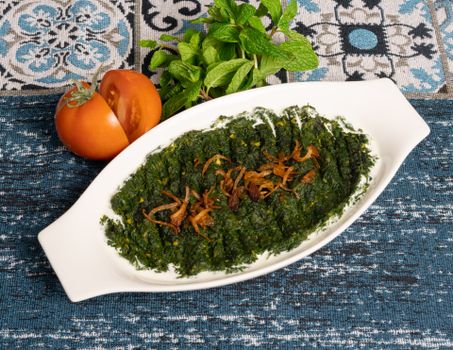
Photo: Shameel mukkath / Pexels
The diets react (see scores below)
Common Ingredients
- jute leaves
- garlic
- coriander
- chicken broth
- olive oil
- cumin
- lemon
Specific recipes may vary.
Incompatible with 3 of 11 diets
Diet Ratings
Molokhia (jute leaves) is a leafy green vegetable with moderate net carbs — approximately 7-9g net carbs per 100g of cooked leaves. A typical serving of this soup would contain roughly 1-2 cups of prepared molokhia, which could contribute 5-12g net carbs depending on portion size. The remaining ingredients (garlic, coriander, chicken broth, olive oil, cumin, lemon) are all keto-friendly in normal cooking quantities. The dish is naturally low in protein (no primary protein listed) and contains healthy fats from olive oil. The main concern is that jute leaves are notably higher in carbs than typical keto leafy greens like spinach or kale. Molokhia is traditionally served over rice or with bread, which must be avoided entirely. As a standalone soup in moderate portions (1 cup), it can fit within daily carb limits, but larger servings or multiple bowls could push someone over the 20-50g threshold.
Some strict keto practitioners argue that jute leaves' relatively high carb density compared to other leafy greens (spinach, arugula) makes molokhia an unnecessary carb expense and recommend substituting lower-carb greens. Conversely, lazy keto or liberal keto practitioners may freely approve it, noting the fiber content significantly offsets net carbs and the dish is nutrient-dense.
This version of Molokhia contains chicken broth, which is an animal-derived ingredient made by simmering chicken bones and/or meat. Despite the dish's otherwise plant-based components — jute leaves, garlic, coriander, olive oil, cumin, and lemon — the chicken broth is a clear disqualifier under vegan dietary rules. Molokhia can easily be made vegan by substituting vegetable broth, in which case it would score highly as a nutritious, whole-food plant-based soup.
Molokhia (jute leaves) is a leafy green vegetable with a long history of human consumption, fully compatible with paleo principles. All core ingredients — jute leaves, garlic, coriander, cumin, lemon, and olive oil — are whole, unprocessed foods available to hunter-gatherers. The chicken broth is paleo-approved, especially if made from whole chicken. The dish is essentially a nutrient-dense leafy green soup with herbs and healthy fat, which aligns well with paleo eating. The main caveat is the chicken broth: store-bought broth often contains added salt, natural flavors, or other additives that would make it non-compliant — homemade broth scores cleanly.
Some strict paleo adherents flag jute leaves (Corchorus species) as an unfamiliar or under-researched ingredient in Western paleo literature, and may caution against any store-bought chicken broth due to additives. Using homemade, unsalted broth resolves this concern entirely.
Molokhia is an excellent fit for Mediterranean diet principles. The dish centers on jute leaves, a highly nutritious leafy green vegetable rich in fiber, vitamins, and minerals — exactly the kind of plant-based food the Mediterranean diet prioritizes. Olive oil serves as the primary fat, aligning perfectly with core guidelines. Garlic, coriander, cumin, and lemon are classic Mediterranean flavor enhancers with known health benefits. The chicken broth introduces a small amount of poultry-derived ingredient, which is acceptable in moderate amounts under Mediterranean principles. The dish is whole-food, minimally processed, and plant-forward overall.
Some stricter Mediterranean diet frameworks focus primarily on the cuisines of Southern Europe (Greece, Italy, Spain) and may not explicitly recognize Egyptian culinary traditions. However, Eastern Mediterranean and North African cuisines are increasingly acknowledged by researchers like those behind the EAT-Lancet report as sharing the same dietary pattern, and Molokhia is botanically and nutritionally consistent with Mediterranean values.
Molokhia is a plant-based soup made almost entirely from jute leaves (a leafy green vegetable), garlic, coriander, cumin, lemon, and olive oil — all of which are strictly excluded on the carnivore diet. While chicken broth is present, it is a minor component in an otherwise entirely plant-derived dish. Every primary ingredient violates carnivore principles: jute leaves are a vegetable, garlic and coriander and cumin are plant-based aromatics/spices, lemon is a fruit, and olive oil is a plant oil. There is no meaningful animal protein source listed. This dish is fundamentally incompatible with carnivore eating.
Molokhia as described contains only Whole30-compliant ingredients. Jute leaves (molokhia greens) are vegetables, garlic and coriander are herbs/spices, chicken broth is allowed (assuming no non-compliant additives like sugar or off-limits ingredients in a homemade or clean store-bought version), olive oil is a natural fat, cumin is a spice, and lemon is a fruit. All components align squarely with Whole30's approved foods. The one practical caution is store-bought chicken broth, which should be label-checked for added sugar, MSG (now allowed), or other additives — but as described, this dish is fully compliant.
Molokhia contains two significant high-FODMAP ingredients that make it problematic during the elimination phase. First, garlic is one of the highest-FODMAP foods known, rich in fructans, and is typically used in meaningful quantities in molokhia — it is a defining flavoring of the dish. Second, jute leaves (Corchorus olitorius) have not been formally tested by Monash University, but they are a fiber-rich leafy green with potential oligosaccharide content; their FODMAP status is uncertain. The remaining ingredients — olive oil, cumin, lemon juice, and coriander — are generally low-FODMAP at standard culinary doses. Chicken broth is low-FODMAP if homemade or garlic/onion-free, but commercial broths often contain onion and garlic. The dish is essentially built around garlic as a core flavor component, meaning substituting garlic-infused oil would fundamentally alter the dish. As prepared traditionally, this dish should be avoided during elimination.
Monash University has not specifically tested jute leaves, so their FODMAP contribution remains uncertain — some practitioners may consider them acceptable in moderate portions as a leafy green. Additionally, if garlic were replaced with garlic-infused oil and a low-FODMAP broth were used, the dish could potentially be adapted to a low-FODMAP version, though this would deviate significantly from the traditional recipe.
Molokhia (jute leaves) is an excellent DASH-compatible dish. Jute leaves are exceptionally rich in potassium, calcium, magnesium, iron, and fiber — precisely the micronutrients DASH emphasizes. Olive oil aligns with DASH's preference for unsaturated vegetable oils. Garlic, coriander, cumin, and lemon provide flavor without added sodium. The main variable is the chicken broth: if made from standard commercial broth, sodium can be significant (700-900mg per cup), which tempers the score. Using homemade or low-sodium broth keeps this dish squarely in the 'approve' range. The dish contains no saturated fat, no added sugar, no red meat, and no processed ingredients — ticking nearly every DASH box.
NIH DASH guidelines do not specifically reference jute leaves or molokhia, so this verdict relies on nutrient-profile alignment rather than explicit inclusion. Some DASH clinicians may flag the dish's sodium content if prepared with standard commercial chicken broth, recommending low-sodium broth to keep the dish fully compliant; using low-sodium broth would raise the score to 9.
Molokhia (jute leaf soup) is an excellent Zone-friendly dish in its base form. Jute leaves are a nutrient-dense, low-glycemic leafy green vegetable — exactly the type of colorful vegetable Dr. Sears promotes heavily. They are rich in polyphenols, fiber, and micronutrients, with a very low net carbohydrate load per serving. The olive oil provides ideal monounsaturated fat (a Zone-favorable fat block). Garlic, coriander, cumin, and lemon are anti-inflammatory flavor agents that align with Sears' emphasis on polyphenol-rich foods. Chicken broth adds minimal macronutrients but contributes savory depth. The main Zone limitation is that this dish as described has no primary protein source, making it an incomplete Zone meal on its own — it would need lean protein added (such as the chicken it is traditionally served with) to achieve the 40/30/30 ratio. As a side dish or soup component paired with lean protein, it scores very well. The olive oil portion should be kept to about 1 teaspoon (one Zone fat block) to maintain ratio balance.
Some Zone practitioners might rate this slightly lower due to the absence of protein, which technically makes it an incomplete Zone meal. However, as a vegetable-forward soup component — a role the Zone actively encourages — it is highly favorable. The confidence is medium rather than high because jute leaves are not specifically catalogued in Sears' published food block lists, requiring inference from their macro profile as a leafy green vegetable.
Molokhia is a strongly anti-inflammatory dish by nearly every measure. Jute leaves (Corchorus olitorius) are the star ingredient — they are exceptionally nutrient-dense, rich in vitamins A, C, E, and K, along with iron, calcium, and dietary fiber. Their high antioxidant and polyphenol content supports anti-inflammatory pathways, and preliminary research suggests jute leaf extracts have direct anti-inflammatory and antioxidant effects. Garlic is a well-established anti-inflammatory food, containing allicin and organosulfur compounds that reduce inflammatory cytokines including IL-6 and TNF-α. Coriander (likely used here as the spice/seed) contains linalool and quercetin with documented anti-inflammatory activity. Cumin is rich in cuminaldehyde and flavonoids, contributing antioxidant and anti-inflammatory properties. Olive oil, even used in modest amounts for cooking, provides oleocanthal and oleic acid, both of which reduce inflammatory markers. Lemon juice contributes vitamin C and citrus flavonoids, supporting immune function and reducing oxidative stress. Chicken broth is neutral to mildly beneficial in this context. The dish is whole-food based, plant-forward, uses anti-inflammatory spices, and contains no refined carbohydrates, seed oils, processed ingredients, or added sugars. It aligns closely with Dr. Weil's anti-inflammatory pyramid principles emphasizing colorful vegetables, herbs, spices, and olive oil.
Molokhia is a nutrient-dense leafy green soup with meaningful advantages for GLP-1 patients: jute leaves are rich in fiber, iron, calcium, and antioxidants, and the dish is inherently low in calories and easy to digest in its traditional broth form. The high water content supports hydration, which is critical given GLP-1s reduce thirst sensation. Garlic and lemon add micronutrients without significant drawbacks. Olive oil is a preferred unsaturated fat and is used in modest quantities. However, the dish as described has no meaningful primary protein source — chicken broth contributes only trace protein — which is its most significant limitation for GLP-1 patients where protein preservation is the top dietary priority. Scoring it as an approve would misrepresent its standalone nutritional profile for this population. It earns a caution because it is an excellent supportive dish but should be paired with a substantial protein source (e.g., chicken breast, a boiled egg, lentils) to meet the 15–30g per meal protein target. Portion sensitivity is low — this dish works well in small servings, which suits GLP-1 reduced appetite. Spice profile is mild and GI-friendly.
Some GLP-1-focused dietitians may rate molokhia more favorably when it is served in its most common Egyptian presentation — over chicken or with chicken pieces incorporated — in which case protein concerns largely disappear. The disagreement centers on whether to evaluate the dish as traditionally served (with protein) versus as ingredient-listed here (broth only), and individual tolerance to the mucilaginous texture of jute leaves, which a minority of GLP-1 patients with heightened nausea may find difficult.
*See how scores were generated at our methodology page.
Nutritional profile
Six traits that cut across every diet.
Fiber & Plants
How much whole-plant food and fiber it delivers.
Healthy Fats
The quality of its fats (unsaturated, omega-3).
Whole / Unprocessed
How close it is to its natural, unprocessed form.
Gut Gentle
How easy it is on digestion (low FODMAP, few irritants).
Low Glycemic
How little it spikes your blood sugar.
Protein Density
How much protein it packs per calorie.
Controversy Index
Higher controversy = more disagreement between diets.
Diet-Specific Tips
 Keto — 5/10
View tips
- Jute leaves contain ~7-9g net carbs per 100g cooked — higher than most keto-approved leafy greens
- Portion control is critical — 1 cup serving is manageable, but multiple servings risk exceeding daily carb limits
- All other ingredients (olive oil, garlic, chicken broth, cumin, lemon) are keto-friendly
- Must be eaten without rice or bread accompaniments traditionally served with the dish
- No added sugars or grains in this recipe as listed
- Olive oil provides healthy keto-approved fats
- Rich in fiber which reduces net carb impact somewhat
 Paleo — 8/10
View tips
- Jute leaves are a whole leafy green vegetable — paleo approved
- Olive oil is a preferred paleo fat
- Garlic, coriander, cumin, and lemon are all paleo-compliant herbs and aromatics
- Chicken broth quality matters: homemade is cleanly paleo; store-bought may contain salt or additives
- No grains, legumes, dairy, or seed oils present
- Dish is naturally low-carb and nutrient-dense
 Mediterranean — 9/10
View tips
- Jute leaves are a nutrient-dense leafy green, a Mediterranean diet staple category
- Olive oil used as primary fat — core Mediterranean principle
- Garlic, lemon, coriander, cumin are health-promoting aromatics with no dietary concerns
- Chicken broth is a minor, acceptable animal-derived component
- No processed ingredients, refined grains, added sugars, or red meat
- Egyptian cuisine is part of the broader Eastern Mediterranean food tradition
 Whole30 — 9/10
View tips
- Jute leaves are a compliant vegetable
- Garlic, cumin, and coriander are compliant spices/herbs
- Olive oil is an approved natural fat
- Lemon is a compliant fruit
- Chicken broth should be verified compliant (no added sugar or excluded ingredients) if store-bought
- No grains, legumes, dairy, or excluded ingredients present
 DASH — 8/10
View tips
- Jute leaves are exceptionally high in potassium, calcium, magnesium, and fiber — core DASH micronutrients
- Olive oil is the fat source — heart-healthy unsaturated fat aligned with DASH
- Sodium content depends heavily on broth type: standard commercial broth may add 700-900mg sodium per serving, low-sodium broth keeps it DASH-compliant
- No saturated fat, no added sugar, no red meat, no processed ingredients
- Garlic, lemon, and spices provide flavor without sodium
- Low-sodium or homemade broth version scores 9/10; standard broth version scores 7/10
 Zone — 8/10
View tips
- Jute leaves are low-glycemic, fiber-rich leafy greens — ideal Zone carbohydrate source
- Olive oil provides Zone-favorable monounsaturated fat
- Rich in polyphenols and anti-inflammatory compounds (garlic, cumin, coriander, lemon)
- No primary protein — must be paired with lean protein to form a complete Zone meal
- Chicken broth adds negligible macronutrients; if made with actual chicken pieces, protein balance improves significantly
- Low net carbohydrate density makes this easy to balance within Zone blocks
- Aligns with Sears' anti-inflammatory dietary principles
 Anti-Inflammatory — 8/10
View tips
- Jute leaves are rich in vitamins A, C, E, K, antioxidants, and fiber with anti-inflammatory properties
- Garlic contains allicin and organosulfur compounds that reduce IL-6, TNF-α, and other inflammatory cytokines
- Olive oil provides oleocanthal, a natural COX inhibitor with ibuprofen-like anti-inflammatory effects
- Coriander and cumin contribute polyphenols and flavonoids with antioxidant and anti-inflammatory activity
- Lemon juice adds vitamin C and citrus flavonoids supporting oxidative stress reduction
- No refined carbohydrates, added sugars, seed oils, trans fats, or processed additives
- Whole-food, plant-forward dish consistent with anti-inflammatory dietary principles
 GLP-1 Friendly — 6/10
View tips
- No primary protein source as listed — significant gap for GLP-1 protein targets
- High fiber from jute leaves supports digestion and constipation prevention
- High water content aids hydration
- Olive oil is a preferred unsaturated fat used in moderate quantity
- Low calorie density — nutrient-dense per calorie
- Mild spice profile is GLP-1 GI-friendly
- Easy to digest — well-suited to slowed gastric emptying
- Works well in small portions
- Should be paired with a protein source to be a complete GLP-1-friendly meal