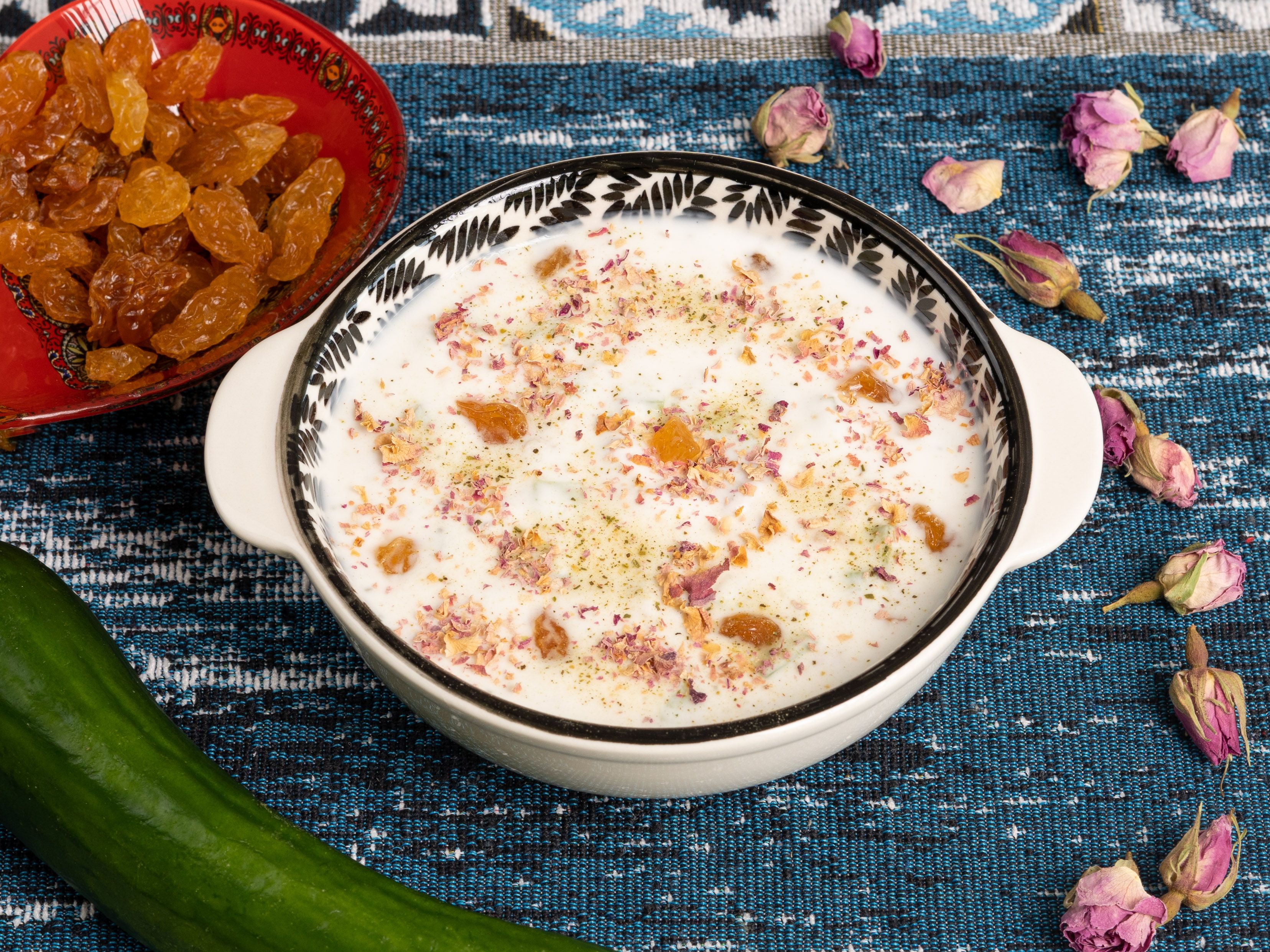
Photo: Shameel mukkath / Pexels
Egyptian
Roz Bel Laban
The diets react (see scores below)
Common Ingredients
- rice
- milk
- sugar
- cornstarch
- vanilla
- cinnamon
Specific recipes may vary.
Incompatible with 9 of 11 diets
Diet Ratings
Roz Bel Laban is an Egyptian rice pudding that is fundamentally incompatible with a ketogenic diet. Rice is a high-glycemic grain that alone can contain 40-50g of net carbs per serving, which exceeds the entire daily keto carb limit. Added sugar compounds the problem significantly. Cornstarch is another high-carb thickener with zero fiber to offset net carbs. Milk adds lactose (milk sugar). There is virtually nothing in this dish that supports ketosis — it is high in carbohydrates, moderate in protein, and low in fat, the exact inverse of keto macros.
Roz Bel Laban is an Egyptian rice pudding whose defining ingredient is dairy milk, which is an animal product and unambiguously excluded from a vegan diet. All other ingredients — rice, sugar, cornstarch, vanilla, and cinnamon — are plant-based, but the dish as traditionally prepared cannot be considered vegan due to the milk. A vegan version is achievable by substituting plant-based milk (oat, almond, coconut, or rice milk), which would transform this into a fully vegan-friendly dessert.
Roz Bel Laban (Egyptian rice pudding) is fundamentally incompatible with the paleo diet. It contains multiple non-paleo ingredients: rice is a grain and excluded by virtually all paleo frameworks; milk is dairy and excluded; sugar is a refined sweetener and excluded; and cornstarch is a processed grain derivative also excluded. Vanilla and cinnamon are the only paleo-compliant ingredients in this dish. With four out of six ingredients being clear paleo violations, this dish scores at the very bottom of the scale.
Roz Bel Laban is an Egyptian rice pudding made with white rice, milk, and added sugar — a combination that presents multiple concerns for the Mediterranean diet. White rice is a refined grain lacking the fiber and nutrients of whole grains, added sugar directly contradicts Mediterranean principles of minimal added sugars, and the dish lacks any olive oil, vegetables, legumes, or other core Mediterranean staples. While milk provides some nutritional value, the overall profile is that of a sweet dessert high in refined carbohydrates and added sugars with little redeeming Mediterranean value.
Some traditional Mediterranean and Middle Eastern culinary traditions do include rice pudding as an occasional treat, and dairy (milk) is an accepted moderate component of the diet. A small portion could be considered an occasional indulgence rather than a regular dietary staple, and some practitioners would allow such traditional sweets in strict moderation rather than categorically avoiding them.
Roz Bel Laban is an Egyptian rice pudding made almost entirely of plant-based and processed ingredients. Rice is a grain — completely excluded on carnivore. Sugar is a processed sweetener with no place on any tier of carnivore. Cornstarch is a plant-derived thickener. Vanilla and cinnamon are plant-derived spices/flavorings. The only potentially acceptable ingredient is milk, which is itself debated on carnivore but at least animal-derived. However, with six ingredients and five of them being firmly off-limits, this dish is fundamentally incompatible with the carnivore diet at every tier, including the most lenient 'animal-based' approaches.
Roz Bel Laban (Egyptian rice pudding) contains multiple excluded ingredients. Rice is a grain and is explicitly excluded on Whole30. Milk is dairy and is excluded (only ghee/clarified butter are dairy exceptions). Sugar is an added sweetener and is explicitly excluded. Cornstarch is also explicitly listed as an excluded ingredient. With four distinct Whole30-prohibited ingredients, this dish is firmly off-limits.
Roz Bel Laban (Egyptian rice pudding) contains cow's milk as a primary ingredient, which is high in lactose — a key FODMAP disaccharide. A standard serving of rice pudding would require a substantial amount of milk, pushing lactose levels well above the Monash threshold (approximately 1/2 cup or 125ml of regular milk is the limit for low-FODMAP). Rice itself is low-FODMAP, cornstarch is low-FODMAP, sugar (sucrose) is low-FODMAP in normal amounts, vanilla extract is low-FODMAP, and cinnamon at typical culinary doses is low-FODMAP. The dish is therefore not safe during elimination phase as traditionally prepared with regular cow's milk. A lactose-free milk substitution (lactose-free dairy milk, or an appropriate plant-based milk like rice milk or oat milk in low-FODMAP portions) would make this dish safe.
Monash University clearly rates regular cow's milk as high-FODMAP above 1/2 cup; a full serving of rice pudding almost certainly exceeds this threshold. Some practitioners may suggest lactose-free milk as a straightforward swap to make this dish elimination-compliant, but the dish as traditionally prepared with regular milk cannot be considered low-FODMAP at a standard portion.
Roz Bel Laban (Egyptian rice pudding) is made with white rice, milk, sugar, cornstarch, vanilla, and cinnamon. It is low in sodium and contains no saturated fat from tropical oils or red meat, which are positives for DASH. The milk provides calcium and some potassium, aligning with DASH's low-fat dairy emphasis — though the fat content depends on whether whole or low-fat milk is used. The primary concerns are the added sugar and white rice: DASH limits sweets and added sugars, and white rice is a refined grain rather than the whole grain DASH emphasizes. As a dessert or snack with meaningful sugar content, it sits in 'caution' territory — acceptable occasionally in small portions but not a DASH staple. Using low-fat milk improves its profile, but the added sugar remains a limiting factor.
NIH DASH guidelines explicitly limit added sugars and sweets, which this dish contains, and favor whole grains over refined white rice. However, some updated DASH-aligned clinical interpretations note that moderate portions of lightly sweetened rice pudding made with low-fat milk can fit within a balanced DASH meal plan, particularly given its low sodium, modest caloric density, and calcium contribution — provided sugar is kept minimal and portion size is controlled.
Roz Bel Laban (Egyptian rice pudding) is a high-glycemic, carbohydrate-dominant dessert with no meaningful protein or favorable fat contribution. The primary ingredients — white rice and sugar — are both explicitly unfavorable in Zone methodology. White rice is a high-glycemic refined grain that causes rapid insulin spikes, and added sugar is one of the few ingredients Dr. Sears categorically discourages. Cornstarch adds additional high-glycemic starch load. The milk provides minimal protein (and some saturated fat), but not nearly enough to bring the dish into Zone ratio balance. As a snack, this dish would deliver an overwhelming carbohydrate surge with virtually no protein or monounsaturated fat to modulate the insulin response. Even with aggressive portion control, the 40/30/30 ratio cannot be approximated without adding substantial external protein and fat — effectively building a different meal around a tiny portion of this dish. The dish lacks any favorable Zone carbohydrate sources (low-GI vegetables, favorable fruits) and contains two of the most problematic carbohydrate sources in Zone terminology. Vanilla and cinnamon are negligible in macro terms (though cinnamon does have mild insulin-sensitizing properties, insufficient to redeem the dish).
Roz Bel Laban is an Egyptian rice pudding made with white rice, milk, sugar, cornstarch, vanilla, and cinnamon. The dish has a mixed anti-inflammatory profile. On the positive side, cinnamon is a well-documented anti-inflammatory spice with research showing it can reduce inflammatory markers, and vanilla contains small amounts of polyphenols. Milk provides some protein and micronutrients, though full-fat dairy is only moderate on anti-inflammatory frameworks. The significant concerns are the refined white rice (high glycemic index, minimal fiber) and added sugar — both of which can spike blood glucose and promote inflammatory signaling (including elevated IL-6 and CRP) when consumed regularly. Cornstarch adds further refined starch with no nutritional benefit. The dish is essentially a dessert/snack built around two ingredients anti-inflammatory frameworks specifically caution against: refined carbohydrates and added sugar. As an occasional treat, the harm is limited, but the structural composition is not anti-inflammatory. Cinnamon is not present in sufficient culinary quantities to offset the glycemic load of the dish as a whole.
Roz Bel Laban (Egyptian rice pudding) is a poor fit for GLP-1 patients. It is essentially a dessert composed of refined white rice, sugar, and whole milk — offering minimal protein, negligible fiber, and a high glycemic load. With limited caloric real estate on GLP-1 medications, this dish delivers almost entirely empty or low-nutrient calories. The added sugar directly conflicts with the guidance to avoid high-sugar foods, and the refined rice provides rapidly digested starch with no meaningful fiber to slow glucose absorption or support satiety. The cornstarch thickener adds further refined carbohydrate. Milk provides a small amount of protein, but in the quantities used in rice pudding it is insufficient to meaningfully contribute to the 100–120g daily protein target. As a snack category item, it fails doubly — snacks on GLP-1 protocols should prioritize protein and fiber density given the reduced overall intake window.
*See how scores were generated at our methodology page.
Nutritional profile
Six traits that cut across every diet.
Fiber & Plants
How much whole-plant food and fiber it delivers.
Healthy Fats
The quality of its fats (unsaturated, omega-3).
Whole / Unprocessed
How close it is to its natural, unprocessed form.
Gut Gentle
How easy it is on digestion (low FODMAP, few irritants).
Low Glycemic
How little it spikes your blood sugar.
Protein Density
How much protein it packs per calorie.
Controversy Index
Higher controversy = more disagreement between diets.
Diet-Specific Tips
 DASH — 5/10
View tips
- Contains added sugar, which DASH limits
- Made with white rice (refined grain) rather than whole grain
- Milk provides calcium and potassium, supporting DASH goals
- Very low sodium — no salt typically added
- Fat content depends on milk type: low-fat milk is preferred under DASH
- No red meat, saturated fat from tropical oils, or high-sodium ingredients
- Appropriate only in small portions as an occasional treat under DASH
 Anti-Inflammatory — 4/10
View tips
- Added sugar is a primary ingredient — directly pro-inflammatory in research linking sugar to elevated CRP and IL-6
- White rice is a refined carbohydrate with high glycemic index and minimal fiber
- Cornstarch adds further refined starch with no anti-inflammatory benefit
- Cinnamon is a genuine anti-inflammatory spice but present in small culinary quantities insufficient to offset the dish's overall profile
- Milk is acceptable in moderation per anti-inflammatory guidelines but does not contribute meaningfully to anti-inflammatory benefit here
- No omega-3s, antioxidant-rich vegetables, or other anti-inflammatory anchors are present