Austrian
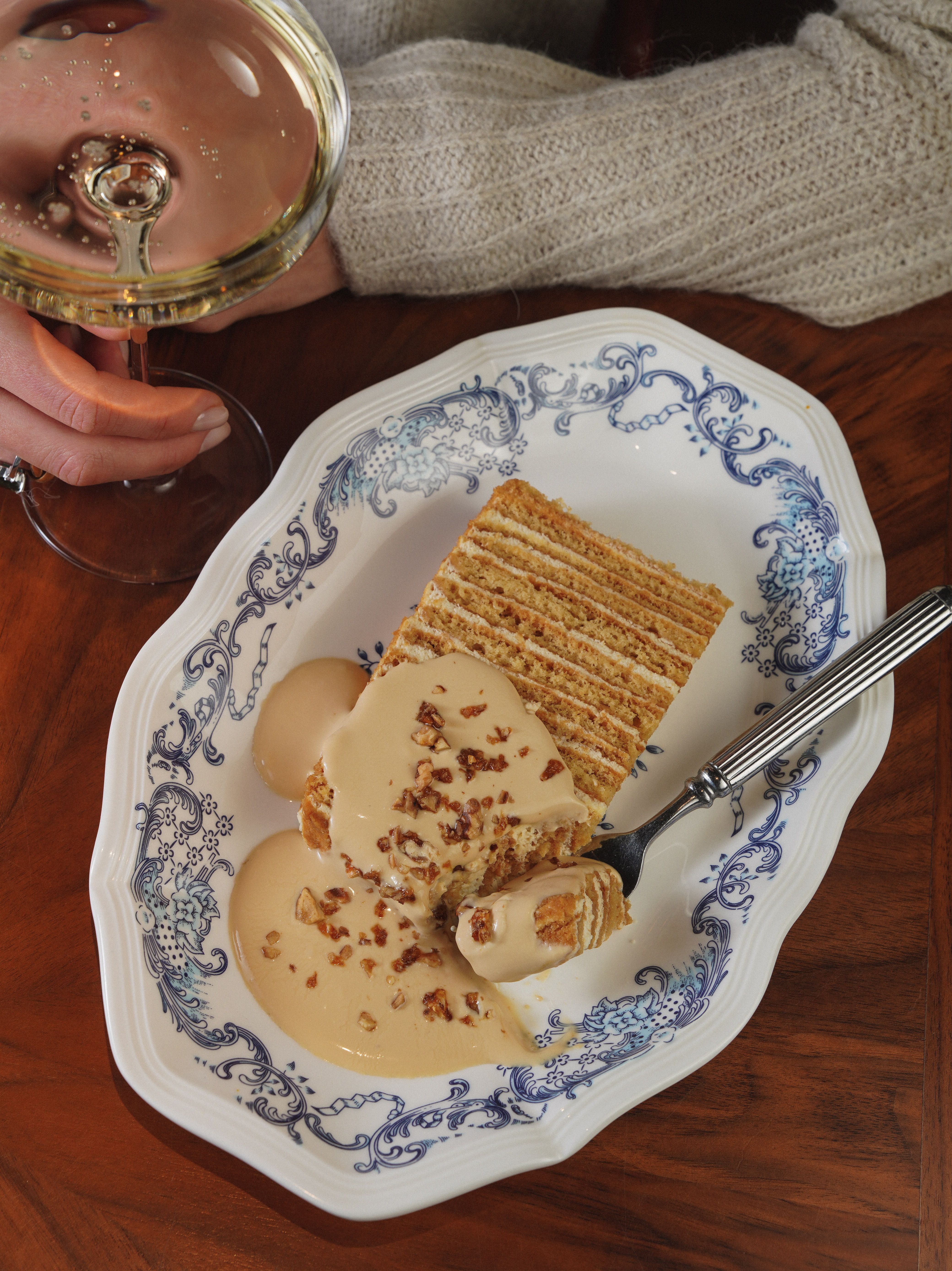
Esterhazy Torte
The diets react (see scores below)
Common Ingredients
- almonds
- butter
- sugar
- eggs
- flour
- apricot jam
- fondant
- chocolate
- vanilla
Specific recipes may vary.
Incompatible with 11 of 11 diets
Diet Ratings
Esterhazy Torte is a classic Austrian layered cake that is fundamentally incompatible with a ketogenic diet. It contains multiple high-carb ingredients: flour (pure starch), sugar (primary sweetener throughout), apricot jam (high-sugar fruit preserve), and fondant (essentially pure sugar). These ingredients form the structural and flavor foundation of the dish and cannot be considered minor or portion-controllable additions. A single slice would easily contain 50-80g of net carbs, exceeding or meeting the entire daily keto limit in one serving. While almonds and butter are keto-friendly components, they are completely overshadowed by the carbohydrate load from the other ingredients.
Esterhazy Torte contains multiple animal-derived ingredients that categorically disqualify it from vegan compliance. Eggs and butter are core structural components of this classic Austrian layer cake — eggs provide the meringue-like nut layers and the buttercream, while butter forms the rich filling. These are unambiguous animal products with no vegan debate. The dish is fundamentally incompatible with a vegan diet as formulated. A vegan adaptation would require replacing eggs (e.g., aquafaba or flax eggs) and butter (e.g., vegan margarine or coconut oil), which would constitute an entirely different recipe.
Esterhazy Torte is a classic Austrian layered cake that is fundamentally incompatible with the Paleo diet. Multiple core ingredients are explicitly excluded: flour (a grain product), sugar (refined sugar), butter (dairy), and fondant (a heavily processed refined sugar product). Apricot jam in commercial form typically contains added refined sugar. The combination of these non-Paleo ingredients makes this one of the clearest possible avoid verdicts — this dish is essentially a showcase of processed, grain-based, dairy, and refined-sugar ingredients that Paleolithic humans would have had no access to.
Esterhazy Torte is a classic Austrian layered confection built around butter, sugar, fondant, apricot jam, and chocolate — all either added sugars, refined ingredients, or saturated fats. While almonds and eggs have some place in Mediterranean eating, they are overwhelmed here by large quantities of sugar, butter, and refined flour. The dish is a highly processed, high-sugar, high-saturated-fat dessert that fundamentally contradicts Mediterranean diet principles, which minimize sweets and added sugars to only occasional indulgences. As a snack — implying more frequent consumption — this is especially incompatible.
Esterhazy Torte is a classic Austrian confection that is almost entirely plant-based and heavily processed, with no animal protein as the primary component. The ingredient list is dominated by carnivore-incompatible foods: almonds (nuts, plant-derived), flour (grain, plant-derived), sugar (processed, plant-derived), apricot jam (fruit preserve, plant-derived), fondant (sugar-based, plant-derived), vanilla (plant-derived spice), and chocolate (plant-derived). While butter and eggs are animal products and would individually be acceptable to most carnivore practitioners, they serve here merely as binders and enrichers in an otherwise plant-heavy baked good. The overall dish is a dessert cake with no meaningful animal-based nutrition profile and is laden with sugar and carbohydrates. There is unanimous consensus across all carnivore camps — from the strictest Lion Diet to the more permissive animal-based approach — that baked goods, pastries, nuts, grains, fruit jams, and sugar are excluded.
Esterhazy Torte is a classic Austrian layered cake that violates Whole30 on multiple fronts. It contains flour (a grain, excluded), butter (dairy, excluded — only ghee/clarified butter is allowed), sugar (added sugar, excluded), and fondant (pure sugar/confectioner's sugar, excluded). Additionally, as a torte, it is explicitly the type of baked good/dessert that Whole30 Rule 4 prohibits even when made with otherwise compliant ingredients. There is no compliant version of this dish possible within the Whole30 framework.
Esterhazy Torte is a classic Austrian layered cake that contains several high-FODMAP ingredients. The most problematic is wheat flour, which is high in fructans and must be avoided during the elimination phase. Apricot jam is another significant concern — apricots are stone fruits high in polyols (sorbitol), and jam concentrates these sugars further, making it high-FODMAP at any realistic serving. Fondant typically contains large amounts of sugar and may include glucose syrup or other additives, but sugar itself (sucrose) is generally low-FODMAP in small amounts. Almonds are low-FODMAP at 10 nuts (approximately 12g) but become high-FODMAP at larger quantities; in a torte, almond content per slice could easily exceed this threshold. Butter, eggs, chocolate (dark, in small amounts), and vanilla are generally low-FODMAP. However, the combination of wheat flour and apricot jam alone makes this dessert clearly high-FODMAP at any standard serving size. Even if flour were substituted with a gluten-free alternative, the apricot jam component would remain problematic.
Monash University rates apricot jam as high-FODMAP due to polyol content, and wheat flour is clearly high in fructans; however, some clinical FODMAP practitioners note that small tastes of celebratory desserts may be tolerated depending on individual thresholds established during reintroduction — this would only apply post-elimination phase personalization, not during strict elimination.
Esterhazy Torte is a classic Austrian layered cake that is fundamentally incompatible with DASH diet principles. It is a high-sugar, high-saturated-fat confection featuring butter, fondant (pure sugar), apricot jam (added sugar), chocolate, and eggs in a torte format. The dish is calorie-dense and loaded with added sugars and saturated fat from butter and chocolate — all categories explicitly limited by NIH/NHLBI DASH guidelines. While almonds are a DASH-approved ingredient and eggs are acceptable in moderation, they are minor components in the context of this heavily sweetened, butter-rich dessert. Sweets and foods high in added sugar are the most restricted category in DASH, with the plan recommending no more than 5 servings per week of sweets, and even then, low-fat varieties are preferred. This torte far exceeds those limits in a single serving. The fondant icing and sugar-heavy layers make this a quintessential 'avoid' under DASH guidelines.
Esterhazy Torte is a classic Austrian layered cake built almost entirely on Zone-unfavorable ingredients. Its macronutrient profile is the antithesis of the 40/30/30 Zone target: it is dominated by high-glycemic refined sugar, apricot jam, fondant, and flour (all fast-releasing carbohydrates), saturated fat from butter, and very little lean protein. The eggs and almonds offer modest redeeming nutritional value — almonds provide monounsaturated fats and some protein, and eggs are a reasonable protein source — but they are swamped by sugar, butter, and refined flour in proportions that make Zone balancing essentially impossible. There is no lean protein component, the fat profile is saturated-fat-heavy (butter), and the carbohydrate load is almost entirely high-glycemic. Even a small portion would require an enormous amount of lean protein and low-GI vegetables alongside it to approach Zone ratios, making it functionally incompatible as a snack or meal component. This is a confectionery dessert, not a Zone-friendly food.
Esterhazy Torte is a classic Austrian confection built almost entirely around ingredients that rank poorly on anti-inflammatory scales. Butter and eggs contribute saturated fat and arachidonic acid. Refined sugar and white flour are the dominant structural elements, delivering a high glycemic load that drives spikes in blood glucose and promotes production of inflammatory cytokines (IL-6, TNF-α). Fondant is essentially pure refined sugar with additives. Apricot jam adds additional concentrated sugar. While almonds carry genuine anti-inflammatory value (vitamin E, monounsaturated fats, magnesium) and dark chocolate offers polyphenols, both appear in quantities far too small relative to the sugar, butter, and refined flour to meaningfully offset the pro-inflammatory profile. The overall dish is a high-sugar, high-saturated-fat, refined-carbohydrate dessert with negligible fiber and no omega-3 content. It is not categorically 'processed' in the industrial sense, but its ingredient composition is deeply misaligned with anti-inflammatory principles.
Esterhazy Torte is a classic Austrian layered confection built almost entirely from ingredients that conflict with every core GLP-1 dietary priority. It is high in sugar (sugar, apricot jam, fondant), high in saturated fat (butter, almonds, egg yolks), low in protein, negligible in fiber, and calorie-dense per small serving. The fondant and jam layers add concentrated simple sugars that spike blood glucose and provide zero nutritional value. Butter and the volume of almonds used in the dacquoise layers drive saturated and total fat content high, worsening the nausea, bloating, and reflux that GLP-1 medications already predispose patients to. The chocolate component adds further sugar and fat. There is no redeeming protein density — eggs and almonds contribute modest protein but it is far outweighed by the sugar and fat load in the context of a dessert torte. Even a single small slice represents a high-sugar, high-fat, low-nutrient serving that is exactly the food category GLP-1 patients are advised to avoid. Category snack makes this worse, as a snack slot on a GLP-1 diet should be delivering protein and fiber, not empty calories.
*See how scores were generated at our methodology page.
Nutritional profile
Six traits that cut across every diet.
Fiber & Plants
How much whole-plant food and fiber it delivers.
Healthy Fats
The quality of its fats (unsaturated, omega-3).
Whole / Unprocessed
How close it is to its natural, unprocessed form.
Gut Gentle
How easy it is on digestion (low FODMAP, few irritants).
Low Glycemic
How little it spikes your blood sugar.
Protein Density
How much protein it packs per calorie.
Controversy Index
Higher controversy = more disagreement between diets.