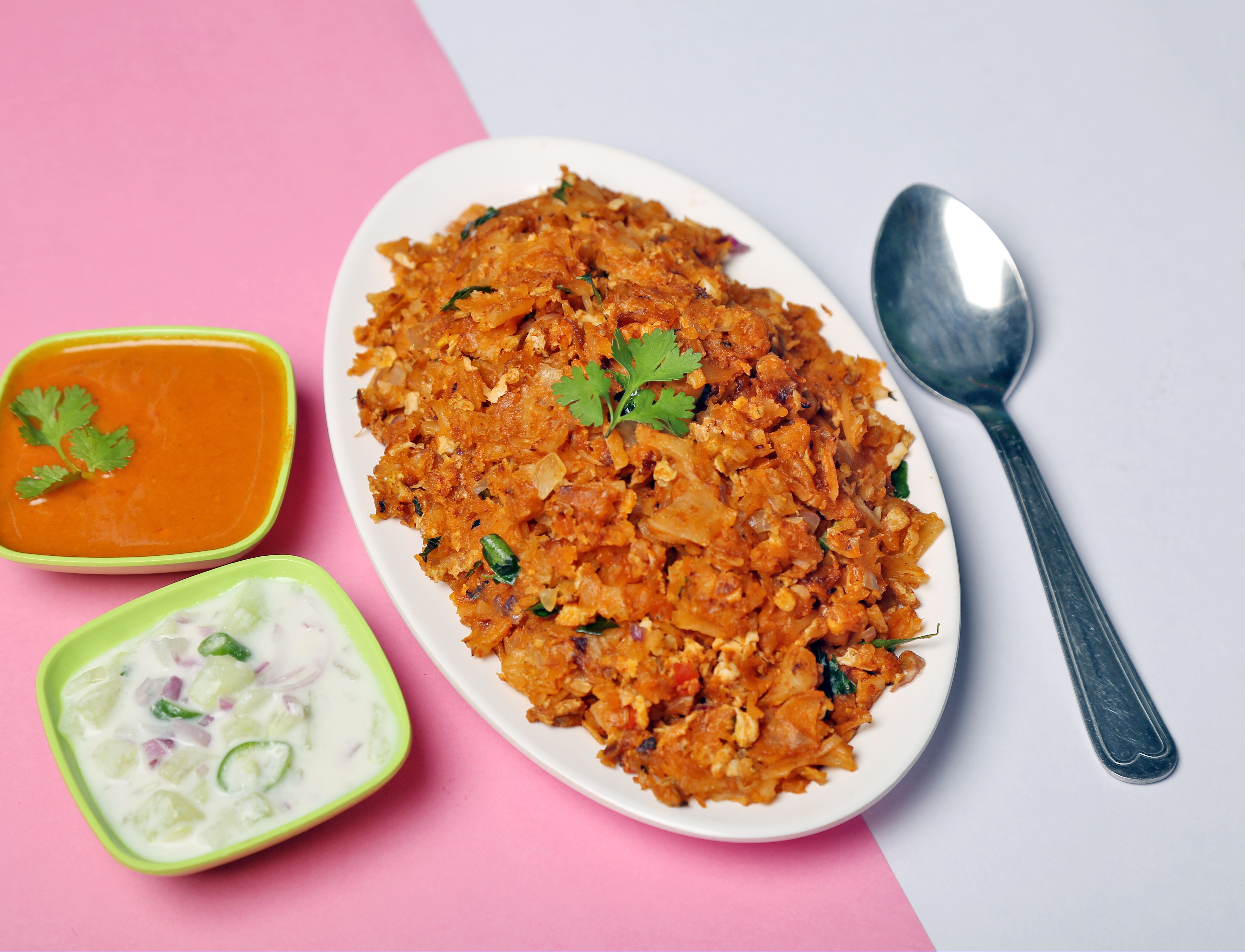
Photo: Milton Das / Pexels
Estonian
Mulgikapsad
The diets react (see scores below)
Common Ingredients
- pork
- sauerkraut
- barley
- onion
- caraway seeds
- sugar
- salt
- pepper
Specific recipes may vary.
Incompatible with 8 of 11 diets
Diet Ratings
Mulgikapsad is a traditional Estonian dish that combines pork and sauerkraut with barley — and barley is the critical disqualifier here. Barley is a whole grain with roughly 28g of net carbs per half-cup cooked serving, which alone can exceed a strict keto daily carb limit. The dish also contains added sugar, compounding the carb load. While the pork and sauerkraut components are keto-friendly (sauerkraut is low net-carb and probiotic-rich), the barley makes the dish fundamentally incompatible with ketosis in its traditional form. The combination of a high-carb grain, added sugar, and the typical serving size of this hearty stew places it firmly in the avoid category.
Mulgikapsad is a traditional Estonian braised dish whose primary ingredient is pork, a clear animal product. The dish is fundamentally defined by its pork content — typically pork ribs or shoulder — combined with sauerkraut and barley. There is no ambiguity here: pork is explicitly listed as the primary protein and is central to the dish's identity. All remaining ingredients (sauerkraut, barley, onion, caraway seeds, sugar, salt, pepper) are plant-based, but the presence of pork makes the dish entirely incompatible with a vegan diet.
Mulgikapsad is a traditional Estonian braised pork and sauerkraut dish that is fundamentally incompatible with the paleo diet. The dish contains barley, a grain that is strictly excluded from paleo eating as it contains gluten and anti-nutrients inconsistent with Paleolithic food availability. Additionally, added salt and refined sugar are both on the avoid list. While several ingredients are paleo-friendly — pork is an approved protein, sauerkraut (fermented cabbage) is generally accepted, onion and caraway seeds are fine — the presence of barley alone is enough to disqualify this dish. The combination of barley, added salt, and sugar makes this a clear avoid verdict with high confidence.
Mulgikapsad is a traditional Estonian pork and sauerkraut dish that conflicts significantly with Mediterranean diet principles. Pork is a red meat, which should be limited to only a few times per month in the Mediterranean diet. It is the primary and dominant protein here, not a minor ingredient. While sauerkraut (fermented cabbage) and barley (a whole grain) are individually positive components, and onion and caraway seeds are fine, the dish is fundamentally built around a large portion of red/fatty pork. The Mediterranean diet emphasizes plant-based eating with red meat as an occasional accent, not the centerpiece. This dish is the opposite of that structure.
Mulgikapsad is a traditional Estonian pork and sauerkraut dish that is fundamentally incompatible with the carnivore diet. While pork is an approved animal protein, the dish contains multiple plant-based and processed ingredients that disqualify it entirely: sauerkraut (fermented cabbage — a plant food), barley (a grain — one of the most excluded food categories), onion (a vegetable), caraway seeds (a plant spice), and sugar (a processed sweetener). The majority of the dish by volume and character is plant-derived. Even if one removed the barley, the sauerkraut and aromatics alone would make this non-compliant. There is no meaningful carnivore-compatible version of this dish without a complete reconstruction.
Mulgikapsad contains two clearly excluded ingredients: barley (a grain, explicitly prohibited on Whole30) and sugar (added sugar, explicitly prohibited). Either of these alone would disqualify the dish. Barley is a grain and falls squarely within the excluded grains category. Sugar is listed as an excluded added sweetener. The remaining ingredients — pork, sauerkraut, onion, caraway seeds, salt, and pepper — are all Whole30-compatible, but the presence of barley and sugar make this dish non-compliant as traditionally prepared.
Mulgikapsad contains two significant high-FODMAP ingredients that make this dish problematic during the elimination phase. First, onion is one of the highest fructan-containing foods and is a major FODMAP trigger — there is no safe serving size during elimination. Second, barley is high in fructans and GOS and is not safe on a low-FODMAP diet. Pork (plain) is low-FODMAP. Sauerkraut is fermented cabbage and is considered low-FODMAP at small servings (around 2 tablespoons per Monash) because fermentation reduces FODMAP content, though larger portions become problematic. Caraway seeds are low-FODMAP at culinary amounts (1 teaspoon). Sugar, salt, and pepper are all low-FODMAP. However, the combination of onion and barley — both core, structural ingredients in this dish that cannot be easily removed or reduced to safe quantities — makes the dish high-FODMAP overall. A low-FODMAP adaptation would require omitting onion entirely (or substituting the green tops of scallions) and replacing barley with a low-FODMAP grain such as rice.
Monash University has tested barley and confirms it is high-FODMAP due to fructans; some clinical FODMAP practitioners note that small amounts of pearl barley (under ~35g cooked) may be borderline, but the typical serving in a dish like Mulgikapsad far exceeds this threshold. Sauerkraut's FODMAP status also varies by fermentation time and brand, and some practitioners advise caution even at small servings during strict elimination.
Mulgikapsad is a traditional Estonian braised dish combining pork (typically fatty cuts like shoulder or belly) with sauerkraut, barley, and seasonings. It presents multiple serious conflicts with DASH diet principles. First, sauerkraut is extremely high in sodium — a single cup can contain 900–1,200mg of sodium, easily exceeding half the daily DASH sodium limit (2,300mg standard, 1,500mg low-sodium) in one serving. Second, pork as typically used in this dish involves fatty cuts with significant saturated fat content, which DASH explicitly limits. Third, the combination of sauerkraut sodium plus added salt pushes this dish firmly into avoid territory. The barley and onion are DASH-friendly ingredients, and caraway seeds are neutral, but they cannot offset the dominant sodium and saturated fat load. This dish as traditionally prepared is fundamentally incompatible with DASH dietary targets.
Mulgikapsad is a traditional Estonian braised dish combining pork, sauerkraut, barley, and onion. From a Zone perspective, this dish has some favorable elements but several significant challenges. Sauerkraut is an excellent Zone carbohydrate — very low glycemic, high in fiber, and rich in polyphenols and probiotics that align with Sears' anti-inflammatory focus. Onion and caraway seeds are also Zone-favorable. However, the dish has notable problems: (1) Pork (especially traditional preparations using fatty cuts like shoulder or belly) is not lean protein — it carries significant saturated fat, pushing the fat balance away from Zone's preferred monounsaturated profile. If lean pork loin is substituted, this improves markedly. (2) Barley, while lower glycemic than white rice or potatoes, is still a grain and must be carefully portioned — a typical serving of barley easily overshoots Zone carbohydrate blocks. (3) The small amount of sugar in traditional recipes adds unnecessary high-glycemic carbs. (4) The macro balance in a traditional serving likely skews toward excess carbohydrates (barley-heavy) and saturated fat (fatty pork), making the 40/30/30 ratio difficult to hit without significant recipe modification. With careful portioning — using lean pork, reducing barley to a single block (~1/4 cup cooked), and emphasizing the sauerkraut as the primary carbohydrate — this dish can be adapted into Zone territory, but as traditionally prepared it lands firmly in 'caution.'
Some Zone practitioners may rate this more favorably, noting that barley is one of the lower-glycemic whole grains Sears acknowledges as acceptable in limited quantities, and that sauerkraut is nearly ideal as a Zone carbohydrate. Sears' later anti-inflammatory writings also softened somewhat on saturated fat from whole-food animal sources compared to his earliest Zone books, which might make a moderate amount of pork fat more acceptable. A Zone-adapted version of this dish — lean pork, small barley portion, generous sauerkraut — could potentially score a 6.
Mulgikapsad is a traditional Estonian braised dish of pork, sauerkraut, barley, and caraway seeds. The anti-inflammatory profile is genuinely mixed. On the positive side, sauerkraut is a fermented food rich in probiotics and vitamin C, supporting gut health and potentially reducing systemic inflammation. Barley is a whole grain with beta-glucan fiber linked to reduced CRP. Caraway seeds have modest anti-inflammatory and digestive properties. Onion contributes quercetin, a beneficial flavonoid. However, pork — particularly as used in traditional Mulgikapsad, which typically includes fatty cuts like shoulder or belly — is a red/processed meat with saturated fat content that most anti-inflammatory frameworks flag as pro-inflammatory when consumed regularly. The small amount of added sugar is a minor concern but not significant at culinary doses. Salt in fermented dishes can be high but is not itself directly pro-inflammatory at moderate intake. Overall, this is a dish with real anti-inflammatory components (fermented cabbage, whole grain barley, beneficial spices) offset by a fatty pork base, placing it firmly in the 'caution' range — acceptable occasionally but not a regular anti-inflammatory staple.
Some anti-inflammatory practitioners, particularly those influenced by traditional food movements, would view fermented sauerkraut and the probiotic benefits of this dish more favorably, arguing that the gut-health benefits of lacto-fermented vegetables can outweigh the inflammatory impact of moderate saturated fat from pork. Conversely, stricter anti-inflammatory protocols (such as those guided by Dr. Weil's emphasis on limiting red and fatty meats) would rate this lower given the centrality of fatty pork to the dish.
Mulgikapsad is a traditional Estonian slow-cooked dish of pork layered with sauerkraut and pearl barley. It has meaningful positives for GLP-1 patients: sauerkraut contributes fiber and is fermented (supporting gut health), barley is a high-fiber whole grain with beta-glucan that stabilizes blood sugar, and onion and caraway seeds are digestive-friendly. However, the dish is built around pork — typically fatty cuts like shoulder or belly — which is high in saturated fat and can significantly worsen GLP-1 side effects including nausea, bloating, and reflux due to slowed gastric emptying. The dish is also slow-cooked and dense, meaning fat from the pork renders into the sauerkraut and barley, raising the fat load of the entire dish. A small amount of sugar is common in traditional recipes, though negligible at serving scale. Protein content is moderate-to-good depending on the pork cut and portion, but the saturated fat burden is the primary concern. If prepared with a leaner pork cut (loin, tenderloin) and consumed in a small portion, the rating improves. As traditionally made with fattier cuts, it sits at the lower end of caution.
Some GLP-1-focused RDs would argue that a small portion of a whole-food, minimally processed dish like Mulgikapsad — fermented vegetables, whole grain barley, real pork — is preferable to ultra-processed 'low-fat' alternatives even with the higher fat content. The counterpoint is that high-fat pork cuts are among the most consistently problematic foods for patients experiencing nausea and delayed gastric emptying, making cut selection and portion control non-negotiable rather than optional.
*See how scores were generated at our methodology page.
Nutritional profile
Six traits that cut across every diet.
Fiber & Plants
How much whole-plant food and fiber it delivers.
Healthy Fats
The quality of its fats (unsaturated, omega-3).
Whole / Unprocessed
How close it is to its natural, unprocessed form.
Gut Gentle
How easy it is on digestion (low FODMAP, few irritants).
Low Glycemic
How little it spikes your blood sugar.
Protein Density
How much protein it packs per calorie.
Controversy Index
Higher controversy = more disagreement between diets.
Diet-Specific Tips
 Zone — 4/10
View tips
- Sauerkraut is a highly favorable Zone carbohydrate: low glycemic, high fiber, anti-inflammatory polyphenols
- Barley is a moderate-glycemic grain that must be strictly portioned (1 block ≈ 1/4 cup cooked) to stay in Zone
- Traditional fatty pork cuts (shoulder, belly) are high in saturated fat, conflicting with Zone's preference for lean protein and monounsaturated fat
- Small amount of added sugar adds unnecessary high-glycemic carbohydrate
- Macro ratio in traditional serving likely skews toward excess carbs and saturated fat — 40/30/30 hard to achieve without modification
- Dish is adaptable: substituting lean pork loin and reducing barley significantly improves Zone compatibility
 Anti-Inflammatory — 4/10
View tips
- Sauerkraut is probiotic-rich and anti-inflammatory via fermentation
- Barley is a whole grain with beta-glucan fiber that reduces CRP
- Fatty pork cuts are a source of saturated fat, flagged as pro-inflammatory in most frameworks
- Caraway seeds and onion contribute modest anti-inflammatory phytonutrients (quercetin, volatile oils)
- Small added sugar is a minor concern at culinary doses
- Traditional preparation typically uses high-fat pork cuts, elevating saturated fat content
 GLP-1 Friendly — 4/10
View tips
- Pork cut is critical — fatty cuts (shoulder, belly) push this toward avoid; lean cuts (loin, tenderloin) improve the rating
- Sauerkraut provides fiber and fermented gut-health benefits, positive for digestion
- Barley is a high-fiber whole grain with blood sugar-stabilizing beta-glucan
- High saturated fat from traditional pork cuts worsens GLP-1 GI side effects (nausea, bloating, reflux)
- Fat renders into the dish during slow cooking, raising fat load beyond the meat alone
- Small portion essential — dense, heavy dish that stays in stomach longer due to slowed gastric emptying
- Caraway seeds may mildly support digestion and reduce bloating
- Added sugar is negligible at typical recipe proportions