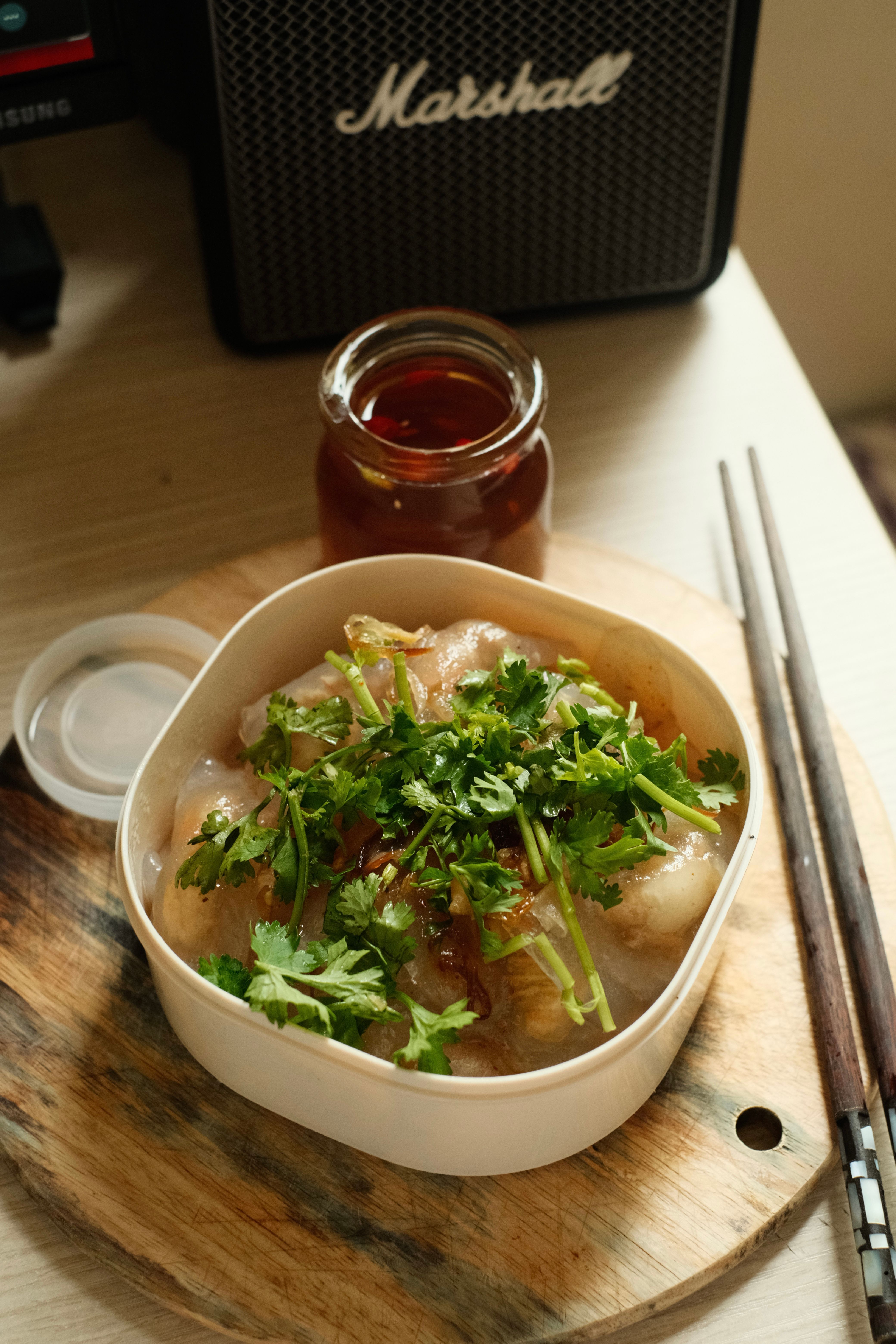
Photo: Pew Nguyen / Pexels
The diets react (see scores below)
Common Ingredients
- pork hock
- carrots
- onion
- garlic
- bay leaf
- black peppercorns
- gelatin
- salt
Specific recipes may vary.
Incompatible with 7 of 11 diets
Diet Ratings
Sult is an Estonian pork aspic (head cheese style dish) made by slowly cooking pork hock in seasoned water, then setting the strained broth with gelatin. The primary macros are protein and fat from the pork, with minimal carbohydrates. Carrots and onion are used mainly as aromatics during the cooking broth stage and contribute negligible net carbs to the final dish. The gelatin sets the dish without adding carbs. Net carbs per serving are very low (likely under 2-3g), making this naturally compatible with ketogenic eating. The dish is whole, unprocessed, and free of grains, added sugars, or starchy vegetables.
Some stricter keto practitioners apply caution to gelatinous/collagen-heavy dishes, noting that the high glycine content of collagen protein can theoretically be converted to glucose via gluconeogenesis, though this is a minority concern and not considered significant by most keto advocates. A small minority also flag carrots as a higher-carb vegetable to avoid entirely, even when used only as a broth aromatic.
Sult is a traditional Estonian pork aspic (head cheese/brawn) made by simmering pork hock until tender and setting the resulting broth with gelatin. It contains multiple animal-derived ingredients: pork hock (pig meat and skin), and gelatin (derived from boiled animal bones, connective tissue, and skin). Both are unambiguously non-vegan. This dish is fundamentally incompatible with a vegan diet.
Sult (Estonian head cheese/brawn) is fundamentally a pork gelatin aspic made from pork hock, vegetables, and aromatics — all paleo-compliant ingredients — but the dish is disqualified by two clear violations: added salt and commercial gelatin. Salt is explicitly excluded under paleo rules as an added/processed ingredient unavailable in pure Paleolithic form. Commercial gelatin, while derived from collagen, is a processed industrial extract rather than a whole food. Pork hock, carrots, onion, garlic, bay leaf, and black peppercorns are all approved paleo ingredients. Without the salt and processed gelatin (relying instead on natural collagen reduction from slow-cooking the hock), this dish could be made paleo-compliant — the bones and connective tissue of a pork hock naturally produce gelatin when simmered. As traditionally prepared and described, however, the added salt is a definitive disqualifier.
Sult is an Estonian pork head cheese/aspic made from pork hock as its primary ingredient. Pork hock is a fatty cut of red meat, high in saturated fat, which directly contradicts Mediterranean diet principles. Red meat is limited to only a few times per month in the Mediterranean diet, and pork hock specifically — a gelatinous, fatty cut — is far from the plant-forward, olive-oil-based dietary pattern emphasized. The gelatin-set preparation also has no analogue in traditional Mediterranean cuisine. While the vegetables (carrots, onion, garlic) and aromatics are Mediterranean-friendly, they are minor components in a dish dominated by fatty pork. This dish represents a Northern/Eastern European culinary tradition fundamentally at odds with Mediterranean dietary principles.
Sult is an Estonian head cheese/aspic made from pork hock set in gelatin — the base protein is excellent for carnivore. However, the dish contains several plant-derived ingredients that disqualify it under carnivore rules: carrots and onion are vegetables, garlic is a plant allium, bay leaf is an herb, and black peppercorns are a plant spice. While pork hock and gelatin are ideal carnivore foods, the plant ingredients are integral to the traditional recipe, not optional garnishes. A carnivore-adapted version stripped of all plant ingredients (pork hock, gelatin, salt only) would score 8-9, but the dish as described cannot be approved.
Some flexible carnivore practitioners tolerate spices like black pepper and bay leaf as negligible plant matter used for flavoring rather than nutrition, and might accept this dish with the vegetables removed or ignored. However, even lenient practitioners would remove the carrots, onion, and garlic as substantive plant foods.
Sult is a traditional Estonian head cheese / meat aspic made by simmering pork hock with aromatic vegetables and spices, then setting the cooking liquid with gelatin into a jellied loaf. Every ingredient in this dish is fully Whole30 compliant: pork hock is an unprocessed cut of meat, carrots and onion are vegetables, garlic is an allowed aromatic, bay leaf and black peppercorns are approved spices, gelatin is a natural animal-derived protein with no excluded ingredients, and salt is explicitly permitted. There are no grains, legumes, dairy, added sugars, or any other excluded ingredients present. The dish is a whole-food preparation that aligns well with the program's spirit of eating real, minimally processed foods.
Sult is a traditional Estonian pork broth jelly (head cheese/aspic) made by slow-simmering pork hock with aromatic vegetables. The critical FODMAP problem is onion and garlic, both of which are high-FODMAP due to fructans and must be avoided during the elimination phase. Although FODMAPs are water-soluble, when onion and garlic are simmered for an extended period in liquid that then becomes the gelatin base of the dish, significant fructans leach directly into the broth/jelly itself. This is the opposite of garlic-infused oil (where FODMAPs don't transfer to fat) — in a water-based broth, fructans from onion and garlic fully transfer to the cooking liquid. The finished jelly would therefore be high in fructans regardless of whether the solids are removed before setting. Pork hock, carrots, bay leaf, black peppercorns, gelatin, and salt are all low-FODMAP ingredients, but the onion and garlic in a water-based broth make the dish unsuitable for the elimination phase.
Some FODMAP practitioners debate the exact magnitude of fructan transfer into broths during long cooking, and Monash University has not specifically tested slow-simmered onion/garlic broths for residual FODMAP content. A small serving of the jelly (e.g., 30–50g) might contain only trace fructans if dilution is significant, but clinical FODMAP dietitians generally advise avoiding any dish where onion or garlic is simmered in water-based liquid during the elimination phase due to unpredictable fructan leaching.
Sult is a traditional Estonian head cheese/aspic made primarily from pork hock, which is a high-fat, high-sodium cut of pork. Pork hock is classified as red meat with significant saturated fat content, and the preparation involves substantial salt for seasoning and preservation. DASH guidelines explicitly limit red meat, saturated fat, and sodium — all of which are prominent in this dish. The gelatin-set format means the pork-derived fats and sodium are concentrated. While the vegetables (carrot, onion, garlic) and aromatics are DASH-friendly, they are present in minor quantities relative to the fatty pork. This dish conflicts with core DASH principles on multiple fronts: red meat as primary protein, high saturated fat from pork hock skin and connective tissue, and significant added salt.
Sult is a traditional Estonian head cheese/brawn made primarily from pork hock set in gelatin. From a Zone perspective, this dish presents a mixed profile. The protein source (pork hock) is higher in saturated fat and collagen than lean Zone-preferred proteins like skinless chicken or fish, and hock meat contains significant amounts of skin and connective tissue, elevating the saturated fat content considerably. However, the dish does provide a reasonable protein contribution and the gelatin itself is a protein source. The vegetables (carrots, onion, garlic) are favorable low-glycemic Zone carbs, though present in relatively small quantities as aromatics rather than primary carb blocks. The dish lacks meaningful carbohydrate content to balance Zone ratios, meaning it would need to be paired with substantial low-glycemic vegetables or fruit to approach 40/30/30. The saturated fat from pork hock skin is the primary Zone concern. Portion control is essential — a small serving of the lean meat portions (avoiding fatty skin) could fit a Zone protein block, but the overall dish as traditionally consumed skews toward a high-fat, moderate-protein, very-low-carb profile, misaligning with Zone ratios without careful pairing.
Some Zone practitioners following Sears' later anti-inflammatory writings (Zone Diet Revolution, The Mediterranean Zone) acknowledge that not all saturated fat is equally problematic, and pork collagen/gelatin has been reconsidered positively in some nutritional circles. A strict early-Zone reader (Enter the Zone) would rate this lower due to clear guidance against fatty cuts of pork. Additionally, if only the lean meat portions are consumed and the skin is discarded, the protein quality improves meaningfully, potentially warranting a slightly higher score.
Sult is a traditional Estonian head cheese/aspic made primarily from pork hock set in its natural gelatin. The dish has a mixed anti-inflammatory profile. On the positive side, it contains garlic (anti-inflammatory allicin), carrots (beta-carotene, antioxidants), onion (quercetin), bay leaf and black peppercorns (piperine enhances curcumin absorption and has mild anti-inflammatory properties), and is minimally processed with clean, whole-food ingredients. Gelatin/collagen from the pork hock has some emerging research support for gut lining integrity, which can play a role in systemic inflammation. However, the core issue is the pork hock itself: it is a fatty, high-saturated-fat cut of red meat. Anti-inflammatory guidelines consistently recommend limiting red meat and full-fat pork products due to their saturated fat content and arachidonic acid, both of which can promote inflammatory signaling (elevated CRP, IL-6). Unlike lean poultry or fatty fish, pork hock sits in the 'limit' category. The dish has no omega-3s, no significant antioxidant-rich vegetables beyond carrots and onion, and no olive oil or other anti-inflammatory fats. It is not a processed food and contains no additives, refined sugars, or trans fats, which keeps it out of the 'avoid' category. Overall, this is a traditional, whole-food dish that is acceptable occasionally but not aligned with anti-inflammatory dietary emphasis.
Some functional medicine and ancestral nutrition advocates (e.g., Weston A. Price Foundation) argue that collagen-rich cuts like pork hock and traditional aspics provide joint-supportive glycine and proline that may reduce systemic inflammation, and that saturated fat from whole-food animal sources is not inherently pro-inflammatory. Mainstream anti-inflammatory nutrition (Dr. Weil, IF Rating system) disagrees, placing high-fat pork products in the 'limit' category due to saturated fat and arachidonic acid content.
Sult is a traditional Estonian aspic/head cheese made by slow-cooking pork hock until the meat and natural collagen form a gelatinous set loaf. While the dish does deliver some protein from the pork, the primary protein source — pork hock — is a fatty cut with significant saturated fat and skin content that is poorly suited to GLP-1 patients. The fat-to-protein ratio is unfavorable compared to lean protein options: a typical serving contains moderate protein but alongside high saturated fat, which directly worsens GLP-1 side effects including nausea, bloating, and reflux due to slowed gastric emptying and fat-stimulated GI distress. The gelatinous texture comes largely from collagen rather than complete high-quality protein, so protein density per calorie is lower than lean cuts. Fiber content is negligible — the carrots and onion contribute trace amounts at serving size. Sodium content is typically high from salting and long brining. The dish is cold and fatty, which GLP-1 patients tend to tolerate poorly. The vegetable and aromatic components (carrot, onion, garlic, bay leaf, peppercorns) are nutritionally minor at the quantities used as flavor agents. Overall, this is a high-saturated-fat, low-fiber, moderate-protein food that fails on the two most critical GLP-1 dietary criteria and is likely to worsen GI side effects.
Some GLP-1-focused dietitians may note that collagen-rich slow-cooked preparations can be gentle on the stomach in texture terms, and that pork hock does provide some complete protein and minerals including zinc. However, the consensus concern within obesity medicine nutrition practice is that the high saturated fat load from pork hock skin and connective tissue outweighs these benefits, and that patients would be better served by lean pork loin or another protein source with a far more favorable fat profile.
*See how scores were generated at our methodology page.
Nutritional profile
Six traits that cut across every diet.
Fiber & Plants
How much whole-plant food and fiber it delivers.
Healthy Fats
The quality of its fats (unsaturated, omega-3).
Whole / Unprocessed
How close it is to its natural, unprocessed form.
Gut Gentle
How easy it is on digestion (low FODMAP, few irritants).
Low Glycemic
How little it spikes your blood sugar.
Protein Density
How much protein it packs per calorie.
Controversy Index
Higher controversy = more disagreement between diets.
Diet-Specific Tips
 Keto — 8/10
View tips
- Pork hock is high in protein and fat with zero net carbs
- Gelatin adds no net carbohydrates
- Carrots and onion used as aromatics contribute negligible net carbs to finished dish
- No grains, added sugars, or starchy ingredients
- Whole, minimally processed traditional preparation
- Very low net carbs per serving — well within keto daily limits
 Whole30 — 9/10
View tips
- Pork hock is an unprocessed, whole-food cut of meat — fully compliant
- Carrots, onion, and garlic are all compliant vegetables
- Bay leaf and black peppercorns are approved herbs/spices
- Gelatin is a natural animal-derived ingredient with no excluded components
- Salt is explicitly permitted on Whole30
- No grains, legumes, dairy, added sugar, or other excluded ingredients
- Whole-food, minimally processed preparation aligns with Whole30 spirit
 Zone — 4/10
View tips
- Pork hock is a fatty, collagen-rich cut — higher in saturated fat than Zone-preferred lean proteins
- Skin and connective tissue from hock significantly elevates saturated fat content
- Very low carbohydrate content — would require substantial side vegetables to achieve 40% carb ratio
- Gelatin provides additional protein but is incomplete (lacks tryptophan) and does not substitute well for a full protein block
- Vegetables (carrot, onion, garlic) are Zone-favorable but present only as aromatics in small quantities
- No added fats or oils, so fat content comes entirely from the pork — monounsaturated fat target is not met
- Could be incorporated into a Zone meal if served with a large low-GI vegetable portion and the fatty skin is avoided
- Processed/preserved nature and salt content are minor concerns from an anti-inflammatory standpoint
 Anti-Inflammatory — 4/10
View tips
- Pork hock is a high-fat, high-saturated-fat cut of red meat — placed in the 'limit' category by anti-inflammatory guidelines
- No omega-3 fatty acids or significant anti-inflammatory fats present
- Garlic, onion, and carrots contribute quercetin, allicin, and beta-carotene — modestly anti-inflammatory
- Black peppercorns contribute piperine, a mild anti-inflammatory compound
- Gelatin/collagen content may support gut integrity, with some emerging anti-inflammatory implications
- Minimal processing — no additives, refined sugars, trans fats, or seed oils
- Traditional whole-food dish acceptable occasionally but not a dietary staple under anti-inflammatory principles