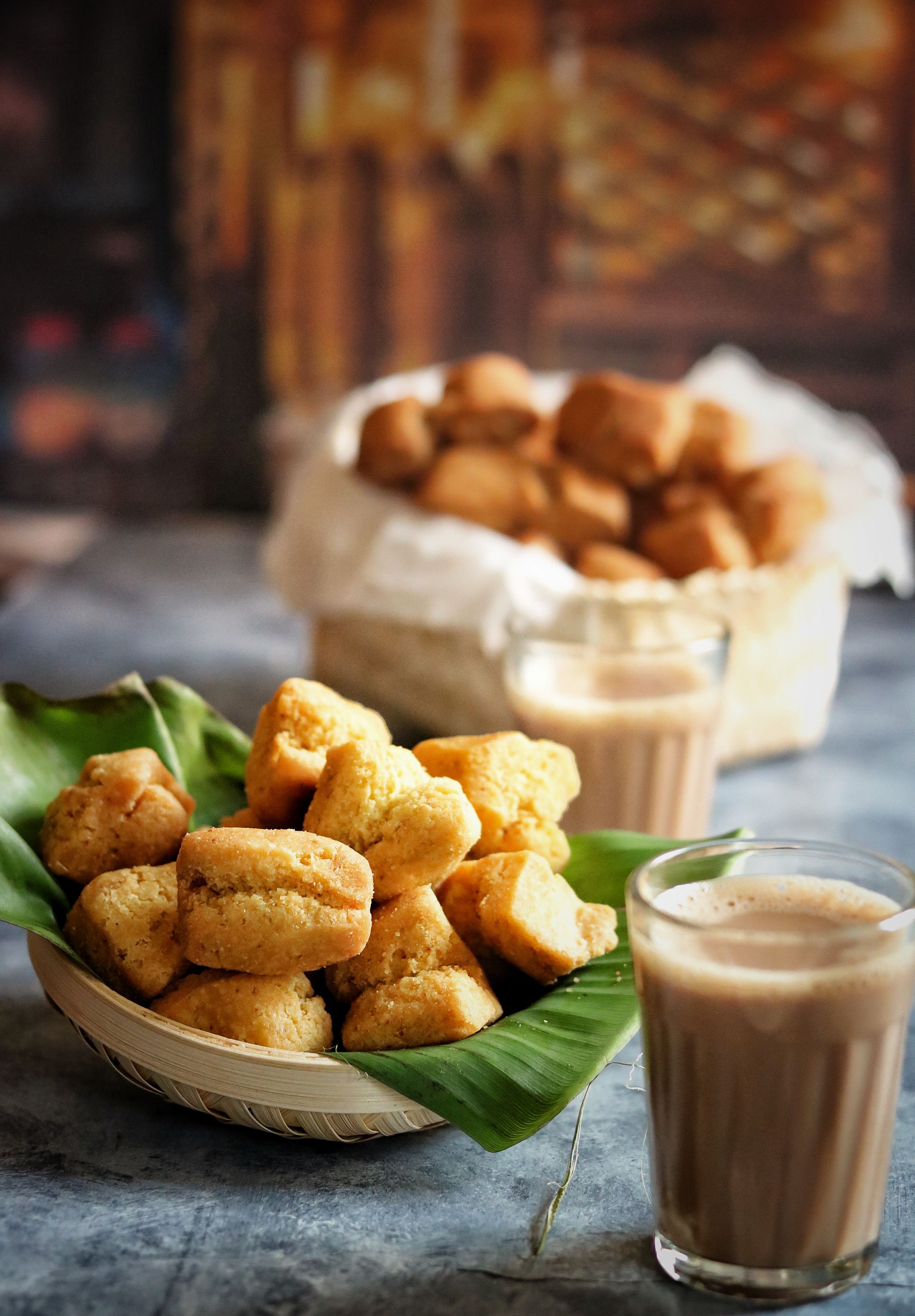
Photo: Saveurs Secretes / Pexels
The diets react (see scores below)
Common Ingredients
- flour
- sugar
- salt
- berbere
- vegetable oil
- water
Specific recipes may vary.
Incompatible with 8 of 11 diets
Diet Ratings
Dabo Kolo is a traditional Ethiopian crunchy snack made primarily from wheat flour and sugar — two ingredients that are fundamentally incompatible with ketogenic eating. Wheat flour is a high-carb grain that would alone spike net carbs far beyond the daily keto limit in any reasonable serving size. The addition of sugar compounds this problem further. The small amounts of berbere spice and salt are keto-neutral, and vegetable oil adds fat, but these elements cannot offset the dominant carbohydrate load from flour and sugar. A typical serving of Dabo Kolo would deliver 30-50g+ of net carbs, making ketosis maintenance impossible.
Dabo Kolo is a traditional Ethiopian crunchy snack made by baking or frying small pieces of seasoned dough. All listed ingredients — flour, sugar, salt, berbere spice blend, vegetable oil, and water — are entirely plant-based with no animal products or animal-derived ingredients. Berbere is a spice mixture of chili peppers, fenugreek, coriander, and other aromatics, which is fully vegan. Vegetable oil confirms no animal fat is used. This is a simple, minimally processed whole-food-adjacent snack with a clean vegan ingredient profile.
Dabo Kolo is a traditional Ethiopian crunchy snack made primarily from wheat flour, which is a grain and a core exclusion in the paleo diet. Beyond the flour, the dish also contains refined sugar (excluded), added salt (excluded), and vegetable oil — a seed/processed oil category explicitly avoided on paleo. With three to four major paleo violations stacked in a single recipe, this dish is firmly in 'avoid' territory with no gray area. The only paleo-compatible ingredient is berbere spice blend (and water). There is no meaningful way to reconcile this dish with paleo principles without replacing nearly every ingredient.
Dabo Kolo is an Ethiopian snack made from refined wheat flour, added sugar, and vegetable oil (likely refined, not extra virgin olive oil). The refined flour and added sugar directly contradict Mediterranean diet principles, which emphasize whole grains and minimal added sugars. The use of non-EVOO vegetable oil further distances it from the diet's core fat guidelines. The berbere spice blend is a positive element, but it cannot offset the nutritional concerns of the base ingredients. As a processed, fried or baked snack with refined carbohydrates and sugar, this falls into the 'avoid' category.
Some Mediterranean diet interpreters apply a moderate flexibility for small portions of traditional grain-based snacks, noting that the portion sizes of such snacks are typically small and the berbere spice mix adds anti-inflammatory compounds. If made with whole wheat flour and minimal sugar, a modified version could edge toward 'caution.'
Dabo Kolo is an Ethiopian crunchy snack made entirely from plant-based ingredients: wheat flour, sugar, berbere spice blend, vegetable oil, and water. There are zero animal-derived components. Every single ingredient violates carnivore diet principles — flour is a grain, sugar is a plant-derived sweetener, berbere is a plant-based spice mix, and vegetable oil is a seed/plant oil. This is about as far from carnivore-compliant as a food can get.
Dabo Kolo is an Ethiopian crunchy snack made from wheat flour, which is a grain explicitly excluded on the Whole30. Additionally, it contains added sugar, another excluded ingredient. Even if these two excluded ingredients were somehow replaced with compliant alternatives, the resulting product — a crunchy, cracker/chip-like snack — would fall squarely into the 'no recreating junk food/crackers/chips' rule (Rule 4), which explicitly lists crackers and chips as prohibited even when made from compliant ingredients. Multiple violations make this a clear avoid.
Dabo Kolo is a traditional Ethiopian crunchy snack made from wheat flour as its primary ingredient. Wheat flour is high in fructans, which are a major FODMAP category that must be avoided during the elimination phase. A standard serving of Dabo Kolo would involve a meaningful quantity of wheat flour, making it high-FODMAP. The other ingredients — sugar, salt, vegetable oil, and water — are all low-FODMAP and pose no concern. Berbere spice blend is the one variable worth noting: it typically contains garlic and onion powder, both of which are high-FODMAP fructan sources. This compounds the FODMAP load from the wheat flour. Even a small portion would likely contain enough fructans from wheat alone to be problematic during elimination, and the berbere spice compounds the issue further.
Monash University has not specifically tested Dabo Kolo, so exact fructan thresholds per serving are unknown. Some clinical FODMAP practitioners note that very small portions (a few pieces) of wheat-based snacks may fall below the fructan threshold for sensitive individuals, but this is not standard elimination phase guidance — most dietitians advise avoiding all wheat-flour-based snacks entirely during elimination to ensure compliance and symptom resolution.
Dabo Kolo is a traditional Ethiopian snack made from small fried or baked dough pieces seasoned with berbere spice blend. From a DASH perspective, the dish has several concerns: it is made with refined white flour rather than whole grain, contains added sugar, uses salt (sodium contribution), and is typically fried or baked with vegetable oil. The berbere spice blend itself is DASH-friendly as a flavorful salt substitute, but traditional recipes often include a notable amount of salt to achieve the characteristic savory-spicy flavor. The refined flour and frying method make this a less-than-ideal snack for DASH. However, it contains no red meat, no saturated fat from tropical oils (assuming standard vegetable oil like canola or sunflower), and no high-sodium processed ingredients beyond added salt, which can be controlled. As an occasional snack in small portions, it is not categorically excluded from DASH, but it does not align with the diet's emphasis on whole grains, fruits, vegetables, or low-fat dairy. A modified version using whole wheat flour, reduced salt, and baking instead of frying would score significantly higher.
NIH DASH guidelines emphasize whole grains over refined grains and limit sodium, which would place this snack in caution-to-avoid territory depending on salt quantity. However, some DASH-oriented clinicians note that small portions of minimally processed homemade snacks with controllable sodium — especially when spiced with herbs rather than processed flavorings — are acceptable within a DASH pattern, and that berbere's anti-inflammatory spice components align with cardiovascular-friendly eating patterns.
Dabo Kolo is an Ethiopian crunchy snack made primarily from refined wheat flour with added sugar, fried or baked in vegetable oil (likely an omega-6-heavy seed oil). From a Zone perspective, this snack is deeply problematic on multiple fronts. First, it provides virtually no protein — Zone requires a balanced 40/30/30 ratio at every meal and snack, and there is no protein block source here. Second, the primary carbohydrate is refined white flour, which is high-glycemic and classified as an 'unfavorable' carb in Zone terminology, compounded by added sugar. Third, the fat source (generic vegetable oil) is likely a high-omega-6 seed oil (soybean, sunflower, or similar), which Sears explicitly discourages due to its pro-inflammatory properties. The berbere spice blend is anti-inflammatory and polyphenol-rich, which is Zone-positive, but it cannot rescue this snack. As a standalone snack, there is no realistic portioning strategy that brings this into Zone balance — you would need to add lean protein and swap the carb base entirely, at which point you are no longer eating Dabo Kolo. This is one of the rare cases where an 'avoid' rating is appropriate.
Dabo Kolo is a traditional Ethiopian crunchy snack made by frying or roasting small pieces of spiced dough. Its profile is mixed from an anti-inflammatory standpoint. On the positive side, berbere — the key spice blend — contains chili peppers, fenugreek, ginger, coriander, turmeric, and other spices with well-documented anti-inflammatory properties, particularly curcumin (turmeric) and capsaicin (chili). This is a genuine anti-inflammatory asset. However, the base is refined white flour, which is a refined carbohydrate that spikes blood glucose and is associated with increased inflammatory markers like CRP. Added sugar compounds this concern. Vegetable oil is used in preparation; depending on the specific oil (commonly corn, sunflower, or soybean in commercial settings), this could contribute excess omega-6 fatty acids. The dish is also typically deep-fried or pan-fried, increasing the oxidized fat burden. Overall, the beneficial spice profile is undercut by the refined carbohydrate and sugar base, and the frying medium. It is not as harmful as processed junk food — the berbere spices provide meaningful anti-inflammatory compounds — but it is not a food that actively promotes an anti-inflammatory diet. Acceptable as an occasional treat rather than a regular snack.
Some anti-inflammatory practitioners may rate Dabo Kolo more favorably when homemade and roasted (not fried), citing the potent anti-inflammatory berbere spice blend as a significant mitigating factor. Others following strict anti-inflammatory or blood sugar-conscious protocols (e.g., Dr. Weil's refined carb cautions) would score it lower, emphasizing that refined flour and added sugar are foundational pro-inflammatory ingredients that outweigh the spice benefits in a regularly consumed snack context.
Dabo Kolo is a traditional Ethiopian crunchy snack made from wheat flour, sugar, oil, salt, and berbere spice. It is essentially a fried or baked bite-sized dough snack — nutritionally comparable to crackers or fried breadsticks. It offers virtually no protein, negligible fiber, is made from refined flour (empty refined carbohydrates), contains added sugar, and is cooked in vegetable oil adding unnecessary fat calories. For GLP-1 patients who have dramatically reduced appetite and must maximize nutritional value in every bite, Dabo Kolo represents exactly the kind of empty-calorie, low-nutrient-density snack to avoid. The berbere spice blend may also irritate the GI tract in patients already experiencing nausea or reflux from GLP-1 medications. There is no meaningful protein to support muscle preservation, no fiber to support digestion or satiety, and no micronutrient density to justify the calorie cost.
*See how scores were generated at our methodology page.
Nutritional profile
Six traits that cut across every diet.
Fiber & Plants
How much whole-plant food and fiber it delivers.
Healthy Fats
The quality of its fats (unsaturated, omega-3).
Whole / Unprocessed
How close it is to its natural, unprocessed form.
Gut Gentle
How easy it is on digestion (low FODMAP, few irritants).
Low Glycemic
How little it spikes your blood sugar.
Protein Density
How much protein it packs per calorie.
Controversy Index
Higher controversy = more disagreement between diets.
Diet-Specific Tips
 Vegan — 8/10
View tips
- All ingredients are plant-based
- Berbere spice blend is fully vegan — composed of chili peppers and plant-derived spices
- Vegetable oil used instead of butter or ghee (common in some Ethiopian recipes)
- No eggs or dairy in the dough
- Simple, short ingredient list with no hidden animal-derived additives
- Minimally processed snack, scoring well even under whole-food plant-based standards
 DASH — 4/10
View tips
- Refined flour rather than whole grain reduces fiber and nutrient density
- Added salt contributes to daily sodium load — amount varies by recipe
- Typically fried, increasing total fat content
- Berbere spice blend is a DASH-positive flavor enhancer that reduces need for salt
- No saturated fat from tropical oils if standard vegetable oil is used
- No lean protein, fruits, or vegetables — low DASH nutrient density
- Small portion snack context moderates overall impact on daily DASH targets
 Anti-Inflammatory — 4/10
View tips
- Berbere spice blend contributes anti-inflammatory compounds: capsaicin, curcumin, and other polyphenols
- Refined white flour is a pro-inflammatory refined carbohydrate associated with elevated CRP
- Added sugar compounds the pro-inflammatory glycemic load
- Vegetable oil may contribute excess omega-6 fatty acids depending on oil type
- Frying preparation method increases oxidized fat content
- No significant protein, fiber, or omega-3 content to offset inflammatory profile
- Acceptable as an occasional indulgence due to spice benefits, but not suitable as a regular snack on an anti-inflammatory diet