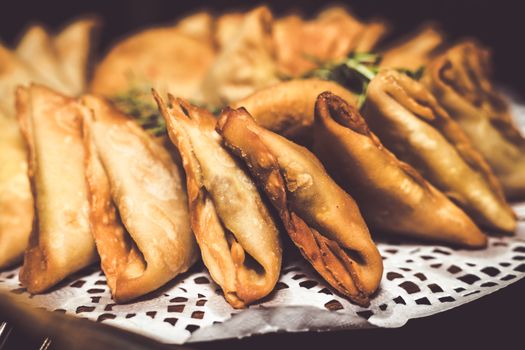
Photo: basunga visual / Pexels
The diets react (see scores below)
Common Ingredients
- pastry dough
- red lentils
- onion
- garlic
- green chili
- cumin
- berbere
- vegetable oil
Specific recipes may vary.
Incompatible with 6 of 11 diets
Diet Ratings
Sambusa is fundamentally incompatible with a ketogenic diet. The two core components — pastry dough and red lentils — are both high-carbohydrate foods that would spike net carbs far beyond the daily keto limit. Pastry dough is made from refined wheat flour, a grain that is strictly excluded from keto. Red lentils, while containing some fiber, still carry a significant net carb load (roughly 20g+ net carbs per 100g cooked). Together, a single sambusa could easily contain 25-40g of net carbs, potentially exceeding the entire daily allowance in one snack. The spices (cumin, berbere, garlic) and aromatics are keto-friendly, but they cannot offset the fundamental carbohydrate problem of the dish's structure.
Sambusa is an Ethiopian fried or baked pastry filled with spiced lentils, and all listed ingredients are plant-based. Red lentils provide whole-food protein, onion, garlic, green chili, cumin, and berbere are all plant-derived spices and aromatics, and vegetable oil is used for frying. The pastry dough is the one ingredient requiring scrutiny: traditional Ethiopian sambusa dough is typically made with flour, water, and oil — fully vegan — but some recipes or commercial versions incorporate butter or egg, which would make it non-vegan. Assuming the dough follows the traditional oil-and-water method (as implied by the ingredient list), this dish is fully plant-based. The lentil filling and aromatic spice profile make this a nutritionally solid whole-food-leaning vegan snack, hence a strong approve score.
Some whole-food plant-based (WFPB) advocates may assign slight caution to deep-fried preparations, noting that frying in vegetable oil significantly increases caloric density and diminishes the whole-food nutritional profile — though this does not affect vegan compliance, only nutritional quality scoring within stricter WFPB frameworks.
Sambusa is fundamentally incompatible with the paleo diet, containing multiple core violations. The pastry dough is grain-based (typically wheat flour), which is a primary paleo exclusion. Red lentils are legumes, explicitly excluded from paleo due to their lectin and phytate content. Vegetable oil (likely canola, soybean, or sunflower) is a seed oil, also banned under paleo guidelines. Every structural element of this dish — the wrapper, the filling protein, and the cooking fat — violates paleo principles. The allowable ingredients (onion, garlic, green chili, cumin, berbere spice blend) are paleo-compliant but represent a small fraction of the dish and cannot redeem it.
Sambusa has a mixed Mediterranean diet profile. The filling is excellent: red lentils are a Mediterranean staple, and aromatics like onion, garlic, green chili, cumin, and berbere are all plant-based and align well with Mediterranean principles. However, the pastry dough wrapper is a refined grain product, and the dish is typically deep-fried in vegetable oil rather than baked with olive oil, introducing processed fats and reducing the overall nutritional quality. The legume filling earns strong marks, but the refined pastry shell and frying method pull the score down into the caution range.
Some Mediterranean diet interpreters would be more lenient, noting that legume-stuffed pastries exist in traditional Mediterranean cuisines (e.g., Greek spanakopita, Turkish börek) and that if baked rather than fried, the dish could approach an 'approve' rating. The lentil-forward filling is nutritionally dense enough that some practitioners might view this as an acceptable occasional inclusion even in its fried form.
Sambusa is entirely plant-based and incompatible with the carnivore diet. Every single ingredient is excluded: pastry dough is a grain-based product, red lentils are legumes, onion and garlic are vegetables, green chili is a plant, cumin and berbere are plant-based spices, and vegetable oil is a plant-derived fat. There is no animal product whatsoever in this dish. This represents the antithesis of carnivore eating — a legume-filled, grain-wrapped, plant-oil-fried snack seasoned exclusively with plant compounds.
Sambusa contains multiple excluded ingredients. First, pastry dough is a grain-based wrapper (typically made from wheat flour), which is excluded on Whole30. Second, red lentils are legumes, which are explicitly excluded from the Whole30 program. Either of these ingredients alone would disqualify the dish, and together they make it clearly non-compliant. Additionally, even if compliant substitutes were used for both, a filled pastry/dumpling-style snack would likely fall under the 'no recreating baked goods/junk food' rule (analogous to wraps, crackers, or similar forms). The remaining ingredients — onion, garlic, green chili, cumin, berbere, and vegetable oil — are generally Whole30-compatible, but they cannot redeem a dish built on two excluded foundations.
Sambusa contains multiple high-FODMAP ingredients that make it unsuitable during the elimination phase. Onion is one of the highest-FODMAP foods tested by Monash University, rich in fructans, and is high-FODMAP at any meaningful culinary quantity. Garlic is similarly very high in fructans and must be avoided entirely during elimination. Red lentils contain significant GOS (galacto-oligosaccharides) and are high-FODMAP at standard serving sizes (though canned/well-rinsed lentils may reduce GOS somewhat, this dish uses cooked dried lentils as a filling). The pastry dough is almost certainly wheat-based, adding fructans from wheat flour. The combination of onion, garlic, wheat pastry, and lentils creates a dish with stacked high-FODMAP loads across multiple FODMAP categories (fructans from onion, garlic, and wheat; GOS from lentils). Green chili in small amounts may be acceptable, and cumin and berbere spices are generally low-FODMAP in culinary quantities, but these do not offset the multiple high-FODMAP components. This dish cannot be made low-FODMAP without fundamentally altering its core ingredients.
Sambusa contains several DASH-friendly ingredients — red lentils are an excellent source of plant-based protein, fiber, potassium, and magnesium, all core DASH nutrients. Onion, garlic, and green chili are low-sodium, nutrient-rich vegetables. However, the dish raises DASH concerns in a few areas: (1) The pastry dough is typically made with refined white flour, adding refined carbohydrates with minimal fiber — DASH emphasizes whole grains. (2) Deep-frying in vegetable oil significantly increases total fat and calorie density, though vegetable oils are preferable to tropical or animal fats. (3) Berbere spice blend can contain significant added salt depending on the commercial mix or recipe, raising sodium concerns. (4) Portion control is critical — as a fried pastry snack, it is calorie-dense and easy to overconsume. The lentil filling itself is strongly DASH-aligned, but the fried dough wrapper and potential sodium from berbere push this into moderate territory. Homemade versions with low-sodium berbere and baked rather than fried preparation would score notably higher.
NIH DASH guidelines emphasize low-fat cooking methods and whole grains, which standard fried sambusa does not meet. However, some DASH-oriented clinicians note that plant-based snacks with legume fillings can fit within DASH when prepared with baking instead of frying and low-sodium spice blends, arguing the overall dietary pattern matters more than individual preparation methods.
Sambusa presents several Zone challenges despite having some favorable elements. The primary structural problem is the pastry dough — a refined flour wrapper that is high-glycemic and carb-dense, similar to fried wonton or spring roll wrappers. This pushes the carbohydrate portion toward unfavorable, high-GI territory. The filling has genuine Zone merit: red lentils provide plant-based protein and fiber-rich carbohydrates (lentils are considered a 'favorable' carb in Zone due to their low glycemic load and protein content), and aromatics like onion, garlic, green chili, and spices (cumin, berbere) contribute polyphenols with anti-inflammatory value. However, frying in vegetable oil (likely omega-6-heavy seed oil such as sunflower or canola) introduces the kind of pro-inflammatory fat Dr. Sears specifically cautions against. The fat profile is therefore unfavorable. The macro ratio is likely skewed: high in refined carbs (dough) and omega-6 fat (frying oil), with modest protein from lentils. As a snack component in Zone, the portion would need to be tightly controlled — perhaps 1 sambusa paired with additional lean protein and vegetables to rebalance the ratios. It is not categorically unusable, but it requires significant contextual correction.
Some Zone practitioners following Sears' later anti-inflammatory writing (Toxic Fat, The OmegaRx Zone) might give slightly more credit to the lentil filling — lentils are genuinely favorable Zone carbs with low glycemic load, and berbere spice contains polyphenol-rich chili and fenugreek. A baked version using whole-wheat dough with avocado or olive oil brushing would score considerably higher (6-7), and some flexible Zone adherents would treat one sambusa as an acceptable 'unfavorable' snack block if the rest of the day's meals are tightly zoned.
Sambusa presents a mixed anti-inflammatory profile. On the positive side, red lentils are an excellent source of plant-based protein, fiber, and polyphenols with well-established anti-inflammatory properties. Garlic, onion, green chili, cumin, and berbere (a spice blend typically containing turmeric, fenugreek, chili, ginger, and other anti-inflammatory spices) all contribute meaningful antioxidant and anti-inflammatory compounds. These ingredients alone would push this dish toward approval. However, the preparation method introduces significant concerns: the pastry dough is typically made from refined white flour, which is a refined carbohydrate with pro-inflammatory potential, and the dish is deep-fried in vegetable oil. The type of vegetable oil matters enormously — if it's a high-omega-6 seed oil like sunflower or corn oil (common in Ethiopian cooking contexts), regular consumption adds oxidized fats and unfavorable omega-6 load. The frying process itself generates oxidation byproducts regardless of oil type. As an occasional snack, the anti-inflammatory spice and legume content partially offsets the refined dough and frying concerns, but the overall preparation method prevents approval. Baked versions would score considerably higher (7-8).
Some anti-inflammatory nutritionists would argue the lentil filling, garlic, onion, and powerful berbere spice blend carry enough anti-inflammatory weight to make this an acceptable moderate indulgence — particularly compared to Western fried snacks. Others, especially those following stricter anti-inflammatory or AIP protocols, would flag both the refined flour casing and deep-frying in seed oils as disqualifying, rating it closer to 'avoid' territory.
Sambusa is a deep-fried pastry pocket that poses multiple challenges for GLP-1 patients. The fried pastry dough is high in fat and refined carbohydrates with minimal nutritional value, directly conflicting with the low-fat and nutrient-density priorities. The lentil filling is genuinely beneficial — red lentils provide plant protein, fiber, and iron — but the delivery vehicle undermines those benefits significantly. Frying in vegetable oil substantially increases the fat load per serving, which is a known trigger for nausea, bloating, and reflux in GLP-1 patients due to slowed gastric emptying. Berbere and green chili introduce spice levels that may worsen GI discomfort and reflux, which are already common side effects. The refined pastry shell offers empty calories with little protein or fiber contribution. Protein yield from the lentil filling in a small fried snack portion is modest — likely 4-7g per piece — falling short of the 15-30g per meal target. The combination of high fat, fried preparation, spice, and refined dough makes this a poor fit for GLP-1 patients despite its plant-based protein core.
Some GLP-1-focused dietitians may note that the lentil filling itself is an excellent plant protein and fiber source, and a patient with good GI tolerance might enjoy a single piece as an occasional treat. The disagreement centers on whether the beneficial filling can offset the fried wrapper, and individual spice tolerance varies considerably among GLP-1 patients.
*See how scores were generated at our methodology page.
Nutritional profile
Six traits that cut across every diet.
Fiber & Plants
How much whole-plant food and fiber it delivers.
Healthy Fats
The quality of its fats (unsaturated, omega-3).
Whole / Unprocessed
How close it is to its natural, unprocessed form.
Gut Gentle
How easy it is on digestion (low FODMAP, few irritants).
Low Glycemic
How little it spikes your blood sugar.
Protein Density
How much protein it packs per calorie.
Controversy Index
Higher controversy = more disagreement between diets.
Diet-Specific Tips
 Vegan — 4/10
View tips
- Red lentils are a whole-food plant protein — fully vegan
- All spices and aromatics (cumin, berbere, onion, garlic, green chili) are plant-derived
- Vegetable oil is plant-based
- Pastry dough as listed contains no eggs or dairy — traditional Ethiopian sambusa dough is flour, water, and oil
- Non-traditional or commercial dough versions may contain butter or egg — always verify
- Fried preparation is vegan-compliant but may concern WFPB advocates on nutritional grounds
 Mediterranean — 5/10
View tips
- Red lentils are a core Mediterranean legume — strongly positive
- Plant-based aromatics (onion, garlic, chili, cumin, berbere) align well with Mediterranean principles
- Pastry dough is a refined grain, not a whole grain — negative
- Typically deep-fried, introducing excess oil and reducing nutritional quality compared to olive-oil-based preparations
- Vegetable oil used rather than extra virgin olive oil — minor negative
- No animal products, keeping it fully plant-based — positive
- Overall acceptable as an occasional snack, not a dietary staple
 DASH — 5/10
View tips
- Red lentils are DASH-approved: high fiber, potassium, magnesium, plant protein
- Fried pastry dough increases total fat and calories significantly
- Refined white flour pastry shell lacks the whole grain fiber DASH emphasizes
- Berbere spice blend may contribute meaningful sodium depending on formulation
- Vegetable oil is preferable to saturated fats but frying adds caloric density
- Baked preparation with low-sodium seasoning would improve DASH compatibility
- Portion size critical — small snack portion is more DASH-compatible than multiple pieces
 Zone — 4/10
View tips
- Pastry dough is refined, high-glycemic carbohydrate — an 'unfavorable' Zone carb
- Red lentils are a favorable Zone carb/protein source with low glycemic load and fiber
- Fried in vegetable oil, likely high in omega-6 fatty acids — pro-inflammatory per Sears
- Spices (berbere, cumin) contribute anti-inflammatory polyphenols — a Zone positive
- Macro ratio skewed: excess refined carbs and omega-6 fat relative to lean protein
- As a snack, portion control is feasible but requires pairing with lean protein to balance blocks
- Baked version would substantially improve Zone compatibility
 Anti-Inflammatory — 5/10
View tips
- Red lentils: strong anti-inflammatory legume with fiber and polyphenols — positive
- Berbere spice blend: rich in turmeric, chili, ginger, and other anti-inflammatory spices — positive
- Garlic, onion, green chili: well-established anti-inflammatory alliums and capsaicinoids — positive
- Cumin: anti-inflammatory antioxidant — positive
- Pastry dough (refined white flour): refined carbohydrate, raises blood sugar, pro-inflammatory — negative
- Deep-fried in vegetable oil: likely high-omega-6 seed oil, oxidation risk during frying — negative
- Preparation method (frying) significantly offsets quality of filling ingredients