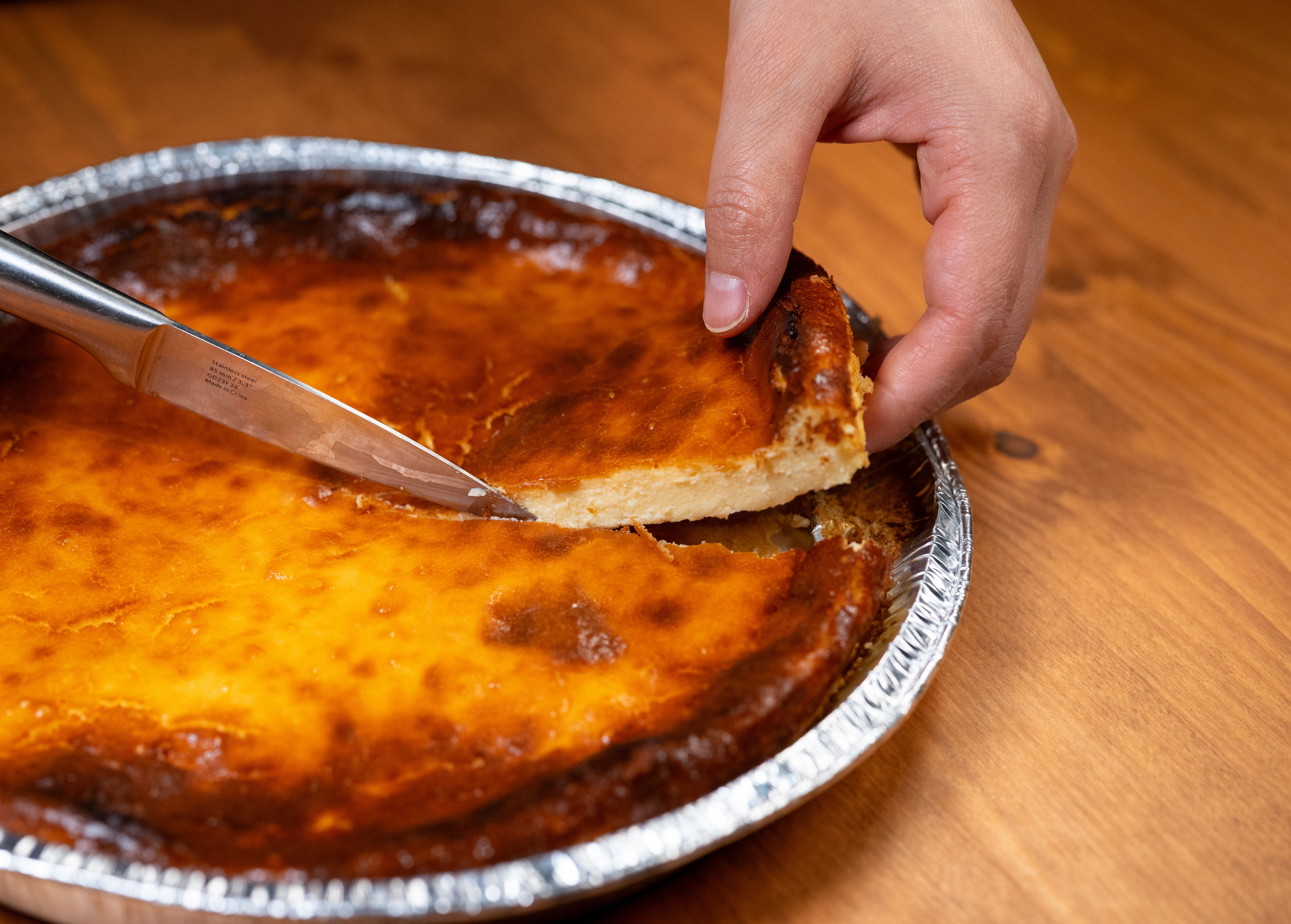
Fijian
Cassava Cake
The diets react (see scores below)
Common Ingredients
- cassava
- coconut milk
- sugar
- butter
- eggs
- condensed milk
- vanilla
Specific recipes may vary.
Incompatible with 10 of 11 diets
Diet Ratings
Cassava Cake is fundamentally incompatible with a ketogenic diet. Cassava (tapioca root) is one of the highest-carb root vegetables available, with roughly 38g of net carbs per 100g — far exceeding the entire daily keto carb allowance in a single serving. Compounding this, the recipe includes both granulated sugar and condensed milk, two of the most concentrated sources of simple sugars possible. Together, these three ingredients alone deliver an extreme carbohydrate and sugar load that would immediately and completely disrupt ketosis. The coconut milk and butter provide some fat-positive ingredients, but they are entirely insufficient to offset the overwhelming carb content. There is no viable portion size that would make this dish keto-compatible.
Cassava Cake contains multiple animal-derived ingredients that disqualify it from being vegan. Eggs are a direct animal product, butter is a dairy product, and condensed milk is a concentrated dairy product. All three are explicitly excluded under vegan dietary rules. While the base ingredients — cassava, coconut milk, sugar, and vanilla — are fully plant-based, the presence of three distinct animal-derived ingredients makes this dish clearly non-vegan with no ambiguity.
Cassava Cake contains multiple paleo-incompatible ingredients that make it clearly non-compliant. While cassava itself is a starchy tuber that is generally accepted in paleo (unprocessed), the recipe includes refined sugar, butter (dairy), and condensed milk (dairy + refined sugar) — all of which are explicitly excluded from the paleo diet. Even if cassava and eggs are paleo-approved, and coconut milk is fully compliant, the combination of dairy products and refined sugar disqualifies this dish firmly. This is a processed, sweetened dessert cake format that contradicts both the ingredient rules and the whole-food philosophy of paleo eating.
Cassava Cake is a sweet dessert/snack that conflicts with Mediterranean diet principles on multiple fronts. It is built around refined starchy cassava (a tropical tuber not part of traditional Mediterranean cuisine), heavily sweetened with both added sugar and condensed milk, uses butter as the fat source rather than olive oil, and coconut milk adds significant saturated fat. The combination of added sugars, condensed milk, and butter places this firmly in the 'avoid' category — it is a processed, high-sugar, high-saturated-fat confection with no meaningful alignment to Mediterranean dietary patterns.
Cassava Cake is fundamentally incompatible with the carnivore diet. The primary ingredient, cassava, is a starchy root vegetable — a plant food that is entirely excluded. The dish also contains coconut milk (plant-derived), sugar (processed plant-derived sweetener), and vanilla (plant-derived flavoring). While butter and eggs are animal-derived and carnivore-compatible, they are minor components of what is essentially a plant-based dessert built around cassava starch and coconut. The sugar and condensed milk add further processed carbohydrates. No configuration of this dish can be made carnivore-compliant without fundamentally changing its nature.
Cassava Cake contains multiple excluded ingredients: sugar (added sugar is prohibited on Whole30), butter (regular dairy butter is excluded — only ghee/clarified butter is allowed), and condensed milk (a dairy product with added sugar). Additionally, even if all ingredients were made compliant, this dish is a baked cake — explicitly falling under the Whole30 rule against recreating baked goods and junk food (cakes, muffins, brownies, etc.), which violates the spirit of the program regardless of ingredient substitutions.
Cassava Cake contains several ingredients that require careful evaluation. Cassava (tapioca/yuca) itself is low-FODMAP per Monash at standard servings (~100g), making it a safe base. Coconut milk is low-FODMAP at 1/2 cup (125ml) but becomes high-FODMAP in larger amounts due to sorbitol. Sugar and butter are low-FODMAP. Eggs are low-FODMAP. However, condensed milk is the primary concern — it is high in lactose and is used in significant quantities in this cake, making the overall dish high-FODMAP from a lactose standpoint. Vanilla extract (not paste) is low-FODMAP. The combination of condensed milk (high lactose) and potentially large portions of coconut milk creates a meaningful FODMAP load. A very small slice may be tolerable for some, but a standard serving of this rich dessert cake is likely to contain problematic levels of lactose from the condensed milk.
Monash University has not specifically tested Fijian Cassava Cake as a composite dish. Some clinical FODMAP practitioners may consider a very small portion (thin sliver) acceptable if coconut milk is limited and the individual has established lactose tolerance during reintroduction, but during strict elimination phase, the condensed milk content makes this risky for most patients.
Cassava Cake is fundamentally incompatible with the DASH diet due to multiple high-concern ingredients. Coconut milk is a tropical oil-based product high in saturated fat, which DASH explicitly limits. Butter adds additional saturated fat. Condensed milk contributes substantial added sugar and calories. Regular sugar further increases the added sugar load. Together, these ingredients create a high-calorie, high-saturated-fat, high-added-sugar snack that conflicts with nearly every key DASH dietary principle. While cassava itself is a starchy root vegetable with some fiber and potassium, its nutritional benefits are overwhelmed by the preparation method. Eggs are the one neutral-to-acceptable component, but they do not offset the other concerns.
Cassava Cake is a highly problematic food for the Zone Diet on nearly every dimension. Cassava (tapioca) is a very high-glycemic, starchy root vegetable with minimal fiber, making it one of the worst carbohydrate sources in Zone terms — worse than white rice in glycemic load per serving. This is then compounded by multiple added sugar sources: granulated sugar, sweetened condensed milk (extremely high glycemic, calorie-dense sugar bomb), and the inherent sugars in coconut milk. The fat profile is also unfavorable: butter contributes saturated fat and coconut milk adds medium-chain saturated fats, with no monounsaturated fats present. There is no meaningful lean protein source (eggs provide some protein but are overwhelmed by the carbohydrate and fat load). The macro ratio of this dish is wildly skewed — extremely high carbohydrate (mostly high-glycemic), high saturated fat, and minimal protein — essentially the opposite of a Zone-favorable 40/30/30 balance. Even a very small portion would be difficult to incorporate into a Zone meal without creating a massive carbohydrate spike. As a dessert/snack with no lean protein anchor, it cannot be balanced into Zone blocks in any practical way.
Cassava Cake is a dense, sweet baked dessert/snack with a strongly pro-inflammatory nutritional profile. Cassava itself is a high-glycemic refined starch with minimal fiber in this processed cake form, contributing to blood glucose spikes that drive inflammatory markers. The dish is heavily loaded with added sugars from both granulated sugar and condensed milk — condensed milk being a concentrated source of both sugar and full-fat dairy. Butter is a saturated fat that anti-inflammatory guidelines recommend limiting. Coconut milk contains medium-chain saturated fats which are debated, but in this quantity alongside the other saturated fat sources, it tips the balance negatively. Eggs offer modest anti-inflammatory properties (choline, selenium), and vanilla is neutral. There are no omega-3 sources, no significant antioxidants, polyphenols, or flavonoids, no meaningful fiber, and no herbs or spices with anti-inflammatory activity. The overall combination of high glycemic load, added sugars, condensed milk, and saturated fats from butter and coconut milk makes this a dish that would be expected to elevate inflammatory markers (CRP, IL-6) with regular consumption.
Cassava Cake is a poor fit for GLP-1 patients on nearly every key criterion. The dish is built on cassava (a starchy, low-fiber, low-protein root), coconut milk and butter (high in saturated fat), condensed milk and sugar (high in added sugar and empty calories), with eggs providing minimal protein per serving. The result is a calorie-dense, high-sugar, high-saturated-fat, low-protein, low-fiber snack that works against every GLP-1 dietary priority. With slowed gastric emptying already a side effect of GLP-1 medications, the high fat content from coconut milk, butter, and condensed milk significantly increases the risk of nausea, bloating, and reflux. The high sugar load offers no nutritional return and contributes empty calories at a time when every bite must count. There is no meaningful protein, no fiber benefit, and no hydration value. This is a traditional celebratory food best avoided or reserved for very rare, very small tastes only.
*See how scores were generated at our methodology page.
Nutritional profile
Six traits that cut across every diet.
Fiber & Plants
How much whole-plant food and fiber it delivers.
Healthy Fats
The quality of its fats (unsaturated, omega-3).
Whole / Unprocessed
How close it is to its natural, unprocessed form.
Gut Gentle
How easy it is on digestion (low FODMAP, few irritants).
Low Glycemic
How little it spikes your blood sugar.
Protein Density
How much protein it packs per calorie.
Controversy Index
Higher controversy = more disagreement between diets.
Diet-Specific Tips
 Low-FODMAP — 4/10
View tips
- Condensed milk is high in lactose — a primary FODMAP concern and major ingredient in this dish
- Cassava/tapioca is low-FODMAP at standard servings (~100g) per Monash
- Coconut milk is low-FODMAP at ≤125ml but high-FODMAP at larger amounts due to sorbitol
- Butter, eggs, sugar, and vanilla extract are low-FODMAP
- Overall dish likely exceeds safe lactose thresholds at a standard serving due to condensed milk
- No Monash University composite testing data available for this specific dish