Photo: Ali Dashti / Pexels
The diets react (see scores below)
Common Ingredients
- taro leaves
- coconut milk
- onion
- garlic
- salt
Specific recipes may vary.
Incompatible with 3 of 11 diets
Diet Ratings
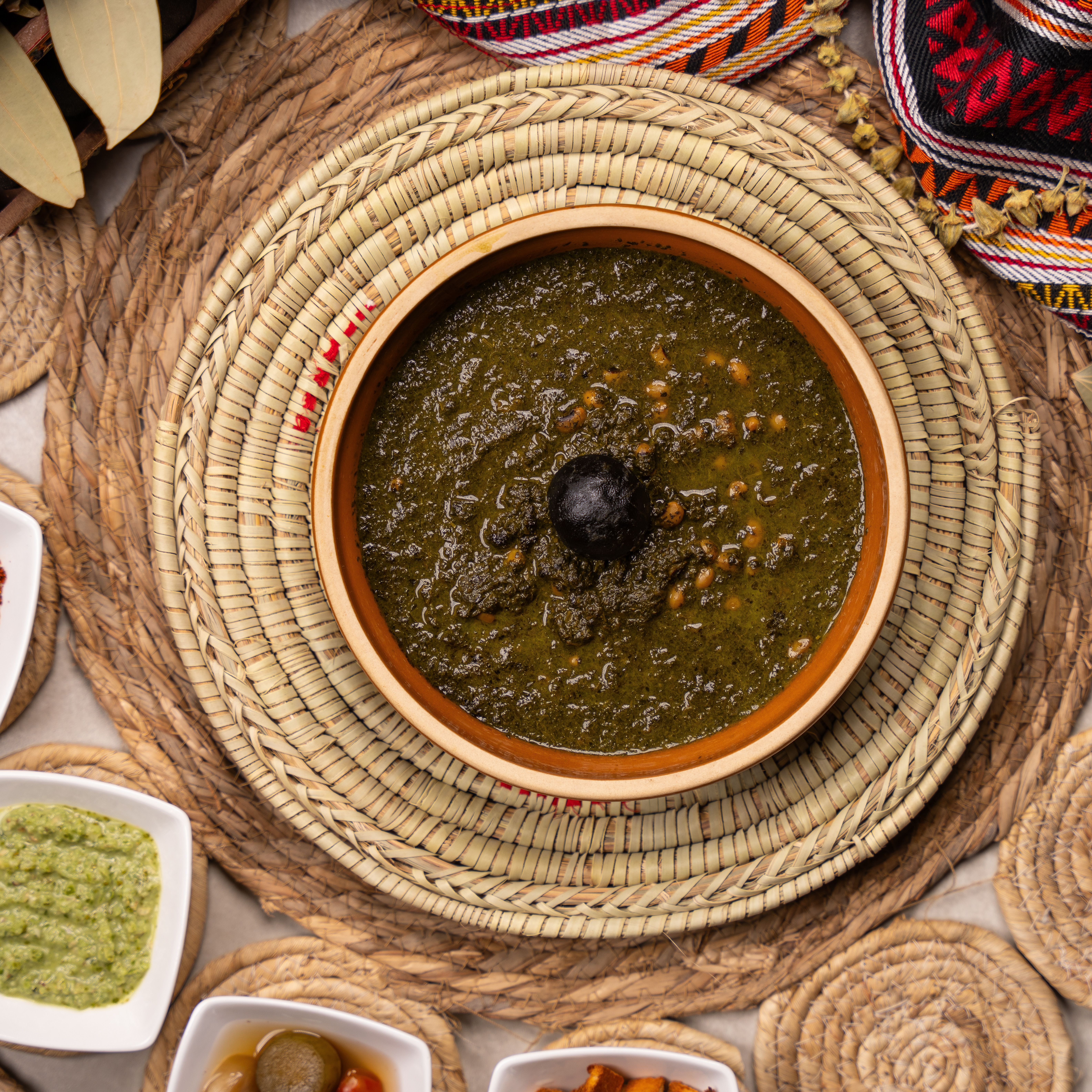
Rourou is a Fijian dish of taro leaves cooked in coconut milk with onion and garlic. The key distinction here is that taro LEAVES (not the taro root) are used. Taro leaves are relatively low in net carbs (~3-4g net carbs per 100g cooked), unlike taro root which is very high-starch and keto-incompatible. The coconut milk base is keto-friendly, providing healthy saturated fats. Onion and garlic add minor carbs but in typical culinary quantities are manageable. A standard serving of this dish is likely compatible with keto, but portion control matters as taro leaves do contain moderate carbs that can accumulate. The coconut milk fat content works strongly in its favor.
Some stricter keto practitioners flag any taro-family plant due to confusion with the high-carb root, or apply a blanket caution to less-common greens where carb data is uncertain. More permissive lazy keto followers would likely approve this outright given the coconut milk fat content and the leafy nature of the main ingredient.
Rourou is a traditional Fijian dish made entirely from whole plant-based ingredients: taro leaves, coconut milk, onion, garlic, and salt. All components are clearly plant-derived with no animal products or animal-derived ingredients. The dish is predominantly whole food in nature, with coconut milk being the most processed element, which is minimally processed and widely accepted in vegan diets. This scores very highly as a whole-food plant-based side dish.
Rourou contains two problematic ingredients under strict paleo rules: salt (added salt is excluded) and coconut milk (which in its commercially prepared form is a processed product, though homemade or minimally processed coconut milk is generally paleo-accepted). More critically, salt is a flat exclusion. Taro leaves, onion, garlic, and coconut milk are otherwise paleo-compatible — taro leaves are a whole-food leafy green available to pre-agricultural peoples, and coconut milk is widely accepted in the paleo community. However, the addition of salt pushes this dish into avoid territory under strict paleo guidelines. Without salt, this dish would rate as an approve or caution depending on how the coconut milk is sourced.
Rourou is a whole-food, plant-based dish built around leafy taro greens, onion, and garlic — all of which align strongly with Mediterranean diet principles emphasizing vegetables and plant foods. However, the primary fat source is coconut milk rather than extra virgin olive oil. Coconut milk is high in saturated fat and is not a traditional Mediterranean ingredient. The dish contains no refined grains, added sugars, or processed ingredients, so it does not contradict Mediterranean principles in a harmful way, but the substitution of coconut milk for olive oil means it is not a core Mediterranean preparation. Swapping coconut milk for a small amount of olive oil would make this dish fully compliant.
Some modern Mediterranean diet interpreters take a broader 'plant-forward whole food' view and would note that coconut milk, while not traditional, replaces meat-based fats with a plant-derived fat and the overall dish profile (leafy greens, aromatics, no processed ingredients) is far closer to Mediterranean ideals than most alternatives. In this more permissive reading, the dish could edge toward approval.
Rourou is a traditional Fijian dish made entirely from plant-based ingredients: taro leaves, coconut milk, onion, and garlic. Every single ingredient is derived from plants, making this dish completely incompatible with the carnivore diet. Taro leaves are a leafy vegetable, coconut milk is a plant-based liquid, and onion and garlic are plant foods explicitly excluded from the carnivore diet. There are no animal products whatsoever in this dish. This is a clear and unambiguous avoid with full consensus across all carnivore diet approaches.
Rourou is a traditional Fijian dish of taro leaves cooked in coconut milk with onion, garlic, and salt. Every ingredient is fully Whole30 compliant: taro leaves are a whole vegetable, coconut milk is an approved natural fat, onion and garlic are vegetables, and salt is explicitly allowed. There are no excluded ingredients — no grains, legumes, dairy, added sugars, alcohol, or any other prohibited substances. This is a simple, whole-food dish that aligns perfectly with the spirit and letter of the Whole30 program.
Rourou contains two significant high-FODMAP ingredients: onion and garlic. Both are among the highest-fructan foods in the FODMAP system and are problematic at virtually any culinary quantity used in a cooked dish. Onion is high-FODMAP even in very small amounts, and garlic is one of the most concentrated sources of fructans known. Coconut milk is low-FODMAP at around 1/2 cup (125ml) but can become high-FODMAP at larger servings due to polyols (sorbitol). Taro leaves (as distinct from taro root) have limited Monash testing data, but taro root is low-FODMAP at standard servings and leaves are unlikely to be a concern. Salt is FODMAP-free. The dish is fundamentally disqualified by the onion and garlic content, which are standard structural ingredients in this preparation and cannot be reduced to negligible amounts without changing the dish entirely.
Monash University clearly rates both onion and garlic as high-FODMAP at any culinary serving, so there is little scientific debate about those ingredients. However, some clinical FODMAP practitioners note that if the dish were adapted using garlic-infused oil (discarding solids) and omitting onion entirely, the coconut milk and taro leaves could potentially form a low-FODMAP base — but this would not reflect traditional Rourou as prepared.
Rourou is a Fijian dish of taro leaves cooked in coconut milk with onion, garlic, and salt. The taro leaves themselves are excellent for DASH — they are rich in potassium, calcium, magnesium, and fiber, closely aligning with core DASH vegetable goals. Onion and garlic are also DASH-friendly aromatics. However, the dish is significantly compromised by two ingredients: coconut milk and salt. Coconut milk is high in saturated fat (primarily from lauric acid) and tropical oils, which DASH explicitly limits. A typical serving of rourou made with full coconut milk can deliver 10–15g of saturated fat. The added salt also raises sodium concerns, though the amount is variable by preparation. These two factors prevent an 'approve' rating despite the otherwise nutrient-dense vegetable base. Using light coconut milk and minimizing salt would substantially improve the DASH compatibility.
NIH DASH guidelines explicitly restrict coconut milk due to its high saturated fat and tropical oil content. However, some updated DASH-aligned clinicians note that emerging research on coconut milk's medium-chain triglycerides (MCTs) and its role in traditional dietary patterns suggests it may not be as harmful as other saturated fats — a small portion of rourou in an otherwise DASH-compliant diet may be acceptable by these interpretations.
Rourou is a Fijian dish of taro leaves cooked in coconut milk with onion and garlic. The taro leaves themselves are a nutritious, low-glycemic leafy green rich in polyphenols and fiber — highly favorable in Zone terms and consistent with Sears' emphasis on colorful vegetables. However, the dish is cooked in coconut milk, which is high in saturated fat (predominantly lauric acid). This creates a Zone tension: the vegetable base is ideal, but the fat profile skews heavily saturated rather than monounsaturated. As a side dish with no lean protein, it also provides no protein block contribution. On the positive side, coconut milk fat does provide caloric density that could serve as fat blocks in a Zone meal, and the dish is low-glycemic and unprocessed. The key issue is that you would need to pair this with lean protein and limit the coconut milk portion to stay within Zone fat block targets (1.5g fat per fat block when paired with animal protein). Used as a small side alongside grilled fish or chicken, it can fit into a Zone meal — but the saturated fat content and absence of protein make it a 'caution' food requiring careful portioning.
Later Sears writings (particularly 'The Anti-Inflammation Zone') take a more nuanced view of coconut-derived saturated fat, acknowledging that medium-chain triglycerides in coconut milk have different metabolic effects than long-chain saturated fats. Some Zone practitioners following Sears' later anti-inflammatory framework would rate the coconut milk more favorably, potentially upgrading this dish. Conversely, strict early-Zone followers applying the original 'favorable/unfavorable' fat classifications would view the saturated fat content more negatively.
Rourou is a traditional Fijian dish of cooked taro leaves simmered in coconut milk with onion and garlic. The taro leaves themselves are a nutritional standout — rich in vitamins A, C, and K, folate, calcium, and polyphenolic antioxidants, with meaningful fiber content. They are strongly anti-inflammatory in profile. Onion and garlic add further anti-inflammatory benefit via quercetin, allicin, and organosulfur compounds. However, the dish is defined by full-fat coconut milk, which is high in saturated fat (predominantly lauric acid). Saturated fat is listed under 'limit' in the anti-inflammatory framework. Coconut milk's saturated fat content is a meaningful concern — a typical serving could deliver 10–15g of saturated fat. The anti-inflammatory profile of lauric acid is genuinely debated (see dissenting view). The dish contains no refined carbohydrates, no seed oils, no added sugars, and no processed ingredients, which is favorable. On balance, the strong vegetable and allium components are partially offset by high saturated fat from coconut milk, landing this dish in cautious territory rather than outright approval for regular consumption. Occasional consumption is reasonable.
Mainstream anti-inflammatory nutrition (Dr. Weil's framework, IF Rating system) treats saturated fat — including from coconut — as pro-inflammatory and recommends limiting it. However, a meaningful camp within functional and ancestral nutrition argues that lauric acid in coconut milk has neutral-to-beneficial effects on HDL cholesterol and immune function, and that traditional whole-food preparations like rourou should not be penalized the same way as processed saturated fats. Some anti-inflammatory practitioners (e.g., those influenced by Paul Jaminet's Perfect Health Diet) would rate this dish more favorably.
Rourou is a Fijian braised taro leaf dish cooked in coconut milk. Taro leaves themselves are nutrient-dense — rich in fiber, vitamins A, C, and K, calcium, and iron — making them an excellent GLP-1 friendly vegetable. The significant drawback is coconut milk, which is high in saturated fat. Depending on preparation, a standard serving can deliver 8–14g of saturated fat, which conflicts with the low-fat priority for GLP-1 patients and can worsen nausea, bloating, and reflux due to slowed gastric emptying. The dish contains no meaningful protein source, limiting its standalone value for GLP-1 patients who need to prioritize protein at every meal. As a side dish served in a small portion alongside a lean protein, it becomes more acceptable. The onion and garlic are beneficial — anti-inflammatory, low-calorie, and digestibility is fine when cooked. The fiber from taro leaves supports the #2 priority and helps counter constipation. Overall, this is a nutrient-rich vegetable dish undermined by saturated fat from coconut milk and zero protein contribution.
Some GLP-1-focused dietitians accept coconut milk in small quantities given its medium-chain triglyceride (MCT) profile, which may digest differently than long-chain saturated fats, and because the vegetable nutrient density of taro leaves is high. Others are more conservative given that any high-fat ingredient reliably worsens GI side effects in a meaningful subset of GLP-1 patients, particularly in early weeks of treatment.
*See how scores were generated at our methodology page.
Nutritional profile
Six traits that cut across every diet.
Fiber & Plants
How much whole-plant food and fiber it delivers.
Healthy Fats
The quality of its fats (unsaturated, omega-3).
Whole / Unprocessed
How close it is to its natural, unprocessed form.
Gut Gentle
How easy it is on digestion (low FODMAP, few irritants).
Low Glycemic
How little it spikes your blood sugar.
Protein Density
How much protein it packs per calorie.
Controversy Index
Higher controversy = more disagreement between diets.
Diet-Specific Tips
 Keto — 5/10
View tips
- Taro leaves (not root) — significantly lower in net carbs than taro root
- Coconut milk provides high healthy fat content, strongly keto-aligned
- Onion and garlic add minor carbs — manageable in typical cooking quantities
- No added sugars, grains, or starchy ingredients
- Portion control recommended to stay within daily net carb limits
- Whole, unprocessed ingredients align with keto food quality preferences
 Vegan — 9/10
View tips
- Taro leaves are a whole plant food and the primary ingredient
- Coconut milk is plant-based and minimally processed
- Onion, garlic, and salt are unambiguously vegan
- No animal products or animal-derived ingredients present
- Whole-food plant-based profile with no synthetic or heavily processed additives
- Traditional preparation uses no dairy or eggs
 Mediterranean — 5/10
View tips
- Taro leaves are nutrient-dense leafy greens, strongly aligned with Mediterranean vegetable emphasis
- Coconut milk is the primary fat — high in saturated fat and not a Mediterranean staple fat
- No extra virgin olive oil present, which is the canonical Mediterranean fat source
- No processed ingredients, refined grains, added sugars, or red meat
- Onion and garlic are classic Mediterranean aromatics
- Dish is entirely plant-based, which is a core Mediterranean principle
 Whole30 — 9/10
View tips
- Taro leaves are a compliant whole vegetable
- Coconut milk is an approved natural fat on Whole30
- Onion and garlic are compliant vegetables
- Salt is explicitly allowed
- No excluded ingredients present
- Simple, whole-food preparation honors the spirit of Whole30
 DASH — 5/10
View tips
- Taro leaves are nutrient-dense: high in potassium, calcium, magnesium, and fiber — core DASH nutrients
- Coconut milk is a tropical oil high in saturated fat, which DASH explicitly limits
- Added salt increases sodium load; amount varies by preparation
- Onion and garlic are DASH-friendly ingredients with no concerns
- Light coconut milk substitution would significantly improve DASH score
- Low-sodium preparation would further improve compatibility
 Zone — 5/10
View tips
- Taro leaves are a low-glycemic, polyphenol-rich leafy green — highly Zone-favorable as a carbohydrate source
- Coconut milk provides primarily saturated fat (lauric acid), not the monounsaturated fat preferred in Zone methodology
- No protein present — must be paired with a lean protein source to constitute a Zone-balanced meal
- Dish is whole-food, unprocessed, and anti-inflammatory in character despite the saturated fat
- Portion size of coconut milk must be controlled to avoid exceeding fat block targets
- Onion and garlic add beneficial polyphenols with minimal macro impact
 Anti-Inflammatory — 6/10
View tips
- Taro leaves are highly nutritious — rich in vitamins A, C, K, folate, antioxidants, and fiber
- Garlic and onion provide allicin, quercetin, and organosulfur anti-inflammatory compounds
- Coconut milk is high in saturated fat (lauric acid), which the anti-inflammatory framework recommends limiting
- No refined carbohydrates, seed oils, added sugars, or artificial additives
- Whole-food, minimally processed preparation
- Coconut milk's inflammatory impact is debated — lauric acid may have neutral or mixed effects vs. other saturated fats
 GLP-1 Friendly — 5/10
View tips
- High saturated fat from coconut milk — primary concern for GLP-1 side effects
- Zero meaningful protein — does not support the #1 GLP-1 dietary priority
- Taro leaves are nutrient-dense with strong fiber, vitamin A, C, K, calcium, and iron content
- Fiber content from taro leaves supports GLP-1 priority #2 and helps prevent constipation
- Acceptable as a small side portion paired with a lean protein source
- Cooked preparation improves digestibility of taro leaves, which must be thoroughly cooked to neutralize oxalates
- Portion-sensitive: a small side serving is more acceptable than a large serving