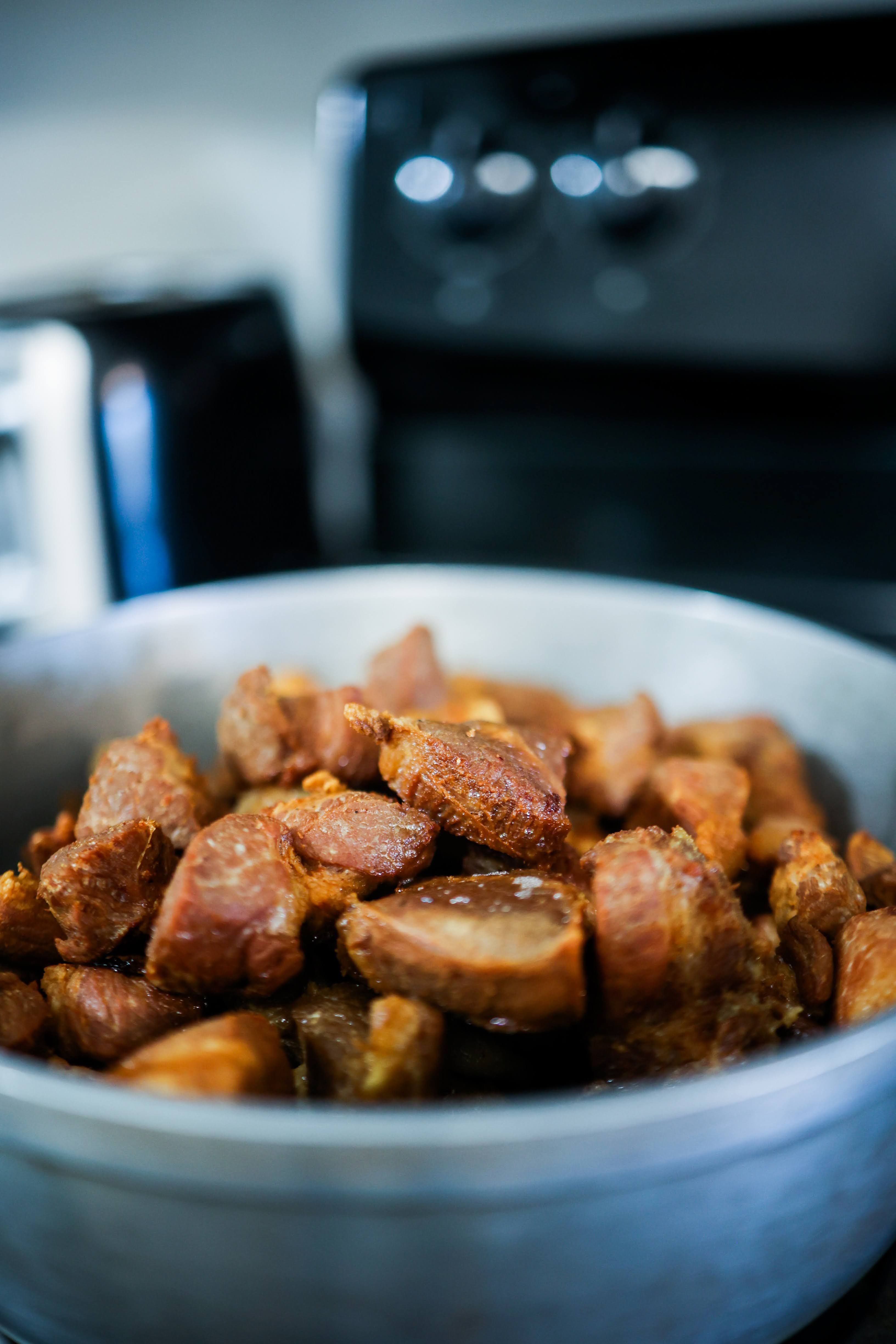
Photo: Caleb Oquendo / Pexels
The diets react (see scores below)
Common Ingredients
- chicken
- soy sauce
- vinegar
- garlic
- bay leaf
- black peppercorns
- onion
- sugar
Specific recipes may vary.
Incompatible with 5 of 11 diets
Diet Ratings
Filipino adobo with chicken is largely keto-compatible, but the inclusion of sugar is a concern. The base recipe uses chicken (high protein, moderate fat), vinegar (zero carbs), soy sauce (low carbs, ~1g per tbsp), garlic and onion (small amounts add minimal carbs), and aromatics. However, the added sugar — even a small amount — is technically against strict keto principles. In practice, if sugar is used sparingly (1-2 tsp across a full batch serving multiple people), the per-serving carb impact may be negligible. The onion also adds a small carb load. A standard serving could land around 3-6g net carbs depending on portion and recipe ratios, making it borderline. With sugar omitted or substituted with a keto sweetener, this dish would easily earn an approve rating.
Strict keto practitioners argue that any added sugar, regardless of quantity, sets a bad precedent and can stall ketosis in insulin-sensitive individuals; they would recommend explicitly substituting with erythritol or monk fruit and eliminating onion to confidently approve the dish.
Filipino Adobo in this preparation is built on chicken as its primary protein, which is an animal product and categorically excluded from a vegan diet. The remaining ingredients — soy sauce, vinegar, garlic, bay leaf, black peppercorns, onion, and sugar — are all plant-based, but the inclusion of chicken makes the dish non-vegan. There is no ambiguity here: poultry is an animal product universally excluded under vegan dietary standards.
Filipino Adobo in its traditional form contains two clear non-paleo ingredients that make it incompatible with the diet. Soy sauce is a fermented soy product — a legume derivative — and also contains wheat, making it doubly excluded (both legumes and grains are strictly off-limits in paleo). Sugar, unless specified as a natural whole-food source, is treated as refined sugar and is also excluded. The remaining ingredients — chicken, vinegar, garlic, bay leaf, black peppercorns, and onion — are all paleo-approved. However, the foundational flavor base of adobo depends on soy sauce, and substituting it (e.g., with coconut aminos) would produce a fundamentally different dish. As written with standard ingredients, this dish cannot be considered paleo-compliant.
Filipino Adobo features chicken as the primary protein, which fits Mediterranean diet guidelines as a moderate, acceptable protein (poultry is permitted a few times per week). The aromatics — garlic, onion, bay leaf, and black peppercorns — are strongly Mediterranean-compatible. However, the dish diverges from Mediterranean principles in several ways: soy sauce is a high-sodium, non-traditional ingredient absent from the Mediterranean pantry; vinegar-based braises are not typical but not harmful; and the addition of sugar, even in small amounts, introduces unnecessary added sugar. The dish lacks olive oil, vegetables, legumes, or whole grains that would make it more Mediterranean-aligned. As a standalone main, it is a moderate protein dish with some problematic elements but no red meat or highly processed components.
Some flexible Mediterranean diet interpretations would view this dish more favorably, noting that vinegar and garlic have long been used in Mediterranean cooking (e.g., escabeche traditions in Spain and Sicily), and that lean chicken with aromatics is broadly compatible. The soy sauce and sugar, however, would still be flagged by stricter Mediterranean clinical guidelines as non-traditional additives.
Filipino Adobo is fundamentally incompatible with the carnivore diet. While chicken is an acceptable animal protein, the dish is prepared with multiple plant-derived and processed ingredients: soy sauce (fermented soy — a legume), vinegar (plant-derived acid), garlic, bay leaf, black peppercorns, onion (all plant foods), and sugar (processed carbohydrate). The marinade and sauce are entirely plant-based condiments. Only the chicken itself is carnivore-compliant. This dish cannot be modified into a carnivore version without being an entirely different preparation — there is no version of traditional Adobo that fits the carnivore framework.
This traditional Filipino adobo recipe contains two excluded ingredients: soy sauce (a soy-based product, and soy is a legume explicitly excluded from Whole30) and sugar (added sugar is explicitly excluded). Both are core, non-optional components of adobo. The dish can be adapted for Whole30 by substituting coconut aminos for soy sauce and omitting the sugar entirely, but as described with these ingredients, it is not compliant.
Filipino Adobo as traditionally prepared contains two significant high-FODMAP ingredients: garlic and onion. Both are among the highest-fructan foods tested by Monash University and are consistently flagged as avoid during the elimination phase at any standard culinary quantity. Garlic is a particularly potent source of fructans — even small amounts (a single clove) exceed safe FODMAP thresholds. Onion is similarly high in fructans and must be completely eliminated during the elimination phase. Soy sauce contains wheat and therefore fructans, adding another FODMAP source, though the amount per serving may be modest. Chicken, vinegar, bay leaf, black peppercorns, and sugar are all low-FODMAP and safe. However, the garlic and onion alone make this dish clearly high-FODMAP in its traditional form. The dish could theoretically be modified using garlic-infused oil instead of garlic cloves, omitting onion entirely or using the green tops of spring onions, and substituting tamari for soy sauce — but as traditionally prepared, it must be avoided.
Filipino adobo features chicken (a lean protein aligned with DASH) alongside garlic, vinegar, and aromatics that are DASH-friendly. However, the dominant concern is soy sauce, which is extremely high in sodium — a single tablespoon contains roughly 900–1,000mg of sodium, and adobo typically uses a generous amount. A standard serving could easily deliver 800–1,500mg of sodium, threatening or exceeding the DASH sodium ceiling (1,500–2,300mg/day). The small amount of sugar is a minor concern. Vinegar, garlic, onion, and bay leaf are positive DASH elements. The dish is not categorically disqualifying — chicken is lean, there is no saturated fat problem, and the aromatics are beneficial — but as traditionally prepared, the sodium load is the critical limiting factor.
NIH DASH guidelines explicitly target sodium reduction as a primary mechanism, making traditional soy-sauce-heavy adobo a problematic choice at standard preparation levels. However, an updated clinical interpretation notes that substituting low-sodium soy sauce (which can cut sodium by 40–50%) and using skinless chicken breast can meaningfully rehabilitate this dish toward DASH compliance, making it acceptable in moderation for non-hypertensive individuals on the standard 2,300mg limit.
Filipino Adobo with chicken is a reasonable Zone-compatible main dish but requires some adjustments. The chicken provides lean protein that fits well within Zone guidelines — approximately 25g per serving aligns with Zone block targets. Vinegar is actually beneficial in Zone eating as it lowers the glycemic index of a meal. Garlic, onion, bay leaf, and black peppercorns are all favorable low-glycemic, polyphenol-rich aromatics that Sears would approve of. The main concerns are: (1) soy sauce contributes significant sodium and often contains added sugars or wheat, though the quantity per serving is small; (2) the small amount of sugar added is an unfavorable carb that raises glycemic load — this should be minimized or eliminated; (3) traditional adobo is often fatty depending on whether skin-on chicken is used. If prepared with skinless chicken, the fat profile improves considerably. The dish lacks the carbohydrate block component needed for a complete Zone meal, so it would need to be paired with low-glycemic vegetables (e.g., steamed broccoli, spinach) to achieve the 40/30/30 ratio. As a protein-and-flavor centerpiece of a Zone meal, it scores well, but the added sugar and potential skin-on preparation keep it at caution.
Some Zone practitioners would rate this more favorably, noting that vinegar actively improves glycemic response (a key Sears principle), the sugar quantity is negligible per serving, and chicken adobo is essentially a lean protein with condiments — easily portioned into Zone blocks. In Sears' later anti-inflammatory writings, polyphenol-rich garlic and the acetic acid in vinegar are highlighted positives. Strict early-Zone followers, however, would flag the added sugar and soy sauce as 'unfavorable' elements requiring substitution.
Filipino chicken adobo has a mixed anti-inflammatory profile. On the positive side, it features several beneficial ingredients: garlic is a well-documented anti-inflammatory with allicin and organosulfur compounds; vinegar (typically cane or coconut) is essentially neutral to mildly beneficial; bay leaf and black peppercorns contain anti-inflammatory polyphenols and piperine respectively; and onion provides quercetin and other flavonoids. Lean chicken is classified as a moderate, acceptable protein on the anti-inflammatory framework. However, soy sauce contributes significant sodium and is a highly processed, high-sodium condiment — chronic high sodium intake is associated with pro-inflammatory endothelial stress. The addition of sugar, even in small quantities, nudges the dish in a pro-inflammatory direction. The dish lacks omega-3-rich ingredients, antioxidant-rich vegetables, or other strongly anti-inflammatory components that would push it into 'approve' territory. Overall, it is a reasonably whole-food dish with anti-inflammatory herbs and aromatics, but the high sodium from soy sauce and added sugar prevent a stronger rating. Prepared with reduced-sodium soy sauce or coconut aminos and minimal sugar, the profile improves meaningfully.
Some anti-inflammatory practitioners would rate traditional soy sauce more favorably, noting that fermented soy products are highlighted positively in Dr. Weil's framework and that the small amounts of sugar typical in adobo are negligible in context. Others, particularly those following stricter anti-inflammatory or AIP protocols, would flag soy sauce as a processed, high-sodium, potentially gut-irritating ingredient and penalize the dish further.
Filipino chicken adobo is a strong GLP-1 companion dish. Chicken is a lean, high-protein primary ingredient that supports muscle preservation during rapid weight loss. The braising liquid — vinegar, soy sauce, garlic, bay leaf, and peppercorns — is low in fat and calories, and vinegar may modestly support blood sugar regulation. The dish is slow-cooked until tender, making it easy to digest. Garlic and onion add micronutrients and prebiotic fiber. The small amount of sugar in a standard recipe is not a meaningful concern. The main caution is sodium: soy sauce contributes significant sodium per serving, which may affect fluid retention and blood pressure. The dish as traditionally made also uses bone-in, skin-on chicken thighs, which increases saturated fat content. Prepared with skinless chicken breast and low-sodium soy sauce, this dish scores higher; prepared with skin-on thighs and full-sodium soy sauce, the score drops toward caution territory.
Some GLP-1-focused dietitians caution against traditional adobo because skin-on, fatty cuts of chicken are commonly used in home preparation, and the high sodium from soy sauce may worsen bloating or fluid retention in GLP-1 patients who are already managing GI side effects. Others consider it an excellent whole-food, high-protein option when prepared with lean cuts and modified soy sauce.
*See how scores were generated at our methodology page.
Nutritional profile
Six traits that cut across every diet.
Fiber & Plants
How much whole-plant food and fiber it delivers.
Healthy Fats
The quality of its fats (unsaturated, omega-3).
Whole / Unprocessed
How close it is to its natural, unprocessed form.
Gut Gentle
How easy it is on digestion (low FODMAP, few irritants).
Low Glycemic
How little it spikes your blood sugar.
Protein Density
How much protein it packs per calorie.
Controversy Index
Higher controversy = more disagreement between diets.
Diet-Specific Tips
 Keto — 5/10
View tips
- Added sugar directly conflicts with keto zero-sugar rule, even in small amounts
- Chicken is an excellent keto protein source
- Vinegar and soy sauce contribute negligible net carbs per serving
- Onion adds minor carb load; acceptable in small quantities
- Per-serving net carbs likely 3-6g — within range but depends on sugar quantity
- Easy to modify: omit sugar or use keto sweetener for full approval
 Mediterranean — 5/10
View tips
- Chicken is an acceptable moderate protein under Mediterranean guidelines
- Garlic and onion are core Mediterranean aromatics
- Soy sauce is high-sodium and non-traditional to the Mediterranean pantry
- Added sugar contradicts Mediterranean diet principles
- No olive oil, vegetables, or whole grains present in the dish
- Vinegar-based cooking has some parallels in Mediterranean cuisine (escabeche)
 DASH — 4/10
View tips
- High sodium from soy sauce — primary DASH concern, potentially 800–1,500mg per serving
- Chicken is a lean DASH-approved protein
- Garlic, onion, vinegar, and bay leaf are DASH-compatible aromatics
- Small amount of sugar is a minor negative but not disqualifying
- Low-sodium soy sauce substitution would significantly improve DASH compatibility
- Skinless chicken breast preferred over skin-on cuts to limit saturated fat
- Portion size and soy sauce quantity are critical variables for sodium management
 Zone — 6/10
View tips
- Chicken is a lean Zone-favorable protein if skinless
- Vinegar lowers glycemic index of the meal — a Zone positive
- Added sugar is an unfavorable carb that should be minimized or omitted
- Soy sauce adds sodium and may contain wheat/sugar; use low-sodium tamari sparingly
- Dish lacks carbohydrate block — must be paired with low-glycemic vegetables for Zone balance
- Garlic and onion are polyphenol-rich, anti-inflammatory Zone-approved aromatics
- Skin-on vs. skinless chicken significantly affects fat content and Zone compatibility
 Anti-Inflammatory — 5/10
View tips
- Garlic: well-documented anti-inflammatory (allicin, organosulfur compounds)
- Black peppercorns: piperine enhances bioavailability of anti-inflammatory compounds
- Onion: quercetin and flavonoid content support anti-inflammatory effect
- Bay leaf: minor polyphenol contribution
- Chicken: lean protein, acceptable in moderate anti-inflammatory framework
- Soy sauce: highly processed, high sodium — associated with pro-inflammatory vascular effects at regular/high intake
- Added sugar: small but nudges profile toward pro-inflammatory
- No omega-3 sources, antioxidant-rich vegetables, or strongly anti-inflammatory fats present
 GLP-1 Friendly — 7/10
View tips
- High protein from chicken — supports muscle preservation
- Braising method produces tender, easy-to-digest meat
- Vinegar base may support modest blood sugar stability
- Garlic and onion provide prebiotic fiber and micronutrients
- High sodium from soy sauce is a meaningful concern
- Traditional preparation with skin-on thighs raises saturated fat
- Small amount of sugar is not a significant concern at typical quantities
- No fried components, carbonation, or empty calories