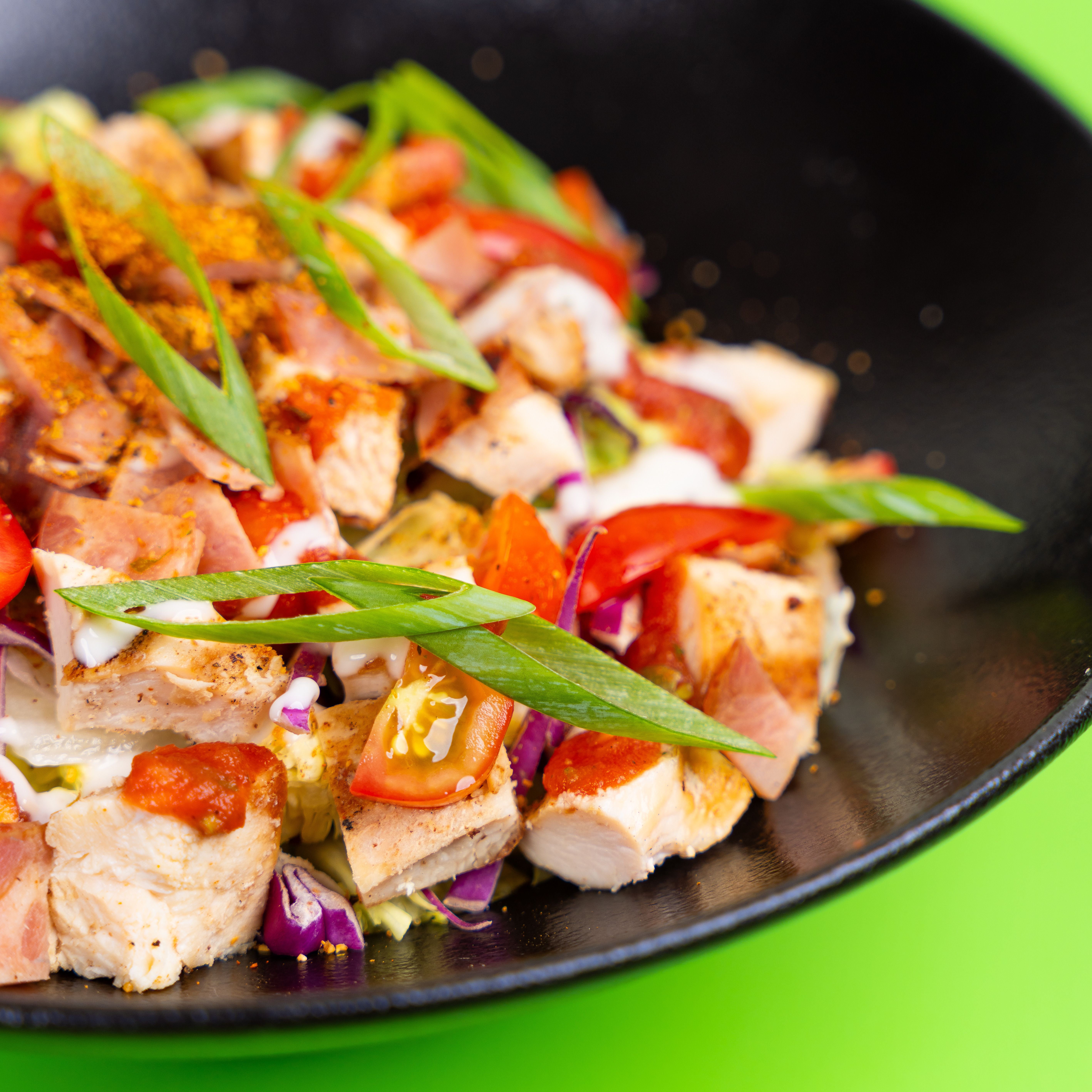
Photo: Ali Dashti / Pexels
Filipino
Bicol Express
The diets react (see scores below)
Common Ingredients
- pork
- coconut milk
- bagoong
- siling labuyo
- garlic
- onion
- ginger
- long chiles
Specific recipes may vary.
Incompatible with 8 of 11 diets
Diet Ratings
Bicol Express is a Filipino pork stew cooked in coconut milk with shrimp paste (bagoong) and various chiles. The core ingredients — pork and full-fat coconut milk — are excellent keto foods, providing high fat and quality protein. Garlic, onion, and ginger add small amounts of net carbs but are used in modest quantities. The main concerns are: (1) bagoong (fermented shrimp paste) sometimes contains added sugar in commercial preparations, contributing hidden carbs; (2) the chile peppers (siling labuyo and long chiles) add some net carbs, though typically minimal in the amounts used; (3) onion contributes moderate carbs and should be kept to a minimum. A standard serving is likely manageable within daily carb limits (~5-8g net carbs per serving), but portion size and the specific bagoong used matter significantly. The dish earns a solid caution — keto-friendly in moderate portions with careful ingredient sourcing.
Some strict keto practitioners would fully approve this dish, arguing that the carb contributors (onion, garlic, chiles) are negligible in typical serving sizes and the fat profile from coconut milk and pork is nearly ideal; they would simply advise using unsweetened bagoong and consider it a near-approve.
Bicol Express contains multiple animal-derived ingredients that make it entirely incompatible with a vegan diet. Pork is a direct animal product (meat), and bagoong is a fermented shrimp or fish paste — both are explicitly excluded under vegan rules. The remaining ingredients (coconut milk, chiles, garlic, onion, ginger) are plant-based, but the presence of pork and bagoong alone is sufficient to classify this dish as a clear avoid.
Bicol Express is disqualified primarily by bagoong (fermented shrimp paste), which is a heavily processed, salt-laden condiment — a staple example of the preserved and processed foods excluded from paleo. Beyond bagoong, the dish as traditionally prepared relies on added salt throughout. The remaining ingredients — pork, coconut milk, siling labuyo, garlic, onion, ginger, and long chiles — are individually paleo-compliant and would otherwise make this dish a strong candidate for approval. However, bagoong is not a gray-area ingredient; it is a processed, fermented paste with significant added salt and often additional preservatives, placing it firmly in the avoid category. Because the offending ingredient is central to the dish's identity and flavor profile (not a minor garnish), the entire dish must be rated avoid rather than caution.
Bicol Express is a poor fit for the Mediterranean diet on multiple fronts. Pork is a red meat, which should be limited to only a few times per month under Mediterranean guidelines. Coconut milk is high in saturated fat and is entirely absent from the Mediterranean culinary tradition, where extra virgin olive oil is the canonical fat source. Bagoong (fermented shrimp paste) is a highly processed, very high-sodium condiment with no Mediterranean equivalent. While garlic, onion, ginger, and chiles are plant-based positives, they do not offset the core structural problems: red meat as the primary protein, saturated-fat-heavy coconut milk as the cooking medium, and a highly processed fermented condiment. This dish fundamentally contradicts Mediterranean dietary principles in its fat profile, protein choice, and use of processed ingredients.
Bicol Express is fundamentally incompatible with the carnivore diet. While it does contain pork as the primary protein, the dish is built around multiple plant-based ingredients that are all excluded from carnivore: coconut milk (plant fat/liquid), siling labuyo and long chiles (plant foods), garlic, onion, and ginger (all plant aromatics). Bagoong (fermented shrimp paste) is animal-derived and would be acceptable on its own, but the overall dish is a heavily plant-laden preparation. The coconut milk alone is a disqualifying plant oil/fat, and the multiple chiles and aromatics compound the exclusions. This is not a borderline case — the majority of the dish's flavor profile and volume comes from plant ingredients.
Bicol Express is a Filipino pork stew cooked in coconut milk with chilies, aromatics, and bagoong (fermented shrimp paste). Most individual ingredients — pork, coconut milk, siling labuyo, long chiles, garlic, onion, and ginger — are fully Whole30 compliant. The critical concern is bagoong, a fermented shrimp paste that is traditional and essential to authentic Bicol Express. Commercially produced bagoong frequently contains added sugar and sometimes MSG or other additives, which would make it non-compliant. However, plain fermented shrimp paste with only shrimp and salt as ingredients does exist and would be compliant. Because bagoong as commonly sold often contains added sugar, this dish requires careful label-reading or sourcing of a clean-ingredient bagoong to be compliant. The dish itself is a whole-food-based savory stew and does not violate the spirit of the program if made with compliant bagoong.
Some Whole30 practitioners may question whether heavily fermented condiments like bagoong — even sugar-free versions — align with the program's whole-food spirit, though official Whole30 guidelines do not categorically exclude fermented foods or shrimp-based condiments. The key official concern is solely the presence of excluded ingredients like added sugar, not the fermentation process itself.
Bicol Express contains multiple high-FODMAP ingredients that make it unsuitable for the elimination phase. Garlic and onion are the primary offenders — both are very high in fructans and are among the most significant FODMAP triggers. These are structural ingredients in this dish, not garnishes, meaning they cannot be consumed in FODMAP-safe quantities within a standard serving. Bagoong (fermented shrimp paste) is a complex fermented product that may contain added onion or garlic and whose FODMAP status is uncertain, adding further risk. Coconut milk is low-FODMAP only at restricted portions (up to 1/2 cup), and in a rich, sauce-heavy dish like Bicol Express it is likely used in quantities that push into moderate-to-high FODMAP territory. Pork itself is low-FODMAP, and ginger and chiles (siling labuyo, long chiles) are generally low-FODMAP at typical cooking quantities. However, the garlic and onion alone are sufficient to classify this dish as high-FODMAP and unsuitable during elimination.
Bicol Express is fundamentally incompatible with DASH diet principles due to multiple high-risk components. Coconut milk is a tropical oil-based product extremely high in saturated fat, which DASH explicitly limits. Pork (especially as commonly prepared in this dish, using fatty cuts) is a red/high-fat meat that DASH discourages. Bagoong (fermented shrimp or fish paste) is extraordinarily high in sodium, often containing 1,000–2,500mg per tablespoon alone — a single serving could push sodium intake beyond the entire daily DASH limit of 1,500–2,300mg. The combination of high saturated fat from coconut milk, fatty pork, and extreme sodium from bagoong makes this dish a triple threat against DASH principles. The beneficial ingredients (garlic, onion, ginger, chiles) are far too minor in nutritional impact to offset these concerns.
Bicol Express presents significant Zone Diet challenges primarily due to its two dominant ingredients: fatty pork and full-fat coconut milk. Pork (especially belly or shoulder cuts typical in this dish) is not a lean protein — it carries substantial saturated fat alongside protein, making it harder to hit the 30% protein / 30% fat ratio without overshooting fat calories. Full-fat coconut milk is extremely high in saturated fat (lauric acid), directly conflicting with Zone's preference for monounsaturated fats. A single cup of coconut milk contains ~46g of mostly saturated fat, which would blow out any Zone fat block budget instantly. Bagoong (fermented shrimp paste) adds sodium and some protein but is not a Zone concern in small quantities. The chiles, garlic, onion, and ginger are all Zone-favorable low-glycemic aromatic vegetables with anti-inflammatory polyphenol benefits. However, the favorable aromatics cannot offset the core protein and fat profile problems. The dish has virtually no carbohydrate component (no rice in the dish itself), meaning it would need to be paired with Zone-appropriate carbs, which is doable — but the fat-to-protein imbalance within the dish itself remains the primary issue. With careful portioning (small serving of pork, minimal coconut milk sauce), it can technically be incorporated into a Zone meal, hence 'caution' rather than 'avoid.'
Bicol Express presents a strongly pro-inflammatory profile driven by several key concerns. Pork, the primary protein, is red/fatty meat that anti-inflammatory guidelines recommend limiting or avoiding — particularly fatty cuts common in this dish (belly, shoulder). Coconut milk, while a subject of some debate, is high in saturated fat and used in large quantities here, contributing significantly to saturated fat load. Bagoong (fermented shrimp paste) is extremely high in sodium, which can promote inflammatory responses and cardiovascular stress. On the positive side, the dish contains genuinely anti-inflammatory ingredients: siling labuyo and long chiles provide capsaicin (anti-inflammatory, metabolism-boosting), garlic offers allicin and quercetin, ginger contains gingerols, and onion provides flavonoids. However, these beneficial spices are insufficient to offset the foundational concerns: a high-saturated-fat, high-sodium base built around fatty pork in full-fat coconut milk. The overall dish pattern — fatty red meat braised in full-fat coconut cream with high sodium — is inconsistent with anti-inflammatory dietary principles for the general population.
Bicol Express is a poor fit for GLP-1 patients on nearly every key criterion. The dish is built on a base of full-fat coconut milk, which is one of the highest-saturated-fat ingredients in Filipino cuisine — a single serving can deliver 20–30g of fat, predominantly saturated. High-fat meals directly worsen the most common GLP-1 side effects: nausea, bloating, reflux, and prolonged gastric discomfort, since slowed gastric emptying means a heavy, fatty dish sits in the stomach even longer than it would for a non-medicated person. The primary protein is pork, typically a fatty cut (pork belly or shoulder is traditional), which compounds the fat burden rather than offsetting it. The dish is also intensely spicy — siling labuyo (bird's eye chili) is among the hottest peppers used in Filipino cooking — and very spicy food is a known trigger for reflux and nausea in GLP-1 patients. Bagoong (fermented shrimp paste) adds significant sodium, which is a secondary concern for water retention and blood pressure. Protein content exists but comes packaged with high saturated fat, so it does not redeem the dish. There is no meaningful fiber. The calorie density is high relative to the small portions GLP-1 patients can comfortably eat, meaning nutrient return per bite is poor. This dish hits four independent avoid triggers simultaneously: high saturated fat, fatty red/processed meat, very spicy ingredients, and low fiber — making avoidance the clear recommendation.
*See how scores were generated at our methodology page.
Nutritional profile
Six traits that cut across every diet.
Fiber & Plants
How much whole-plant food and fiber it delivers.
Healthy Fats
The quality of its fats (unsaturated, omega-3).
Whole / Unprocessed
How close it is to its natural, unprocessed form.
Gut Gentle
How easy it is on digestion (low FODMAP, few irritants).
Low Glycemic
How little it spikes your blood sugar.
Protein Density
How much protein it packs per calorie.
Controversy Index
Higher controversy = more disagreement between diets.
Diet-Specific Tips
 Keto — 6/10
View tips
- Full-fat coconut milk is a premium keto fat source
- Pork provides high-quality protein and fat
- Bagoong may contain added sugar — label check required
- Onion and garlic add moderate net carbs; use sparingly
- Chile peppers contribute minimal net carbs in typical amounts
- Overall net carbs per serving are manageable with portion control
- No grains, starches, or high-sugar ingredients in traditional recipe
 Whole30 — 5/10
View tips
- Bagoong (fermented shrimp paste) commonly contains added sugar — must verify label for compliant version
- Pork, coconut milk, and all aromatics/chiles are fully Whole30 compliant
- Compliant bagoong (shrimp + salt only) does exist and would make this dish approvable
- No grains, dairy, legumes, or other categorically excluded ingredients in the base recipe
- Dish is a whole-food savory stew — does not violate the spirit or 'junk food recreation' rule
 Zone — 4/10
View tips
- Full-fat coconut milk is very high in saturated fat, directly opposing Zone's monounsaturated fat preference
- Pork (typically fatty cuts used in Bicol Express) exceeds Zone's lean protein guidelines
- Dish is naturally very low in carbohydrates, requiring external Zone-compatible carb pairing
- Aromatics (garlic, onion, ginger, chiles) are Zone-favorable anti-inflammatory ingredients
- Bagoong contributes sodium but is used in small quantities and is not a major Zone concern
- Could be incorporated into a Zone meal only with strict portion control and lean pork cuts
- Saturated fat load makes 40/30/30 macro ratio very difficult to achieve