Photo: stillspiica / Pexels
The diets react (see scores below)
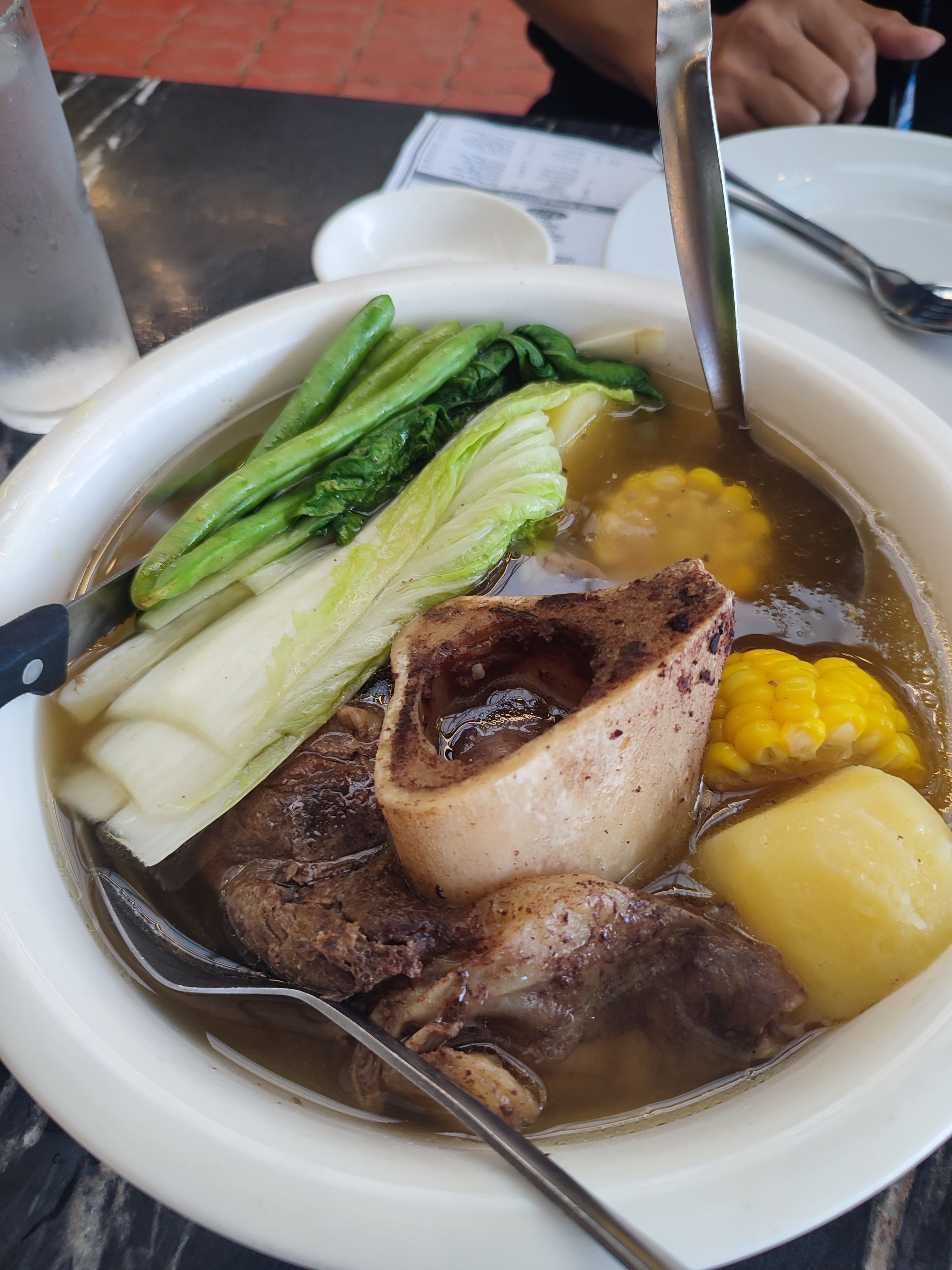
Common Ingredients
- beef shank
- bone marrow
- corn
- cabbage
- potato
- onion
- fish sauce
- peppercorns
- scallion
Specific recipes may vary.
Incompatible with 7 of 11 diets
Diet Ratings
Bulalo as traditionally prepared contains multiple high-carb ingredients that make it incompatible with ketosis. Corn is a starchy grain with approximately 25g net carbs per ear, and potato is a starchy vegetable with roughly 30g net carbs per medium potato — together these two ingredients alone can easily exceed the entire daily carb allowance. The base components (beef shank, bone marrow, cabbage, onion, fish sauce, peppercorns) are largely keto-friendly, but the dish cannot be considered keto-compatible in its traditional form due to the mandatory inclusion of corn and potato. A heavily modified version omitting corn and potato could be approved, but that would no longer represent authentic Bulalo.
Bulalo is a Filipino beef bone marrow soup that is fundamentally incompatible with a vegan diet. Its primary components — beef shank and bone marrow — are direct animal products, making this dish clearly non-vegan. Fish sauce, another key ingredient, is also animal-derived (fermented fish). While the dish does include plant-based components such as corn, cabbage, potato, onion, peppercorns, and scallions, the presence of multiple animal-derived ingredients disqualifies it entirely. There is no meaningful debate within the vegan community about this dish.
Bulalo is a Filipino bone marrow beef shank soup that has a strong paleo foundation — beef shank, bone marrow, cabbage, onion, peppercorns, and scallions are all paleo-approved ingredients. However, several components disqualify the dish as traditionally prepared. Corn is a grain and is explicitly excluded from the paleo diet. Fish sauce, while made from fish, is a processed condiment with added salt, disqualifying it under strict paleo rules. Potato is debated (white potatoes are discouraged by Cordain and The Paleo Diet's official guide, though accepted by others). These problematic ingredients — especially corn and fish sauce — are structural to the dish's identity, not optional garnishes, pushing the overall verdict to avoid.
Some modern paleo practitioners following Mark Sisson's Primal Blueprint or Whole30 guidelines would accept white potatoes as a safe starch, and many paleo-leaning cooks substitute coconut aminos for fish sauce. With those swaps and corn removed, a modified Bulalo could reach caution or even approve territory. The bone broth base and marrow are celebrated superfoods in ancestral health communities.
Bulalo is a Filipino beef shank and bone marrow soup. The primary protein is beef (a red meat), and bone marrow is extremely high in saturated fat — both are among the most discouraged components of the Mediterranean diet. Red meat is limited to a few times per month in Mediterranean guidelines, and bone marrow as a featured ingredient directly contradicts the diet's emphasis on minimizing saturated animal fats in favor of extra virgin olive oil. While the dish does include Mediterranean-friendly vegetables (cabbage, corn, potato, onion, scallion) and uses fish sauce rather than heavily processed condiments, these positives are substantially outweighed by the large quantities of red meat and bone marrow as the dish's centerpiece. The broth is also likely rich in animal fat rendered from the marrow and shank, making the overall fat profile incompatible with Mediterranean principles.
Bulalo is a Filipino beef shank and bone marrow soup that has a carnivore-friendly protein base, but it is loaded with multiple plant-based ingredients that make it incompatible with the carnivore diet. Corn, cabbage, potato, onion, peppercorns, and scallion are all excluded plant foods. Corn and potato are starchy carbohydrates, cabbage and onion are vegetables, and peppercorns and scallion are plant-derived seasonings. Fish sauce is generally acceptable on carnivore, but the dish as a whole is disqualifying. The beef shank and bone marrow components are excellent carnivore foods, but they cannot redeem this dish in its traditional form. To make it carnivore-compatible, all plant ingredients would need to be removed, leaving essentially just a beef bone broth with shank meat and marrow.
Bulalo is a Filipino beef bone marrow soup with wholly compliant ingredients. Beef shank and bone marrow are unprocessed meats and natural fats — both fully allowed. Corn, cabbage, potato, onion, and scallion are all Whole30-compliant vegetables. Fish sauce is generally compliant (it's a fermented condiment made from fish and salt — label-check is wise to confirm no added sugar or non-compliant additives, but plain fish sauce is widely accepted). Peppercorns are a compliant spice. There are no grains, legumes, dairy, added sugars, or other excluded ingredients in this dish as described. This is a straightforward, whole-food, nutrient-dense soup that aligns well with Whole30 principles.
Bulalo contains several high-FODMAP ingredients that make it unsuitable during the elimination phase. Onion is one of the highest-FODMAP foods tested by Monash University, rich in fructans, and is a core aromatic in this dish — even small amounts cooked into broth are problematic as fructans are water-soluble and leach into the liquid. Corn is high-FODMAP above a half-cob (about 38g) serving, and a typical serving in bulalo would exceed this threshold. Cabbage is moderate-FODMAP and can contribute fructans at larger servings typical of this dish. Potato is generally low-FODMAP at a standard serving (~75g), and beef shank, bone marrow, fish sauce, peppercorns, and scallion greens (the green tops only) are low-FODMAP. However, the combination of onion-infused broth and corn at typical Filipino serving sizes makes this dish a clear avoid during elimination. The dish cannot be easily modified without fundamentally changing its character, as onion is integral to the broth base.
Bulalo is a Filipino beef shank and bone marrow soup that presents a mixed DASH profile. On the positive side, it contains several DASH-friendly vegetables (corn, cabbage, potato, onion, scallion) that contribute fiber, potassium, and micronutrients, and the broth-based preparation avoids added fats. However, the dish has significant concerns: bone marrow is extremely high in saturated fat, which DASH explicitly limits; beef shank, while a lean cut compared to other beef, is still red meat, which DASH recommends limiting; and fish sauce is very high in sodium (approximately 1,400mg per tablespoon), making sodium control difficult unless used sparingly. The combination of red meat, bone marrow saturated fat, and high-sodium fish sauce collectively push this dish into caution territory. It could be adapted for DASH by using a small portion of lean beef, skipping or minimizing bone marrow, and replacing fish sauce with a low-sodium seasoning alternative.
NIH DASH guidelines clearly limit both red meat and saturated fat, placing bone marrow-heavy dishes at odds with the protocol. However, some DASH-oriented clinicians note that collagen-rich bone broth soups may offer cardiovascular and gut health benefits not fully captured by macronutrient analysis, and that the vegetable-rich base aligns well with DASH principles — suggesting that a modified, lower-marrow version with reduced fish sauce could be reasonably accommodated within a DASH framework.
Bulalo is a rich Filipino beef bone soup that presents several Zone Diet challenges while retaining some redeeming qualities. On the positive side, it contains lean beef shank (a reasonable protein source when trimmed), cabbage (a favorable low-glycemic vegetable), onion, scallion, and peppercorns — all Zone-friendly. However, the dish has three significant Zone concerns: (1) Bone marrow is extremely high in saturated fat, making it difficult to stay within Zone fat guidelines and skewing fat quality away from the preferred monounsaturated sources. (2) Corn and potato are both 'unfavorable' high-glycemic carbohydrates in Zone terminology — potato in particular is on Sears' avoid list due to its high glycemic index, and corn is similarly discouraged. Together they create a high-glycemic carb load. (3) The broth itself becomes laden with rendered saturated fat from the marrow and bone. With careful modification — removing the marrow, skipping the potato, limiting corn portions, and skimming the fat — Bulalo could be restructured into a more Zone-compliant meal using the cabbage, beef shank, and aromatics. As traditionally prepared, however, it struggles to meet the 40/30/30 ratio and leans heavily toward unfavorable fats and high-glycemic carbs.
Some Zone practitioners argue that traditional bone broth-based soups align with Dr. Sears' later anti-inflammatory nutritional work, which acknowledges the benefits of collagen and gelatin from bone broth. In 'The Zone Diet' and later writings, Sears softened his position on some saturated fats in the context of an otherwise anti-inflammatory diet. A practitioner following later-era Zone principles might rate Bulalo higher if prepared with minimal marrow, reduced potato, and emphasis on the cabbage and beef shank — treating it as a modifiable, broth-based protein meal rather than a categorically unfavorable dish.
Bulalo is a Filipino beef bone marrow soup built around beef shank and bone marrow — both of which are significant sources of saturated fat, which anti-inflammatory frameworks like Dr. Weil's generally recommend limiting. Bone marrow in particular is very high in saturated fat and calories. However, the dish also contains meaningful anti-inflammatory contributors: cabbage and corn provide fiber and antioxidants; onion and scallion contain quercetin and organosulfur compounds with anti-inflammatory properties; peppercorns contain piperine, which has demonstrated anti-inflammatory effects and enhances curcumin absorption; and the long bone broth cooking process may yield collagen-derived compounds (glycine, proline) that some researchers associate with gut lining support and modest anti-inflammatory benefit. Fish sauce is high in sodium but adds minimal inflammatory concern at typical serving amounts. The vegetable component is relatively thin — a more vegetable-forward version could shift the profile somewhat. Overall, the saturated fat load from beef shank and especially bone marrow is the dominant concern here, placing Bulalo in the 'moderate/limit' category of anti-inflammatory eating rather than outright avoidance. It can be consumed occasionally rather than regularly.
Some researchers and nutritional practitioners, including those aligned with ancestral or paleo-adjacent frameworks, argue that marrow fat and collagen-rich bone broth are actually anti-inflammatory due to glycine content, fat-soluble vitamins (A, K2), and gut-healing properties — contrasting with Dr. Weil's and mainstream anti-inflammatory guidance that emphasizes limiting saturated fat from red meat and animal fats. The bone broth movement (popularized by figures like Dr. Kellyann Petrucci) specifically positions marrow and collagen as inflammation-reducers.
Bulalo is a Filipino bone broth soup made by simmering beef shank and bone marrow for hours, producing a rich, collagen-heavy broth that is notably high in saturated fat — particularly from the bone marrow, which is nearly pure fat. The beef shank itself offers a reasonable protein source (roughly 20-25g per serving), but the overall fat load of the dish, especially from the marrow, is a significant concern for GLP-1 patients who are prone to nausea, bloating, and reflux when consuming high-fat meals. On the positive side, the soup format is easy to eat in small portions, the broth contributes to hydration, and the vegetable components (cabbage, corn, potato, onion, scallion) add fiber and micronutrients. Cabbage in particular is a good source of fiber and is easy to digest when cooked soft in soup. However, potato adds starchy carbohydrates with moderate fiber, and corn adds additional carbohydrate load. The peppercorns and fish sauce are generally fine in typical amounts. The primary concern is the bone marrow: it is extremely calorie-dense and high in saturated fat per small volume, which is problematic given GLP-1 patients' reduced appetite — the marrow can crowd out more nutritionally valuable foods. Modified versions of bulalo that skip or significantly limit the marrow and skim fat from the broth would score considerably higher (6-7). As served in a traditional preparation, this dish sits firmly in caution territory.
Some GLP-1-focused dietitians accept bone broth-based soups as beneficial due to their collagen, gelatin, and hydration properties, and would permit bulalo if the marrow is avoided and the broth is defatted — rating it closer to a 6. Others flag all fatty beef preparations as problematic for GLP-1 patients regardless of preparation method, citing the consistent clinical pattern of high-fat meals worsening gastroparesis-like symptoms in this population.
*See how scores were generated at our methodology page.
Nutritional profile
Six traits that cut across every diet.
Fiber & Plants
How much whole-plant food and fiber it delivers.
Healthy Fats
The quality of its fats (unsaturated, omega-3).
Whole / Unprocessed
How close it is to its natural, unprocessed form.
Gut Gentle
How easy it is on digestion (low FODMAP, few irritants).
Low Glycemic
How little it spikes your blood sugar.
Protein Density
How much protein it packs per calorie.
Controversy Index
Higher controversy = more disagreement between diets.
Diet-Specific Tips
 DASH — 4/10
View tips
- Bone marrow is very high in saturated fat, conflicting with DASH fat limits
- Red meat (beef shank) is a limited food in DASH guidelines
- Fish sauce is extremely high in sodium (~1,400mg/tbsp), posing a sodium challenge
- Vegetables (cabbage, corn, potato, onion, scallion) are DASH-friendly and nutrient-rich
- Broth-based preparation avoids added oils or frying
- Low-sodium fish sauce or reduced fish sauce quantity could significantly improve DASH compatibility
- Portion control of marrow and beef is critical if consumed on a DASH diet
 Zone — 4/10
View tips
- Bone marrow is very high in saturated fat, conflicting with Zone's preference for monounsaturated fats
- Potato is explicitly listed as an unfavorable/avoid carbohydrate in Zone Diet due to high glycemic index
- Corn is a high-glycemic carbohydrate discouraged in Zone Diet
- Beef shank is a lean, Zone-compatible protein source when trimmed of excess fat
- Cabbage is a favorable low-glycemic Zone carbohydrate
- Traditional preparation results in a fat-heavy, high-glycemic carb profile that disrupts 40/30/30 ratio
- Dish can be significantly improved for Zone compliance by omitting marrow, potato, and limiting corn
 Anti-Inflammatory — 4/10
View tips
- Beef shank and bone marrow are high in saturated fat — a pro-inflammatory concern under anti-inflammatory frameworks
- Bone marrow is one of the richest dietary sources of saturated fat, flagged for limitation
- Red meat (beef) is in the 'limit' category for anti-inflammatory eating
- Cabbage, corn, onion, and scallion contribute fiber, antioxidants, and quercetin
- Peppercorns provide piperine, which has anti-inflammatory and bioavailability-enhancing properties
- Long-simmered bone broth yields glycine and collagen peptides, with debated anti-inflammatory potential
- Fish sauce adds sodium but negligible inflammatory concern at culinary amounts
- Dish lacks omega-3-rich ingredients, extra virgin olive oil, or emphasized anti-inflammatory spices (e.g., turmeric, ginger)
- Acceptable occasionally; not suitable as a dietary staple under anti-inflammatory principles
 GLP-1 Friendly — 4/10
View tips
- Bone marrow is extremely high in saturated fat and calorie-dense, worsening GLP-1 GI side effects
- Beef shank provides meaningful protein (~20-25g per serving) but is a moderate-fat cut
- Soup format supports hydration and small-portion eating
- Cabbage, corn, and potato add fiber and micronutrients but also carbohydrate load
- Traditional preparation produces a high-fat broth that may trigger nausea, bloating, or reflux
- Defatting the broth and omitting marrow significantly improves the nutritional profile
- Not a high-protein-density dish relative to its fat and calorie content