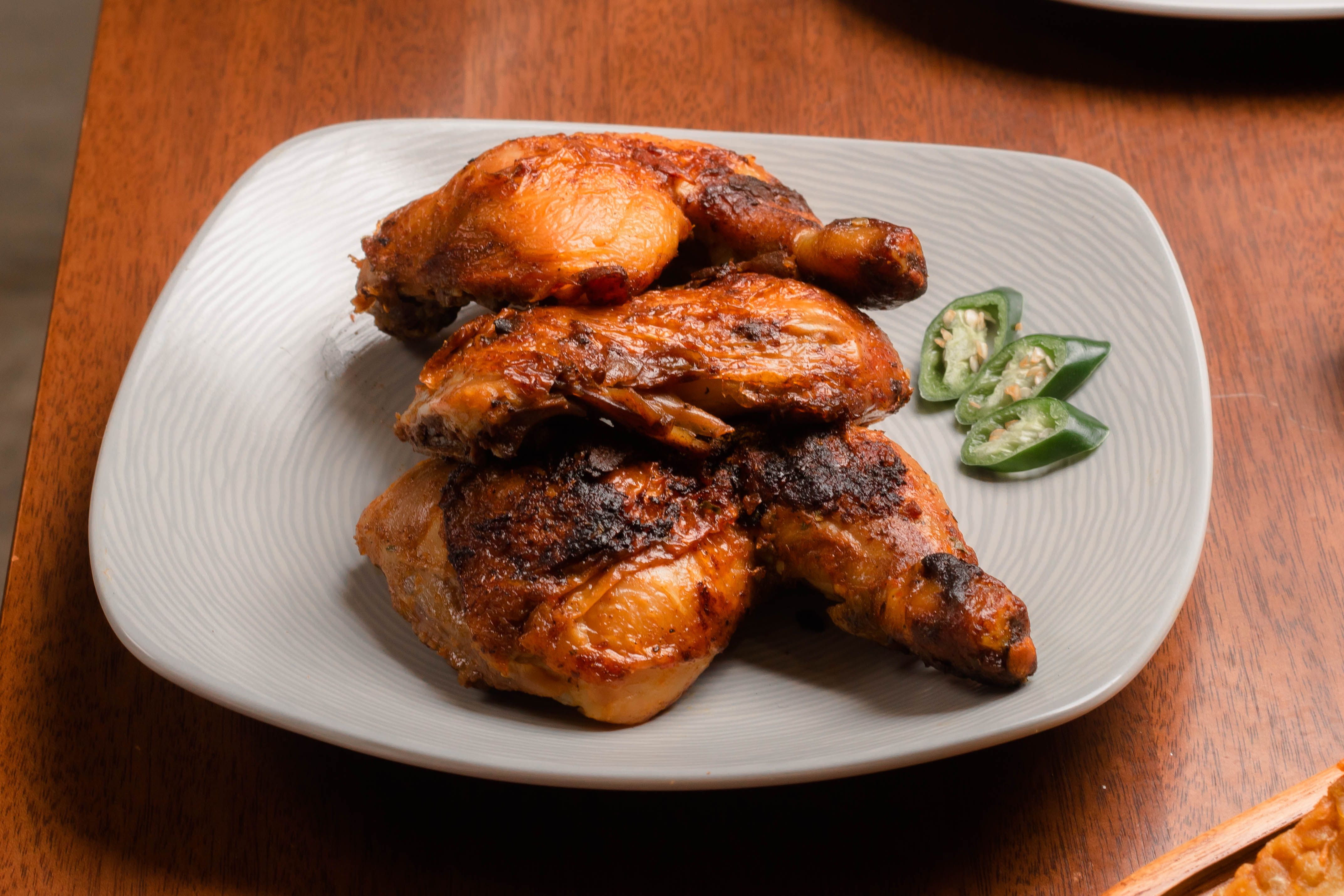
Filipino
Chicken Inasal
The diets react (see scores below)
Common Ingredients
- chicken
- annatto
- lemongrass
- vinegar
- garlic
- ginger
- calamansi
- soy sauce
Specific recipes may vary.
Incompatible with 5 of 11 diets
Diet Ratings
Chicken Inasal is primarily grilled chicken marinated in vinegar, calamansi, lemongrass, garlic, ginger, soy sauce, and annatto. The protein base (chicken) is excellent for keto, and most marinade ingredients contribute negligible carbs. However, soy sauce contains a small amount of carbs and wheat in many formulations, calamansi juice adds minimal sugar, and annatto can carry trace carbs. In typical restaurant or home preparation, small amounts of sugar are often added to the marinade — this is the main concern. Without added sugar, this dish would be a solid keto approve. With a standard marinade that includes even a modest amount of sugar, it warrants caution. The net carbs per serving are likely low (2-5g) but depend heavily on preparation. Choosing skin-on chicken thighs maximizes fat content, aligning well with keto macros.
Strict keto practitioners flag soy sauce (often contains wheat/gluten and trace carbs) and warn that traditional Inasal marinades frequently include sugar or banana ketchup not listed in base ingredients; they recommend verifying preparation or substituting coconut aminos. Lazy keto adherents generally consider this dish fine given the low net carb impact per serving.
Chicken Inasal is a Filipino grilled chicken dish with chicken as its primary and defining ingredient. Chicken is an animal product and is entirely incompatible with a vegan diet. There is no ambiguity here — all vegan organizations and ethical frameworks unequivocally exclude poultry. The marinade ingredients (annatto, lemongrass, vinegar, garlic, ginger, calamansi, soy sauce) are all plant-based, but the dish cannot be considered vegan in any form due to the chicken itself.
Chicken Inasal is disqualified primarily by soy sauce, which is a soy-based, grain-processed condiment — both legume and grain (wheat) derived — firmly excluded from the paleo diet. Soy sauce also contains added salt and is a processed food product. All other ingredients are paleo-compliant: chicken is an approved protein, annatto (achiote) is a natural seed-based spice, lemongrass and ginger are herbs/roots, garlic is a vegetable, vinegar (particularly cane or coconut vinegar common in Filipino cooking) is generally accepted in moderation, and calamansi is a citrus fruit. The dish as traditionally prepared cannot be approved due to the soy sauce component, which is a core non-negotiable exclusion in all mainstream paleo frameworks.
Chicken Inasal features grilled chicken marinated in vinegar, garlic, ginger, lemongrass, calamansi, and annatto — a preparation method that aligns reasonably well with Mediterranean diet principles. Chicken (poultry) is an acceptable moderate-frequency protein in the Mediterranean diet, ideally consumed a few times per week. The marinade is built on whole, natural aromatics and acidic components (vinegar, calamansi) with no refined grains or added sugars. The primary concern is soy sauce, which adds significant sodium and is not a Mediterranean pantry staple. The dish also lacks olive oil as the fat source, and annatto-based chicken fat (often used for basting in authentic Inasal) can add saturated fat. Overall, this is a relatively clean poultry dish with whole-food flavoring, landing it firmly in the 'caution' zone as an occasional, moderate choice.
Some Mediterranean diet practitioners applying broader, more flexible interpretations would view this dish more favorably, noting that the grilling method, vinegar-based marinade, and abundant aromatics mirror techniques found in traditional Southern European and Eastern Mediterranean cooking. The high sodium from soy sauce, however, remains a consistent concern across interpretations.
Chicken Inasal is heavily incompatible with the carnivore diet. While chicken itself is an acceptable animal protein, this dish is defined by its marinade, which consists almost entirely of plant-derived ingredients: annatto (plant-based coloring/flavoring), lemongrass (plant), vinegar (typically plant-derived fermented product), garlic (plant), ginger (plant), calamansi (citrus fruit), and soy sauce (fermented soy — a legume, and one of the most anti-carnivore ingredients possible). The chicken accounts for only one of eight ingredients. The dish cannot be adapted without stripping it of its identity entirely. Soy sauce alone is a disqualifying ingredient due to its legume and grain base. This is essentially a plant-marinade dish that happens to contain chicken.
Chicken Inasal contains soy sauce, which is a soy-based product and therefore excluded on Whole30. Soy in all forms — including soy sauce — is explicitly prohibited. All other ingredients (chicken, annatto, lemongrass, vinegar, garlic, ginger, calamansi) are Whole30-compliant. The dish could be made compliant by substituting coconut aminos for soy sauce, which is the standard Whole30-approved soy sauce replacement.
Chicken Inasal contains garlic as a primary marinade ingredient, which is high-FODMAP due to fructans and problematic at any typical cooking quantity. Garlic is one of the most concentrated sources of fructans and cannot be made low-FODMAP by cooking — unlike garlic-infused oil, the fructans remain in the marinade and penetrate the meat. The remaining ingredients are largely low-FODMAP: chicken is free of FODMAPs, annatto (achuete) is low-FODMAP as a coloring/flavoring spice used in small amounts, lemongrass is low-FODMAP at standard culinary doses, vinegar (cane or white) is low-FODMAP, ginger is low-FODMAP at up to 1 tsp per serve, calamansi juice is low-FODMAP in small quantities (similar to other citrus), and soy sauce is low-FODMAP at up to 2 tablespoons. However, garlic is the critical disqualifier — a traditional Chicken Inasal marinade uses multiple garlic cloves, and the fructans infuse into the meat during marination. This makes the dish high-FODMAP during the strict elimination phase.
Some FODMAP practitioners suggest that if garlic is removed or replaced with garlic-infused oil in the marinade, Chicken Inasal can be made low-FODMAP — Monash University confirms garlic-infused oil is safe. However, as traditionally prepared with whole garlic cloves in the marinade, the dish is generally considered unsuitable during elimination phase since fructans leach into the marinade liquid and coat/penetrate the meat.
Chicken Inasal is a Filipino grilled chicken dish with several DASH-friendly elements: lean poultry as the primary protein, aromatic herbs and citrus (lemongrass, calamansi, ginger, garlic), and vinegar — all low in sodium and consistent with DASH principles. However, soy sauce is a significant sodium contributor, with a single tablespoon containing roughly 900–1,000mg sodium. Depending on the marinade-to-meat ratio and whether skin-on chicken is used, sodium and saturated fat intake can vary considerably. The grilling method is positive, avoiding added oils. Without low-sodium soy sauce substitution, the dish sits in caution territory due to sodium load. If skin is removed and low-sodium soy sauce is used, this dish moves closer to DASH-approved.
NIH DASH guidelines flag soy sauce as a high-sodium condiment to limit; however, updated clinical interpretations note that when soy sauce is used as a marinade component (much of which is discarded or partially metabolized during grilling) and paired with potassium-rich ingredients like calamansi and garlic, some DASH-oriented dietitians consider moderate portions acceptable within the daily sodium budget, especially if the rest of the day's meals are low in sodium.
Chicken Inasal is a Filipino grilled chicken dish that aligns well with Zone Diet principles. The primary protein — chicken — is lean and easily portioned into Zone blocks (~25g protein per meal). The marinade ingredients (annatto, lemongrass, vinegar, garlic, ginger, calamansi, soy sauce) are predominantly low-calorie, low-glycemic flavor components that add negligible macronutrient distortion. Vinegar and calamansi (a Filipino citrus) actually have a favorable effect on glycemic response. Annatto (achuete) is a natural coloring spice with polyphenol properties, consistent with Sears' anti-inflammatory focus. The dish is typically grilled, not fried, minimizing added fat. The main Zone consideration is the soy sauce, which adds sodium and a small amount of carbohydrate, but in marinade quantities this is not a meaningful concern. To complete a Zone meal, one would pair appropriate portions of grilled chicken with low-glycemic vegetables and a small amount of monounsaturated fat (e.g., a drizzle of olive oil or a few slices of avocado). Chicken Inasal is essentially a well-seasoned lean protein source — an ideal Zone building block.
Chicken Inasal features a marinade built almost entirely from anti-inflammatory powerhouses. Lemongrass contains flavonoids and antioxidants with demonstrated anti-inflammatory properties. Garlic (allicin) and ginger (gingerols, shogaols) are well-established anti-inflammatory spices. Calamansi and vinegar provide acidity without adding refined sugars or inflammatory fats. Annatto (achiote) contains bixin and norbixin — carotenoid pigments with antioxidant activity. Lean chicken (especially skinless) is a moderate-category protein that doesn't carry the pro-inflammatory load of red meat. The cooking method — traditionally grilled — avoids deep-frying and added inflammatory fats. The main caution is soy sauce, which is high in sodium and typically contains refined additives; used as a marinade component in modest quantities, it's not disqualifying but worth noting. Overall, this dish represents a favorable anti-inflammatory profile driven by its herb-and-spice-heavy marinade and lean protein base.
Soy sauce contains wheat (gluten) and high sodium, which some anti-inflammatory and autoimmune practitioners (AIP, Dr. Tom O'Bryan) flag as potential gut irritants or drivers of systemic inflammation in sensitive individuals. Additionally, grilling at high heat can produce heterocyclic amines (HCAs) and advanced glycation end products (AGEs), which some researchers associate with low-grade inflammation — though mainstream anti-inflammatory guidance (including Dr. Weil) does not categorically prohibit grilling.
Chicken Inasal is a Filipino grilled chicken dish marinated in calamansi, vinegar, lemongrass, garlic, ginger, soy sauce, and annatto. The base protein is chicken, which is an excellent GLP-1-friendly protein source — high protein density, relatively low fat (especially if breast or thigh is skinless), and easy to digest when grilled rather than fried. The marinade ingredients are all GLP-1-compatible: vinegar and calamansi are acidic but used in small quantities, lemongrass and ginger are actually gut-soothing and may help with nausea, and annatto is a natural colorant with no meaningful nutritional impact. Soy sauce adds sodium but no fat or significant calories. Grilling is the ideal cooking method for GLP-1 patients — no added fats, easy digestibility, not greasy. The dish is naturally portion-friendly and nutrient-dense per calorie. The primary variable is the cut of chicken used: breast scores higher (leaner), bone-in thigh with skin scores lower due to higher saturated fat content. Traditional Inasal is often served with chicken oil (achuete oil drizzled on top) — if this is included, the fat content rises meaningfully and warrants caution. Rated on the standard preparation without added chicken oil.
Some GLP-1 nutrition clinicians note that the acidity of calamansi and vinegar marinades, combined with slowed gastric emptying, may aggravate acid reflux or nausea in sensitive patients, particularly in the early weeks of medication. Additionally, if bone-in skin-on thighs are used with the traditional chicken oil drizzle, the saturated fat content becomes a concern that some RDs would use to downgrade this dish to caution.
*See how scores were generated at our methodology page.
Nutritional profile
Six traits that cut across every diet.
Fiber & Plants
How much whole-plant food and fiber it delivers.
Healthy Fats
The quality of its fats (unsaturated, omega-3).
Whole / Unprocessed
How close it is to its natural, unprocessed form.
Gut Gentle
How easy it is on digestion (low FODMAP, few irritants).
Low Glycemic
How little it spikes your blood sugar.
Protein Density
How much protein it packs per calorie.
Controversy Index
Higher controversy = more disagreement between diets.
Diet-Specific Tips
 Keto — 6/10
View tips
- Chicken is a keto-friendly protein; skin-on thighs add beneficial fat
- Calamansi and vinegar contribute minimal net carbs in marinade quantities
- Soy sauce may contain wheat and adds small carbs; coconut aminos are a stricter alternative
- Annatto (achuete) contributes negligible carbs in typical amounts
- Traditional recipes often include added sugar — a key variable that determines keto compatibility
- Net carbs per serving are likely 2-5g if no sugar added, higher if sugar is included
 Mediterranean — 5/10
View tips
- Chicken is a moderate/acceptable protein — fits 'a few times per week' guideline
- Grilling is a preferred, healthy cooking method in Mediterranean diet
- Marinade uses whole-food aromatics: garlic, ginger, lemongrass, calamansi, vinegar — all diet-compatible
- Soy sauce adds high sodium and is not a Mediterranean staple ingredient
- No olive oil used; traditional annatto chicken fat basting adds saturated fat
- No refined grains, added sugars, or highly processed ingredients
- Non-Mediterranean cuisine, but ingredient profile is relatively clean
 DASH — 5/10
View tips
- Soy sauce contributes significant sodium — primary concern for DASH compliance
- Lean chicken is a DASH-recommended protein source
- Grilling is a DASH-friendly cooking method (no added saturated fat)
- Calamansi, lemongrass, ginger, and garlic are DASH-compatible aromatics with potential blood pressure benefits
- Annatto (achuete) is a natural colorant with no significant sodium or fat concerns
- Skin-on vs. skin-off chicken affects saturated fat content significantly
- Low-sodium soy sauce substitution would raise the score to 7–8 (approve range)
- Vinegar contributes negligible sodium and may support glycemic and metabolic health
 Zone — 8/10
View tips
- Lean chicken protein maps directly to Zone protein blocks (~7g per block)
- Grilling method keeps fat content low and avoids added seed oils
- Marinade ingredients (vinegar, calamansi, garlic, ginger) are low-glycemic and anti-inflammatory — consistent with Zone polyphenol focus
- Annatto provides polyphenols, supporting Sears' anti-inflammatory framework
- Soy sauce adds sodium and trace carbs but in negligible quantities at marinade levels
- Dish requires pairing with low-GI carbs and monounsaturated fat to complete a balanced Zone meal
 Anti-Inflammatory — 7/10
View tips
- Lemongrass: antioxidant flavonoids, anti-inflammatory compounds
- Garlic: allicin with well-documented anti-inflammatory effects
- Ginger: gingerols and shogaols reduce inflammatory cytokines
- Annatto: carotenoid pigments (bixin, norbixin) with antioxidant activity
- Lean chicken: moderate protein, low saturated fat vs. red meat
- Calamansi: vitamin C, citrus polyphenols
- Vinegar: acetic acid, may support blood sugar regulation
- Soy sauce: high sodium, potential gluten concern — mild pro-inflammatory caveat
- Grilling method: avoids added oils but may produce HCAs at high heat
 GLP-1 Friendly — 8/10
View tips
- High-protein chicken base supports the 100-120g daily protein target
- Grilled preparation avoids added fats and supports easy digestibility
- Lemongrass and ginger in marinade may have gut-soothing properties beneficial for GLP-1 side effect management
- Score depends heavily on chicken cut — skinless breast is ideal, skin-on thigh with chicken oil drizzle reduces score
- Vinegar and calamansi acidity may worsen reflux in some GLP-1 patients
- Soy sauce adds sodium — relevant for patients with hypertension but not a GLP-1-specific concern
- No fiber contribution — should be paired with vegetables or legumes to support fiber targets