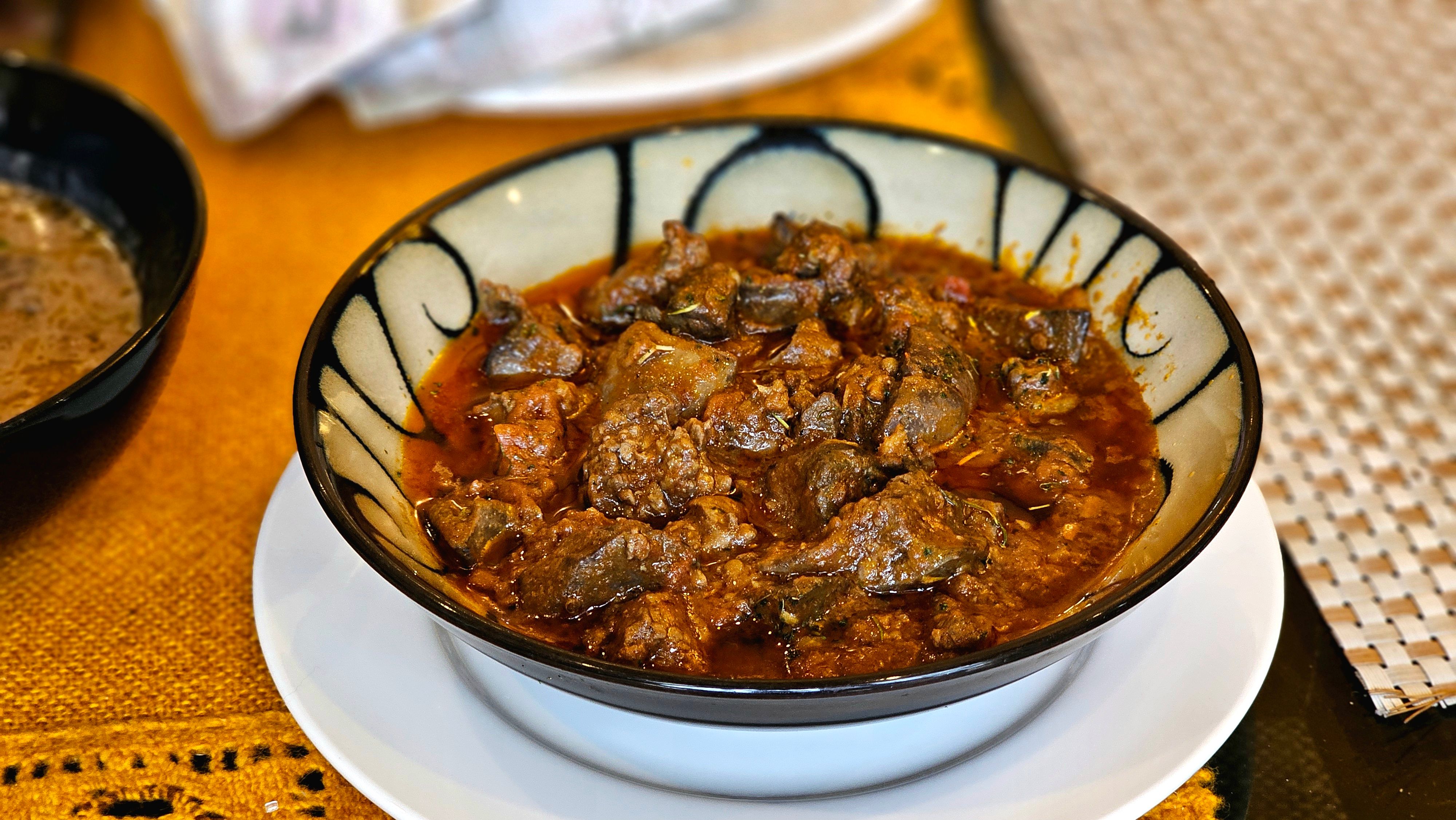
Photo: Muhammad Khawar Nazir / Pexels
The diets react (see scores below)
Common Ingredients
- pork
- pork blood
- vinegar
- garlic
- onion
- ginger
- siling haba
- fish sauce
- bay leaf
Specific recipes may vary.
Incompatible with 7 of 11 diets
Diet Ratings
Dinuguan is a Filipino pork blood stew that is largely keto-compatible but requires attention to the blood content. Pork itself is excellent for keto — high fat, high protein, zero carbs. The aromatics (garlic, onion, ginger, siling haba) and condiments (vinegar, fish sauce, bay leaf) are used in small quantities and add minimal net carbs. The main concern is pork blood, which contains glycogen and natural sugars — approximately 4-5g net carbs per 100ml. A standard serving of dinuguan may contain 150-200ml of blood-based broth, contributing roughly 6-10g net carbs per serving, which is manageable within a daily keto budget but not negligible. The dish is otherwise free of grains, added sugars, and starchy vegetables. With portion control and accounting for blood carbs in the daily total, this dish can fit keto.
Some strict keto practitioners flag organ-based blood products due to their glycogen content and argue that the carb load from blood is underestimated in standard tracking tools, making it a food to avoid for those with strict sub-20g net carb targets or stalled ketosis.
Dinuguan is a Filipino pork blood stew that is entirely incompatible with a vegan diet. The dish contains multiple animal-derived ingredients: pork (meat), pork blood (an animal by-product used as the defining base of the stew), and fish sauce (derived from fermented fish). These are unambiguous animal products with no debate within the vegan community. There are no plant-based substitutes present that could redeem this dish — it is defined by its animal components.
Dinuguan is a Filipino pork blood stew with a largely paleo-compatible ingredient list — pork, pork blood, vinegar, garlic, onion, ginger, chili, and bay leaf are all whole, unprocessed foods available to hunter-gatherers. Organ blood was absolutely consumed by Paleolithic humans and is nutrient-dense. However, the dish is pulled into caution territory primarily by fish sauce, which is a fermented, salted condiment with added salt — a processed ingredient excluded under strict paleo rules. Vinegar is also mildly debated (fermented/processed), though most paleo practitioners accept it. The core of the dish is ancestrally sound, but the fish sauce additive prevents a clean approval.
Strict Cordain-school paleo would flag fish sauce for its added salt and processed/fermented nature, and some would question vinegar. Conversely, more permissive paleo frameworks (e.g., Mark Sisson's Primal Blueprint) would likely approve this dish outright, viewing fermented condiments used in small quantities as acceptable and pork blood as a highly ancestral food.
Dinuguan is a Filipino pork blood stew that fundamentally conflicts with Mediterranean diet principles. The dish centers on pork (red meat) and pork blood as its primary components. Red meat is limited to only a few times per month in the Mediterranean diet, and organ blood products are not part of the dietary pattern at all. While the aromatics (garlic, onion, ginger, vinegar, bay leaf) are Mediterranean-friendly, they are minor supporting ingredients and cannot offset the core issue: this is essentially an all-pork dish with no plant-based protein, no olive oil, no fish, and heavy reliance on animal fat and blood. The high saturated fat content from pork and the absence of any Mediterranean staple proteins make this a clear avoid.
Dinuguan is a Filipino pork blood stew that contains several animal-derived components — pork, pork blood, and fish sauce — which are excellent carnivore ingredients. Pork blood in particular is a nutrient-dense organ-adjacent product fully embraced by strict carnivore practitioners. However, the dish is prepared with multiple plant-based ingredients that are excluded on the carnivore diet: garlic, onion, ginger, siling haba (long green chili), vinegar (plant-derived fermented product), and bay leaf. These plant aromatics and the vinegar are core to the dish's flavor profile and cannot be considered incidental trace additives — they are structural ingredients. While some lenient carnivore practitioners use small amounts of spices, the quantity and variety of plant ingredients here push this dish into avoid territory as prepared.
Some 'animal-based' or flexible carnivore practitioners (influenced by Paul Saladino's broader approach) would consider the pork and blood components highly valuable and might tolerate small amounts of garlic, onion, or vinegar as minor flavorings, rating this as caution rather than avoid. Strict carnivore adherents following Baker or Lion Diet protocols would categorically reject all plant-derived ingredients regardless of quantity.
Dinuguan is a Filipino pork blood stew whose core ingredients — pork, pork blood, vinegar, garlic, onion, ginger, siling haba (long green chili), and bay leaf — are all Whole30-compliant. Vinegar is explicitly allowed, and the vegetables and aromatics are unambiguously fine. The main concern is fish sauce: most commercial fish sauce brands are compliant (ingredients: anchovies, salt, water), but some contain added sugar or hydrolyzed wheat protein, so label-reading is essential. Pork blood itself is an organ/offal product and is not excluded by Whole30 rules — animal blood is not on any excluded list. However, dinuguan as a dish is uncommon enough in the Whole30 community that some practitioners may raise an eyebrow, and the rich, stew-like comfort-food nature of the dish could prompt mild debate about spirit. The dish is technically compliant assuming a clean fish sauce.
The official Whole30 guidelines do not exclude offal or animal blood, so pork blood is technically compliant. However, some community members and coaches question whether rich, indulgent stews made with non-standard animal parts honor the program's goal of reframing your relationship with food, though Melissa Urban's official stance does not restrict offal consumption in any way.
Dinuguan contains multiple high-FODMAP ingredients that make it unsuitable during the elimination phase. Garlic and onion are among the highest-FODMAP foods tested by Monash University, both being significant sources of fructans. These are core aromatics in the dish and cannot be removed in meaningful quantities once cooked into the stew. Pork itself is low-FODMAP, as is vinegar, ginger, siling haba (long green chili), fish sauce in small amounts, and bay leaf. However, the presence of garlic and onion as foundational ingredients — not incidental garnishes — means the dish as prepared is definitively high-FODMAP. Pork blood has limited Monash testing data but is not itself a FODMAP concern. The dish fails primarily due to the fructan load from garlic and onion.
Dinuguan is a Filipino pork blood stew that is fundamentally incompatible with DASH diet principles on multiple fronts. Pork is a red meat that DASH explicitly limits, and the cuts used in dinuguan are typically fatty (pork belly, intestines, or offal), contributing significant saturated fat and cholesterol. Pork blood, while high in iron and protein, is also high in cholesterol and sodium. Fish sauce is a major sodium contributor, adding approximately 1,400mg of sodium per tablespoon — a single serving of dinuguan can easily contain 1,000–2,000mg of sodium, approaching or exceeding the entire daily sodium budget for both standard DASH (<2,300mg) and low-sodium DASH (<1,500mg) targets. The overall dish is high in saturated fat, high in cholesterol, and high in sodium, placing it firmly in the 'avoid' category. The aromatic ingredients (garlic, onion, ginger, vinegar, bay leaf, siling haba) are DASH-friendly, but they cannot offset the core nutritional liabilities of the dish.
Dinuguan is a Filipino pork blood stew that presents a mixed Zone Diet profile. The protein source (pork) is usable in Zone but typically fattier than ideal — Zone prefers lean proteins like skinless chicken or fish. Pork blood is actually relatively high in protein and low in fat, making it a somewhat favorable protein component, though it's also high in iron and cholesterol. The aromatics (garlic, onion, ginger, siling haba) are Zone-friendly low-glycemic vegetables that contribute polyphenols. Vinegar is neutral or slightly positive (no glycemic impact, may aid glucose control). Fish sauce adds sodium but negligible macros. The primary concern is the fat profile: traditional dinuguan uses fatty pork cuts (belly, intestines, or offal), which are high in saturated fat — problematic for Zone's anti-inflammatory goals. The dish is protein-dominant with minimal carbohydrates, meaning it skews heavily away from the 40/30/30 ratio without accompaniments. To Zone-balance this dish, one would need to use leaner pork cuts, carefully portion the protein (about 3 oz), and pair it with a significant low-glycemic carbohydrate source and a monounsaturated fat addition. The blood itself is an unusual but not categorically unfavorable Zone ingredient.
Some Zone-informed practitioners may rate this more harshly (closer to avoid) given that Dr. Sears consistently discourages high saturated fat pork cuts like belly and organ meats in favor of lean proteins, and the dish's macro profile is very difficult to Zone-balance as traditionally prepared. Conversely, if lean pork is used and the dish is paired with appropriate low-GI vegetables, some practitioners might find it a workable Zone protein-fat component, pushing the score toward 5-6.
Dinuguan is a Filipino pork blood stew that presents several significant concerns from an anti-inflammatory perspective. The primary protein is pork, which is categorized as red meat — a food to limit in anti-inflammatory frameworks due to saturated fat content and its association with elevated inflammatory markers like CRP and IL-6. Pork blood, while nutrient-dense (rich in iron and protein), is also high in saturated fat and arachidonic acid, a precursor to pro-inflammatory eicosanoids. The combination of pork meat and pork blood creates a dish with a high saturated fat and arachidonic acid load. On the positive side, the dish does include several genuinely anti-inflammatory aromatics: garlic and ginger are well-supported anti-inflammatory ingredients, siling haba (long green chili) provides capsaicin with anti-inflammatory properties, and vinegar (acetic acid) has some metabolic benefits. Bay leaf and onion add minor antioxidant value. Fish sauce contributes sodium but minimal anti-inflammatory benefit. However, the beneficial spice and aromatics are insufficient to offset the dominant pro-inflammatory profile driven by the pork-heavy base and blood. The dish is not processed in the industrial sense, but its macronutrient profile — high saturated fat, high arachidonic acid, negligible omega-3s — runs contrary to core anti-inflammatory principles. This is not a dish that would be included or recommended in any mainstream anti-inflammatory eating framework.
Dinuguan is a Filipino pork blood stew that presents multiple significant concerns for GLP-1 patients. The dish is built on fatty pork cuts (typically pork belly, intestines, or offal) cooked in pork blood, making it inherently high in saturated fat. The high fat content directly worsens GLP-1 side effects — nausea, bloating, and reflux — because fat slows gastric emptying further, compounding the medication's own effect. Pork blood adds iron and some protein but also contributes to the dish's heavy, rich character. The overall fat-to-protein ratio is unfavorable compared to lean protein sources, and the dish offers negligible fiber. The rich, thick gravy-like consistency and use of fatty pork cuts make this a poor fit for the reduced-appetite, sensitive-GI context of GLP-1 therapy. While vinegar, garlic, onion, and ginger are beneficial aromatics, they cannot offset the core nutritional profile. Siling haba (long green chili) adds mild heat that may also irritate a sensitized GI tract in some patients.
*See how scores were generated at our methodology page.
Nutritional profile
Six traits that cut across every diet.
Fiber & Plants
How much whole-plant food and fiber it delivers.
Healthy Fats
The quality of its fats (unsaturated, omega-3).
Whole / Unprocessed
How close it is to its natural, unprocessed form.
Gut Gentle
How easy it is on digestion (low FODMAP, few irritants).
Low Glycemic
How little it spikes your blood sugar.
Protein Density
How much protein it packs per calorie.
Controversy Index
Higher controversy = more disagreement between diets.
Diet-Specific Tips
 Keto — 6/10
View tips
- Pork is zero-carb and high in fat — ideal for keto
- Pork blood adds approximately 4-5g net carbs per 100ml due to glycogen content
- Standard serving may contribute 6-10g net carbs — manageable but notable
- Aromatics and vinegar add negligible net carbs in cooking quantities
- Fish sauce adds minimal carbs at typical serving amounts
- No grains, starchy vegetables, or added sugars in traditional recipe
- Portion size is key — larger servings can challenge daily carb limits
 Paleo — 5/10
View tips
- Pork and pork blood are ancestral, nutrient-dense whole foods — fully paleo-approved
- Fish sauce contains added salt and is a processed fermented condiment — flagged under strict paleo
- Vinegar is generally accepted by most paleo practitioners but is technically fermented/processed
- Garlic, onion, ginger, chili pepper, and bay leaf are all paleo-approved aromatics and spices
- No grains, legumes, dairy, or seed oils present
- Overall profile is ancestrally strong; fish sauce is the primary disqualifying factor
 Whole30 — 6/10
View tips
- Pork blood (offal) is not an excluded ingredient under official Whole30 rules
- Vinegar is explicitly permitted on Whole30
- Fish sauce must be label-checked — most are compliant (anchovies + salt), but some contain added sugar or wheat
- All aromatics (garlic, onion, ginger, bay leaf) and siling haba are fully compliant vegetables/spices
- No grains, dairy, legumes, or added sweeteners in the base recipe
- Compliance depends on sourcing a sugar-free, wheat-free fish sauce
 Zone — 4/10
View tips
- Pork is a usable Zone protein but typically fattier than ideal — lean cuts reduce saturated fat concerns
- Pork blood contributes protein with relatively low fat, somewhat Zone-compatible
- High saturated fat risk from traditional fatty pork cuts (belly, intestines) conflicts with Zone's anti-inflammatory goals
- Dish is very low in carbohydrates, requiring significant low-GI vegetable pairing to achieve 40/30/30 ratio
- Aromatics (garlic, onion, ginger, chili) are Zone-favorable low-glycemic vegetables with polyphenol benefits
- Vinegar is Zone-neutral or mildly positive (no glycemic load, may support insulin sensitivity)
- No favorable monounsaturated fat source present; dish fat comes primarily from saturated animal fat
- Fish sauce adds high sodium but negligible macronutrient impact