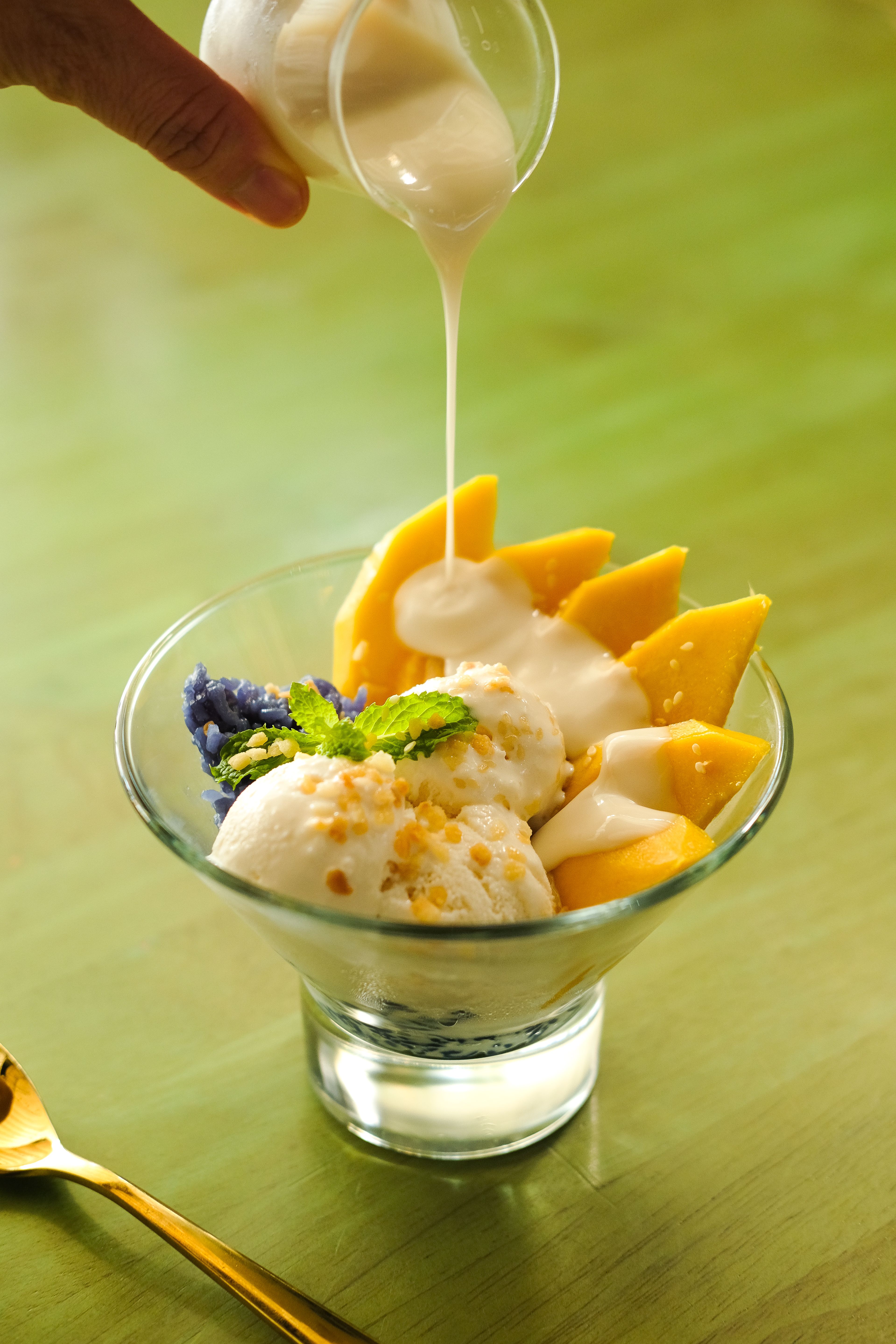
Photo: Ngân Dương / Pexels
The diets react (see scores below)
Common Ingredients
- shaved ice
- evaporated milk
- sweet beans
- ube halaya
- leche flan
- nata de coco
- jackfruit
- sago
- sugar
Specific recipes may vary.
Incompatible with 11 of 11 diets
Diet Ratings
Halo-Halo is fundamentally incompatible with a ketogenic diet. Nearly every ingredient is a significant source of net carbs or added sugar. Sweet beans (red beans/mongo) are starchy and high in net carbs. Ube halaya (purple yam jam) is a sugar-laden starchy root vegetable preparation. Leche flan is high in sugar. Jackfruit is a high-sugar fruit. Sago pearls are pure starch. Nata de coco, while lower in carbs, is typically served sweetened. Evaporated milk adds additional sugars. The dish is explicitly finished with added sugar. A single serving could easily contain 80-120g+ of net carbs, which far exceeds the entire daily keto limit multiple times over. There are no meaningful fat or fiber components to offset the carbohydrate load, and no practical substitution strategy exists that would preserve the dish's identity.
Traditional Halo Halo contains multiple animal-derived ingredients that make it incompatible with a vegan diet. Evaporated milk is a dairy product, and leche flan is made from egg yolks and condensed milk — both are clear animal products. These are not incidental or trace ingredients; they are central, defining components of the dish. The remaining ingredients (shaved ice, sweet beans, ube halaya, nata de coco, jackfruit, sago, sugar) are plant-based, but the presence of evaporated milk and leche flan disqualifies the dish as a whole. A vegan version could theoretically be made by substituting coconut milk for evaporated milk and omitting or replacing leche flan with a tofu-based flan, but the traditional recipe as listed is not vegan-compliant.
Halo Halo is fundamentally incompatible with the Paleolithic diet. Nearly every component violates core paleo principles: evaporated milk is a processed dairy product; sweet beans are legumes; leche flan contains dairy and refined sugar; nata de coco, while coconut-derived, is a processed fermented product with added sugar; sago is a starch extracted from palm pith and considered a processed grain-like ingredient; and sugar is explicitly excluded refined sweetener. Ube halaya (purple yam jam) involves heavy processing with added sugar and butter/milk. Jackfruit is the only ingredient with any paleo merit in its natural form, but in this dessert context it is typically sweetened and processed. The dish is essentially a processed dessert built on dairy, legumes, refined sugar, and highly processed components — representing a near-total violation of paleo guidelines.
Halo-halo is a Filipino dessert that fundamentally conflicts with Mediterranean diet principles. It is built around shaved ice and added sugar, with multiple heavily sweetened components: leche flan (a high-sugar, high-fat custard), ube halaya (sweetened purple yam jam), sweet beans (cooked with sugar), nata de coco (sugar-preserved coconut gel), and sago pearls in syrup. Evaporated milk adds saturated fat. While jackfruit is a fruit and some ingredients have plant origins, the dish is dominated by added sugars and processed sweet components — exactly what the Mediterranean diet minimizes. There is no olive oil, whole grains, or plant-forward nutrition. The overall sugar load, processed ingredients, and lack of any core Mediterranean diet staples place this firmly in the 'avoid' category.
Halo-Halo is almost entirely plant-based and sugar-laden, making it completely incompatible with the carnivore diet. The dish consists of shaved ice, sugar, sweet beans (legumes), jackfruit (tropical fruit), nata de coco (coconut jelly), sago (starch pearls from palm), and ube halaya (purple yam jam) — all strictly forbidden plant foods. The only animal-derived component is evaporated milk (dairy) and leche flan (egg and dairy custard), but these are entirely overwhelmed by the plant-based and sugary ingredients. There is universal consensus in the carnivore community that this dessert is off-limits.
Halo Halo contains multiple explicitly excluded ingredients that disqualify it entirely from Whole30 compliance. Sugar is a direct excluded ingredient (added sugar). Evaporated milk is dairy, which is excluded. Sweet beans are legumes, which are excluded. Leche flan contains dairy and sugar. Sago (tapioca pearls) are typically prepared with added sugar and are a starchy, processed ingredient outside Whole30 guidelines. Ube halaya (purple yam jam) is typically made with condensed milk, butter, and sugar — all excluded. Nata de coco is often prepared with added sugar. This dish is a classic Filipino dessert built almost entirely around excluded ingredients and represents exactly the kind of sweet, indulgent treat the Whole30 program aims to eliminate.
Halo-Halo is a highly problematic dish for the low-FODMAP elimination phase due to multiple high-FODMAP ingredients stacked together. Sweet beans (typically red mung beans or kidney beans) are high in GOS and fructans. Jackfruit is high-FODMAP at typical serving sizes due to excess fructose and polyols. Leche flan contains significant lactose from whole milk/condensed milk. Ube halaya (purple yam paste) is often prepared with condensed or evaporated milk in large quantities and may contain polyols depending on preparation. Evaporated milk contributes lactose. Sago pearls are generally low-FODMAP but are a minor component. Nata de coco is largely fermented coconut gel and is likely low-FODMAP, but it is a minor ingredient. Even setting aside individual ingredient concerns, this dish combines at least three to four independently high-FODMAP components — beans (GOS), jackfruit (excess fructose/polyols), and dairy (lactose) — making it categorically unsuitable during the elimination phase regardless of portion size.
Halo-halo is a Filipino dessert loaded with added sugars across nearly every component. The combination of sweetened beans, ube halaya (sugar-sweetened purple yam jam), leche flan (egg custard with heavy sugar), nata de coco, sago, and added sugar results in an extremely high added-sugar load — easily 40–60g or more per serving. DASH explicitly limits sweets and added sugars. Evaporated milk, while not full-fat dairy, contributes saturated fat and is used in sweetened form here. While jackfruit is a DASH-friendly fruit, it is a minor component overwhelmed by high-sugar accompaniments. The dish provides minimal fiber, potassium, magnesium, or calcium relative to its caloric and sugar density. DASH guidelines clearly discourage sweets and high-sugar snacks, making this a clear 'avoid.'
Halo Halo is essentially a pure sugar bomb with virtually no redeeming Zone macronutrient balance. The dish is composed almost entirely of high-glycemic carbohydrates: added sugar, sweet beans in syrup, ube halaya (sweet purple yam paste loaded with sugar), leche flan (high sugar and saturated fat), sago pearls (starchy, high-GI), jackfruit (high-sugar fruit), and nata de coco in syrup — all layered over shaved ice with sweetened evaporated milk. There is no meaningful lean protein, no monounsaturated fat, and no low-glycemic vegetables. The carbohydrate load is almost entirely high-glycemic, which directly opposes the Zone's core principle of insulin control. This dish would spike insulin dramatically and provides no pathway to a 40/30/30 block balance. Unlike many foods that can be portioned into Zone meals, Halo Halo's entire composition is the problem — even a small portion delivers a high-glycemic carb dump with essentially zero protein or favorable fat to offset it. It is nutritionally analogous to a sugar-sweetened dessert with no structural role in Zone eating.
Halo-halo is a Filipino dessert built almost entirely around added sugars and refined carbohydrates, with very little anti-inflammatory value. The base is shaved ice sweetened with evaporated milk (full-fat, moderate concern) and explicit added sugar. Sweet beans, while legumes have anti-inflammatory potential, are here prepared in heavy syrup, negating their fiber benefits. Ube halaya (purple yam jam) is heavily sweetened; though purple yam contains some anthocyanins, the sugar load dominates. Leche flan is high in sugar and full-fat dairy. Nata de coco is essentially sugar-preserved coconut gel. Jackfruit offers some fiber and antioxidants but appears in a heavily sweetened context. Sago pearls are pure refined starch with no notable nutritional benefit. The cumulative glycemic load is extremely high, promoting insulin spikes and pro-inflammatory cytokine release. There is no meaningful source of omega-3s, polyphenols, or fiber in anti-inflammatory quantities. The dessert is almost definitionally what anti-inflammatory nutrition advises against: a high-sugar, low-fiber, nutrient-light confection.
Halo halo is a high-sugar Filipino dessert composed almost entirely of empty or low-nutrient-density carbohydrates. The base is shaved ice with evaporated milk, topped with sweetened beans, ube halaya (sweetened purple yam paste), leche flan (egg custard with significant sugar and saturated fat), nata de coco, sweetened jackfruit, sago pearls, and added sugar. There is virtually no protein (the evaporated milk and leche flan contribute minimal amounts, well under 5g per serving), negligible fiber relative to the sugar load, and a very high glycemic impact. The sweetened, fatty components (leche flan, evaporated milk, ube halaya) combine saturated fat with refined sugar — a combination that directly worsens GLP-1 side effects including nausea, reflux, and blood sugar instability. The large volume and cold temperature of shaved ice may also aggravate gastric discomfort in patients with already-slowed gastric emptying. While beans in isolation are a fiber and protein source, their sweetened preparation here strips most of that nutritional value. This dish fails on nearly every GLP-1 dietary criterion: no meaningful protein, high sugar, moderate saturated fat, low fiber density, poor nutrient density per calorie, and high likelihood of triggering GI side effects.
*See how scores were generated at our methodology page.
Nutritional profile
Six traits that cut across every diet.
Fiber & Plants
How much whole-plant food and fiber it delivers.
Healthy Fats
The quality of its fats (unsaturated, omega-3).
Whole / Unprocessed
How close it is to its natural, unprocessed form.
Gut Gentle
How easy it is on digestion (low FODMAP, few irritants).
Low Glycemic
How little it spikes your blood sugar.
Protein Density
How much protein it packs per calorie.
Controversy Index
Higher controversy = more disagreement between diets.