Photo: AMANDA LIM / Pexels
Filipino
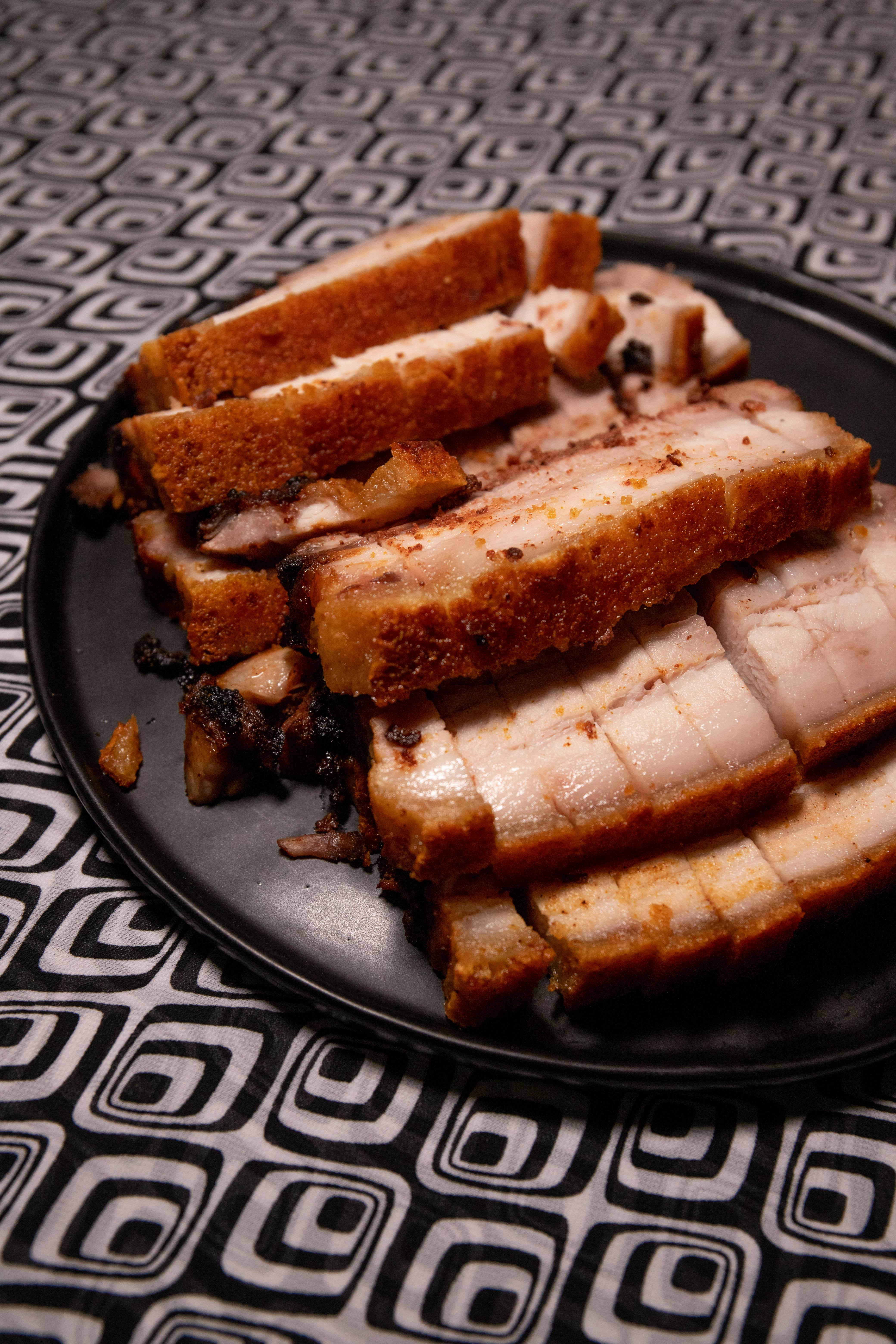
Lechon Kawali
The diets react (see scores below)
Common Ingredients
- pork belly
- garlic
- bay leaf
- black peppercorns
- salt
- oil
- soy sauce
- vinegar
Specific recipes may vary.
Incompatible with 8 of 11 diets
Diet Ratings
Lechon Kawali is deep-fried pork belly, which is naturally high in fat and protein with virtually zero net carbs from the primary ingredient. The aromatics (garlic, bay leaf, black peppercorns) contribute negligible carbs. Soy sauce contains a small amount of carbs (~1g per tablespoon), and vinegar (typically cane or white) may have trace carbs, but both are used in small quantities during the boiling stage and largely don't end up in the final dish in significant amounts. The crispy rendered pork belly with its fat-to-protein ratio aligns well with keto macros. The dipping sauce (often made with soy sauce and vinegar) should be used sparingly to keep carbs minimal.
Some strict keto practitioners flag soy sauce due to its wheat content (making it technically not gluten-free) and the cumulative carb load from soy-based condiments, recommending coconut aminos as a substitute. A minority also caution that traditional dipping sauces served alongside can significantly add hidden carbs if not controlled.
Lechon Kawali is a Filipino dish centered on pork belly as its primary protein. Pork is an animal flesh product, which is categorically excluded under all vegan dietary frameworks. There is no ambiguity here — this dish is fundamentally non-vegan regardless of the plant-based supporting ingredients (garlic, bay leaf, black peppercorns, soy sauce, vinegar).
Lechon Kawali contains several non-paleo ingredients that disqualify it. Soy sauce is a major violation — it is derived from fermented soybeans (a legume) and wheat (a grain), both strictly excluded from the paleo diet. Added salt is also excluded under paleo rules. The frying oil is unspecified and almost certainly a seed oil (e.g., canola or vegetable oil) in traditional preparation, which is another clear violation. The base ingredients — pork belly, garlic, bay leaf, and black peppercorns — are themselves paleo-approved, but the soy sauce and salt alone are enough to disqualify this dish as traditionally prepared.
Lechon Kawali is a deep-fried pork belly dish, which fundamentally conflicts with Mediterranean diet principles on multiple levels. Pork belly is a high-fat red/processed meat cut with very high saturated fat content, and deep-frying (in oil, not extra virgin olive oil) adds further unhealthy fats. Red meat is limited to a few times per month in the Mediterranean diet, and fatty pork belly specifically is far removed from the lean, occasional meat servings the diet tolerates. The deep-frying method also contradicts the diet's emphasis on olive oil-based cooking such as sautéing, roasting, or grilling. Soy sauce adds significant sodium and is not a traditional Mediterranean condiment. While garlic, bay leaf, and vinegar are compatible ingredients, they cannot redeem the core protein and cooking method.
While pork belly is an excellent carnivore food — fatty, rich, and animal-derived — the traditional Lechon Kawali preparation includes several non-carnivore ingredients that disqualify the dish as prepared. Soy sauce is a plant-based, fermented legume product with additives and is firmly excluded on carnivore. Vinegar, while debated, is typically plant-derived (often from cane sugar or grain) and excluded by most practitioners. Bay leaf, black peppercorns, and garlic are all plant-based aromatics excluded on carnivore. The frying oil is almost certainly a plant-based seed oil (vegetable, canola, etc.), which is strictly avoided. Only the pork belly and salt are carnivore-compliant. This dish cannot be considered carnivore-compatible as traditionally prepared.
Lechon Kawali as listed includes soy sauce, which is a soy-based product and therefore excluded on Whole30. Soy in all forms — including soy sauce, tamari, and soy-based condiments — is prohibited under the legume/soy exclusion rule. The remaining ingredients (pork belly, garlic, bay leaf, black peppercorns, salt, oil, and vinegar) are all Whole30-compliant. A compliant version of this dish could be made by substituting coconut aminos for the soy sauce, which is the program's explicitly approved soy sauce alternative.
Lechon Kawali is primarily pork belly — a protein and fat source that is inherently low-FODMAP. The main FODMAP concern is garlic, which is high in fructans even in small amounts and is a significant trigger during the elimination phase. Bay leaf and black peppercorns are used in trace culinary amounts and are considered low-FODMAP. Soy sauce contains wheat and is technically high-FODMAP in larger servings, though it is often used in small quantities for dipping (as a sawsawan). Vinegar (white or cane) is generally low-FODMAP. Salt and oil are FODMAP-free. The garlic used during boiling leaches fructans into the water-based cooking liquid — if the pork is boiled in garlic-infused water and then that liquid is absorbed or retained, fructan exposure increases. However, the final dish is deep-fried, and FODMAPs are water-soluble (not fat-soluble), so residual FODMAP transfer from boiling may be reduced but not eliminated. The soy sauce dipping component (often with garlic added in traditional preparations) further complicates the assessment. A modified version using garlic-infused oil or asafoetida substitute and low-FODMAP tamari in small amounts could make this dish safer.
Monash University confirms garlic is high-FODMAP even in small amounts, and many clinical FODMAP practitioners advise eliminating any dish where garlic is cooked directly into the food (even if later discarded), as fructans can leach into the cooking medium and be absorbed by the meat. Some practitioners may approve this dish if garlic is removed after boiling and the cooking water is discarded, but this is not standard preparation.
Lechon Kawali is deep-fried pork belly, which is fundamentally incompatible with DASH diet principles on multiple fronts. Pork belly is one of the fattiest cuts of meat, extremely high in saturated fat, which DASH explicitly limits to reduce cardiovascular risk. Deep-frying adds substantial amounts of fat and calories. The dish also contains soy sauce, which is very high in sodium, compounding sodium load on top of the salt used in boiling. DASH guidelines specifically call for limiting red meat, high saturated fat foods, and high-sodium preparations. This dish violates the core tenets of DASH simultaneously — high saturated fat, high sodium, and a fatty red meat as the primary protein.
Lechon Kawali is deep-fried pork belly, which presents significant challenges for Zone Diet compliance. Pork belly is one of the fattiest cuts of pork, with roughly equal parts fat and protein by weight, and the fat profile is heavily saturated. Deep-frying in oil adds substantial additional fat, and the cooking method (deep-frying) typically uses omega-6-heavy seed oils. While the seasonings (garlic, bay leaf, peppercorns, soy sauce, vinegar) are Zone-neutral or even mildly favorable, the primary ingredient undermines Zone ratios severely. A typical serving would deliver far too much fat — especially saturated fat — relative to protein, making the 30/30 fat-to-protein ratio nearly impossible to achieve without drastically small, unsatisfying portions. The carbohydrate component is essentially zero, requiring heavy supplementation with low-GI vegetables to approach a Zone-balanced meal. This dish is not categorically excluded — Zone is ratio-based — but its fat density and saturated fat content make it one of the more difficult proteins to incorporate, placing it at the lower end of 'caution.'
Lechon Kawali is a Filipino dish centered on deep-fried pork belly, which presents multiple significant anti-inflammatory concerns. Pork belly is an extremely high-fat cut, rich in saturated fat — a well-established driver of inflammatory markers including CRP and IL-6. The deep-frying process adds another major strike: the dish is cooked in large quantities of oil at high temperatures, which promotes formation of advanced glycation end products (AGEs) and oxidized lipids, both strongly associated with inflammatory signaling. The crispy skin and fatty subcutaneous layers are particularly problematic, as they concentrate saturated fat. While some ingredients are mildly beneficial — garlic has anti-inflammatory allicin compounds, black peppercorns contain piperine, and vinegar may have modest metabolic benefits — their presence in small seasoning quantities is entirely overwhelmed by the primary cooking method and protein source. Soy sauce is high in sodium, which is a secondary concern. Red meat is in the 'limit' category, but pork belly deep-fried is considerably worse than lean red meat. This preparation method transforms even an already-concerning ingredient into something that should be avoided on an anti-inflammatory diet. Occasional consumption as a cultural indulgence may be acceptable for generally healthy individuals, but it offers essentially no anti-inflammatory value.
Lechon Kawali is deep-fried pork belly — one of the most problematic food choices for GLP-1 patients. Pork belly is extremely high in saturated fat, and deep-frying compounds the problem by adding additional fat and making the dish heavy and difficult to digest. GLP-1 medications slow gastric emptying significantly, meaning high-fat, greasy foods like this will sit in the stomach for an extended period, greatly worsening nausea, bloating, reflux, and general GI discomfort. While pork belly does contain protein, the fat-to-protein ratio is poor — a typical serving delivers far more fat than usable protein, making it a low-value protein source by GLP-1 dietary standards. The dish also provides virtually no fiber, no meaningful micronutrient density, and zero hydration support. The accompanying dipping sauce (soy sauce and vinegar) is harmless in small amounts, but it does not offset the core problems. This dish checks nearly every box in the avoid category: fried, high saturated fat, fatty processed meat cut, low fiber, poor nutrient density per calorie, and high likelihood of triggering or worsening GLP-1 side effects.
*See how scores were generated at our methodology page.
Nutritional profile
Six traits that cut across every diet.
Fiber & Plants
How much whole-plant food and fiber it delivers.
Healthy Fats
The quality of its fats (unsaturated, omega-3).
Whole / Unprocessed
How close it is to its natural, unprocessed form.
Gut Gentle
How easy it is on digestion (low FODMAP, few irritants).
Low Glycemic
How little it spikes your blood sugar.
Protein Density
How much protein it packs per calorie.
Controversy Index
Higher controversy = more disagreement between diets.
Diet-Specific Tips
 Keto — 8/10
View tips
- Pork belly is extremely high in fat and moderate in protein — ideal keto macros
- Zero net carbs from primary protein source
- Aromatics (garlic, bay leaf, peppercorns) contribute negligible carbs
- Soy sauce adds minimal carbs when used in boiling liquid — most is discarded
- Deep-frying in oil adds fat without carbs
- Dipping sauce portion control is important to avoid carb creep
- Naturally whole, unprocessed protein source
 Low-FODMAP — 5/10
View tips
- Garlic is a high-FODMAP ingredient (fructans) used directly in boiling the pork
- Fructans from garlic can leach into the cooking liquid and potentially into the pork during the boiling phase
- Soy sauce contains wheat (fructans) — low-FODMAP only at ≤2 tablespoons per Monash, but traditional dipping sauces may contain more
- Pork belly itself is low-FODMAP — a safe protein and fat source
- Deep-frying step uses oil, which is FODMAP-free
- Bay leaf and black peppercorns used in trace amounts are considered low-FODMAP
- A low-FODMAP modification is possible: use garlic-infused oil and low-FODMAP tamari
 Zone — 5/10
View tips
- Pork belly is extremely high in saturated fat, which Zone Diet explicitly discourages in favor of monounsaturated fats
- Deep-frying adds substantial additional fat, likely from omega-6 seed oils — anti-inflammatory Zone principles oppose this
- Fat-to-protein ratio in pork belly is unfavorable; difficult to achieve Zone's 30% protein / 30% fat balance without tiny portions
- Zero carbohydrate content means the meal requires large additions of low-GI vegetables to approach 40/30/30
- Garlic and vinegar are Zone-neutral to mildly favorable ingredients
- Could theoretically be used in a very small portion within a Zone meal, but practical serving sizes make Zone compliance very difficult