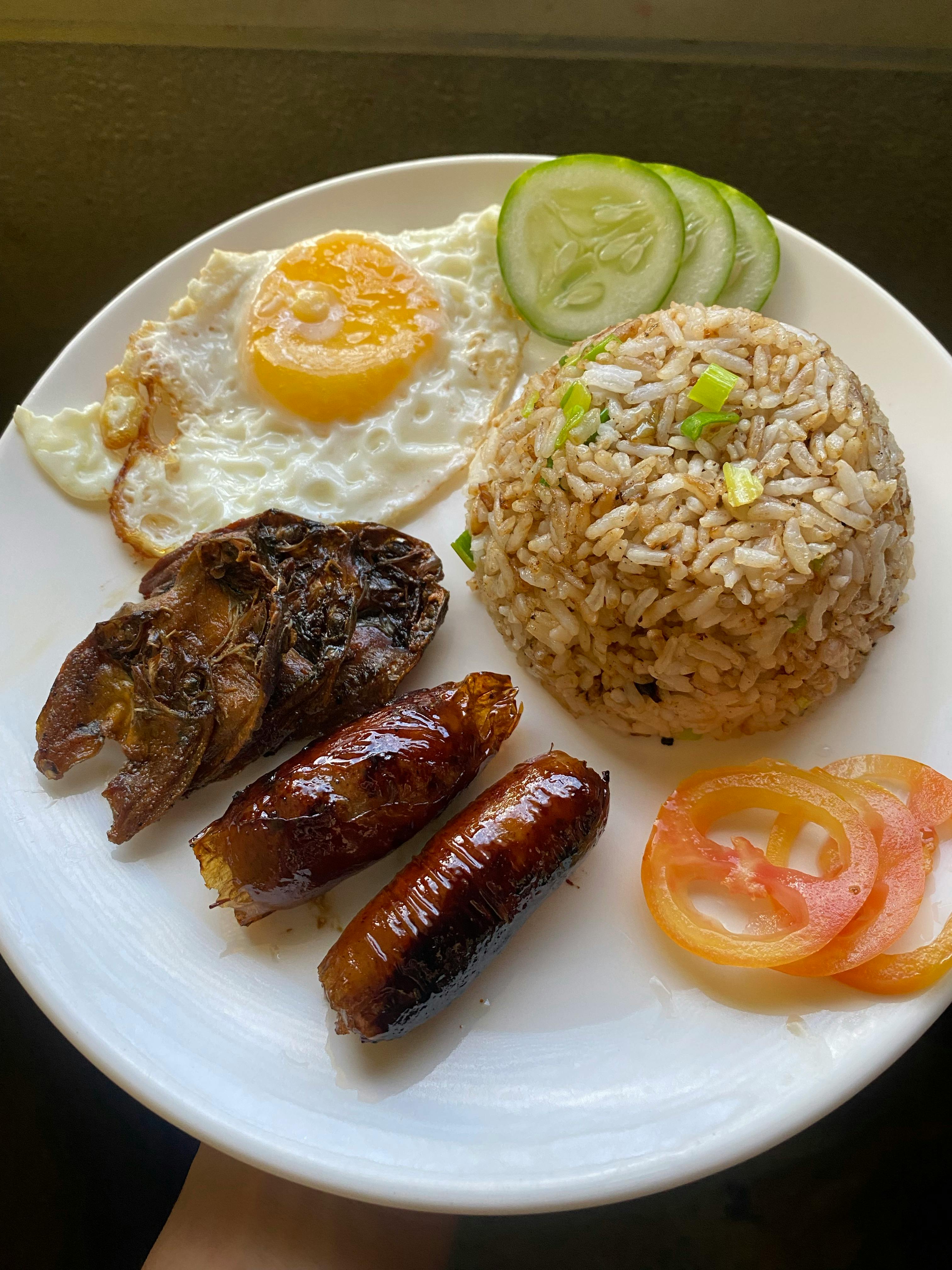
Photo: Kevin Dedicatoria / Pexels
The diets react (see scores below)
Common Ingredients
- ground pork
- garlic
- vinegar
- brown sugar
- soy sauce
- black pepper
- paprika
- salt
Specific recipes may vary.
Incompatible with 8 of 11 diets
Diet Ratings
Longganisa is a Filipino sweet sausage that traditionally contains a significant amount of brown sugar, which is a direct source of added sugar incompatible with strict keto. Ground pork itself is keto-friendly and high in fat and protein, and the garlic, vinegar, black pepper, paprika, and salt are negligible in carbs. However, the brown sugar is the key disqualifier — a standard serving of longganisa can contain 3-8g of sugar per link depending on the recipe, and commercial versions are often even sweeter. Soy sauce also adds a small amount of carbs. With portion control (1 small link) and ideally a homemade version with drastically reduced or sugar-substituted sweetener (e.g., erythritol), it can be worked into a keto diet cautiously. Most mainstream keto practitioners would flag this as a caution food rather than an outright avoid due to the favorable fat/protein base, but the added sugar content prevents approval.
Strict keto practitioners argue that any added brown sugar — regardless of portion size — disrupts ketosis and triggers an insulin response, placing longganisa firmly in the avoid category. They would only accept a fully reformulated version using zero-carb sweeteners as a true substitute.
Longganisa is a Filipino sausage whose primary and defining ingredient is ground pork, a direct animal product. There is no ambiguity here — pork is unequivocally excluded under all vegan frameworks. The remaining ingredients (garlic, vinegar, brown sugar, soy sauce, black pepper, paprika, salt) are plant-based, but the dish cannot be considered vegan in any form as described. Vegan versions of longganisa do exist using plant-based protein substitutes, but the traditional dish evaluated here is firmly non-vegan.
Longganisa is a Filipino cured/processed sausage that contains multiple non-paleo ingredients. Soy sauce is a soy-based product (a legume derivative) and also contains wheat, both of which are strictly excluded from the paleo diet. Brown sugar is a refined sugar, also excluded. Added salt is discouraged under paleo rules. The dish is also a processed meat product by nature — ground pork mixed with preservatives and curing agents — which contradicts the paleo philosophy of whole, unprocessed foods. While pork, garlic, vinegar, black pepper, and paprika are individually paleo-compatible, the combination with soy sauce, brown sugar, and salt renders this dish clearly non-paleo.
Longganisa is a Filipino cured/processed pork sausage that directly contradicts core Mediterranean diet principles. The dish features ground pork as its primary protein — a red meat that the Mediterranean diet limits to only a few times per month. More critically, it is a processed meat product with added sugar (brown sugar), high sodium (soy sauce, salt), and no plant-forward nutritional profile. Processed meats are among the foods most strongly discouraged in Mediterranean dietary patterns due to their association with cardiovascular risk, which is antithetical to the diet's primary health goals. The absence of olive oil, vegetables, whole grains, or legumes means it contributes nothing to the diet's core pillars.
Longganisa is a heavily processed pork sausage that contains multiple non-carnivore ingredients. While ground pork is the base protein and carnivore-approved, the recipe includes brown sugar (refined carbohydrate/sweetener), soy sauce (plant-derived fermented soybean product), vinegar (plant-derived fermented acid), garlic (vegetable/allium), black pepper (plant spice), and paprika (plant spice). This combination of plant-derived additives, a sweetener, and a legume-based condiment (soy sauce) makes Longganisa clearly incompatible with carnivore principles. The sugar alone — a core ingredient in the characteristic sweet Filipino style — disqualifies it outright. This is not a borderline case; the dish is structurally defined by plant-based flavor agents and sugar.
Longganisa as described contains two clearly excluded ingredients: brown sugar (added sugar) and soy sauce (soy is a legume and explicitly excluded). These are not edge cases or ambiguous inclusions — both are core excluded categories on Whole30. Vinegar is allowed, garlic, black pepper, paprika, salt, and ground pork are all compliant, but the presence of brown sugar and soy sauce makes this dish non-compliant as written. Coconut aminos could substitute for soy sauce, and the sugar could be omitted, but the traditional recipe cannot be considered Whole30-compatible.
Longganisa contains garlic as a primary flavoring ingredient, which is one of the highest-FODMAP foods on the Monash University list due to its extremely high fructan content. Even small amounts of garlic cloves used in cooking can trigger symptoms during the elimination phase. Garlic is used in meaningful quantities in longganisa — it is a defining flavor of the sausage — making this dish clearly high-FODMAP. The soy sauce may also contribute moderate fructans depending on the brand and quantity, though traditional brewed soy sauce is often considered borderline. Brown sugar in small amounts is generally low-FODMAP, as is vinegar (typically low-FODMAP). Ground pork itself is protein and fat with no FODMAPs. Black pepper, paprika, and salt are all low-FODMAP. However, the garlic alone is sufficient to classify this dish as high-FODMAP and unsuitable during the elimination phase. A low-FODMAP adaptation using garlic-infused oil (discarding the garlic solids) instead of garlic cloves could make this dish safe, but the traditional recipe cannot be approved.
Longganisa is a Filipino cured/seasoned sausage made primarily from ground pork, which is high in saturated fat and is classified as red meat — both of which DASH guidelines explicitly limit. The ingredient list includes soy sauce and added salt, making this a high-sodium food (a single serving can easily exceed 500–800mg sodium). Brown sugar adds significant refined sugar content. The combination of high saturated fat (from fatty ground pork), high sodium (soy sauce + salt), and added sugar places this firmly in the 'avoid' category under DASH guidelines. DASH specifically calls for limiting red meat, high-sodium foods, and added sugars, and this dish violates all three of those restrictions simultaneously.
Longganisa is a Filipino pork sausage that presents several Zone Diet challenges. The primary protein source (ground pork) is not lean — it typically contains significant saturated fat, making it less favorable than Zone-preferred proteins like skinless chicken, fish, or egg whites. The inclusion of brown sugar is a concern, as it adds glycemic load and empty carbohydrate calories that don't contribute nutritionally favorable Zone blocks. Soy sauce adds sodium but is negligible in macros. The vinegar and garlic are Zone-neutral or mildly positive (polyphenol content in garlic). The combination of high saturated fat from ground pork plus added sugar makes this difficult to fit cleanly into Zone ratios without careful portioning. That said, it is not categorically excluded — a small portion (controlling the fat and sugar content) could serve as a protein block within a Zone-balanced breakfast plate that includes low-glycemic vegetables and a monounsaturated fat source. The ratio problem is the main issue: longganisa tends to skew the fat block toward saturated fat and adds unwanted high-glycemic carb calories from sugar, disrupting the 40/30/30 balance without contributing favorable macros.
Some Zone practitioners and later Sears writings acknowledge that occasional use of less-lean pork products is acceptable in context, especially if the overall meal is balanced with abundant low-glycemic vegetables and the portion of longganisa is kept small (one link or roughly 50-60g). The garlic and vinegar components also contribute polyphenols and acetic acid, which have mild anti-inflammatory and glycemic-moderating properties consistent with Zone anti-inflammatory principles. Traditionalists following strict early Zone (Enter the Zone) would rate this lower due to the saturated fat and added sugar concerns.
Longganisa is a Filipino cured/seasoned sausage made primarily from ground pork, which places it in a moderately pro-inflammatory category. Ground pork — especially as used in sausage — tends to be higher in saturated fat than lean cuts, which is a concern under anti-inflammatory guidelines that recommend limiting red meat and high-fat animal products. The added brown sugar and soy sauce introduce refined sugars and sodium, both of which can contribute to low-grade inflammation when consumed regularly. However, the dish is not entirely without merit: garlic is a well-established anti-inflammatory ingredient rich in allicin and organosulfur compounds; black pepper contains piperine, which has demonstrated anti-inflammatory activity; paprika provides carotenoids and antioxidants; and vinegar (particularly if fermented) may have modest glycemic and gut-health benefits. The net profile is mixed — some genuinely beneficial spice components offset by a processed-sausage base that is high in saturated fat, salt, and added sugar. This is acceptable occasionally as part of a broader anti-inflammatory diet, but not a food to emphasize or eat daily.
Some anti-inflammatory practitioners (aligned with Dr. Weil's more flexible Mediterranean-influenced framework) would argue that homemade longganisa with quality pork, real garlic, and minimal sugar is meaningfully better than commercially processed sausages and fits within a 'moderate' meat category acceptable a few times per week. Conversely, stricter anti-inflammatory and autoimmune-focused protocols (e.g., AIP-adjacent approaches) would rate this closer to 'avoid' due to the combination of red/processed meat, added sugar, and high sodium — all recognized drivers of inflammatory markers like CRP.
Longganisa is a Filipino cured sausage made primarily from ground pork — typically a fatty cut — with added sugar and soy sauce. It is high in saturated fat, high in sodium, and contains added sugar (brown sugar), all of which are problematic for GLP-1 patients. The fat content is the primary concern: high-fat foods directly worsen GLP-1 medication side effects including nausea, bloating, and reflux due to slowed gastric emptying. While pork does provide protein, the protein-to-fat ratio in ground pork sausage is poor compared to lean proteins recommended for GLP-1 patients. The added sugar reduces its nutritional value per calorie further. The high sodium content is also a concern for fluid retention and cardiovascular health in a population often managing metabolic conditions. This is not a small-portion-friendly food in the sense that a small portion delivers relatively poor protein density with high fat and caloric cost.
*See how scores were generated at our methodology page.
Nutritional profile
Six traits that cut across every diet.
Fiber & Plants
How much whole-plant food and fiber it delivers.
Healthy Fats
The quality of its fats (unsaturated, omega-3).
Whole / Unprocessed
How close it is to its natural, unprocessed form.
Gut Gentle
How easy it is on digestion (low FODMAP, few irritants).
Low Glycemic
How little it spikes your blood sugar.
Protein Density
How much protein it packs per calorie.
Controversy Index
Higher controversy = more disagreement between diets.
Diet-Specific Tips
 Keto — 4/10
View tips
- Brown sugar is a primary ingredient, adding significant net carbs and directly conflicting with keto rules
- Ground pork base is naturally high-fat and protein-rich — ideal for keto
- Soy sauce contributes minor additional carbs
- Serving size is critical — a single small link may stay within limits if sugar is minimized
- Homemade versions with sugar substitutes (erythritol, monk fruit) can make this keto-compatible
- Commercial longganisa is typically too sweet and should be avoided
 Zone — 4/10
View tips
- Ground pork is a high-saturated-fat protein, not a Zone-preferred lean protein source
- Added brown sugar introduces glycemic load and disrupts favorable carbohydrate block quality
- Portion control is critical — a small serving can fit as a partial protein block but at caloric fat cost
- Vinegar and garlic offer minor polyphenol and anti-inflammatory benefits consistent with Zone principles
- Best paired with egg whites or low-fat protein to balance protein quality, plus abundant low-glycemic vegetables
- Soy sauce adds sodium but does not significantly alter macronutrient ratios
 Anti-Inflammatory — 4/10
View tips
- Ground pork is a red/processed meat high in saturated fat — a key pro-inflammatory driver to limit
- Brown sugar adds refined carbohydrates and glycemic load, associated with elevated inflammatory markers
- High sodium from soy sauce and salt can contribute to systemic inflammation
- Garlic is a strongly anti-inflammatory ingredient with allicin and organosulfur compounds
- Black pepper (piperine) and paprika (carotenoids) provide modest anti-inflammatory offset
- Vinegar may offer minor metabolic and gut-health benefits
- Sausage format (cured, seasoned ground meat) is generally categorized as processed meat, which mainstream research links to increased CRP and IL-6
- Occasional consumption in the context of an overall anti-inflammatory diet is acceptable; daily consumption is not recommended