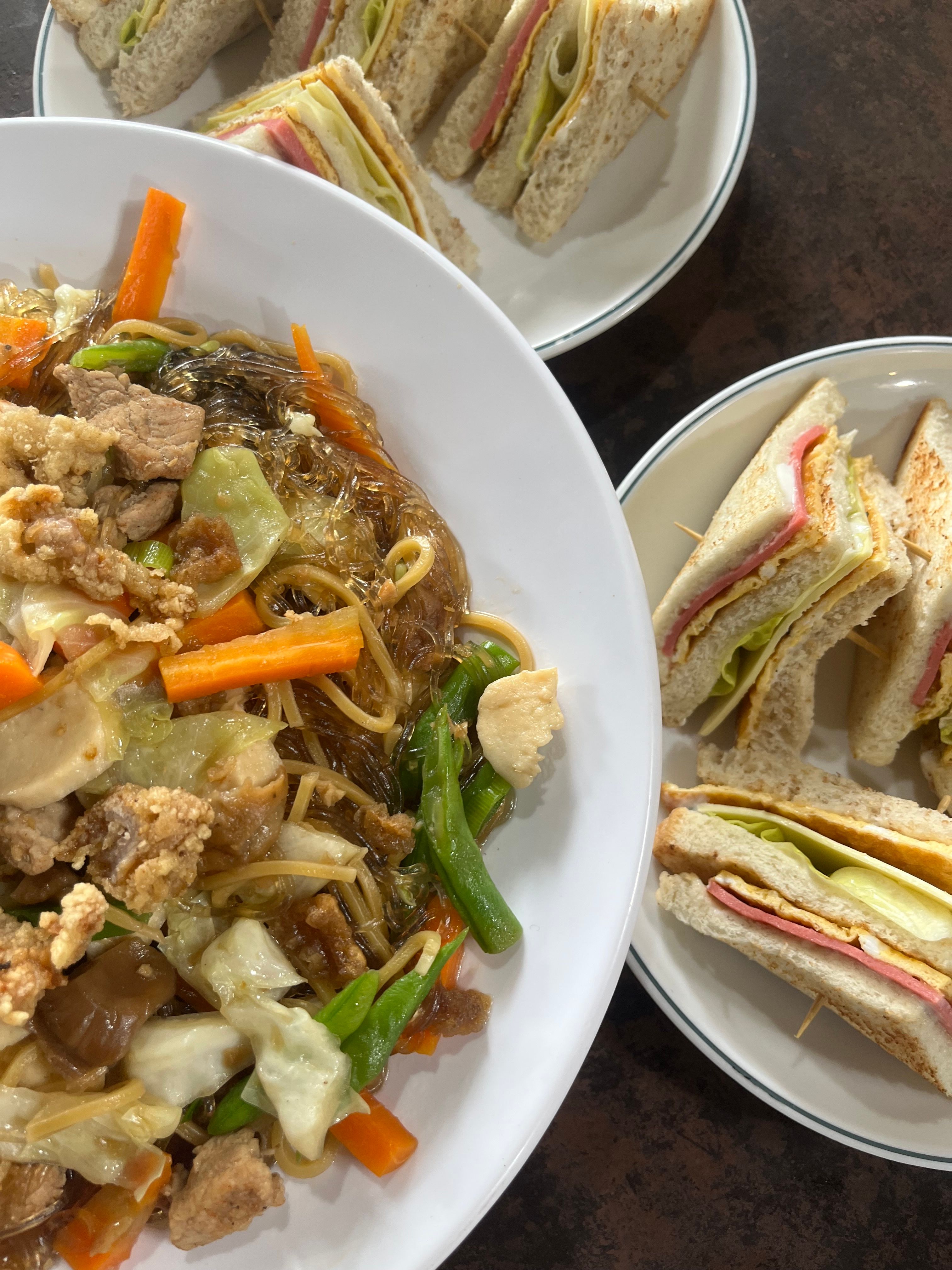
Photo: Ching Monis / Pexels
Filipino
Pancit Palabok
The diets react (see scores below)
Common Ingredients
- rice noodles
- shrimp
- annatto
- pork
- egg
- chicharron
- fish sauce
- garlic
- scallion
Specific recipes may vary.
Incompatible with 8 of 11 diets
Diet Ratings
Pancit Palabok is fundamentally built on rice noodles, which are a high-carb grain-based ingredient that is completely incompatible with ketogenic eating. A standard serving of rice noodles alone can contain 40-50g of net carbs, easily exceeding the entire daily keto carb budget in one dish. While several individual components are keto-friendly — shrimp, pork, chicharron (pork rinds), eggs, fish sauce, garlic, and scallions — the rice noodle base makes this dish a clear avoid. There is no meaningful way to reduce the carb load without fundamentally reconstructing the dish by substituting the noodles entirely (e.g., with shirataki or zucchini noodles), at which point it would no longer be Pancit Palabok in any traditional sense.
Pancit Palabok contains multiple animal products and animal-derived ingredients, making it entirely incompatible with a vegan diet. Shrimp is seafood (animal product), pork is meat (animal product), egg is an animal product, chicharron is fried pork skin (animal product), and fish sauce is derived from fermented fish (animal product). Every protein source and several flavor components in this dish are animal-derived. The only vegan-compliant ingredients are the rice noodles, annatto, garlic, and scallions.
Pancit Palabok is fundamentally incompatible with the Paleo diet. The dish's foundation is rice noodles, a grain-based ingredient that is explicitly excluded from Paleo. Fish sauce typically contains added salt and is a processed condiment. Chicharron (fried pork rinds) is a processed food that often contains added salt and may be cooked in non-Paleo oils. The remaining ingredients — shrimp, pork, egg, annatto, garlic, and scallion — are Paleo-approved, but the disqualifying core ingredients (rice noodles, fish sauce, chicharron) make this dish a clear avoid. The dish cannot be considered Paleo even in a modified form without losing its essential character.
Pancit Palabok contains several ingredients that conflict with Mediterranean diet principles. The base is refined rice noodles (not a whole grain), and the dish is topped with chicharron (fried pork rinds), which is a highly processed food high in saturated fat. Pork is a red/processed meat that should be limited to a few times per month. While shrimp and garlic are Mediterranean-friendly, and fish sauce provides umami similarly to Mediterranean anchovy-based condiments, the overall profile is dominated by refined starch, processed pork products, and fried toppings. The cooking method and ingredient combination are far from the whole-food, plant-forward, olive-oil-based Mediterranean framework.
Pancit Palabok is fundamentally incompatible with the carnivore diet. The dish is built on a rice noodle base, which is a plant-derived grain product and the primary component of the meal. Additional plant-based ingredients include annatto (a plant-derived colorant/spice), garlic, and scallions. While the dish does contain carnivore-compatible ingredients — shrimp, pork, egg, chicharron (pork rinds), and fish sauce — these are secondary components that cannot redeem a dish whose foundation is prohibited plant foods. This is not a borderline case; rice noodles alone make this dish a clear avoid under any tier of the carnivore diet.
Pancit Palabok is built on rice noodles, which are a grain-based product explicitly excluded from the Whole30 program. Grains — including rice and rice-derived products — are on the elimination list for the full 30 days. Beyond the noodles, chicharron (fried pork rinds) is often processed with additives that may not be compliant, and fish sauce requires label-checking for added sugars or non-compliant preservatives. However, the core disqualifier here is unambiguous: rice noodles are a grain product and are not allowed. This dish also falls into the 'pasta or noodles' category that the Whole30 explicitly prohibits even under the 'no recreating' rule (rule 4). The remaining ingredients — shrimp, pork, egg, annatto, garlic, scallion — are individually Whole30-friendly, but the dish cannot be made compliant without fundamentally changing what it is.
Pancit Palabok contains two high-FODMAP ingredients that make it unsuitable during the elimination phase: garlic (high in fructans — one of the most problematic FODMAP sources, avoid at any quantity) and scallions/green onions when the white bulb portion is used (also high in fructans). These aromatics are foundational to the dish's flavor and cannot simply be reduced to a safe serving size. Rice noodles are low-FODMAP and safe. Shrimp, pork, egg, and chicharron (pork rinds) are all protein/fat sources with no FODMAPs. Annatto is a natural coloring agent with no known FODMAP content. Fish sauce is generally considered low-FODMAP at typical culinary amounts (1-2 tbsp). The dish is disqualified primarily by garlic and the white parts of scallions, both of which are high-fructan ingredients central to the recipe.
Pancit Palabok is problematic for the DASH diet primarily due to its high sodium content and saturated fat load. Fish sauce is extremely high in sodium (approximately 1,400mg per tablespoon), making it difficult to stay within DASH sodium limits in a single serving. Chicharron (fried pork rinds) is high in saturated fat and sodium — both explicitly limited by DASH guidelines. Pork adds additional saturated fat. While some ingredients are DASH-compatible (shrimp as lean protein, garlic, scallions, eggs in moderation), the overall dish as commonly prepared is high in sodium, saturated fat, and includes a fried processed meat product. Rice noodles are refined rather than whole grain, offering little fiber. The combination of fish sauce and chicharron alone likely pushes sodium well beyond DASH's 2,300mg daily ceiling in a single dish.
Pancit Palabok is a challenging dish for Zone compliance primarily due to its rice noodle base. Rice noodles are a high-glycemic, refined carbohydrate source that Zone classifies as 'unfavorable' — they spike blood sugar rapidly and offer little fiber to slow absorption. The dish's carbohydrate profile is heavily noodle-dominant, making it very difficult to achieve a balanced 40/30/30 ratio in a typical serving. On the positive side, shrimp is an excellent Zone-approved lean protein, and garlic and scallions contribute polyphenols aligned with Sears' anti-inflammatory focus. However, chicharron (fried pork rinds) and pork add saturated fat, and the overall fat profile skews toward saturated rather than monounsaturated sources. Fish sauce adds sodium but negligible macros. The dish lacks the vegetable volume Zone recommends (8 servings/day goal), and there are no monounsaturated fat sources present. In a restaurant or traditional serving, the carbohydrate-to-protein ratio is heavily skewed toward carbs, with rice noodles dominating the plate. A Zone adaptation would require dramatically reducing noodle portion, increasing shrimp, eliminating or minimizing chicharron, and adding non-starchy vegetables — fundamentally altering the dish. As served traditionally, this is a caution-level food requiring significant portion modification.
Pancit Palabok is a mixed dish from an anti-inflammatory standpoint. On the positive side, shrimp provides lean protein with some omega-3s and astaxanthin, a potent antioxidant carotenoid. Annatto (from achiote seeds) contains bixin, a carotenoid with antioxidant properties. Garlic and scallions are anti-inflammatory alliums with well-documented benefits. Fish sauce, while high in sodium, contributes fermented umami depth without major inflammatory concern in modest amounts. However, the dish also contains several pro-inflammatory elements: pork (red meat) is recommended to be limited; chicharron (fried pork rinds) is high in saturated fat and typically deep-fried, making it one of the more inflammatory components; and rice noodles are refined carbohydrates with a high glycemic index that lack fiber and nutrients of whole grains. The combination of refined noodles, pork, and chicharron creates a meaningful pro-inflammatory load that offsets the benefits of the shrimp, garlic, and annatto. This dish is best enjoyed occasionally rather than regularly, and can be improved by reducing or omitting the chicharron and pork, increasing the shrimp proportion, and potentially substituting whole-grain or legume-based noodles.
Some integrative nutrition perspectives would rate this more harshly due to the combination of refined carbohydrates, saturated fat from chicharron and pork, and high sodium from fish sauce — a trifecta that some anti-inflammatory practitioners associate with elevated CRP and metabolic inflammation. Conversely, traditional food advocates note that shrimp-forward versions with fermented condiments and alliums represent a nutrient-dense cultural preparation that compares favorably to many Western processed foods.
Pancit Palabok is a mixed dish with both strengths and significant drawbacks for GLP-1 patients. On the positive side, shrimp is a lean, high-protein seafood that fits GLP-1 dietary priorities well, and garlic and scallions add micronutrients with minimal caloric cost. However, the dish's overall profile is problematic: rice noodles are a refined carbohydrate with low fiber and low protein density, making them nutritionally sparse for the limited appetite GLP-1 patients have. Chicharron (fried pork rinds) is a high-fat, fried ingredient that can worsen GLP-1 side effects including nausea, bloating, and reflux. Pork adds additional saturated fat depending on the cut used. Fish sauce is high in sodium, which may contribute to water retention and is worth monitoring. The egg is a positive addition for protein and nutrient density. The annatto is purely a colorant and nutritionally neutral. Overall, the dish is low in fiber, moderate-to-high in fat due to chicharron and pork, and relies heavily on refined rice noodles as its base — making it a poor match for GLP-1 dietary priorities despite containing some quality protein from shrimp and egg. It is not categorically off-limits but would need significant modification (removing chicharron, reducing pork, adding vegetables) to be GLP-1 friendly.
Some GLP-1-focused dietitians may rate this more leniently if the shrimp and egg portions are generous and chicharron is used only as a small garnish, arguing that the dish can fit within a moderate-calorie small serving. Others would flag the fried chicharron and refined noodle base as disqualifying for patients actively managing GI side effects, particularly in early weeks on the medication.
*See how scores were generated at our methodology page.
Nutritional profile
Six traits that cut across every diet.
Fiber & Plants
How much whole-plant food and fiber it delivers.
Healthy Fats
The quality of its fats (unsaturated, omega-3).
Whole / Unprocessed
How close it is to its natural, unprocessed form.
Gut Gentle
How easy it is on digestion (low FODMAP, few irritants).
Low Glycemic
How little it spikes your blood sugar.
Protein Density
How much protein it packs per calorie.
Controversy Index
Higher controversy = more disagreement between diets.
Diet-Specific Tips
 Zone — 4/10
View tips
- Rice noodles are high-glycemic 'unfavorable' carbs in Zone terminology, dominating the dish's macro profile
- Shrimp is an ideal Zone lean protein — a positive element
- Chicharron and pork contribute saturated fat, not the monounsaturated fat Zone prefers
- No non-starchy vegetables present, contrary to Zone's emphasis on 8 vegetable servings daily
- Carbohydrate-to-protein ratio in traditional serving is heavily imbalanced toward carbs
- Garlic and scallions provide beneficial polyphenols aligned with Zone's anti-inflammatory focus
- Traditional portion size makes Zone block balancing very difficult without significant modification
 Anti-Inflammatory — 4/10
View tips
- Shrimp provides lean protein with astaxanthin antioxidant and modest omega-3s
- Annatto/achiote seeds contain bixin, a beneficial carotenoid antioxidant
- Garlic and scallions are anti-inflammatory alliums
- Chicharron (fried pork rinds) is high in saturated fat and pro-inflammatory
- Pork is a red/fatty meat recommended to limit in anti-inflammatory diets
- Rice noodles are refined carbohydrates with high glycemic index, low fiber
- Fish sauce adds high sodium but minimal inflammatory concern in small amounts
- Overall profile is mixed: anti-inflammatory proteins/spices offset by refined carbs and saturated fat sources
 GLP-1 Friendly — 4/10
View tips
- Shrimp is a lean, high-quality protein source — positive
- Egg adds additional protein and nutrient density — positive
- Rice noodles are a refined carbohydrate with low fiber and low protein — negative
- Chicharron is fried and high in saturated fat, a known GLP-1 side effect trigger — negative
- Pork contributes additional saturated fat depending on cut — negative
- Fish sauce is high in sodium — minor concern
- Dish is low in fiber overall — does not support GLP-1 digestive health goals
- Small portion may limit fat exposure but also limits protein and calorie adequacy