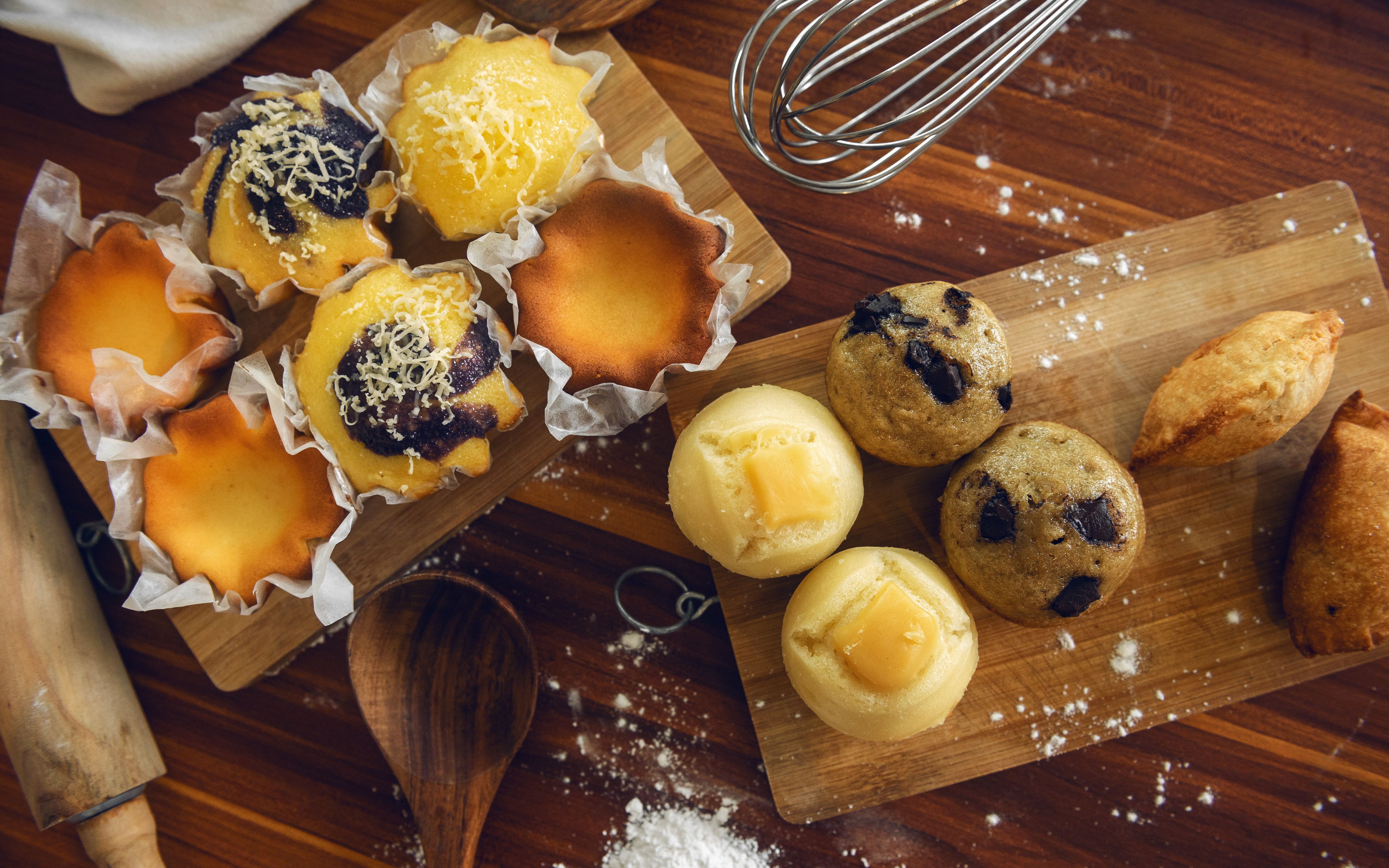
The diets react (see scores below)
Common Ingredients
- rice flour
- sugar
- coconut milk
- baking powder
- cheese
- water
Specific recipes may vary.
Incompatible with 7 of 11 diets
Diet Ratings
Puto is a Filipino steamed rice cake made primarily from rice flour and sugar — two ingredients that are fundamentally incompatible with ketogenic eating. Rice flour is a high-glycemic grain-based flour with extremely high net carbs (roughly 75-80g net carbs per 100g), and added sugar compounds the carbohydrate load further. Even a single small puto piece (30-40g) could easily deliver 15-20g of net carbs, making it nearly impossible to consume without breaking ketosis. While coconut milk and cheese are keto-friendly components, they are minor contributors overshadowed by the dominant grain and sugar base. There is no portion size that makes puto compatible with a ketogenic diet.
Puto as listed contains cheese, which is a dairy product derived from animal milk. Dairy is explicitly excluded under vegan dietary rules. The other ingredients — rice flour, sugar, coconut milk, baking powder, and water — are all plant-based and would otherwise make this a vegan-friendly steamed rice cake. However, the inclusion of cheese (a standard topping or mix-in in the Filipino version of puto) renders this dish non-vegan. A vegan version could be made by simply omitting the cheese or substituting a plant-based cheese alternative.
Puto is a Filipino steamed rice cake made primarily from rice flour, which is a grain product and explicitly excluded from the paleo diet. Beyond the rice flour, the dish also contains refined sugar (a prohibited ingredient), cheese (dairy, excluded), and baking powder (a processed additive). Coconut milk is the only paleo-compliant ingredient in this dish. With multiple foundational paleo violations — grains, dairy, refined sugar, and processed additives — Puto is firmly in the avoid category with no meaningful gray area.
Puto is a Filipino steamed rice cake made primarily from refined rice flour and added sugar, with coconut milk as the fat source. While coconut milk is plant-based, it is not part of the Mediterranean dietary tradition. The main issues are: (1) refined rice flour is a refined grain with minimal fiber or nutrients compared to whole grains emphasized in the Mediterranean diet; (2) added sugar directly contradicts Mediterranean diet principles of minimal added sugars; (3) coconut milk replaces the canonical extra virgin olive oil as a fat source; (4) the small amount of cheese is acceptable in moderation but does not redeem the dish. Overall, this snack is built on a refined grain and sugar base, placing it firmly in the 'avoid' category for Mediterranean diet adherence.
Some Mediterranean diet interpreters apply a flexible, cultural-inclusion lens and note that rice flour-based snacks, when consumed occasionally and in small portions, may be tolerated similarly to how white rice appears in some traditional Mediterranean cuisines (e.g., Greek rice dishes). However, the added sugar and coconut milk — both non-traditional and nutritionally at odds with core Mediterranean principles — make even a moderate interpretation difficult to justify here.
Puto is a Filipino steamed rice cake made almost entirely from plant-based ingredients. Rice flour is a grain product, sugar is a processed plant-derived sweetener, coconut milk is a plant-based liquid, and baking powder contains starch-based fillers — all strictly excluded on the carnivore diet. The only marginally carnivore-adjacent ingredient is cheese, which is a small dairy component and itself debated in strict carnivore circles. There is no meaningful animal protein or animal fat in this dish, and it is fundamentally a grain-based, sugar-sweetened snack with no place in any tier of carnivore eating.
Puto is a Filipino steamed rice cake that violates Whole30 on multiple fronts. Rice flour is a grain and explicitly excluded. Sugar is an added sweetener and explicitly excluded. Cheese is dairy and explicitly excluded. Even if those ingredients were removed, puto is a steamed cake — a baked good analog — which falls squarely under Whole30's 'no recreating baked goods' rule. This dish cannot be made Whole30-compliant without fundamentally changing what it is.
Puto is a Filipino steamed rice cake made primarily from rice flour, which is inherently low-FODMAP. Sugar and water are also low-FODMAP with no concerns. Coconut milk is low-FODMAP at small servings (up to 1/2 cup per Monash), but becomes high-FODMAP at larger amounts due to polyols (sorbitol). Baking powder is generally low-FODMAP in the small quantities used. The main concern is the cheese topping/ingredient — hard cheeses like cheddar are low-FODMAP due to minimal lactose, but if a softer, fresh cheese is used (as is common in Filipino puto, often using kesong puti or processed cheese), lactose content rises. Standard Filipino puto recipes also tend to use a generous amount of coconut milk, which could push the per-serving polyol load into moderate-to-high territory. The dish is likely safe at a small serving (1-2 pieces) if made with hard cheese and moderate coconut milk, but problematic at typical serving sizes where coconut milk quantity and cheese type are uncontrolled.
Monash University rates coconut milk as low-FODMAP only at 1/2 cup per serving, and many clinical FODMAP practitioners advise caution with coconut milk-heavy dishes during elimination because portion control is difficult when it is a base ingredient. Additionally, the type of cheese used in puto varies widely — soft or processed cheeses common in Filipino cooking contain more lactose than aged hard cheeses, which some practitioners flag as a risk during strict elimination.
Puto is a Filipino steamed rice cake made with rice flour, sugar, coconut milk, baking powder, cheese, and water. From a DASH perspective, this snack presents several concerns. Coconut milk is high in saturated fat from a tropical oil source, which DASH explicitly limits. The added sugar contributes empty calories without nutritional benefit. The cheese topping adds saturated fat and sodium. Rice flour is a refined grain rather than a whole grain, offering less fiber, potassium, and magnesium than DASH-preferred whole grains. On the positive side, Puto is typically small-portioned, steamed (not fried), and relatively low in sodium compared to many processed snacks — though the cheese increases sodium content. It lacks the key DASH-promoting nutrients (potassium, calcium from low-fat dairy, magnesium, fiber). Occasional consumption in small portions is not severely harmful, but it is not a DASH-aligned food due to coconut milk's saturated fat, refined flour, added sugar, and cheese.
NIH DASH guidelines explicitly limit coconut milk due to its high saturated fat content; however, some updated clinical interpretations note that the saturated fat in coconut milk (predominantly medium-chain triglycerides) may have a more neutral cardiovascular effect than long-chain saturated fats, and some DASH-oriented dietitians permit small amounts in culturally traditional dishes. Additionally, the small portion size typical of puto may make its overall saturated fat and sugar contribution modest in the context of an otherwise DASH-compliant diet.
Puto is a Filipino steamed rice cake made primarily from rice flour and sugar, making it a high-glycemic, carbohydrate-dense snack with virtually no favorable macronutrient balance for the Zone Diet. The primary carbohydrate source is refined rice flour, which behaves similarly to white rice in terms of glycemic impact — a food Dr. Sears explicitly flags as unfavorable. Added sugar compounds the glycemic problem. Coconut milk contributes saturated fat rather than the preferred monounsaturated fats. The small amount of cheese adds some protein, but it is negligible relative to the carbohydrate load and comes with saturated fat. There is no lean protein source, no low-glycemic vegetable carbohydrate, and no monounsaturated fat. The macronutrient profile is overwhelmingly carbohydrate-dominant with poor fat quality, making it extremely difficult to incorporate into any Zone-balanced meal or snack without a complete overhaul of the surrounding food. As a standalone snack — which is its primary use case — it fails the 40/30/30 ratio in every dimension.
Puto is a Filipino steamed rice cake made from refined rice flour, sugar, coconut milk, baking powder, and cheese. From an anti-inflammatory perspective, this dish is largely neutral to mildly pro-inflammatory. Rice flour is a refined carbohydrate with minimal fiber, offering little anti-inflammatory benefit compared to whole grains. The added sugar contributes to glycemic load and can promote inflammatory signaling when consumed regularly or in quantity. Coconut milk contains medium-chain triglycerides (MCTs) and some lauric acid, which have a more complex inflammatory profile — it is high in saturated fat, which anti-inflammatory guidelines generally recommend limiting. The cheese adds full-fat dairy and additional saturated fat, another ingredient the framework recommends limiting. Baking powder is nutritionally neutral. There are no meaningful anti-inflammatory components here — no omega-3s, polyphenols, antioxidants, or fiber-rich whole grains. As an occasional snack in small portions, puto is not overtly harmful, but its combination of refined carbohydrates, added sugar, saturated fat from coconut milk and cheese, and lack of any protective phytonutrients places it firmly in caution territory. It should not be a dietary staple for those following an anti-inflammatory eating pattern.
Puto is a traditional Filipino steamed rice cake made primarily from rice flour and sugar, with coconut milk adding saturated fat and additional calories. It is low in protein (the cheese topping adds only a minimal amount), high in refined carbohydrates, and moderate in fat from coconut milk. While steaming makes it relatively easy to digest and the small portion size is GLP-1 friendly in format, nearly every calorie comes from refined starch and sugar — exactly the empty-calorie profile that is counterproductive for GLP-1 patients who have reduced appetite and must maximize nutritional value per bite. The sugar content also conflicts with blood sugar stabilization goals. The coconut milk contributes saturated fat, which can worsen GI side effects. The cheese adds negligible protein relative to the fat it contributes. This is a low-protein, low-fiber, high-refined-carb snack with poor nutrient density per calorie. It scores at the very bottom of the caution range, nearly an avoid, and is only rated caution rather than avoid because it is not fried, not carbonated, not alcohol-based, and is easy to digest in small amounts.
*See how scores were generated at our methodology page.
Nutritional profile
Six traits that cut across every diet.
Fiber & Plants
How much whole-plant food and fiber it delivers.
Healthy Fats
The quality of its fats (unsaturated, omega-3).
Whole / Unprocessed
How close it is to its natural, unprocessed form.
Gut Gentle
How easy it is on digestion (low FODMAP, few irritants).
Low Glycemic
How little it spikes your blood sugar.
Protein Density
How much protein it packs per calorie.
Controversy Index
Higher controversy = more disagreement between diets.
Diet-Specific Tips
 Low-FODMAP — 5/10
View tips
- Rice flour is low-FODMAP and safe as the primary grain base
- Coconut milk is low-FODMAP at ≤1/2 cup but high-FODMAP at larger amounts due to sorbitol
- Cheese type is critical — hard/aged cheese (low lactose) is safer than soft or processed cheese
- Sugar and water add no FODMAP concerns
- Baking powder is used in small quantities and is low-FODMAP
- Standard puto serving sizes may involve enough coconut milk to exceed safe thresholds
 DASH — 4/10
View tips
- Coconut milk is high in saturated fat from a tropical oil — explicitly limited by DASH
- Refined rice flour lacks the fiber, potassium, and magnesium of DASH-preferred whole grains
- Added sugar contributes empty calories without DASH-beneficial nutrients
- Cheese adds both saturated fat and sodium
- No lean protein, fruits, or vegetables — low nutrient density relative to DASH goals
- Small portion size and steamed preparation are mild positives
- Low-sodium versions without cheese would score slightly higher
 Anti-Inflammatory — 4/10
View tips
- Refined rice flour — low fiber, high glycemic index, minimal nutritional value
- Added sugar — contributes to glycemic load and can promote inflammatory signaling
- Coconut milk — high in saturated fat; anti-inflammatory guidelines recommend limiting saturated fat
- Cheese — full-fat dairy, additional saturated fat, limited in anti-inflammatory frameworks
- No anti-inflammatory components — no omega-3s, polyphenols, antioxidants, or whole grains
- Acceptable as an occasional small snack but not suitable as a dietary staple
 GLP-1 Friendly — 5/10
View tips
- Negligible protein — no meaningful protein source in the base recipe; cheese topping adds minimal protein
- Zero dietary fiber — refined rice flour provides no fiber benefit
- High refined carbohydrate and sugar content — poor blood sugar profile
- Coconut milk adds saturated fat, which can worsen GLP-1-related nausea and bloating
- Very low nutrient density per calorie — counterproductive when total intake is sharply reduced
- Steamed preparation is easy to digest — only meaningful positive attribute
- Small individual portion size is format-friendly but does not offset poor macronutrient profile