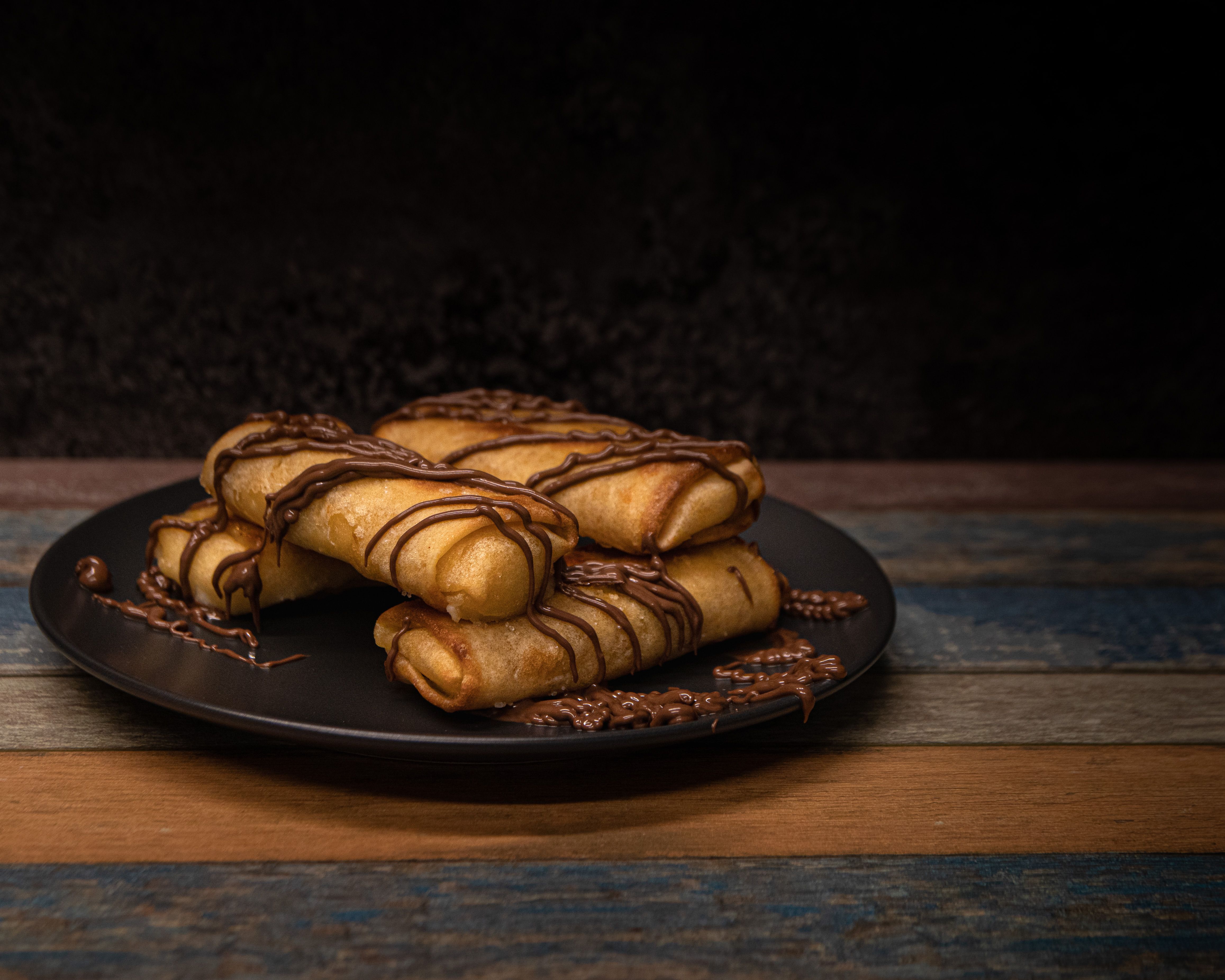
Photo: tal molcho / Pexels
The diets react (see scores below)
Common Ingredients
- saba banana
- jackfruit
- spring roll wrapper
- brown sugar
- oil
Specific recipes may vary.
Incompatible with 10 of 11 diets
Diet Ratings
Turon is fundamentally incompatible with ketogenic eating. Every core ingredient violates keto principles: saba banana is a starchy, high-carb banana variety with roughly 20-25g net carbs per piece on its own; jackfruit is high in natural sugars and net carbs; spring roll wrappers are made from refined wheat or rice flour, adding significant grain-based carbohydrates; and brown sugar is added explicitly as a coating and caramelizing agent. The dish is deep-fried, which adds fat, but the fat source (neutral cooking oil) provides no mitigation when the carbohydrate load from the other ingredients is this extreme. A single serving of turon likely exceeds or nearly meets an entire day's keto carb budget from multiple incompatible sources simultaneously.
Turon is a Filipino snack made by wrapping saba banana and jackfruit in a spring roll wrapper, coating with brown sugar, and deep-frying in oil. All listed ingredients are plant-based. However, two ingredients warrant scrutiny: (1) Spring roll wrappers (lumpia wrappers) are traditionally made with wheat flour and water, but some commercial versions include eggs — making brand selection critical for vegans. (2) Brown sugar in the Philippines and some other countries is occasionally processed using bone char, though this is less common for brown/raw sugar than for refined white sugar. The frying oil is plant-based. As a deep-fried, sugar-coated snack it is also nutritionally poor by whole-food plant-based standards, which keeps the score from the high range even when fully vegan wrappers are used.
Whole-food plant-based advocates would flag the deep-frying oil and refined sugar as nutritionally problematic, and may not consider this dish aligned with a health-focused vegan lifestyle even if technically animal-free. Additionally, strict ethical vegans who scrutinize bone char sugar processing may seek explicitly vegan-certified sugar.
Turon contains multiple non-paleo ingredients that disqualify it entirely. The spring roll wrapper is made from wheat flour or rice flour — both grains explicitly excluded from the paleo diet. Brown sugar is a refined sugar, also firmly off the paleo list. The frying oil is typically a seed or vegetable oil (canola, sunflower, or similar), which are excluded in favor of animal fats or specific plant oils. While saba banana and jackfruit are paleo-friendly fruits, they cannot redeem a dish so fundamentally built on grains, refined sugar, and seed oils.
Turon is a deep-fried Filipino snack that contradicts core Mediterranean diet principles on multiple fronts. The spring roll wrapper is a refined grain product, brown sugar adds significant amounts of added sugar, and deep-frying in oil (not olive oil) adds unhealthy fats. While saba banana and jackfruit are fruits that would otherwise be encouraged, the overall preparation method and added ingredients transform them into a high-sugar, high-refined-carb, fried treat that is far removed from Mediterranean dietary patterns. Minimal processing and avoidance of added sugars and refined grains are foundational rules that this dish violates.
Turon is a Filipino snack made entirely of plant-derived and processed ingredients. Saba banana and jackfruit are fruits, spring roll wrapper is a grain-based product (typically wheat flour), brown sugar is a refined plant-derived sweetener, and oil is likely a plant-based oil. There is not a single animal-derived ingredient in this dish. It is completely incompatible with the carnivore diet at any tier.
Turon contains multiple excluded ingredients that make it clearly non-compliant with Whole30. First, brown sugar is an added sugar, which is explicitly excluded. Second, spring roll wrappers are made from wheat flour or rice flour, both of which are grains and excluded. Third, even if the ingredients were somehow compliant, Turon is a deep-fried wrapped dessert/snack that directly falls into the 'no recreating baked goods/junk food' category — it is essentially a fried pastry/wrap, analogous to the explicitly prohibited tortillas, wraps, and chips. There is no compliant version of this dish possible without fundamentally changing what it is.
Turon contains multiple high-FODMAP ingredients that make it problematic during the elimination phase. The spring roll wrapper is typically made from wheat flour, which is high in fructans — a primary FODMAP concern. Jackfruit is high-FODMAP even at small servings (Monash rates it as high-FODMAP due to excess fructose and polyols). Saba banana (a cooking banana/plantain variety) is less well-studied than Cavendish bananas, but ripe bananas in larger servings become high-FODMAP due to excess fructose; saba tends to be used ripe in turon, increasing this risk. Brown sugar in moderate amounts is generally low-FODMAP (sucrose), but the combination of wheat wrapper and jackfruit alone is enough to classify this dish as avoid. The overall FODMAP load from multiple problematic ingredients stacks unfavorably.
Monash University has limited specific data on saba bananas and some regional spring roll wrappers made from rice flour — if rice paper wrappers were substituted and jackfruit were omitted or replaced, the dish could potentially be modified to caution status. Some FODMAP practitioners note that small amounts of jackfruit (under 45g unripe) may be tolerated, but the ripe jackfruit typically used in turon is a higher-risk form.
Turon is a deep-fried Filipino snack consisting of banana and jackfruit wrapped in a spring roll wrapper and coated with caramelized brown sugar. While saba banana and jackfruit are DASH-friendly fruits in their natural form, the preparation method fundamentally changes the nutritional profile. Deep-frying in oil significantly increases total fat content, the refined spring roll wrapper adds little nutritional value, and the brown sugar coating adds substantial amounts of free/added sugar — a category DASH explicitly limits. The combination of deep-frying (increased fat and calories), added sugar (caramelized coating), and refined starch wrapper places this snack firmly in the 'avoid' category. DASH discourages sweets and treats fried foods with high added fat and sugar as foods to limit substantially. This is not a portion-control issue but a fundamental preparation problem that strips away the DASH-friendly qualities of the original fruit ingredients.
Turon is a Filipino fried banana spring roll that combines multiple Zone-unfavorable elements: saba banana (a high-glycemic, starchy banana explicitly avoided in Zone due to high sugar content), jackfruit (moderate-to-high glycemic and high in sugar), brown sugar coating (added sugar), a refined flour spring roll wrapper (high-glycemic refined carb), and deep-frying in oil (likely omega-6-heavy seed oil, adding unhealthy fat with no protein or fiber to slow glycemic impact). The dish has virtually no protein, no meaningful fiber to buffer the glycemic load, and no monounsaturated fat benefit since the frying oil is likely pro-inflammatory. This snack is essentially pure high-glycemic carbohydrate with added sugar and fried in unfavorable fat — the opposite of what Zone seeks. There is no realistic way to portion-adjust this into a Zone-compliant snack without fundamentally changing the dish. No protein block can be derived from it, the carb load is extreme relative to any balancing protein or fat, and Sears specifically calls out bananas and refined starches as foods to avoid. This is one of the clearest 'avoid' cases in Zone methodology.
Turon is a Filipino fried snack made by wrapping saba banana and jackfruit in a spring roll wrapper, coating with brown sugar, and deep-frying in oil. From an anti-inflammatory standpoint, this dish has several significant concerns. The deep-frying process is the primary issue: it introduces large amounts of omega-6-rich seed oils (typically vegetable or palm oil used in Filipino street cooking) and creates advanced glycation end-products (AGEs) and oxidized lipids, both of which are pro-inflammatory. The spring roll wrapper is a refined carbohydrate with negligible fiber or nutritional value, contributing to rapid blood sugar spikes. The brown sugar coating adds significant refined/added sugar, which drives inflammatory markers like CRP and IL-6. While the underlying ingredients have some redeeming qualities — saba banana provides potassium, resistant starch, and modest antioxidants, and jackfruit contains some polyphenols — these benefits are largely negated by the cooking method and added ingredients. The combination of refined carbs, added sugar, and deep-frying in seed oil places this firmly in the avoid category. It shares the same profile as other fried sweet snacks that anti-inflammatory protocols consistently flag as problematic.
Turon is a deep-fried Filipino snack consisting of caramelized sugar-coated saba banana and jackfruit wrapped in a spring roll wrapper and fried in oil. It fails on nearly every GLP-1 dietary criterion: it is deep-fried (worsening nausea, bloating, and reflux — major GLP-1 side effects), high in sugar (caramelized brown sugar coating adds significant simple carbohydrates with no nutritional benefit), contains no meaningful protein, and offers minimal fiber despite the fruit content. The refined spring roll wrapper adds empty refined carbohydrates. The combination of fat from frying, simple sugars, and refined starch makes this a low-nutrient-density, high-calorie item that is poorly tolerated by GLP-1 patients. Jackfruit and saba banana do provide some potassium and micronutrients, but these benefits are entirely outweighed by the preparation method and added sugar.
*See how scores were generated at our methodology page.
Nutritional profile
Six traits that cut across every diet.
Fiber & Plants
How much whole-plant food and fiber it delivers.
Healthy Fats
The quality of its fats (unsaturated, omega-3).
Whole / Unprocessed
How close it is to its natural, unprocessed form.
Gut Gentle
How easy it is on digestion (low FODMAP, few irritants).
Low Glycemic
How little it spikes your blood sugar.
Protein Density
How much protein it packs per calorie.
Controversy Index
Higher controversy = more disagreement between diets.
Diet-Specific Tips
 Vegan — 6/10
View tips
- Saba banana and jackfruit are fully plant-based
- Spring roll wrappers may contain eggs in some commercial versions — label check required
- Brown sugar is generally vegan but bone char processing is a minority concern
- Deep-frying in oil makes this a heavily processed, calorie-dense snack
- No meat, dairy, or other obvious animal products in the traditional recipe