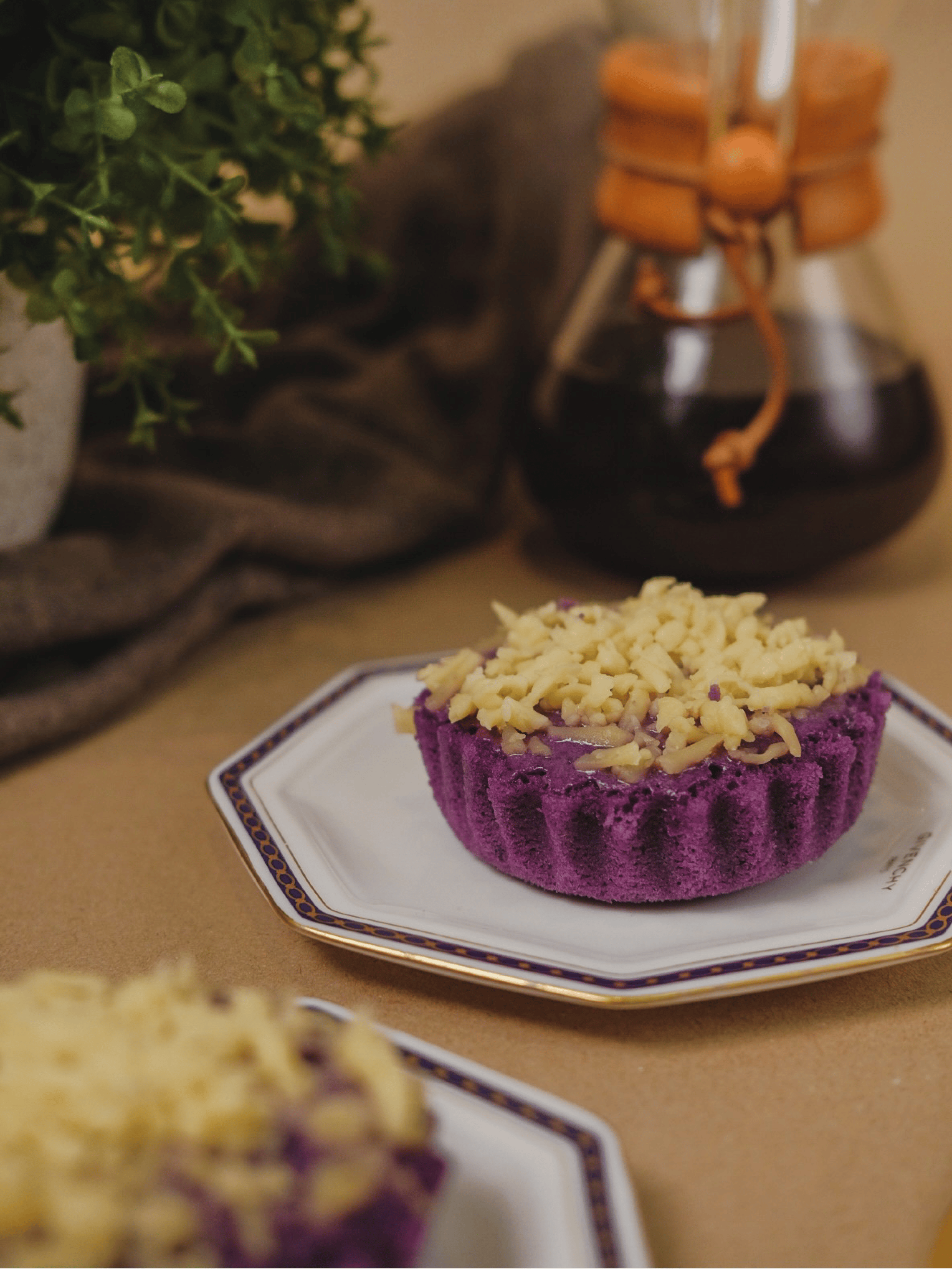
Photo: McHail Hernandez / Pexels
Filipino
Ube Halaya
The diets react (see scores below)
Common Ingredients
- ube
- coconut milk
- condensed milk
- butter
- sugar
- vanilla
Specific recipes may vary.
Incompatible with 10 of 11 diets
Diet Ratings
Ube Halaya is fundamentally incompatible with a ketogenic diet. Every major ingredient is a keto disqualifier: ube (purple yam) is a starchy root vegetable extremely high in net carbs (~27g per 100g cooked), condensed milk is loaded with added sugar, and granulated sugar is added on top of that. Even the coconut milk, which would otherwise be keto-friendly, cannot redeem a dish whose carbohydrate load easily exceeds an entire day's keto carb budget in a single serving. This is a traditional Filipino dessert/jam built around starch and sugar — there is no realistic portion size that makes it compatible with ketosis.
Ube Halaya as listed contains two clear animal-derived ingredients: condensed milk (dairy) and butter (dairy). These are core to the traditional recipe and make it non-vegan. The ube, coconut milk, sugar, and vanilla are all plant-based, but the presence of dairy products disqualifies the dish. Vegan versions can be made by substituting condensed milk with coconut condensed milk and using vegan butter or coconut oil, but the traditional formulation as described here is not vegan-compliant.
Ube Halaya contains multiple non-paleo ingredients that disqualify it outright. Condensed milk is a heavily processed dairy product loaded with refined sugar. Butter is a dairy derivative. Refined sugar is explicitly excluded from the paleo diet. While ube (purple yam) itself is a paleo-approved tuber and coconut milk is paleo-friendly, the combination of condensed milk, butter, and added sugar makes this dish fundamentally incompatible with paleo principles. The dish is essentially a sweetened, dairy-laden jam — the processing and ingredient list place it firmly in the avoid category.
Ube Halaya is a Filipino purple yam jam that, while based on a whole plant ingredient (ube), is heavily processed through the combination of condensed milk (high added sugar), butter (saturated fat, not olive oil), coconut milk (saturated fat), and additional sugar. The resulting dish is high in added sugars and saturated fats, with minimal fiber or nutritional benefit relative to its caloric load. This contradicts core Mediterranean diet principles: it contains no olive oil, relies on butter as a fat source, is loaded with added sugars, and functions as a heavily sweetened confection rather than a whole food. While ube itself is a nutritious root vegetable, it is transformed into a dessert spread that bears little resemblance to Mediterranean dietary patterns.
Ube Halaya is entirely plant-based and heavily processed, making it completely incompatible with the carnivore diet. The primary ingredient is ube (purple yam), a starchy root vegetable that is strictly excluded. Coconut milk is a plant-derived fat source, also excluded. Condensed milk, while dairy-derived, is loaded with sugar and highly processed. Sugar and vanilla are additional plant-based or processed ingredients. There is no animal protein present, and virtually every ingredient violates carnivore principles. This dish represents the antithesis of carnivore eating — high-carb, plant-derived, and sugar-laden.
Ube Halaya contains multiple excluded ingredients that make it clearly non-compliant with Whole30. Condensed milk is a dairy product with added sugar — doubly excluded. Butter is excluded dairy (only ghee/clarified butter is permitted). Sugar is an explicitly excluded added sweetener. Even setting aside the spirit of the program, the ingredient list alone contains three hard-rule violations.
Ube Halaya contains multiple high-FODMAP ingredients that make it problematic during the elimination phase. Condensed milk is a significant source of lactose (a disaccharide) and is present in substantial quantities in this dish. Ube (purple yam) itself has limited Monash testing, but standard yam/purple yam varieties contain polyols and fructans at typical serving sizes. Coconut milk is low-FODMAP only at small portions (up to 1/2 cup per Monash), but in a rich dessert preparation like Ube Halaya, the cumulative coconut milk content per serving can exceed safe thresholds. Butter is generally low-FODMAP (fat-based, minimal lactose), sugar and vanilla are low-FODMAP. However, the combination of condensed milk (high lactose) and potentially polyol-containing ube at realistic serving sizes makes this dish very likely to trigger symptoms during the elimination phase. The dish is served as a jam/spread or dessert in generous portions, compounding the FODMAP load.
Monash University has not specifically tested ube (purple yam) for FODMAP content, creating uncertainty about whether it is the primary driver of concern. Some FODMAP practitioners may consider small tasting portions (1-2 teaspoons) relatively lower risk from the ube and coconut milk components, but the condensed milk remains a consistent high-lactose concern that most clinicians agree makes this dish unsuitable during strict elimination.
Ube Halaya is a Filipino purple yam jam that, while based on a nutritious root vegetable (ube), is heavily processed with multiple DASH-unfriendly ingredients. Coconut milk is a tropical oil-rich ingredient high in saturated fat, which DASH explicitly limits. Condensed milk adds significant amounts of added sugar and saturated fat. Butter contributes additional saturated fat and cholesterol. The dish is also loaded with added sugar from both condensed milk and additional sugar, directly conflicting with DASH guidelines that limit sweets and added sugars. The ube itself would be a DASH-friendly ingredient rich in potassium, fiber, and antioxidants, but the preparation method transforms it into a high-sugar, high-saturated-fat confection. As a snack, it provides minimal protein, little fiber benefit relative to its caloric load, and several ingredients that DASH explicitly advises against.
Ube Halaya is a Filipino purple yam jam that is fundamentally incompatible with Zone Diet principles. The dish is essentially a high-glycemic, high-sugar confection: condensed milk and added sugar are primary ingredients, making this a concentrated source of rapidly absorbed carbohydrates with virtually no protein and high saturated fat from coconut milk and butter. There is no lean protein component, no monounsaturated fat, and the carbohydrate load is dominated by high-glycemic sugars rather than the low-glycemic, fiber-rich vegetables and fruits the Zone favors. While ube (purple yam) itself has moderate glycemic properties and provides polyphenols, the preparation method transforms it into a dessert spread with a macro profile that is nearly impossible to Zone-balance — extremely high carbs (mostly sugar), negligible protein, and saturated fat. Even in very small portions, there is no reasonable Zone block framework that makes this a useful snack component without dramatically disrupting the 40/30/30 ratio. As a standalone snack with no protein source, it fails the Zone's fundamental requirement that every eating occasion maintain macro balance.
Ube Halaya presents a genuinely mixed anti-inflammatory profile. On the positive side, ube (purple yam) is a standout ingredient: its deep violet color signals high anthocyanin content, the same class of polyphenols found in blueberries, which are well-documented to reduce inflammatory markers like CRP and IL-6. Ube also provides fiber, potassium, and vitamin C. Coconut milk contributes medium-chain triglycerides (MCTs), which have some neutral-to-modest anti-inflammatory properties, though its saturated fat content is a consideration. However, the dish's problems are significant: condensed milk is a concentrated source of added sugar and dairy fat; butter is a saturated fat that anti-inflammatory frameworks recommend limiting; and additional sugar is included on top of the condensed milk. The overall sugar load is substantial, and chronic high sugar intake is a well-established driver of inflammation via AGE formation, oxidative stress, and insulin dysregulation. The net result is a food where one genuinely anti-inflammatory ingredient (ube) is embedded in a high-sugar, high-saturated-fat preparation that blunts its benefits considerably. Occasional consumption is acceptable, but the dish as traditionally prepared is not a food one should eat regularly on an anti-inflammatory diet.
Ube halaya is a Filipino purple yam jam made by combining ube with coconut milk, condensed milk, butter, and sugar — a combination that is fundamentally incompatible with GLP-1 dietary priorities. It is extremely high in added sugar, saturated fat (from coconut milk and butter), and calories, while offering virtually no protein and minimal fiber relative to its caloric load. The condensed milk and added sugar make this a high-glycemic, calorie-dense food that provides little nutritional value per bite. The high fat content from both coconut milk and butter is likely to worsen GLP-1 side effects including nausea, bloating, and reflux, as fat slows gastric emptying further on top of what the medication already causes. As a snack, it fails every key criterion: no protein, high sugar, high saturated fat, low fiber, poor nutrient density, and high likelihood of GI discomfort.
*See how scores were generated at our methodology page.
Nutritional profile
Six traits that cut across every diet.
Fiber & Plants
How much whole-plant food and fiber it delivers.
Healthy Fats
The quality of its fats (unsaturated, omega-3).
Whole / Unprocessed
How close it is to its natural, unprocessed form.
Gut Gentle
How easy it is on digestion (low FODMAP, few irritants).
Low Glycemic
How little it spikes your blood sugar.
Protein Density
How much protein it packs per calorie.
Controversy Index
Higher controversy = more disagreement between diets.
Diet-Specific Tips
 Anti-Inflammatory — 4/10
View tips
- Ube is rich in anthocyanins — potent anti-inflammatory polyphenols with research-backed reductions in CRP and IL-6
- High added sugar load from both condensed milk and additional sugar — a clear pro-inflammatory driver
- Butter contributes saturated fat, which anti-inflammatory frameworks recommend limiting
- Coconut milk adds saturated fat but provides MCTs with a more neutral inflammatory profile
- Overall dish is a high-glycemic, high-sugar confection despite its beneficial base ingredient
- Acceptable occasionally; not appropriate for regular anti-inflammatory eating