Finnish
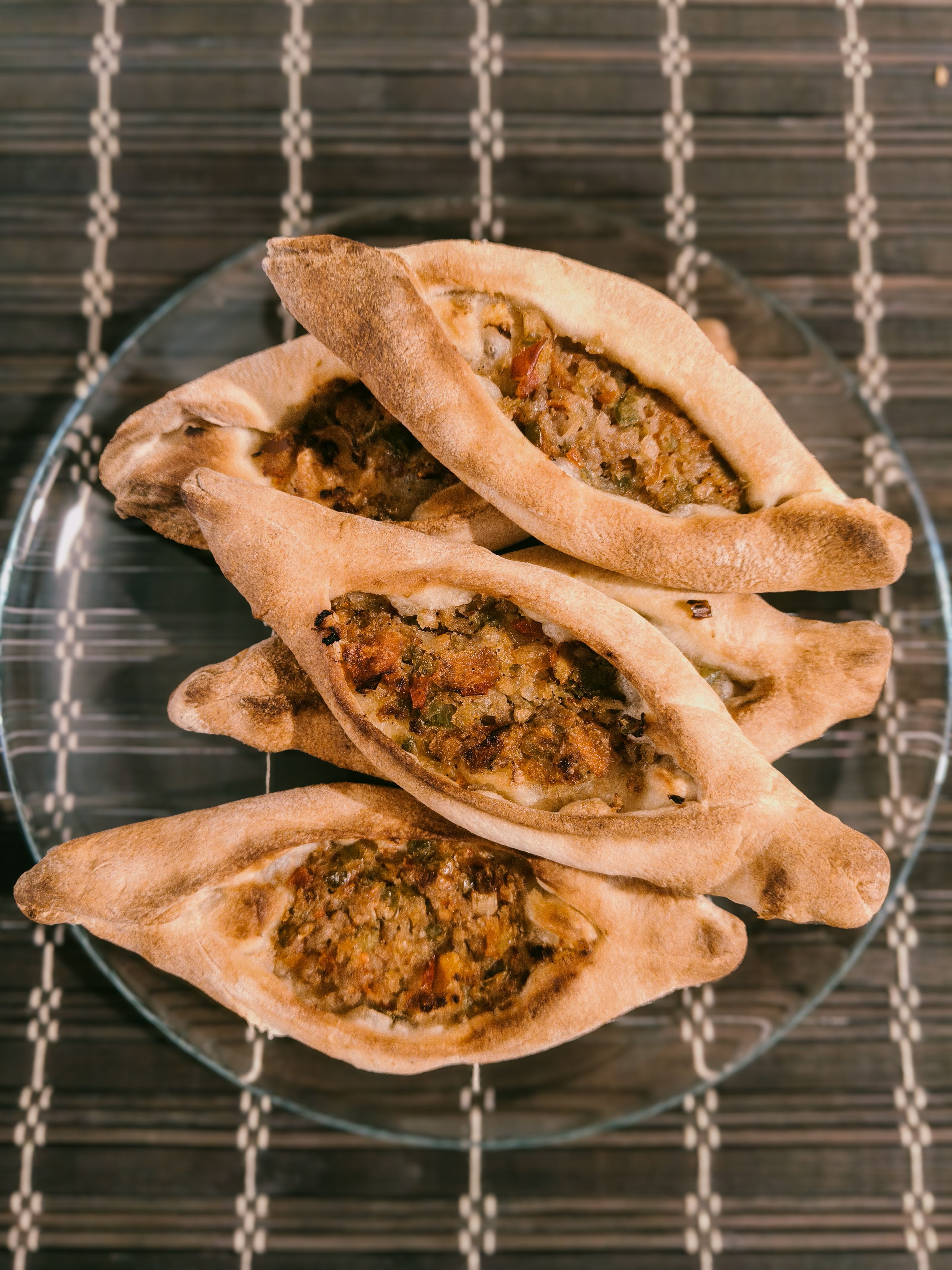
Karjalanpiirakka
The diets react (see scores below)
Common Ingredients
- rye flour
- rice
- milk
- butter
- water
- salt
- eggs
Specific recipes may vary.
Incompatible with 6 of 11 diets
Diet Ratings
Karjalanpiirakka (Karelian pasty) is fundamentally incompatible with a ketogenic diet. The dish consists of a rye flour crust filled with rice porridge made with milk and butter. Both primary components are high-carb offenders: rye flour is a grain with very high net carbs (~60-65g per 100g), and white rice is one of the most carb-dense foods available (~28g net carbs per 100g cooked). A single pasty typically contains 20-30g of net carbs, which can single-handedly exceed or consume the entire daily keto carb allowance. Neither ingredient can be consumed in meaningful portions on keto. The butter and eggs offer minor keto-friendly elements, but they are vastly outweighed by the grain and starch content.
Karjalanpiirakka (Karelian pasty) contains multiple animal-derived ingredients that disqualify it from a vegan diet. Milk and butter are dairy products, and eggs are an animal product — all three are explicitly excluded under vegan principles. The rye flour pastry shell and rice filling are plant-based, but the dairy-enriched rice porridge filling and the traditional egg butter (munavoi) topping make this dish clearly non-vegan. A vegan version could theoretically be made by substituting plant-based milk, vegan butter, and omitting eggs, but the traditional recipe as listed is not vegan-compatible.
Karjalanpiirakka (Karelian pasty) is a traditional Finnish dish consisting of a rye flour crust filled with rice porridge cooked in milk, typically finished with butter and salt. This dish contains multiple hard-excluded ingredients under paleo rules: rye flour is a grain and firmly off-limits, rice is a grain and equally excluded, milk is dairy and excluded, butter is a dairy product and excluded, and salt is on the avoid list. With four to five core non-paleo ingredients — each independently disqualifying — this dish scores at the very bottom of the paleo spectrum. There is no meaningful paleo-compatible version of this recipe without replacing every primary component.
Karjalanpiirakka (Karelian pasty) is a Finnish rye-crusted pastry filled with rice porridge made with milk, finished with butter and egg butter topping. The rye flour crust is a positive element — whole grain rye is encouraged in the Mediterranean diet for its fiber and nutrient density. However, the rice filling is refined (white rice typically), butter is used as the primary fat rather than olive oil, and milk adds moderate dairy. The dish contains no vegetables, legumes, or olive oil, making it peripheral to Mediterranean principles. That said, it is minimally processed, uses whole grain rye, and dairy/eggs are acceptable in moderation, preventing a full 'avoid' verdict.
Some Mediterranean diet interpretations emphasize the quality of whole grains and minimal processing over strict ingredient lists — traditional Northern European whole-grain pastries like this, made without added sugars or industrial ingredients, could be seen as acceptable moderate-frequency foods. Modern clinical guidelines (e.g., PREDIMED-style) would flag the butter and absence of olive oil as meaningful departures from the canonical fat profile.
Karjalanpiirakka (Karelian pasty) is a traditional Finnish dish consisting of a rye flour crust filled with rice porridge cooked in milk, topped with butter. While it contains some animal-derived ingredients (milk, butter, eggs), the foundation of the dish is rye flour — a grain — and rice, both of which are explicitly excluded on the carnivore diet. Plant foods, grains, and starches are categorically off-limits regardless of any animal product content present alongside them. This dish is essentially a grain pastry with a grain filling, making it fundamentally incompatible with carnivore principles.
Karjalanpiirakka (Karelian pasty) is a traditional Finnish dish consisting of a rye flour crust filled with rice porridge made with milk, and typically finished with butter. It contains multiple excluded ingredients: rye flour is a grain (excluded), rice is a grain (excluded), milk is dairy (excluded), and butter is dairy (excluded). Even setting aside the individual excluded ingredients, Karjalanpiirakka is fundamentally a baked pastry/crust item, which falls squarely under the Whole30 prohibition on recreating baked goods — the rye shell is essentially a cracker or crust. There is no compliant version of this dish possible without fundamentally changing what it is.
Karjalanpiirakka (Karelian pasties) are traditional Finnish pastries consisting of a rye flour crust filled with rice porridge cooked in milk. The primary FODMAP concern is the rye flour crust, which is high in fructans. Rye is one of the most concentrated sources of fructans and is explicitly flagged as high-FODMAP by Monash University even at small servings. The rice filling itself is low-FODMAP, and butter, eggs, salt, and water are all low-FODMAP. However, the milk used to cook the rice porridge introduces lactose, adding a second FODMAP concern. The combination of a fructan-rich rye crust plus lactose-containing milk filling makes this dish problematic during the elimination phase. Even a single pasty would deliver a meaningful dose of fructans from the rye shell, making it unsuitable for the elimination phase at a standard serving.
Monash University notes that some rye-based products vary in fructan content depending on the amount of rye flour used and portion size; a very small karjalanpiirakka with minimal rye crust might fall closer to the caution zone. Additionally, some clinical FODMAP practitioners allow lactose-free milk substitutions and consider the overall FODMAP load per serving, which could theoretically make a modified version more tolerable — but a traditional, unmodified recipe is widely advised to avoid during elimination.
Karjalanpiirakka (Karelian pasty) is a traditional Finnish rye-crusted pastry filled with rice porridge, typically made with milk and butter, and often served with egg butter topping. The rye flour crust is a genuine positive for DASH — it provides whole grain fiber, magnesium, and potassium. However, the butter used in both the crust and filling adds saturated fat, and the rice filling is made with whole milk rather than low-fat milk. Salt is present in the dough, and the traditional egg-butter spread (munavoi) served on top would further add cholesterol, saturated fat, and sodium. As a snack-sized portion, the total saturated fat and sodium load is moderate rather than excessive, placing it in the caution category. The whole grain rye element is a meaningful DASH-positive component, but the butter and full-fat dairy prevent a full approval. Using low-fat milk and reducing butter would improve the score.
Standard NIH DASH guidelines flag butter and full-fat dairy as foods to limit due to saturated fat and sodium content. However, updated clinical interpretations note that small amounts of butter in a predominantly whole-grain, portion-controlled snack may be acceptable, and some DASH-aligned practitioners point to emerging evidence that moderate full-fat dairy consumption does not necessarily worsen cardiovascular outcomes — suggesting this dish could be viewed more favorably if consumed in controlled portions.
Karjalanpiirakka (Karelian pasty) is a traditional Finnish snack consisting of a thin rye crust filled with rice porridge (cooked in milk), typically finished with an egg-butter spread. From a Zone perspective, this dish is carbohydrate-dominant with minimal protein and significant saturated fat, making it difficult to fit into the 40/30/30 ratio without significant modification. The rye crust provides some fiber and has a lower glycemic index than white bread, which is a Zone-favorable characteristic. However, white rice filling is a high-glycemic, unfavorable Zone carbohydrate. The egg-butter topping adds saturated fat rather than preferred monounsaturated fat. The dish lacks meaningful lean protein — eggs in the topping contribute some, but not enough to approach Zone balance. As a standalone snack, it skews heavily toward carbs (~65-70% of calories) with saturated fat and negligible lean protein. It could be incorporated into a Zone meal as a carbohydrate block component if paired with a lean protein source and monounsaturated fat, but even then the white rice filling and butter content work against Zone principles. The rye flour component is the redeeming factor that keeps this out of 'avoid' territory.
Some Zone practitioners following Sears' later writing on polyphenols and fermented/whole grain foods might be more permissive with rye-based foods, noting that rye has a notably lower glycemic response than wheat and provides beneficial phytonutrients. In this view, a single Karjalanpiirakka (roughly 55-60g) could function as a 2-block carbohydrate portion if the white rice filling is minimized, paired with adequate lean protein and olive oil rather than the traditional egg-butter spread.
Karjalanpiirakka (Karelian pasties) are traditional Finnish rye-crusted pastries filled with rice porridge made with milk and finished with butter. The anti-inflammatory profile is genuinely mixed. On the positive side, rye flour is a whole grain with a meaningful fiber content, beta-glucans, and a lower glycemic impact than refined wheat flour, all of which are associated with reduced inflammatory markers. Rye also contains lignans and polyphenols. Eggs contribute choline and selenium with modest anti-inflammatory potential. However, the butter content introduces saturated fat, which anti-inflammatory frameworks consistently flag as a food to limit. White rice is a refined, low-fiber carbohydrate with a neutral-to-mildly pro-inflammatory profile depending on portion and context. Whole milk adds additional saturated fat. The dish contains no omega-3 sources, antioxidant-rich vegetables, herbs, or spices. Overall, the rye crust is the strongest positive element, but the saturated fat from butter and the refined carbohydrate from white rice prevent this from being an 'approve.' As a traditional whole-food snack without processed additives, trans fats, or added sugars, it sits comfortably in the 'caution' zone — acceptable in moderation, especially if butter is used sparingly.
Some anti-inflammatory practitioners, particularly those following stricter protocols like AIP or low-saturated-fat approaches, would rate this lower due to the butter and whole milk content, arguing that even modest saturated fat intake contributes to inflammatory load. Conversely, proponents of traditional Nordic dietary patterns — supported by research such as the Baltic Sea Diet studies — would argue that rye-based whole foods like this are positively associated with reduced CRP and cardiovascular risk markers, and might consider the butter a minor concern given the overall whole-food, minimally processed nature of the dish.
Karjalanpiirakka (Karelian pasty) is a traditional Finnish snack consisting of a thin rye crust filled with rice porridge made with milk and butter, often served with egg butter (munavoi). The rye crust provides meaningful fiber and the egg component contributes some protein, but overall protein content per serving is low (roughly 4-6g per pasty). The rice filling is a refined, easily digestible carbohydrate with limited nutritional density. Butter in both the filling and the egg butter topping adds saturated fat, which is a concern for GLP-1 patients prone to nausea and reflux. On the positive side, rye flour is a whole grain with good fiber content, and the dish is not fried or heavily processed. Portion size is naturally small (one pasty is roughly 100-130 kcal), which suits GLP-1 eating patterns. The main drawbacks are low protein density, moderate saturated fat from butter, and a carbohydrate-dominant macronutrient profile that doesn't prioritize GLP-1 dietary goals. Acceptable occasionally as part of a broader high-protein meal, but not a strong standalone snack choice.
Some GLP-1-focused dietitians may view the rye crust favorably given rye's high fiber content and low glycemic index compared to wheat, arguing it supports blood sugar stability and digestive health. Others would flag the butter-enriched rice filling and egg butter topping as too high in saturated fat for patients already managing GI side effects, and would recommend pairing with a protein source or substituting a lower-fat topping to make it more GLP-1 appropriate.
*See how scores were generated at our methodology page.
Nutritional profile
Six traits that cut across every diet.
Fiber & Plants
How much whole-plant food and fiber it delivers.
Healthy Fats
The quality of its fats (unsaturated, omega-3).
Whole / Unprocessed
How close it is to its natural, unprocessed form.
Gut Gentle
How easy it is on digestion (low FODMAP, few irritants).
Low Glycemic
How little it spikes your blood sugar.
Protein Density
How much protein it packs per calorie.
Controversy Index
Higher controversy = more disagreement between diets.
Diet-Specific Tips
 Mediterranean — 5/10
View tips
- Rye flour crust is a whole grain positive
- Butter replaces olive oil as the fat source — not Mediterranean canonical
- White rice filling is a refined grain with limited fiber benefit
- Dairy (milk, butter, eggs) acceptable in moderation but not core
- No vegetables, legumes, or plant-forward fillings
- Minimally processed with no added sugars — a relative positive
- Not traditionally Mediterranean cuisine
 DASH — 5/10
View tips
- Rye flour crust is a DASH-positive whole grain with fiber, magnesium, and potassium
- Butter contributes saturated fat, which DASH explicitly limits
- Milk in the filling should ideally be low-fat or fat-free per DASH guidelines
- Salt in the dough adds sodium; portion size moderates the total load
- No added sugars or heavily processed ingredients
- Traditional egg-butter topping (if used) would further increase saturated fat and cholesterol
- As a snack portion, overall calorie and fat load is moderate
 Zone — 4/10
View tips
- Carbohydrate-dominant macronutrient profile (~65-70% calories from carbs) conflicts with 40/30/30 Zone ratio
- White rice filling is an 'unfavorable' high-glycemic Zone carbohydrate
- Rye flour crust is a mitigating factor — lower GI than wheat, provides fiber, more Zone-friendly
- No meaningful lean protein source; eggs in topping are minimal
- Butter in crust and egg-butter topping contributes saturated fat, not preferred monounsaturated fat
- Could serve as a carb block component in a balanced Zone meal but cannot stand alone as a Zone-compliant snack
- Traditional portion size (1-2 pieces) would require significant protein and fat pairing to approach Zone balance
 Anti-Inflammatory — 5/10
View tips
- Rye flour provides fiber, beta-glucans, lignans, and polyphenols with anti-inflammatory and lower-glycemic properties
- Butter is a saturated fat source that anti-inflammatory frameworks consistently recommend limiting
- White rice filling is a refined, low-fiber carbohydrate with a neutral-to-mildly pro-inflammatory profile
- Whole milk adds additional saturated fat
- No omega-3 fatty acids, colorful vegetables, or anti-inflammatory spices present
- No trans fats, added sugars, processed additives, or seed oils — a traditional whole-food preparation
- Nordic dietary pattern research associates rye-based foods with reduced inflammatory markers
 GLP-1 Friendly — 5/10
View tips
- Low protein per serving (~4-6g), does not meet 15-30g per meal target
- Rye flour provides beneficial fiber and has a lower glycemic index than refined grains
- Rice filling is a refined, low-nutrient-density carbohydrate
- Butter in filling and egg butter topping adds saturated fat — a GLP-1 side effect risk
- Small natural portion size is compatible with GLP-1 reduced appetite
- Easy to digest texture is suitable for slowed gastric emptying
- Not fried or ultra-processed — a relative advantage
- Best consumed paired with a high-protein food to compensate for low protein density