Photo: Polina Tankilevitch / Pexels
Finnish
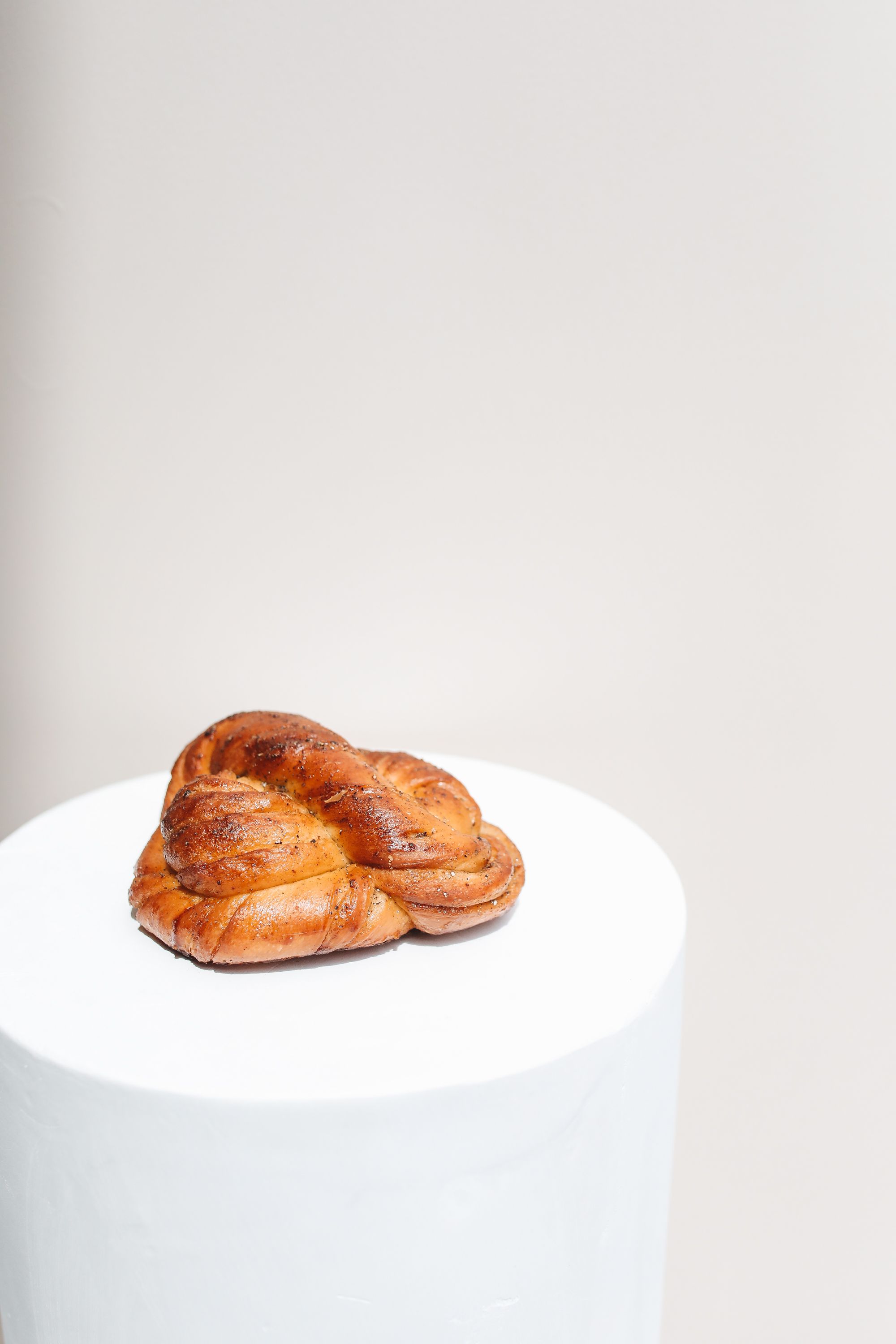
Korvapuusti
The diets react (see scores below)
Common Ingredients
- flour
- yeast
- butter
- milk
- sugar
- cardamom
- cinnamon
- pearl sugar
Specific recipes may vary.
Incompatible with 11 of 11 diets
Diet Ratings
Korvapuusti (Finnish cinnamon rolls) are fundamentally incompatible with a ketogenic diet. The base dough is made from wheat flour and yeast, which alone would push net carbs far beyond the 20-50g daily limit in a single serving. This is compounded by added sugar in both the dough and the pearl sugar topping. A single korvapuusti typically contains 40-60g of net carbs, which would exceed or completely exhaust an entire day's keto carb allowance. There are no redeeming keto-friendly qualities in the traditional recipe.
Korvapuusti (Finnish cinnamon rolls) contains butter and milk, both of which are dairy products and therefore animal-derived ingredients that are strictly excluded from a vegan diet. These are core structural ingredients in the recipe, not trace contaminants, meaning the dish cannot be considered vegan in its traditional form. Vegan versions can be made by substituting plant-based milk (oat, soy, almond) and vegan butter (coconut oil-based or margarine), and the remaining ingredients — flour, yeast, sugar, cardamom, cinnamon, and pearl sugar — are all plant-based and vegan-compliant.
Korvapuusti (Finnish cinnamon rolls) is fundamentally incompatible with the paleo diet. The recipe is built almost entirely on non-paleo ingredients: wheat flour (a grain, strictly excluded), milk (dairy, excluded), sugar and pearl sugar (refined sugar, excluded), and yeast-leavened bread structure (processed grain product). Butter is debated in paleo circles, and cardamom and cinnamon are paleo-approved spices, but these two compliant ingredients cannot redeem a dish whose foundation is wheat, dairy, and refined sugar. There is no meaningful paleo substitution possible while retaining the identity of this dish.
Korvapuusti (Finnish cinnamon rolls) are a classic Scandinavian pastry that directly contradicts Mediterranean diet principles on multiple fronts. The base is refined white flour (not whole grain), butter is the primary fat (not olive oil), and sugar appears twice — both as granulated sugar in the dough and pearl sugar as a topping. This combination of refined grains, saturated animal fat, and added sugars places it firmly in the 'avoid' category. There is no plant-forward nutritional value, no whole grains, no legumes, and no healthy fats. It is a highly processed baked good typical of Northern European cuisine, which is nutritionally distant from Mediterranean dietary patterns.
Korvapuusti (Finnish cinnamon rolls) are entirely incompatible with the carnivore diet. The dish is a plant-based baked good made almost entirely from excluded ingredients: flour (grain), yeast, sugar, cardamom, cinnamon, and pearl sugar are all plant-derived or processed carbohydrates. While butter and milk are animal-derived dairy products that some carnivore practitioners accept, they represent a minor fraction of this recipe and cannot redeem a food that is fundamentally a grain-and-sugar confection. There is universal consensus across all carnivore tiers — from the strictest Lion Diet to the more flexible animal-based approach — that bread, pastries, and grain-based baked goods are prohibited.
Korvapuusti (Finnish cinnamon rolls) contains multiple excluded ingredients: flour (grain), butter (dairy), milk (dairy), and sugar (added sugar). Additionally, even if compliant substitutes were found for these ingredients, this dish is a classic baked good — a sweet roll/pastry — which is explicitly prohibited under Whole30's 'no recreating baked goods' rule. Pearl sugar is also an added sugar. There is no path to making this dish Whole30-compliant.
Korvapuusti (Finnish cinnamon rolls) are made primarily with wheat flour, which is high in fructans — one of the most problematic FODMAPs. A standard serving of one bun contains a substantial amount of wheat flour, making it clearly high-FODMAP during the elimination phase. Additionally, milk contributes lactose, adding another FODMAP source. While butter is low-FODMAP (fat-based, no lactose concern), sugar, cardamom, and cinnamon are low-FODMAP at normal quantities, and yeast itself is not a FODMAP concern. Pearl sugar is sucrose-based and low-FODMAP. However, the wheat flour alone is enough to classify this as a high-FODMAP food — it is not salvageable by portion reduction, as even small amounts of wheat-based baked goods exceed fructan thresholds for most individuals during elimination. The combination of wheat fructans and lactose from milk makes this firmly in the 'avoid' category.
Korvapuusti (Finnish cinnamon rolls) are a sweet pastry made with refined white flour, butter, sugar, and pearl sugar topping. This combination creates a food that conflicts with multiple core DASH principles: refined grains instead of whole grains, significant saturated fat from butter, high added sugar content (both mixed in and as pearl sugar topping), and minimal nutritional value in terms of potassium, magnesium, calcium, or fiber. DASH explicitly limits sweets and added sugars, recommends limiting saturated fat, and emphasizes whole grains over refined. As a snack, this provides little of what DASH promotes and much of what it restricts. The milk and yeast contribute minimal redeeming nutritional value at the quantities used.
Korvapuusti (Finnish cinnamon rolls) are a highly processed sweet pastry made almost entirely of Zone-unfavorable ingredients. The base is refined white flour — a high-glycemic carbohydrate that Sears explicitly discourages. The dough is enriched with butter (saturated fat, not monounsaturated) and whole milk, and sweetened with sugar, which is topped with additional pearl sugar. There is no meaningful lean protein source, and the fat profile is dominated by saturated fat rather than the preferred monounsaturated fats. The macronutrient ratio is wildly skewed toward carbohydrates and saturated fat, with virtually no protein, making it essentially impossible to construct a Zone-balanced block from this food. Cardamom and cinnamon do offer minor anti-inflammatory polyphenol benefits, but they are present in negligible quantities relative to the problematic macro profile. This is the kind of high-glycemic, protein-absent, saturated-fat-heavy baked good that Zone Diet methodology is explicitly designed to avoid.
Korvapuusti (Finnish cinnamon cardamom rolls) are a classic enriched pastry with a strongly pro-inflammatory nutritional profile from an anti-inflammatory perspective. The base is refined white flour — a refined carbohydrate that spikes blood glucose and raises inflammatory markers like CRP. Butter adds saturated fat, which in quantity is associated with increased inflammatory signaling. Sugar appears twice (in the dough and as pearl sugar topping), contributing significant added sugar load — one of the clearest pro-inflammatory dietary factors. Milk is neutral to mildly caution-level at best. The only redemptive elements are cardamom and cinnamon, both genuine anti-inflammatory spices with polyphenols and antioxidant properties; however, in the small quantities used as flavoring in a pastry, they cannot meaningfully offset the inflammatory burden of the refined flour, butter, and sugar that make up the bulk of the dish. This is essentially a sweet roll — a category that anti-inflammatory frameworks consistently flag as something to limit or avoid.
Korvapuusti (Finnish cinnamon cardamom bun) is a classic enriched pastry made primarily from refined white flour, butter, milk, and sugar — a combination that offers minimal protein, negligible fiber, high refined carbohydrates, and significant saturated fat. A typical bun (80–100g) provides roughly 300–350 calories, ~5g protein, ~1g fiber, ~10–14g fat (mostly saturated from butter), and ~20–25g sugar including pearl sugar topping. This profile is nearly the opposite of what GLP-1 patients need: empty refined calories dominate, there is no meaningful protein to support muscle preservation, no fiber to aid digestion or prevent constipation, and the high butter content risks worsening nausea, bloating, and reflux due to slowed gastric emptying. The sugar load also undermines blood sugar stability. With already-reduced appetite on GLP-1 medications, spending 300+ calories on a nutritionally hollow pastry leaves little room for the protein and micronutrients the body critically needs during rapid weight loss.
*See how scores were generated at our methodology page.
Nutritional profile
Six traits that cut across every diet.
Fiber & Plants
How much whole-plant food and fiber it delivers.
Healthy Fats
The quality of its fats (unsaturated, omega-3).
Whole / Unprocessed
How close it is to its natural, unprocessed form.
Gut Gentle
How easy it is on digestion (low FODMAP, few irritants).
Low Glycemic
How little it spikes your blood sugar.
Protein Density
How much protein it packs per calorie.
Controversy Index
Higher controversy = more disagreement between diets.