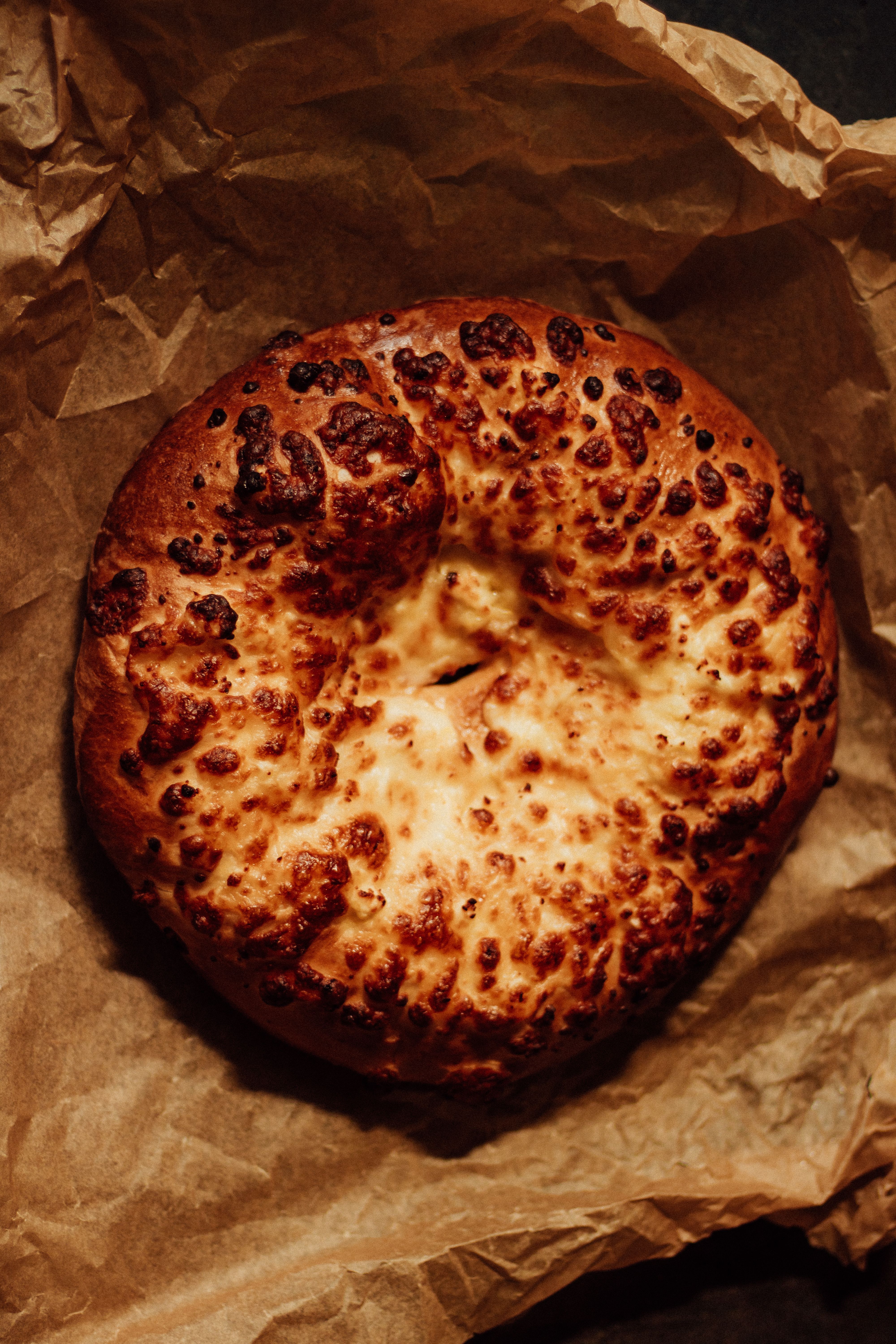
Photo: Anhelina Vasylyk / Pexels
The diets react (see scores below)
Common Ingredients
- milk
- rennet
- salt
- cloudberry jam
- butter
Specific recipes may vary.
Incompatible with 4 of 11 diets
Diet Ratings
Leipajuusto (Finnish squeaky cheese) is traditionally made from milk, rennet, and salt — the cheese itself is relatively low in carbs and high in fat and protein, making it keto-friendly on its own. However, the traditional serving with cloudberry jam is the critical issue. Cloudberry jam contains significant added sugar and fruit carbs, which can easily push a standard serving over daily keto limits. The butter addition is positive for keto. Without the jam, this dish would likely rate 7-8 (approve); with the jam as listed in the ingredients, the net carb load becomes problematic for strict keto adherence.
Lazy keto or flexible keto practitioners might allow a small portion of cloudberry jam occasionally, arguing that the cheese's protein and fat content offsets a modest sugar hit and that cloudberries have some of the lowest sugar content among berries. Strict keto adherents would reject any added-sugar jam entirely and consider this dish incompatible unless the jam is omitted.
Leipajuusto (Finnish squeaky cheese) is fundamentally a dairy product, making it entirely incompatible with a vegan diet. The dish contains multiple animal-derived ingredients: milk (dairy), rennet (typically animal-derived, extracted from calf stomach lining), and butter (dairy fat). Even if microbial or plant-based rennet were substituted, milk and butter remain core animal products. Cloudberry jam is the only vegan ingredient in this dish. There is no meaningful vegan variant of this traditional Finnish cheese dish.
Leipajuusto (Finnish squeaky cheese) is fundamentally a dairy product made from milk, which is excluded from the paleo diet. Dairy is a post-agricultural food unavailable to Paleolithic hunter-gatherers and is consistently rejected across all major paleo frameworks (Cordain, Sisson, Wolf). Salt is also a non-paleo additive. The cloudberry jam introduces refined sugar concerns depending on preparation. While butter is debated in some paleo circles, the foundational ingredient — fresh whole milk cheese — is a clear paleo violation. No amount of favorable preparation changes the fact that this dish's primary component is unprocessed dairy.
Leipajuusto (Finnish squeaky cheese) is a fresh cheese made from milk, rennet, and salt — a minimally processed dairy product. Dairy fits within the Mediterranean diet as a moderate, occasional food (a few servings per week). However, this dish also includes butter, which competes with olive oil as the primary fat and is not favored in Mediterranean principles, and cloudberry jam, which adds refined or concentrated sugars. The combination of butter and jam pushes this snack away from Mediterranean ideals. The base cheese alone would rate as acceptable in moderation, but the accompaniments reduce its compatibility. As a Finnish dish, it has no cultural overlap with Mediterranean traditions, though that alone does not disqualify it — the ingredients are what matter.
Some Mediterranean diet interpreters, particularly those referencing traditional Southern European pastoral communities, note that fresh, minimally processed cheeses like ricotta or fresh feta have always been part of the diet, and a plain fresh cheese like leipajuusto without the jam and butter would align reasonably well with that tradition. The cloudberry jam is the main sticking point under stricter interpretations that minimize added sugars.
Leipajuusto (Finnish squeaky cheese) is a fresh cheese made from milk, rennet, and salt — which would otherwise be a borderline carnivore food in the dairy debate — but this dish is critically disqualified by the inclusion of cloudberry jam. Cloudberry jam is a plant-derived, sugar-laden condiment made from berries and typically sweetened, representing exactly the kind of food that is universally excluded on carnivore: fruit, plant compounds, and added sugar. Even the most permissive 'animal-based' carnivore frameworks (Saladino's approach) would use whole fruit or raw honey rather than processed jam. The butter is a pure animal fat and carnivore-friendly, and the cheese base alone would score as 'caution' given the dairy debate, but cloudberry jam is an unambiguous 'avoid' that pulls the entire dish into that category.
Leipajuusto (Finnish squeaky cheese) is a fresh cheese made from milk, which places it squarely in the dairy category. Dairy — including milk and cheese — is explicitly excluded on Whole30. The only dairy exception is ghee and clarified butter; regular butter (also listed here) is also excluded. Additionally, cloudberry jam almost certainly contains added sugar, which is another excluded ingredient. With two clear Whole30 violations (dairy cheese and sugared jam) plus a third in regular butter, this dish is firmly in the 'avoid' category.
Leipäjuusto (Finnish squeaky cheese) is a fresh, heated curd cheese made from milk, rennet, and salt. As a fresh cheese that undergoes minimal aging, it retains significant lactose, unlike aged hard cheeses where lactose is largely consumed by bacteria during maturation. This makes it similar in FODMAP terms to halloumi or paneer — categories Monash has noted as moderate-to-high lactose depending on serving size. Butter is low-FODMAP at standard servings. The main FODMAP concern is the cloudberry jam: cloudberries themselves are not extensively tested by Monash, but fruit jams often contain high-fructose corn syrup or added sugars/polyols, and even fruit-based jams can be high-FODMAP at typical serving sizes due to concentrated fructose. The cheese base alone warrants caution due to lactose, and the jam compounds the uncertainty.
Monash University has not specifically tested leipäjuusto; some FODMAP practitioners may treat it similarly to halloumi (which Monash rates as low-FODMAP at 40g due to lower lactose than expected for a fresh cheese) and consider small portions acceptable during elimination, while others would avoid any fresh/minimally aged cheese entirely. The cloudberry jam FODMAP status is unverified by Monash, adding further uncertainty.
Leipajuusto (Finnish squeaky cheese) is a fresh cheese made from milk, rennet, and salt, traditionally served with cloudberry jam and sometimes butter. From a DASH perspective, this dish has several concerns. As a full-fat cheese product, it contains saturated fat, which DASH guidelines limit. The butter adds additional saturated fat. The cloudberry jam contributes added sugars, which DASH discourages. Salt is used in the cheesemaking process, contributing sodium, though fresh cheeses like leipajuusto tend to have lower sodium than aged cheeses. On the positive side, it provides calcium and protein. The dish is acceptable in modest portions but is not a DASH-emphasized food due to its full-fat dairy content, added sugar from jam, and butter.
NIH DASH guidelines specify low-fat or fat-free dairy as the recommended dairy category, making full-fat cheese like leipajuusto a limited choice. However, emerging research (including some reanalysis of dairy fat and cardiovascular risk) suggests full-fat dairy may not be as harmful as once thought, and some updated DASH-oriented clinicians are more permissive with fresh, minimally processed full-fat cheeses in moderation compared to processed cheeses.
Leipajuusto (Finnish squeaky cheese) is a fresh, paneer-like cheese made from whole milk, rennet, and salt, typically served warm or grilled and accompanied by cloudberry jam and sometimes butter. From a Zone perspective, the dish has mixed characteristics. The cheese itself provides moderate protein and fat, but it is a full-fat dairy product with notable saturated fat content, which early Zone methodology flagged as unfavorable. The cloudberry jam introduces added sugars and raises the glycemic load of the snack — cloudberries themselves are relatively low-GI and rich in polyphenols (a Zone positive), but jam processing concentrates sugars and removes fiber, making it a higher-glycemic carbohydrate source. Butter adds saturated fat rather than the preferred monounsaturated fats (olive oil, avocado, almonds). The overall macro ratio of this snack skews toward fat and is light on lean protein, with carbs coming predominantly from the sugary jam rather than favorable low-GI vegetables or whole fruits. To make this more Zone-compatible, one would use a smaller portion of cheese, replace jam with fresh cloudberries to preserve polyphenol content and reduce glycemic impact, and eliminate butter. As served traditionally, it requires careful portioning and modification to approximate Zone ratios.
Sears' later anti-inflammatory work (The OmegaRx Zone, Zone Perfect Meals in Minutes) places greater emphasis on polyphenols, and cloudberries are among the most polyphenol-rich berries in the world, which Sears would view very favorably. Some Zone practitioners would argue that fresh cloudberries served with a modest portion of cheese constitute an acceptable Zone snack — the issue is specifically the jam form and the butter addition. Additionally, Sears' evolving stance on saturated fat has softened somewhat in later writings, and some practitioners treat moderate full-fat dairy as acceptable if portions are controlled within the block system.
Leipajuusto (Finnish squeaky cheese) is a fresh, minimally processed cheese made from whole milk with rennet and salt, traditionally served warm — often pan-fried in butter — with cloudberry jam. From an anti-inflammatory perspective, this dish presents a mixed profile. The cheese itself is a full-fat dairy product, which anti-inflammatory frameworks generally advise limiting due to saturated fat content and its potential to promote inflammatory pathways (elevated arachidonic acid metabolism, saturated fat linked to elevated CRP in some studies). The addition of butter compounds the saturated fat load. On the other hand, full-fat dairy from high-quality sources contains conjugated linoleic acid (CLA) and some fat-soluble vitamins (K2, A, D) that have anti-inflammatory or neutral associations in emerging research. The cloudberry jam is a genuine positive: cloudberries (Rubus chamaemorus) are exceptionally rich in vitamin C, ellagitannins, and polyphenols with demonstrated antioxidant and anti-inflammatory activity — though jam preparation adds sugar and reduces some of the berry's benefits. Overall, the dish is dominated by full-fat dairy and butter (both in the 'limit' category) with a modest antioxidant contribution from cloudberries, placing it in the caution zone — acceptable occasionally but not aligned with regular anti-inflammatory eating.
Some updated anti-inflammatory researchers (e.g., those influenced by the PURE study and emerging dairy fat research) argue that full-fat dairy from pasture-raised animals is neutral or even mildly protective due to CLA and K2 content, and would rate this more favorably. Conversely, stricter anti-inflammatory protocols and Dr. Weil's guidelines consistently recommend low-fat dairy and limiting butter, supporting a lower score closer to the avoid boundary.
Leipäjuusto (Finnish squeaky cheese) is a fresh, minimally processed cheese made from milk and rennet, with a mild, low-acidity profile that is generally easier to digest than aged or heavily processed cheeses. It offers a moderate protein contribution (roughly 15–18g per 100g serving) and is lower in sodium than many aged cheeses, which are modest positives for GLP-1 patients. However, it carries meaningful fat content (roughly 15–20g fat per 100g, predominantly saturated), which sits in tension with GLP-1 rule #3 — high saturated fat loads worsen nausea, bloating, and reflux by further slowing gastric emptying on top of the medication's existing effect. The traditional serving here compounds the concern: cloudberry jam adds concentrated sugar with negligible fiber or protein value, and butter adds additional saturated fat with no nutritional upside. Together, the fat-plus-sugar combination represents exactly the kind of empty-calorie, GI-unfriendly pairing that is discouraged for GLP-1 patients. The cheese alone, in a small portion, would be a borderline caution; served in the traditional preparation with jam and butter, the overall dish leans toward the lower end of the caution range. Portion sensitivity is high — a very small serving of the cheese without jam or butter would be more acceptable.
Some GLP-1-focused dietitians accept fresh, minimally processed cheeses like leipäjuusto as a practical protein and calcium source, particularly for patients struggling to meet protein targets, arguing that the saturated fat concern is overstated at small portion sizes. Others flag that even modest saturated fat additions meaningfully worsen GI side effects in GLP-1 patients due to compounded gastric slowing, and would advise substituting lower-fat protein sources entirely.
*See how scores were generated at our methodology page.
Nutritional profile
Six traits that cut across every diet.
Fiber & Plants
How much whole-plant food and fiber it delivers.
Healthy Fats
The quality of its fats (unsaturated, omega-3).
Whole / Unprocessed
How close it is to its natural, unprocessed form.
Gut Gentle
How easy it is on digestion (low FODMAP, few irritants).
Low Glycemic
How little it spikes your blood sugar.
Protein Density
How much protein it packs per calorie.
Controversy Index
Higher controversy = more disagreement between diets.
Diet-Specific Tips
 Keto — 4/10
View tips
- Cloudberry jam contains added sugar and fruit carbs — primary disqualifier
- Leipajuusto cheese base is naturally low-carb and keto-compatible
- Butter is a keto-positive fat
- Full-fat milk used in cheese-making retains minimal lactose in the final product
- Traditional serving presentation makes jam removal a significant cultural modification
- Portion size of jam is critical — even a tablespoon can add 10-15g net carbs
 Mediterranean — 4/10
View tips
- Fresh cheese (dairy) is acceptable in moderation — not a core Mediterranean staple
- Butter is a saturated animal fat not aligned with olive oil as the preferred fat source
- Cloudberry jam adds concentrated/added sugars, contradicting Mediterranean low-sugar principles
- Minimally processed base ingredients (milk, rennet, salt) are a positive factor
- No olive oil, vegetables, legumes, or whole grains present in the dish
- Non-Mediterranean cuisine with no regional tradition overlap
 Low-FODMAP — 5/10
View tips
- Leipäjuusto is a fresh/minimally aged cheese with higher retained lactose compared to hard aged cheeses
- Lactose content makes this a caution item — similar concern to halloumi, ricotta, or paneer
- Cloudberry jam is not tested by Monash University; concentrated fruit jams can be high in fructose
- Butter is low-FODMAP at standard serving sizes
- Rennet and salt are FODMAP-free
- Overall dish is borderline due to lactose in cheese plus untested jam — portion control critical
 DASH — 4/10
View tips
- Full-fat cheese — DASH specifies low-fat/fat-free dairy
- Butter adds saturated fat, not recommended in DASH
- Cloudberry jam contributes added sugars
- Fresh cheese has lower sodium than aged varieties
- Provides calcium and protein, which align with DASH
- Portion control critical — occasional small serving is tolerable
 Zone — 5/10
View tips
- Full-fat cheese provides protein but carries significant saturated fat, which Zone methodology marks as unfavorable
- Cloudberry jam introduces concentrated sugar and raises glycemic load; fresh cloudberries would be far more Zone-favorable due to high polyphenol content and lower sugar density
- Butter adds saturated fat rather than Zone-preferred monounsaturated fat, worsening the fat profile
- Macro ratio skews high-fat with inadequate lean protein relative to Zone block targets
- Cloudberries themselves are exceptionally rich in polyphenols and omega-3-supporting compounds, a strong Zone positive obscured by the jam preparation
- Snack lacks any vegetable-based low-GI carbohydrate to balance the fat-heavy profile
- Portion control could partially redeem this dish, but traditional serving size makes Zone balance difficult
 Anti-Inflammatory — 4/10
View tips
- Full-fat whole milk cheese — high in saturated fat, falls in 'limit' category per anti-inflammatory guidelines
- Butter used in preparation adds additional saturated fat load
- Cloudberry jam provides potent polyphenols and vitamin C (ellagitannins), a meaningful anti-inflammatory positive
- Jam adds sugar, partially offsetting the berry's benefits
- Minimally processed, additive-free — no trans fats or artificial ingredients
- Occasional consumption is acceptable; not suitable as a regular anti-inflammatory staple
 GLP-1 Friendly — 4/10
View tips
- Moderate protein content (~15–18g/100g) is a positive but not exceptional for GLP-1 protein targets
- Saturated fat content (~15–20g/100g) is a meaningful concern given GLP-1-slowed gastric emptying
- Cloudberry jam adds concentrated sugar with negligible protein or fiber — poor nutrient density per calorie
- Butter component adds saturated fat with no nutritional benefit for GLP-1 patients
- Fat-plus-sugar combination is likely to worsen nausea, bloating, and reflux
- Fresh, minimally processed cheese is easier to digest than aged varieties — a relative positive
- Highly portion-sensitive: very small servings of cheese alone are more acceptable than the full traditional preparation
- No fiber contribution from this dish