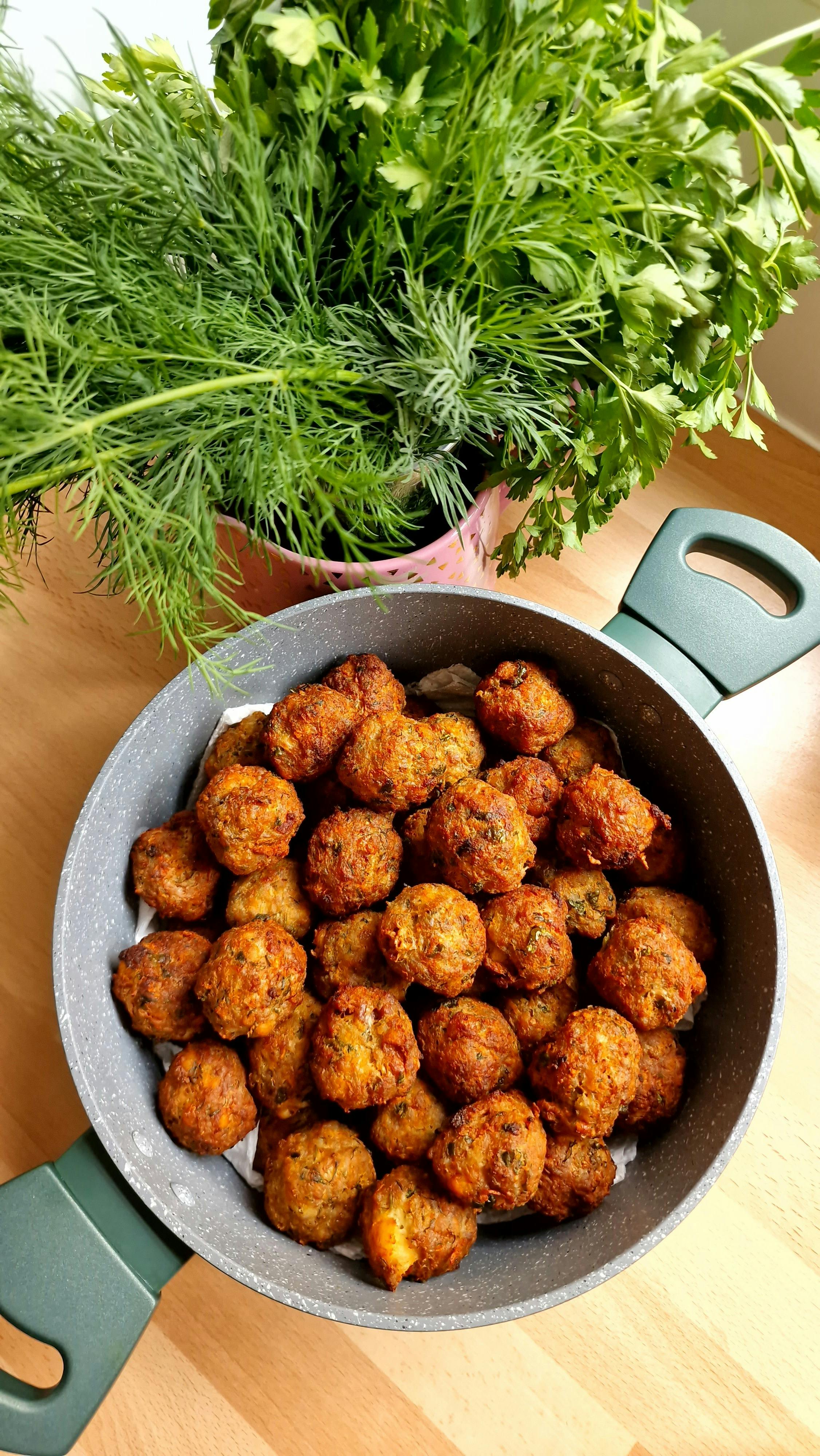
Photo: Ana Palade / Pexels
The diets react (see scores below)
Common Ingredients
- ground beef
- ground pork
- onion
- breadcrumbs
- milk
- eggs
- allspice
- cream
Specific recipes may vary.
Incompatible with 8 of 11 diets
Diet Ratings
Finnish meatballs (Lihapullat) are fundamentally a solid keto protein base — ground beef and pork are ideal keto foods, and eggs and cream are keto-friendly. However, the traditional recipe includes breadcrumbs soaked in milk, which introduces wheat-based grains and additional carbohydrates. Breadcrumbs are a direct keto violation, adding roughly 10-15g of net carbs per serving depending on quantity used. The milk adds further carbs. These two ingredients prevent a full approval. The dish is easily made keto-compatible by substituting breadcrumbs with almond flour or crushed pork rinds and using heavy cream instead of milk, which is a very common keto adaptation. As traditionally prepared, portion control and awareness of carb load are necessary.
Lihapullat (Finnish meatballs) contain multiple animal products that directly violate vegan principles. The dish includes ground beef and ground pork (animal flesh), milk and cream (dairy), and eggs — all of which are explicitly excluded under any definition of veganism. There is no ambiguity here; this dish is fundamentally built on animal products at every level.
Lihapullat (Finnish meatballs) contains multiple non-paleo ingredients that are clear violations of paleo principles. Breadcrumbs are a grain-based binder derived from wheat, which is explicitly excluded from the paleo diet. Milk and cream are dairy products, also excluded. While the core proteins — ground beef and ground pork — are paleo-approved, and eggs, onion, and allspice are all paleo-compliant, the breadcrumbs and dairy components are foundational to this dish's structure and cannot simply be considered minor additions. The dish as traditionally prepared cannot be considered paleo-compatible.
Lihapullat (Finnish meatballs) directly conflicts with Mediterranean diet principles on multiple fronts. The dish combines two red meats (ground beef and ground pork), which are explicitly limited to a few times per month in the Mediterranean pattern. It is further enriched with heavy cream and milk, adding significant saturated fat beyond what moderate dairy allowances would suggest. There is no olive oil, no vegetables as a primary component, and no plant-forward emphasis. The breadcrumbs are likely from refined white bread. The overall fat profile — dominated by animal saturated fats from beef, pork, and cream — is the opposite of the olive oil-centered, plant-based Mediterranean ideal. This is a Northern European comfort dish with little overlap with Mediterranean dietary principles.
Lihapullat (Finnish meatballs) contain multiple non-carnivore ingredients that disqualify them from the diet. Breadcrumbs are a grain-based filler, onion is a plant food, and allspice is a plant-derived spice — all strictly excluded on a carnivore diet. While the base proteins (ground beef, ground pork) and some additions (eggs, milk, cream) are animal-derived, the grain filler alone is a hard disqualifier. The dish as traditionally prepared is fundamentally incompatible with carnivore principles.
Lihapullat (Finnish meatballs) contains multiple Whole30-excluded ingredients. Breadcrumbs are a grain product (wheat), which is explicitly excluded from the Whole30 program. Milk is dairy, also explicitly excluded. Cream is dairy as well, making this dish non-compliant on three separate grounds. The ground beef, ground pork, onion, eggs, and allspice are all Whole30-compliant, but the presence of breadcrumbs, milk, and cream disqualifies this dish entirely.
Finnish meatballs (Lihapullat) contain multiple high-FODMAP ingredients that make this dish unsuitable during the elimination phase. Onion is one of the highest-FODMAP foods tested by Monash University, rich in fructans, and is a core ingredient here — not a garnish. Traditional breadcrumbs are wheat-based, adding significant fructans. Milk adds lactose. While ground beef, ground pork, eggs, allspice, and cream (in small amounts) are individually low-FODMAP, the combination of onion, wheat breadcrumbs, and milk creates a dish with three distinct high-FODMAP triggers. Even in small meatball portions, the cumulative FODMAP load from these ingredients is problematic. Cream is low-FODMAP at up to 2 tablespoons per serving, so depending on quantity it may be acceptable, but it doesn't offset the major offenders.
Lihapullat (Finnish meatballs) are problematic for DASH adherence on multiple fronts. The dish combines ground beef and ground pork, both categorized as red meat, which DASH explicitly limits due to saturated fat content. Cream is a full-fat dairy product directly opposed to DASH's emphasis on fat-free or low-fat dairy. The combination of two red meats plus cream creates a high saturated fat load per serving. Additionally, meatballs are typically salted during preparation and sodium content can be substantial. While onion, egg, and milk are acceptable DASH ingredients, the overall fat and protein profile of this dish does not align with DASH principles. DASH recommends limiting red meat to no more than a few servings per week and avoiding full-fat dairy — this dish combines both negatives in a single preparation.
Finnish meatballs (Lihapullat) present several Zone challenges. The protein base of ground beef and ground pork is acceptable but leans fatty — Zone prefers leaner cuts and proteins. The fat profile is heavily saturated (beef, pork, cream, whole milk) rather than monounsaturated, which conflicts with Zone's anti-inflammatory and fat-quality priorities. Breadcrumbs add high-glycemic carbohydrate filler, which is an 'unfavorable' Zone carb. Cream further elevates saturated fat significantly. The dish also lacks any vegetable carbohydrates, meaning it contributes nothing toward the 8-serving vegetable target and would require substantial Zone-friendly sides (non-starchy vegetables) to approach the 40/30/30 ratio. That said, meatballs as a concept are not categorically off-limits in Zone — the issues are the specific fat sources, cream, and breadcrumbs rather than the meatball format itself. Portioning carefully (2-3 small meatballs) alongside a large vegetable side and swapping cream sauce for a lighter option could make this workable, but as traditionally prepared it scores poorly on Zone fat quality and carbohydrate type.
Some Zone practitioners, particularly those following Sears' later anti-inflammatory writings, may be somewhat more permissive about saturated fat if overall omega-6 load is controlled. Additionally, eggs contribute protein efficiently, and allspice has polyphenol value. A strict reading of early Zone literature (Enter the Zone) would rate this lower due to saturated fat and high-glycemic breadcrumbs, while moderate Zone practitioners might allow it as an occasional meal with significant vegetable accompaniment.
Lihapullat (Finnish meatballs) presents a strongly pro-inflammatory profile across multiple dimensions. The dual red meat base of ground beef and ground pork delivers saturated fat and arachidonic acid, both of which are linked to elevated inflammatory markers (CRP, IL-6) in research. Cream is a full-fat dairy product explicitly in the 'limit' category under anti-inflammatory guidelines due to saturated fat content. Breadcrumbs represent refined carbohydrates, which drive glycemic spikes and promote inflammatory cascades. Milk adds modest saturated fat. The only marginally positive element is allspice, which contains some eugenol with minor anti-inflammatory properties, and onion, which provides quercetin — but these are insufficient to offset the cumulative pro-inflammatory load. The dish contains no omega-3-rich ingredients, no colorful antioxidant vegetables, no legumes, and no anti-inflammatory oils like extra virgin olive oil. In aggregate, this dish combines red meat, pork, cream, and refined carbs — a combination that anti-inflammatory authorities including Dr. Weil's framework consistently flag as problematic when consumed regularly.
Finnish meatballs (Lihapullat) are made with a blend of ground beef and ground pork, bound with breadcrumbs and milk, and enriched with cream — a combination that delivers moderate protein but carries significant fat concerns for GLP-1 patients. The dual-meat blend provides a reasonable protein source, but ground beef and pork at typical fat percentages (15–20% fat) combined with cream in the sauce push the saturated fat content well above what is recommended. Slowed gastric emptying on GLP-1 medications means high-fat meals linger longer in the stomach, meaningfully increasing the risk of nausea, bloating, and reflux. The breadcrumbs add refined carbohydrate with minimal fiber, and milk adds modest additional fat. Allspice and onion are fine. The dish is not fried or ultra-processed, which prevents a lower score, and it does contain complete protein across both meat sources. In a small portion using lean ground beef (93%+ lean), reduced-fat or no cream, and a limited breadcrumb binder, the dish becomes more tolerable — but as traditionally prepared it is a caution-tier food for GLP-1 patients.
Some GLP-1-focused dietitians allow traditional mixed-meat dishes like this in small portions, arguing that the protein density and satiety value justify inclusion when prepared with leaner cuts and cream is minimized or omitted. Others flag the saturated fat load and cream as reliable nausea triggers, particularly in the first months of GLP-1 therapy or after a dose increase, and recommend avoiding cream-enriched meat dishes entirely during that period.
*See how scores were generated at our methodology page.
Nutritional profile
Six traits that cut across every diet.
Fiber & Plants
How much whole-plant food and fiber it delivers.
Healthy Fats
The quality of its fats (unsaturated, omega-3).
Whole / Unprocessed
How close it is to its natural, unprocessed form.
Gut Gentle
How easy it is on digestion (low FODMAP, few irritants).
Low Glycemic
How little it spikes your blood sugar.
Protein Density
How much protein it packs per calorie.
Controversy Index
Higher controversy = more disagreement between diets.
Diet-Specific Tips
 Keto — 5/10
View tips
- Breadcrumbs (wheat-based) are a direct keto-incompatible ingredient adding meaningful net carbs
- Milk adds additional carbohydrates compared to heavy cream
- Ground beef and pork provide excellent fat and protein macros aligned with keto
- Eggs and cream are fully keto-compatible
- Easy keto modification: replace breadcrumbs with almond flour or pork rinds, milk with heavy cream
- Standard serving of traditional recipe estimated 8-15g net carbs depending on breadcrumb quantity
- Onion and allspice add negligible carbs at typical meatball quantities
 Zone — 4/10
View tips
- Ground beef and pork provide adequate protein but carry higher saturated fat than Zone-ideal lean proteins
- Cream is a high-saturated-fat ingredient that conflicts with Zone's monounsaturated fat preference
- Breadcrumbs are a high-glycemic, 'unfavorable' Zone carbohydrate filler
- No vegetable carbohydrates present — dish is essentially protein and fat with minimal carbs
- Dish would require large non-starchy vegetable sides to approximate 40/30/30 ratio
- Eggs contribute protein efficiently and align with Zone protein sources
- Traditional cream-based preparation makes this difficult to fit Zone fat-quality guidelines
 GLP-1 Friendly — 4/10
View tips
- Moderate-to-high saturated fat from ground pork, beef, and cream worsens GLP-1 GI side effects
- Cream sauce significantly increases fat per serving beyond what GLP-1 patients tolerate well
- Slowed gastric emptying makes high-fat, dense meat dishes particularly risky for nausea and reflux
- Breadcrumbs add refined carbohydrate with negligible fiber
- Dual-meat blend provides complete protein but fat percentage undermines protein density per calorie
- Not fried or ultra-processed — partial credit for digestibility relative to worse options
- Small portion with lean beef and cream omitted could shift this toward acceptable