Photo: Valeria Boltneva / Pexels
Finnish
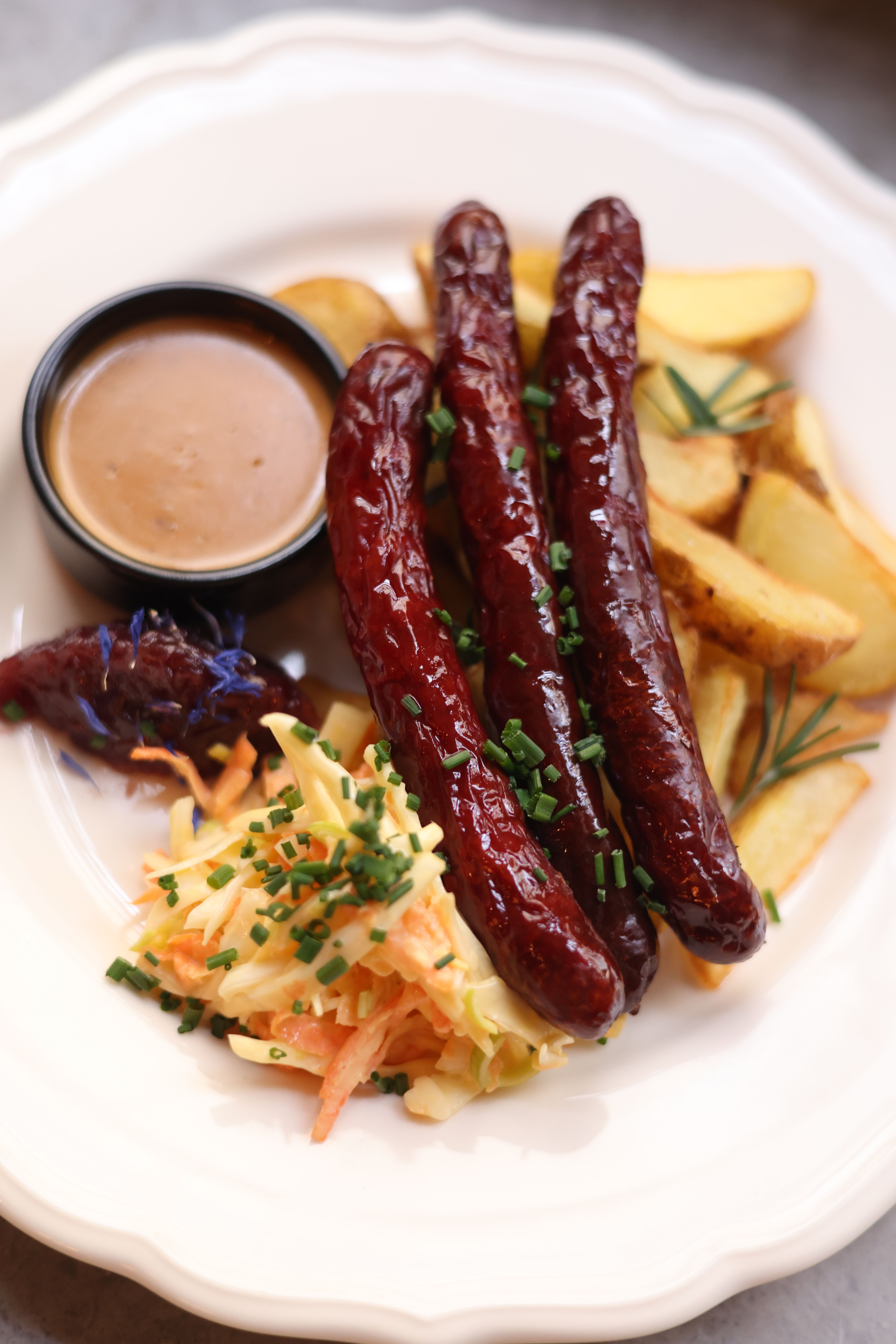
Mustamakkara
The diets react (see scores below)
Common Ingredients
- pig blood
- pork
- rye flour
- onion
- allspice
- marjoram
- lingonberry jam
Specific recipes may vary.
Incompatible with 9 of 11 diets
Diet Ratings
Mustamakkara (Finnish blood sausage) is fundamentally incompatible with ketogenic eating. Rye flour is a primary binding ingredient, contributing significant grain-based carbohydrates. Pig blood itself contains some carbs, and lingonberry jam — traditionally served alongside — adds sugar. The combination of rye flour (a grain explicitly excluded from keto), sweetened jam, and blood-derived carbs pushes this dish well beyond the 20-50g daily net carb threshold in even a modest serving. While the pork fat content is favorable and the protein is high-quality, the grain and sugar components disqualify it.
Mustamakkara is a Finnish blood sausage that is entirely incompatible with a vegan diet. It contains multiple animal-derived ingredients: pig blood and pork are both direct animal products. The sausage casing (traditional) would also be animal-derived. While rye flour, onion, allspice, marjoram, and lingonberry jam are all plant-based, the dominant and defining ingredients are unambiguously animal products. There is no meaningful debate within the vegan community about this dish.
Mustamakkara is a traditional Finnish blood sausage that contains rye flour as a primary binder — rye is a grain and a clear paleo exclusion. The dish also typically includes lingonberry jam, which often contains added refined sugar. While several ingredients are paleo-compliant (pig blood, pork, onion, allspice, marjoram), the rye flour alone is sufficient to disqualify the dish. Grains are one of the most consistently excluded food groups across all paleo frameworks, with no credible paleo authority making an exception for rye.
Mustamakkara is a Finnish blood sausage made primarily from pig blood and pork — both red meat products — combined with rye flour. It sits firmly outside Mediterranean diet principles on multiple fronts: it is a highly processed sausage product, its primary protein is red meat (pork), and pig blood adds significant saturated fat and cholesterol. Red meat is already limited to a few times per month in the Mediterranean diet, and processed meat products like sausages are strongly discouraged regardless of frequency. The lingonberry jam accompaniment adds refined sugars. While rye flour and onion are wholesome ingredients, they do not redeem the dish's overall profile. This is a northern European traditional food with no place in the Mediterranean dietary pattern.
Mustamakkara is a Finnish blood sausage that contains multiple carnivore-incompatible ingredients. While pig blood and pork are excellent animal-derived components, rye flour is a grain filler that directly violates carnivore rules, onion is a plant food, allspice and marjoram are plant-based spices, and lingonberry jam is a plant-derived, sugar-containing condiment. The dish is structurally a processed sausage built around a grain binder and served with a berry jam — both of which are firmly excluded on any tier of the carnivore diet. The animal-derived ingredients (blood, pork) cannot redeem a product so heavily laden with plant fillers and a fruit-based accompaniment.
Mustamakkara, a traditional Finnish blood sausage, contains rye flour as a primary binding ingredient. Rye is a grain and is explicitly excluded on the Whole30 program. Additionally, lingonberry jam typically contains added sugar, which is also excluded. Even if the blood itself and pork are compliant, the inclusion of rye flour alone is sufficient to disqualify this dish. There is no realistic way to prepare traditional Mustamakkara without rye flour, making this a clear avoid.
Mustamakkara contains multiple high-FODMAP ingredients that make it unsuitable during the elimination phase. Rye flour is high in fructans, onion is one of the highest-FODMAP foods (fructans), and lingonberry jam — while lingonberries themselves have limited Monash data — is typically consumed in quantities sufficient to contribute polyols and excess fructose. The combination of rye flour and onion alone is disqualifying, as both are among the most fructan-dense foods and are present as core structural ingredients, not trace seasonings. Pig blood and pork are intrinsically low-FODMAP proteins, and allspice and marjoram at typical spice quantities are low-FODMAP, but these do not offset the high-FODMAP components. There is no realistic reduced-portion strategy for this dish that would bring the fructan load (from both rye and onion together) below the elimination threshold.
The exact proportions of rye flour and onion in a given Mustamakkara recipe vary, and some clinical FODMAP practitioners note that if rye flour is used in very small amounts relative to total sausage weight, fructan exposure per serving could be lower than in a slice of rye bread. However, Monash University testing of traditional blood sausages has not been published, and most practitioners would advise avoiding this dish entirely during elimination given the dual fructan load from both rye and onion.
Mustamakkara is a traditional Finnish blood sausage that is fundamentally incompatible with DASH diet principles. It is a processed meat product made primarily from pig blood and pork, which are high in saturated fat and cholesterol. As a sausage-type product, it is typically high in sodium from processing and seasoning. The DASH diet explicitly limits red meat, processed meats, saturated fat, and high-sodium foods — all of which are central characteristics of this dish. While the rye flour adds some fiber and the onion and spices are DASH-friendly, these minor positives are vastly outweighed by the negatives. The lingonberry jam accompaniment adds sugar. Blood sausages and processed pork products fall squarely in the 'avoid' category under NIH/NHLBI DASH guidelines.
Mustamakkara (Finnish blood sausage) presents a mixed Zone Diet profile. As a snack, it combines pork and pig blood as protein sources, rye flour as a carbohydrate base, and inherent pork fat. The protein content is reasonable for Zone purposes, but the fat profile is predominantly saturated (pork fat), which Dr. Sears consistently discourages in favor of monounsaturated fats. Rye flour is a relatively lower-glycemic grain compared to white flour, making it more Zone-compatible than many bread-based sausage fillers, though it still counts as a grain-based carb. The traditional accompaniment of lingonberry jam adds a moderate-glycemic sugar load that must be carefully portioned — a small amount is workable in a Zone block context, but typical Finnish serving portions of jam would push carb ratios unfavorably. Onion and spices are Zone-neutral to beneficial (polyphenols). Overall, the saturated fat dominance and jam pairing make this a challenging Zone food, but it is not categorically excluded — small portions can fit into a Zone meal with careful block accounting and no additional fat sources.
Some Zone practitioners following Sears' later anti-inflammatory writings (e.g., 'The Zone,' later editions) note that moderate saturated fat is less penalized than omega-6 polyunsaturated fats from seed oils. Pig blood is also notably rich in iron and heme protein, which fits the lean protein spirit of Zone even if the overall sausage fat content is high. A strict early-Zone reading would rate this more harshly (score 3), while a modern Zone anti-inflammatory framework might be slightly more lenient on saturated fat if omega-6 content is low.
Mustamakkara is a traditional Finnish blood sausage with a genuinely mixed anti-inflammatory profile. On the positive side, it contains rye flour (a whole grain with fiber and lignans that have modest anti-inflammatory effects), onion (quercetin, a potent flavonoid), marjoram and allspice (polyphenol-containing spices with antioxidant properties), and lingonberry jam (lingonberries are exceptionally rich in polyphenols, anthocyanins, and resveratrol — one of the most antioxidant-dense Nordic berries). Pig blood provides heme iron and some B vitamins but also contributes to a pro-inflammatory load in excess. The pork component introduces saturated fat, and the overall sausage format means moderate levels of processed red meat — a category that anti-inflammatory frameworks advise limiting. The rye flour base is a meaningful differentiator from refined-carb sausages, and the herb/spice content adds genuine benefit. However, the blood sausage format is fundamentally a processed red meat product with saturated fat, placing it firmly in the 'limit' category under standard anti-inflammatory guidance. The lingonberry jam accompaniment is a legitimate anti-inflammatory positive that partially offsets the dish's concerns. Net assessment: occasional consumption is acceptable, not ideal as a regular feature of an anti-inflammatory diet.
Some Nordic nutrition researchers and advocates of traditional food systems note that blood sausage provides highly bioavailable iron and B12, and that the overall dietary pattern context matters more than individual foods — traditional Finnish diets incorporating mustamakkara also emphasize rye, fish, and berries, which are strongly anti-inflammatory. However, mainstream anti-inflammatory frameworks (including Dr. Weil's pyramid and IF Rating system) clearly place processed red meat in the 'limit' category, and processed meat intake is associated with elevated CRP in epidemiological research regardless of cultural context.
Mustamakkara is a traditional Finnish blood sausage made primarily from pig blood, fatty pork, and rye flour. While it contains some protein from pork and a modest fiber contribution from rye flour, the fat profile is the dominant concern for GLP-1 patients. Blood sausage is characteristically high in saturated fat and total fat per serving, which directly worsens the core GLP-1 side effects of nausea, bloating, and reflux due to slowed gastric emptying. The processed, fatty sausage format places it in the same category as bacon and fatty processed meats — explicitly flagged as foods to avoid. The lingonberry jam accompaniment adds sugar with minimal nutritional benefit. The protein density per calorie is poor relative to lean alternatives, and the heavy, dense texture makes it difficult to digest under GLP-1-slowed gastric motility. The rye flour provides some fiber, but not enough to offset the fat and processing concerns. This is not a small-portion-friendly food in the sense that its caloric and fat load is problematic even in modest servings.
*See how scores were generated at our methodology page.
Nutritional profile
Six traits that cut across every diet.
Fiber & Plants
How much whole-plant food and fiber it delivers.
Healthy Fats
The quality of its fats (unsaturated, omega-3).
Whole / Unprocessed
How close it is to its natural, unprocessed form.
Gut Gentle
How easy it is on digestion (low FODMAP, few irritants).
Low Glycemic
How little it spikes your blood sugar.
Protein Density
How much protein it packs per calorie.
Controversy Index
Higher controversy = more disagreement between diets.
Diet-Specific Tips
 Zone — 4/10
View tips
- Pork fat is primarily saturated — unfavorable in Zone fat block terms (monounsaturated preferred)
- Rye flour is lower-glycemic than wheat flour, making it a relatively more favorable grain carb
- Pig blood adds heme iron and protein, supporting Zone protein block goals
- Lingonberry jam accompaniment introduces sugar/higher-glycemic carbs that must be tightly portioned
- Onion and spices (allspice, marjoram) are Zone-favorable, contributing polyphenols and minimal carbs
- As a snack, total block size is smaller, which helps limit saturated fat exposure
- Processed/traditional sausage format makes macro tracking less precise
 Anti-Inflammatory — 4/10
View tips
- Pork and pig blood: processed red meat, elevated saturated fat — pro-inflammatory, limit category
- Rye flour: whole grain with fiber and lignans — modest anti-inflammatory benefit
- Onion: rich in quercetin, a well-studied anti-inflammatory flavonoid
- Marjoram and allspice: polyphenol-containing spices with antioxidant activity
- Lingonberry jam: exceptionally high in anthocyanins, polyphenols, and resveratrol — strong anti-inflammatory accompaniment
- Sausage processing format: increases concern beyond plain pork — sodium, potential additives
- No omega-3s, no olive oil, no significant anti-inflammatory fats present