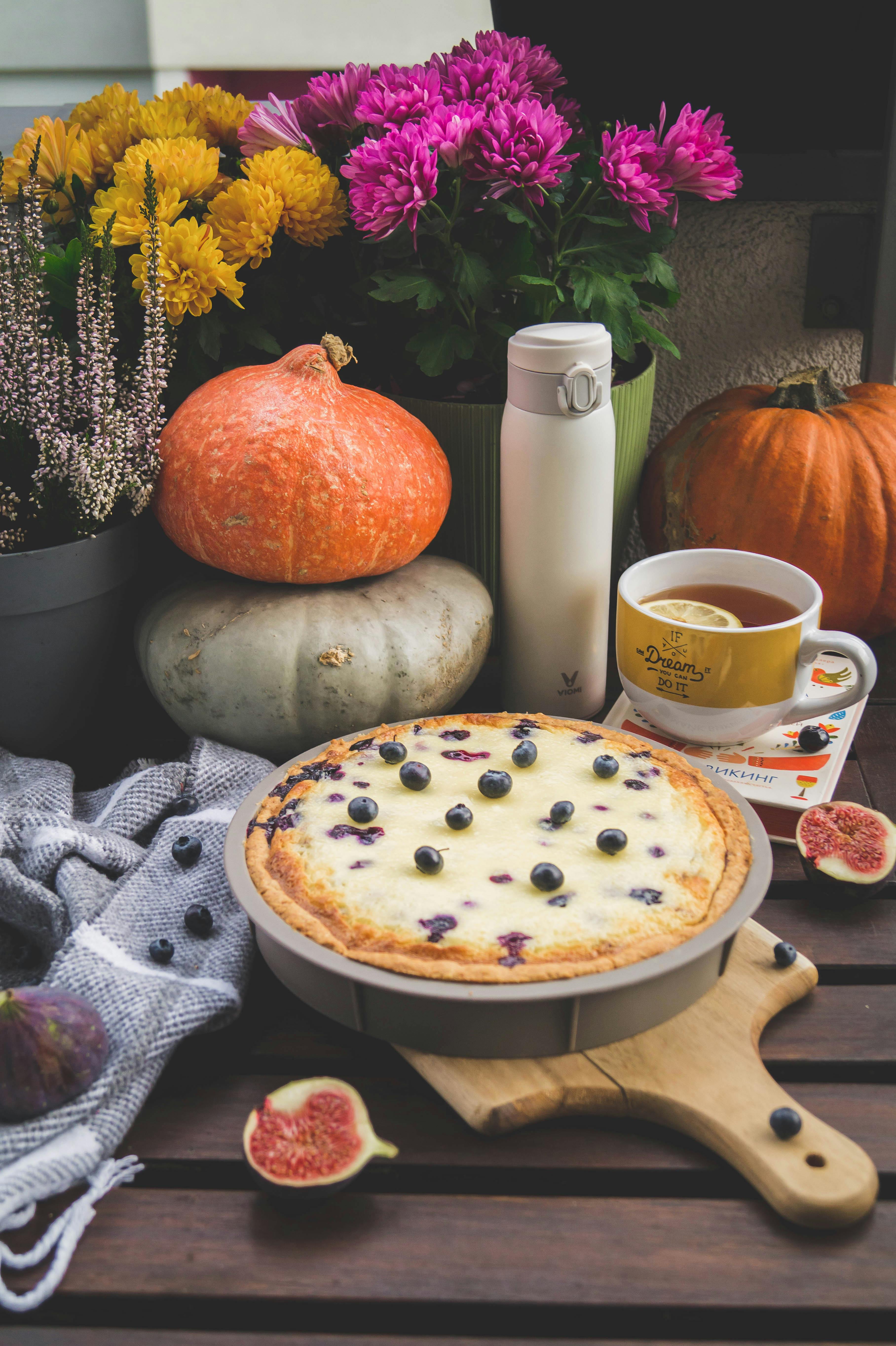
Finnish
Mustikkapiirakka
The diets react (see scores below)
Common Ingredients
- blueberries
- flour
- butter
- sugar
- eggs
- sour cream
- vanilla
Specific recipes may vary.
Incompatible with 8 of 11 diets
Diet Ratings
Mustikkapiirakka is a Finnish blueberry pie that is fundamentally incompatible with a ketogenic diet. The primary structural ingredient is wheat flour, a grain that alone disqualifies the dish — a single slice can easily contain 30-50g of net carbs just from the crust. Added sugar compounds the problem further, pushing a typical serving well over the entire daily keto carb budget of 20-50g. While individual ingredients like butter, eggs, and sour cream are keto-friendly, and even blueberries in small amounts could fit keto, the combination of flour and sugar makes this a high-carb baked good with no viable path to ketosis unless the recipe is entirely reinvented with almond or coconut flour and a sugar substitute.
Mustikkapiirakka (Finnish blueberry pie) contains multiple animal-derived ingredients that disqualify it from a vegan diet. Butter is a dairy product, eggs are an animal product, and sour cream is a dairy-based ingredient. All three are unambiguously excluded under vegan rules. The blueberries, flour, sugar, and vanilla are plant-based, but the animal-derived components are core structural and flavoring elements of the recipe, not minor additives. A vegan version could be made by substituting plant-based butter, flax eggs or commercial egg replacers, and dairy-free sour cream alternatives.
Mustikkapiirakka (Finnish blueberry pie) contains multiple non-paleo ingredients that are fundamentally incompatible with the Paleolithic diet. Flour (wheat) is a grain and a core exclusion in all paleo frameworks. Sugar is refined and excluded. Sour cream is a dairy product, excluded under paleo rules. Butter is also dairy, generally discouraged. While blueberries, eggs, and vanilla are paleo-approved, the structural base of this dish — flour, sugar, and dairy — makes it firmly non-paleo. No version of this traditional Finnish pastry can be considered paleo-compatible without a complete reformulation of nearly every ingredient.
Mustikkapiirakka is a Finnish blueberry pie that conflicts with Mediterranean diet principles on multiple fronts. While blueberries are an excellent fruit, the dish is built around refined white flour, butter (a saturated animal fat rather than olive oil), and added sugar — all ingredients the Mediterranean diet minimizes or avoids. Sour cream adds more saturated dairy fat. The overall profile is that of a refined-grain, high-sugar, butter-based pastry, which places it firmly in the 'avoid' category. The only redeeming element is the blueberries, but they do not offset the structural problems of the dish.
Mustikkapiirakka is a Finnish blueberry pie that is fundamentally incompatible with the carnivore diet. The dish is composed almost entirely of plant-based ingredients: blueberries (fruit), flour (grain), sugar (processed plant-derived sweetener), and vanilla (plant spice). While it does contain eggs, butter, and sour cream — which are animal-derived — these are minor components in a dish whose structure and identity is built around excluded foods. No reformulation could make this dish carnivore-compatible; it would cease to be mustikkapiirakka entirely. This is a classic baked good and dessert that sits at the opposite end of the carnivore spectrum.
Mustikkapiirakka (Finnish blueberry pie) contains multiple excluded ingredients that make it incompatible with Whole30. Sugar is explicitly excluded as an added sugar. Butter (non-clarified) is excluded dairy. Sour cream is excluded dairy. Flour (grain-based) is excluded as a grain product. Furthermore, even if individual ingredients could be substituted to be compliant, this dish is a baked good (pie/pastry), which falls squarely into the 'no recreating baked goods' rule — pies, tarts, and pastries are explicitly the type of food the Whole30 program prohibits regardless of ingredient compliance.
Mustikkapiirakka (Finnish blueberry pie/tart) contains two significant high-FODMAP ingredients that make it unsuitable during the elimination phase. First, regular wheat flour is the primary structural ingredient and is high in fructans — a major FODMAP concern with no safe small-serving workaround when used as a pie base. Second, sour cream contains lactose; while small amounts may be low-FODMAP (Monash rates ~2 tbsp as low-FODMAP), baking recipes typically use larger quantities that push it into high-FODMAP territory. Blueberries are low-FODMAP at a standard serving (~1/2 cup), butter is low-FODMAP (fat-soluble, no FODMAPs), eggs are low-FODMAP, sugar (sucrose) is low-FODMAP, and vanilla is low-FODMAP. However, the wheat flour base is a disqualifying factor on its own during the strict elimination phase. The dish could be made low-FODMAP by substituting gluten-free flour blend and lactose-free sour cream, but as traditionally prepared it should be avoided.
Mustikkapiirakka (Finnish blueberry pie/tart) is a traditional dessert/snack featuring blueberries as a positive DASH element — blueberries are rich in potassium, fiber, and antioxidants and are explicitly encouraged on DASH. However, the dish also contains butter (saturated fat), sugar (added sugars), refined flour (not whole grain), and sour cream (full-fat dairy). These ingredients collectively push the dish away from DASH ideals: DASH limits saturated fat, added sugars, and calls for low-fat dairy and whole grains. The dish is not high in sodium, which is a positive, but the saturated fat from butter and sour cream, combined with added sugar and refined carbohydrates, make this a 'caution' item suitable only for occasional, portion-controlled consumption rather than a regular DASH snack.
NIH DASH guidelines emphasize limiting added sugars, saturated fat, and refined grains — all present in this recipe. However, some updated DASH-oriented clinicians note that a small portion of a fruit-forward dessert like this, made with nutrient-dense blueberries, can fit within an otherwise balanced DASH eating pattern; substituting whole wheat flour, reducing sugar, and using low-fat sour cream or Greek yogurt would meaningfully improve its DASH compatibility.
Mustikkapiirakka (Finnish blueberry pie/cake) is a dessert pastry that poses significant challenges for Zone compliance. While blueberries are actually a Zone-favorable ingredient (low-glycemic, rich in polyphenols, anti-inflammatory), the surrounding components undermine the dish considerably. White flour is a high-glycemic, unfavorable Zone carbohydrate. Sugar is essentially a pure avoid ingredient in Zone methodology. Butter adds saturated fat rather than the preferred monounsaturated fat. The dish has no meaningful lean protein source — eggs contribute some protein but are subordinate in quantity to the carb-heavy base. The macro ratio is heavily skewed toward carbohydrates (flour + sugar + blueberries) and saturated fat (butter), with minimal lean protein, making it nearly impossible to fit into a Zone-balanced meal without radical portion reduction. As a snack, a very small portion alongside a lean protein source could theoretically form a partial Zone block, but the food as presented is a poor Zone choice. It scores 3 rather than 1-2 because blueberries are genuinely favorable and eggs provide some protein — it's not nutritionally empty like pure candy — but the overall profile is very difficult to work with.
Mustikkapiirakka (Finnish blueberry pie/tart) presents a mixed anti-inflammatory profile. On the positive side, blueberries are one of the most potent anti-inflammatory fruits available, rich in anthocyanins, polyphenols, and antioxidants that have been shown in research to reduce CRP and oxidative stress markers. Eggs provide some beneficial nutrients including choline and selenium. However, the dish is built on a foundation of refined white flour (refined carbohydrate with negligible fiber), added sugar (pro-inflammatory at regular consumption), and butter (saturated fat, which is listed as a 'limit' food). Sour cream adds full-fat dairy, also in the 'limit' category. The net result is a dessert/snack where the anti-inflammatory hero (blueberries) is embedded in a pro-inflammatory pastry matrix. This is a common real-world situation: a beneficial ingredient in an otherwise nutritionally neutral-to-negative delivery vehicle. Occasional consumption is unlikely to be harmful and the blueberry content provides genuine benefit, but this is not a food to emphasize in an anti-inflammatory diet. A version made with whole grain flour, reduced sugar, and Greek yogurt instead of sour cream would score meaningfully higher.
Mustikkapiirakka is a traditional Finnish blueberry pie/tart made with a buttery pastry base, sugar, eggs, sour cream, and blueberries. While the blueberries offer some fiber and antioxidants, this dish is fundamentally a high-fat, high-sugar, low-protein baked dessert — a poor fit for GLP-1 patients on nearly every key criterion. The butter and sour cream contribute significant saturated fat, which worsens GLP-1 side effects including nausea, bloating, and reflux. Refined flour provides little fiber or nutrient density. The added sugar contributes empty calories at a time when every calorie must work hard nutritionally. Protein content is negligible (eggs are present but in small quantity relative to the overall dish). Gastric emptying is already slowed by GLP-1 medication, and a rich, fatty baked good will sit heavily in the stomach. The small serving sizes typical of GLP-1 patients make the poor nutrient-to-calorie ratio even more damaging. This is a treat food with no meaningful place in a GLP-1-optimized diet.
*See how scores were generated at our methodology page.
Nutritional profile
Six traits that cut across every diet.
Fiber & Plants
How much whole-plant food and fiber it delivers.
Healthy Fats
The quality of its fats (unsaturated, omega-3).
Whole / Unprocessed
How close it is to its natural, unprocessed form.
Gut Gentle
How easy it is on digestion (low FODMAP, few irritants).
Low Glycemic
How little it spikes your blood sugar.
Protein Density
How much protein it packs per calorie.
Controversy Index
Higher controversy = more disagreement between diets.
Diet-Specific Tips
 DASH — 4/10
View tips
- Blueberries are a DASH-approved fruit rich in fiber, potassium, and antioxidants
- Butter contributes saturated fat, which DASH limits
- Sour cream is full-fat dairy, not aligned with DASH low-fat dairy recommendation
- Refined white flour rather than whole grain flour reduces fiber and nutrient value
- Added sugar is a DASH-limited ingredient
- Low sodium profile is a positive attribute
- Portion size is critical — small servings reduce overall impact of negative ingredients
 Zone — 5/10
View tips
- Blueberries are Zone-favorable: low-glycemic, high in polyphenols and antioxidants
- White flour is a high-glycemic 'unfavorable' carbohydrate in Zone terminology
- Added sugar is a near-avoid ingredient — raises glycemic load significantly
- Butter is saturated fat, not the preferred monounsaturated fat (olive oil, avocado, almonds)
- No lean protein source — eggs provide minimal protein relative to the carb load
- Macro ratio heavily skewed: high carb + saturated fat with very low protein — opposite of 40/30/30
- As a snack category item, Zone snacks should still maintain block ratios, which this fails to do
 Anti-Inflammatory — 4/10
View tips
- Blueberries: strong anti-inflammatory benefit via anthocyanins and polyphenols
- Refined wheat flour: pro-inflammatory refined carbohydrate, raises blood glucose
- Added sugar: pro-inflammatory at regular consumption
- Butter: saturated fat, recommended to limit in anti-inflammatory diets
- Sour cream: full-fat dairy, in the 'limit' category
- Eggs: nutritionally neutral to mildly beneficial in anti-inflammatory context
- Net profile: anti-inflammatory ingredient (blueberries) in a pro-inflammatory pastry base