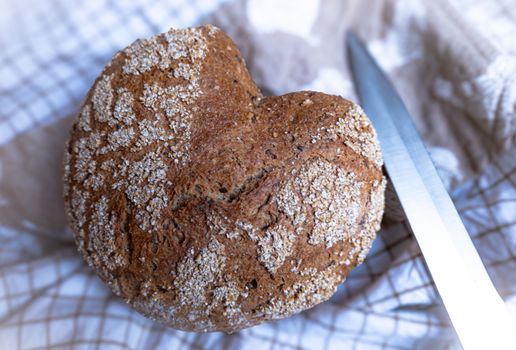
Photo: Sabine Freiberger / Pexels
Finnish
Ruisleipa
The diets react (see scores below)
Common Ingredients
- rye flour
- water
- rye sourdough
- salt
- caraway seeds
Specific recipes may vary.
Incompatible with 5 of 11 diets
Diet Ratings
Ruisleipä (Finnish rye bread) is made almost entirely from rye flour, which is a whole grain with extremely high net carbohydrate content. A typical slice contains approximately 12-15g net carbs, and even a small serving would consume the majority or entirety of a keto dieter's daily carb allowance. While rye has a lower glycemic index than wheat and contains some fiber, the net carbs remain far too high for ketogenic compatibility. The sourdough fermentation process may marginally reduce carbohydrates, but not to any keto-meaningful degree. Grains are explicitly excluded from the ketogenic diet with zero tolerance.
Ruisleipä (Finnish rye bread) is a traditional whole-grain sourdough bread made entirely from plant-based ingredients. Rye flour, water, rye sourdough starter, salt, and caraway seeds are all unambiguously vegan. There are no animal products or animal-derived ingredients present. As a minimally processed whole-grain food, it scores highly even by whole-food plant-based standards, offering substantial fiber, complex carbohydrates, and minerals.
Ruisleipä (Finnish rye bread) is fundamentally incompatible with the Paleolithic diet. Its primary ingredient, rye flour, is a grain — one of the most explicitly excluded food categories in paleo. Grains were not consumed by Paleolithic humans due to the agricultural processing required to make them edible, and rye contains gluten, lectins, and phytic acid — the anti-nutrients that paleo specifically targets. The rye sourdough starter is also grain-based, and salt is excluded as an added/refined ingredient. Caraway seeds are paleo-friendly, and water is neutral, but they cannot redeem a dish that is essentially a grain bread. This is a clear, unambiguous avoid with strong consensus across all major paleo authorities.
Ruisleipä is a traditional Finnish whole-grain rye sourdough bread made from minimally processed, wholesome ingredients: whole rye flour, water, sourdough culture, salt, and caraway seeds. Whole grains are a cornerstone of the Mediterranean diet, and rye in particular is rich in fiber, complex carbohydrates, and micronutrients. The sourdough fermentation process improves digestibility and lowers glycemic impact. There are no added sugars, refined flours, or unhealthy fats. While not a traditional Mediterranean bread (Mediterranean cultures favor wheat-based breads like pita or sourdough wheat loaves), the nutritional profile aligns strongly with Mediterranean principles of whole, plant-based, minimally processed foods.
Some Mediterranean diet purists may note that rye is not a traditional Mediterranean grain — wheat, barley, and to a lesser extent oats dominate the region's culinary heritage. Modern clinical Mediterranean diet guidelines (e.g., PREDIMED protocol) emphasize whole wheat and legume-based breads, and might score rye bread slightly lower simply due to its non-traditional origins, though its whole-grain status makes it nutritionally compatible.
Ruisleipa (Finnish rye bread) is entirely plant-derived and directly violates every tier of the carnivore diet. It consists of rye flour, rye sourdough, water, salt, and caraway seeds — all plant-based ingredients. Rye is a grain, which is explicitly excluded from the carnivore diet. Sourdough fermentation does not change the plant origin of the ingredients. Caraway seeds are plant-derived spices, also excluded. The only marginally acceptable ingredient is salt. There is universal consensus across all carnivore diet frameworks that grain-based breads are completely incompatible.
Ruisleipä is Finnish rye bread, made primarily from rye flour — a grain explicitly excluded on the Whole30 program. Grains of all kinds, including rye, are prohibited for the full 30 days. Additionally, even if rye were compliant, this dish falls squarely into the 'no recreating baked goods/bread' rule (Rule 4), which explicitly lists bread as a prohibited food form regardless of ingredients. Both the primary ingredient and the food format independently disqualify this dish.
Ruisleipä (Finnish rye bread) is made primarily from rye flour, which is high in fructans — a key FODMAP category. Unlike wheat sourdough where long fermentation can meaningfully reduce fructan content, rye is exceptionally high in fructans and the sourdough fermentation in traditional ruisleipä does not reliably reduce fructans to safe levels. Monash University rates rye bread as high-FODMAP. The caraway seeds and salt are low-FODMAP at standard amounts. However, the rye flour base makes this bread unsuitable for the elimination phase at any realistic serving size. This is distinct from spelt or wheat sourdough where fermentation evidence is more supportive — rye's fructan load is substantially higher.
Some FODMAP practitioners note that traditional Finnish ruisleipä undergoes prolonged sourdough fermentation (often 12–24+ hours), which may partially degrade fructans more than standard rye bread; however, Monash University rates rye bread as high-FODMAP and does not currently provide a low-FODMAP serving size, so clinical FODMAP dietitians universally advise avoiding it during the elimination phase.
Ruisleipä (Finnish rye bread) is an excellent fit for DASH principles due to its 100% whole rye flour base, which is rich in fiber, magnesium, and potassium — nutrients the DASH diet explicitly emphasizes. Rye is a whole grain, and DASH recommends 6-8 servings of whole grains daily. The sourdough fermentation process may improve mineral bioavailability and has a lower glycemic index than most breads, which is a cardiovascular plus. Caraway seeds add negligible sodium and have trace mineral benefits. The main caution is sodium: traditional rye breads typically contain 300-450mg sodium per 100g, which requires portion awareness on DASH (especially the 1,500mg/day version). However, compared to refined white bread or processed breads, this is a far superior choice with no added fat, sugar, or artificial ingredients.
NIH DASH guidelines broadly recommend whole grains without distinguishing rye bread specifically, so the approval is straightforward in principle. However, some DASH-oriented clinicians caution that even whole-grain breads can contribute meaningfully to daily sodium intake, and individuals on the stricter 1,500mg/day DASH protocol should track portions carefully — low-sodium homemade versions would score a 9-10.
Ruisleipä (Finnish rye bread) is a dense, whole-grain sourdough bread made from rye flour, water, sourdough starter, salt, and caraway seeds. In Zone terminology, it falls into the 'unfavorable' carbohydrate category — grains in general are limited to 0-1 servings per day, and bread is typically restricted. However, whole rye bread has several redeeming qualities that distinguish it from white bread: it has a significantly lower glycemic index (GI ~40-65 depending on the style) due to its high fiber content, dense structure, and sourdough fermentation, which slows glucose absorption. The caraway seeds contribute negligible macros but add polyphenols, which Sears values for anti-inflammatory effect. Rye bread does provide a usable carbohydrate block (roughly 1 block per 25-30g slice, with net carbs lower than wheat bread due to fiber), making it technically incorporable into a Zone meal as a single carb block. The problem is displacement: using a grain block means fewer vegetable or fruit carb blocks, which are far more favorable in the Zone framework. As a side dish, it would need to be balanced with lean protein and monounsaturated fat to maintain the 40/30/30 ratio, and portion control is essential.
Some Zone practitioners and later Sears writings on polyphenols and gut health acknowledge that fermented, whole-grain rye bread — particularly the dense Finnish style — is among the least problematic grain-based carbs due to its fermentation profile, high fiber, and low glycemic response. The sourdough fermentation may lower the effective glycemic impact further, potentially making it more favorable than Zone's general grain caution would suggest. Early Zone books (Enter the Zone) placed all breads in the unfavorable category, but the nuance around glycemic load (not just index) and fiber content lends support to treating dark rye more permissively than, say, white sandwich bread.
Ruisleipä (Finnish rye sourdough bread) is one of the most nutritionally dense traditional breads available and aligns well with anti-inflammatory principles. Whole rye flour is exceptionally high in dietary fiber, particularly arabinoxylan and beta-glucan, which feed beneficial gut microbiota and are associated with reduced inflammatory markers including CRP and IL-6. Rye has a lower glycemic index than wheat bread, minimizing blood sugar spikes that drive inflammatory cascades. The sourdough fermentation process further lowers the glycemic load, improves mineral bioavailability by reducing phytic acid, and produces beneficial organic acids and postbiotics that support gut health — a key pillar of anti-inflammatory nutrition. Caraway seeds contribute antioxidant compounds (carvacrol, limonene) and have traditional use as a digestive anti-inflammatory agent. The ingredient list is clean: no refined flour, no added sugars, no seed oils, no artificial additives. This is fundamentally a whole grain food in its most traditional form. Dr. Andrew Weil's anti-inflammatory pyramid explicitly encourages whole grains, and dense, minimally processed rye bread like ruisleipä is a flagship example. The only reason this does not score a 9-10 is that grains broadly remain a point of contention in some anti-inflammatory subschools.
Some anti-inflammatory protocols — particularly the Autoimmune Protocol (AIP) and grain-free approaches advocated by practitioners like Dr. Tom O'Bryan — exclude all grains, including rye, citing gluten and lectins as potential drivers of gut permeability and systemic inflammation in sensitive individuals. Rye contains gluten and is therefore wholly inappropriate for those with celiac disease or non-celiac gluten sensitivity. However, mainstream anti-inflammatory authorities including Dr. Weil explicitly endorse whole grains, and the substantial fiber and polyphenol content of whole rye is supported by epidemiological research as broadly anti-inflammatory in the general population.
Ruisleipä (Finnish rye bread) is a dense, whole-grain sourdough bread made exclusively from rye flour, water, sourdough starter, salt, and caraway seeds. It has a strong nutritional profile for a grain-based food: genuinely high fiber content (approximately 5-7g per 35g slice due to whole rye), low fat, no added sugar, and meaningful micronutrient density including B vitamins, iron, and magnesium. The sourdough fermentation process also improves digestibility and lowers the glycemic impact compared to conventional bread. However, it provides minimal protein (about 2-3g per slice) and is primarily a carbohydrate source, which limits its GLP-1 score. GLP-1 patients eating reduced volumes need protein-first prioritization, so rye bread functions best as a fiber-supporting accompaniment to a high-protein main rather than a standalone food. Caraway seeds are generally well-tolerated and may actually aid digestion. Portion sensitivity matters — one thin slice is appropriate; multiple slices displace protein opportunity. Dense texture also means it is moderately filling in small amounts, which suits GLP-1 eating patterns.
Some GLP-1-focused dietitians view whole-grain rye bread favorably due to its exceptionally high fiber content and low glycemic index, recommending it as a vehicle for protein toppings (e.g., smoked salmon, cottage cheese, eggs) that turn it into a well-balanced small meal. Others are more cautious, noting that even high-quality carbohydrates displace limited stomach capacity that should be allocated to protein-dense foods, particularly in early stages of GLP-1 treatment when appetite suppression is strongest.
*See how scores were generated at our methodology page.
Nutritional profile
Six traits that cut across every diet.
Fiber & Plants
How much whole-plant food and fiber it delivers.
Healthy Fats
The quality of its fats (unsaturated, omega-3).
Whole / Unprocessed
How close it is to its natural, unprocessed form.
Gut Gentle
How easy it is on digestion (low FODMAP, few irritants).
Low Glycemic
How little it spikes your blood sugar.
Protein Density
How much protein it packs per calorie.
Controversy Index
Higher controversy = more disagreement between diets.
Diet-Specific Tips
 Vegan — 9/10
View tips
- All ingredients are plant-derived with no animal products
- Whole-grain rye flour provides excellent nutritional profile
- Traditional sourdough fermentation uses no animal-derived leavening
- Caraway seeds are a plant-based spice with no vegan concerns
- Minimal processing aligns well with whole-food plant-based principles
 Mediterranean — 8/10
View tips
- Whole grain rye flour — high fiber, complex carbohydrates, aligns with whole grain emphasis
- Sourdough fermentation improves digestibility and lowers glycemic index
- No added sugars, refined grains, or unhealthy fats
- Minimal, clean ingredient list — fully unprocessed
- Caraway seeds add beneficial phytonutrients
- Not a traditional Mediterranean grain, but nutritionally consistent with diet principles
 DASH — 8/10
View tips
- 100% whole grain rye flour — aligns with DASH whole grain recommendations
- High in dietary fiber supporting cardiovascular and digestive health
- Rich in magnesium and B vitamins relative to refined grains
- Moderate sodium (~350-450mg per 100g) requires portion awareness on low-sodium DASH
- No added fat, sugar, or processed additives — clean ingredient profile
- Sourdough fermentation may improve nutrient bioavailability and lower glycemic response
- Caraway seeds contribute trace minerals with negligible sodium impact
 Zone — 5/10
View tips
- Whole rye flour provides significantly more fiber than refined grains, lowering net carbs and glycemic impact
- Sourdough fermentation reduces glycemic response, distinguishing it from conventional bread
- Zone allows 0-1 grain servings per day — rye bread can fill that slot as an 'unfavorable' but usable carb block
- No added sugar, no seed oils, no processed ingredients — clean ingredient list
- Caraway seeds contribute polyphenols, aligned with Sears' anti-inflammatory emphasis
- Dense format means portion control is practical — thin slices map reasonably to Zone carb blocks
- Grain-based carbs displace more favorable vegetable and fruit carb sources in the Zone framework
- No protein contribution — requires pairing with lean protein and monounsaturated fat to build a Zone meal
 Anti-Inflammatory — 8/10
View tips
- Whole rye flour: very high in fiber (arabinoxylan, beta-glucan), associated with reduced CRP and improved gut microbiome
- Sourdough fermentation: lowers glycemic index, reduces phytates, produces anti-inflammatory postbiotics
- Low glycemic index: minimizes insulin and blood sugar spikes that promote inflammation
- Caraway seeds: contain antioxidant volatile compounds (carvacrol, limonene) with mild anti-inflammatory properties
- Clean ingredient list: no refined flour, no added sugars, no seed oils, no artificial additives
- Contains gluten: caution warranted for those with celiac disease, gluten sensitivity, or autoimmune conditions
- Grain controversy: AIP and grain-free protocols would exclude this; mainstream anti-inflammatory frameworks embrace whole grains
 GLP-1 Friendly — 6/10
View tips
- High dietary fiber (~5-7g per slice) supports GLP-1 priority #2 and helps prevent constipation
- Minimal protein (2-3g per slice) — does not contribute meaningfully to the 100-120g daily protein target
- Low fat content — does not worsen nausea, bloating, or reflux
- Sourdough fermentation improves digestibility and lowers glycemic response, both beneficial for GLP-1 patients
- Dense texture is satiating in small portions, compatible with small-meal eating pattern
- Caraway seeds are digestive-friendly and unlikely to worsen GI side effects
- Best used as a fiber-rich base for high-protein toppings rather than eaten alone
- Portion-sensitive: one thin slice appropriate; more displaces protein intake opportunity