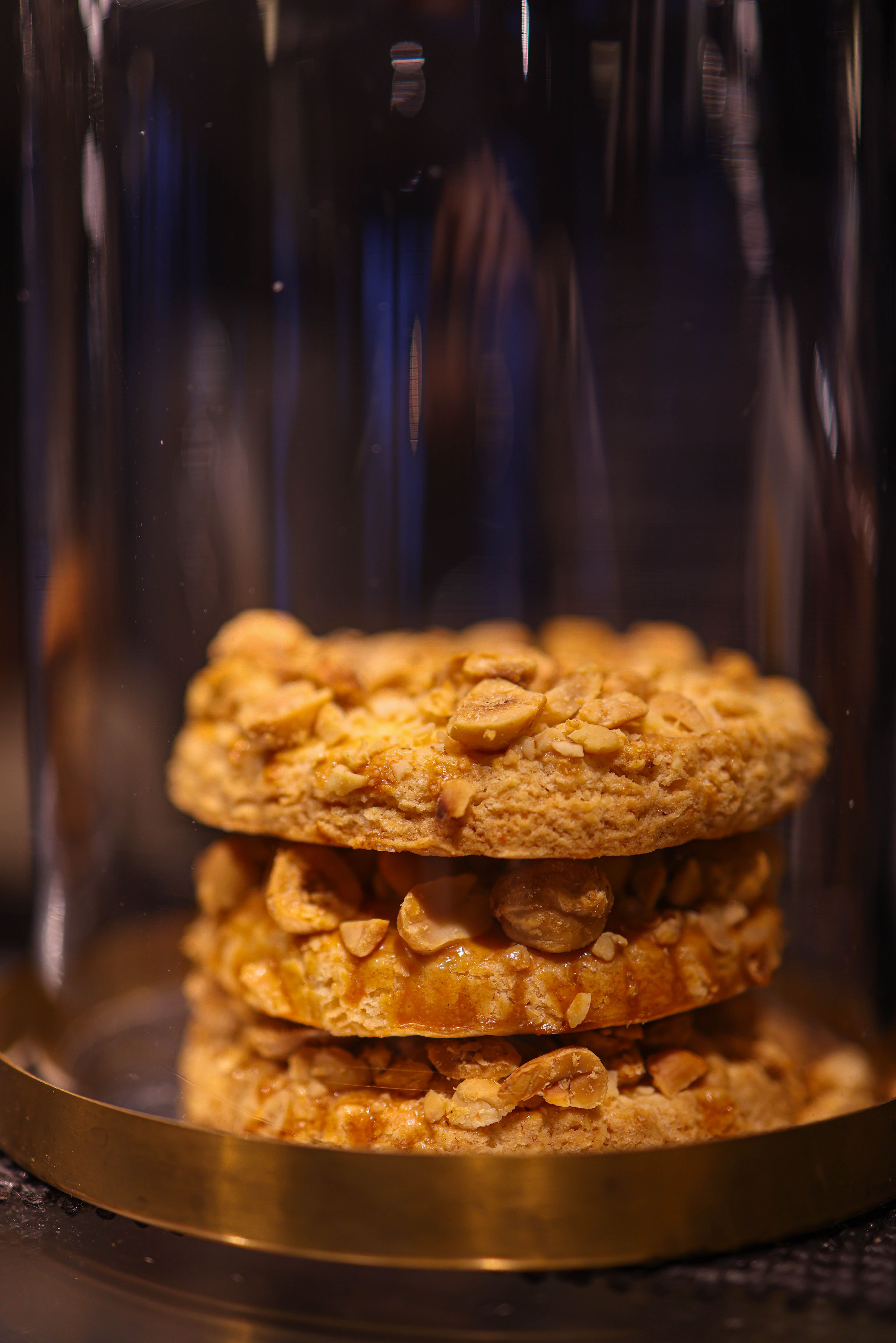
Photo: Valeria Boltneva / Pexels
Italian
Florentine Cookie
The diets react (see scores below)
Common Ingredients
- almonds
- candied orange peel
- honey
- butter
- sugar
- cream
- dark chocolate
Specific recipes may vary.
Incompatible with 10 of 11 diets
Diet Ratings
Florentine cookies are fundamentally incompatible with a ketogenic diet. The recipe combines multiple high-carb, high-sugar ingredients: honey and sugar are pure glucose/fructose that will immediately spike blood sugar and break ketosis. Candied orange peel is sugar-coated fruit, adding yet more concentrated sugar. Even the dark chocolate coating, while lower in carbs than milk chocolate, is typically sweetened enough to add meaningful net carbs. Together, these ingredients make a single cookie likely to contain 15-25g+ of net carbs, potentially consuming an entire day's keto carb budget in one small snack. The only keto-friendly elements are the almonds and butter, which are completely overshadowed by the sugar load.
Florentine cookies contain multiple animal-derived ingredients that disqualify them from a vegan diet. Butter and cream are dairy products (animal-derived), and honey is excluded by the overwhelming majority of vegan organizations including the Vegan Society and PETA. The dark chocolate may also contain dairy depending on the formulation. With three clearly non-vegan ingredients present, this dish is firmly in the 'avoid' category with no meaningful ambiguity.
Florentine cookies contain multiple non-paleo ingredients that disqualify them from the diet. Butter is a dairy product excluded under strict paleo rules. Refined sugar is explicitly prohibited as a processed, non-ancestral sweetener. Cream is dairy and similarly excluded. Candied orange peel is typically made with refined sugar and preservatives, making it a processed food. While almonds, honey, and dark chocolate have varying degrees of paleo acceptance, the presence of butter, refined sugar, and cream makes this dish clearly non-paleo. The overall product is also a processed/baked confection, which contradicts the paleo philosophy regardless of individual ingredients.
Florentine cookies are a confection built around added sugar, butter, cream, and candied fruit — ingredients that run counter to Mediterranean diet principles. While almonds and dark chocolate have redeeming qualities (almonds are a core Mediterranean nut; dark chocolate in small amounts is sometimes considered acceptable), the overall profile is dominated by refined sugar, saturated fat from butter and cream, and highly processed candied peel. This is a dessert treat, not a staple or even a moderate-use food in the Mediterranean framework. The high sugar and butter content place it firmly in the 'avoid' category for regular consumption.
Some Mediterranean diet interpreters, particularly those rooted in traditional Italian and Greek culinary culture, argue that small portions of traditional nut-and-honey confections — consumed occasionally during festivals or celebrations — are culturally authentic and acceptable in strict moderation. The presence of almonds and honey aligns with ancient Mediterranean ingredients, and a small piece infrequently would not undermine an otherwise sound Mediterranean pattern.
Florentine cookies are almost entirely plant-based and processed, making them completely incompatible with the carnivore diet. The primary ingredients — almonds (nuts), candied orange peel (fruit/sugar), sugar, and dark chocolate — are all strictly excluded plant foods. Honey, while produced by bees, is also excluded by strict carnivore practitioners. Butter and cream are the only animal-derived ingredients, but they are minor components of a dessert that is fundamentally built around nuts, sugar, and chocolate. This dish has no meaningful animal protein, is heavily sweetened, and is processed. It fails virtually every carnivore criterion.
Florentine Cookies are excluded on multiple grounds. First, they contain butter (dairy, not ghee/clarified butter), added sugar, honey (added sweetener), and candied orange peel (which contains added sugar). Second, and independently disqualifying, Florentine Cookies are a baked confection/cookie — exactly the type of junk food/baked good the Whole30 program prohibits recreating even with otherwise compliant ingredients. This dish fails both on specific excluded ingredients and on the spirit-of-the-program rule against recreating sweets and baked goods.
Florentine cookies contain multiple high-FODMAP ingredients that make them problematic during the elimination phase. Honey is high in excess fructose and is a significant FODMAP trigger at typical serving sizes used in baking. Candied orange peel is high-FODMAP due to concentrated fructans and excess fructose from the candying process with added sugars. Almonds are low-FODMAP only at 10 nuts (approximately 12g) — in baked goods like Florentines where almonds are the primary ingredient, the per-cookie almond content likely exceeds this threshold. Dark chocolate is low-FODMAP at 30g, but combined with all the other problematic ingredients in this cookie, the cumulative FODMAP load is high. Butter and cream are low-FODMAP. Sugar (sucrose) is low-FODMAP. However, honey alone is enough to push this into 'avoid' territory for the elimination phase.
Monash University rates dark chocolate as low-FODMAP at 30g and almonds as low-FODMAP at 10 nuts, so practitioners disagree on whether a small single Florentine cookie could be tolerated if honey is substituted with maple syrup (which is low-FODMAP) and candied peel is omitted or replaced. However, traditional Florentine recipes rely on honey as a key binding ingredient, making substitution-free versions unsuitable during elimination.
Florentine cookies are a confection centered on high sugar content (honey, refined sugar, candied orange peel), saturated fat (butter, cream), and dark chocolate — a combination that places them firmly in the 'sweets' category that DASH explicitly limits. While almonds are a DASH-approved nut and dark chocolate contains some beneficial flavonoids, they are minor components overwhelmed by the high added sugar and saturated fat load. DASH recommends limiting sweets to no more than 5 servings per week (and small portions at that), and this cookie as a snack represents a concentrated dose of added sugar and saturated fat with little offsetting nutritional benefit from potassium, magnesium, calcium, or fiber. The candied orange peel adds additional concentrated sugar. This is essentially a dessert masquerading as a snack and does not align with DASH principles.
Florentine cookies are fundamentally incompatible with Zone Diet principles. The ingredient list is dominated by high-glycemic, insulin-spiking carbohydrates: honey, sugar, and candied orange peel are essentially pure or near-pure sugar sources with negligible fiber or nutritional value. Butter and cream contribute saturated fat rather than the preferred monounsaturated fats (olive oil, avocado, almonds). While almonds and dark chocolate are individually more Zone-compatible ingredients, they are minor components overwhelmed by the sugar-and-saturated-fat matrix. Critically, this snack has no meaningful protein content whatsoever, making it impossible to construct anything resembling a 40/30/30 block balance. Even with careful portioning, the macro profile — predominantly simple sugars and saturated fat with zero protein — cannot be balanced into a Zone meal or snack without a completely separate protein source. The high glycemic load would spike insulin sharply, the exact hormonal disruption Zone is designed to prevent. This is one of the clearer 'avoid' cases in Zone methodology: a confection built entirely from unfavorable carbs and unfavorable fats with no protein anchor.
Florentine cookies present a genuinely mixed anti-inflammatory profile. On the positive side, almonds provide vitamin E, monounsaturated fats, and polyphenols with documented anti-inflammatory activity. Dark chocolate (>70% cacao) is explicitly emphasized in anti-inflammatory frameworks for its flavanols, polyphenols, and magnesium content. Honey in small amounts offers some antioxidant activity compared to refined sugar. However, the cookie also contains butter (saturated fat, which anti-inflammatory guidelines recommend limiting), heavy cream (full-fat dairy), and significant added sugar — all of which are on the 'limit' or 'caution' list. Candied orange peel adds concentrated sugar with minimal residual citrus polyphenol benefit. As an occasional treat, the beneficial components (almonds, dark chocolate) partially offset the pro-inflammatory ones (butter, cream, sugar), but the overall sugar and saturated fat load prevents this from being a genuinely anti-inflammatory food. This is best treated as an occasional indulgence rather than a regular snack, consistent with how anti-inflammatory frameworks accommodate moderate treats within an overall healthy dietary pattern.
Some anti-inflammatory practitioners (including interpretations of Dr. Weil's pyramid) would note that a small portion of a treat combining dark chocolate and nuts can fit comfortably within an anti-inflammatory lifestyle when consumed occasionally — the dark chocolate and almond benefits are meaningful and real. Stricter anti-inflammatory protocols, however, would flag the butter, cream, and substantial added sugar as meaningful inflammatory drivers that disqualify this from even 'caution' status for individuals managing active inflammatory conditions.
Florentine cookies are essentially a confection built on butter, sugar, honey, cream, and candied orange peel, with almonds and a dark chocolate coating. While almonds provide a modest amount of healthy unsaturated fat and trace protein, the overall nutritional profile is dominated by sugar, saturated fat, and empty calories. There is negligible protein (no meaningful protein source listed), minimal fiber, high sugar content from honey, refined sugar, and candied peel, and significant saturated fat from butter and cream. This combination directly conflicts with the top GLP-1 dietary priorities: it contributes almost nothing toward the 100-120g daily protein target, it risks worsening nausea and reflux due to high fat and sugar load, gastric emptying is already slowed on GLP-1 medications making high-fat sweets particularly uncomfortable, and the caloric density per bite is very high with negligible nutritional return. Dark chocolate offers minor antioxidant value but does not meaningfully change the verdict. This is a treat food with no functional role in a GLP-1-supportive diet.
*See how scores were generated at our methodology page.
Nutritional profile
Six traits that cut across every diet.
Fiber & Plants
How much whole-plant food and fiber it delivers.
Healthy Fats
The quality of its fats (unsaturated, omega-3).
Whole / Unprocessed
How close it is to its natural, unprocessed form.
Gut Gentle
How easy it is on digestion (low FODMAP, few irritants).
Low Glycemic
How little it spikes your blood sugar.
Protein Density
How much protein it packs per calorie.
Controversy Index
Higher controversy = more disagreement between diets.
Diet-Specific Tips
 Anti-Inflammatory — 4/10
View tips
- Dark chocolate (>70% cacao) provides anti-inflammatory flavanols and polyphenols — a genuine positive
- Almonds contribute vitamin E, monounsaturated fats, and polyphenols with anti-inflammatory properties
- Butter and heavy cream add saturated fat, which anti-inflammatory guidelines recommend limiting
- High added sugar content (sugar + candied orange peel + honey) is a significant pro-inflammatory driver
- Candied orange peel contributes concentrated sugar with minimal retained polyphenol benefit
- Small portion size partially mitigates concerns — context and frequency of consumption matter