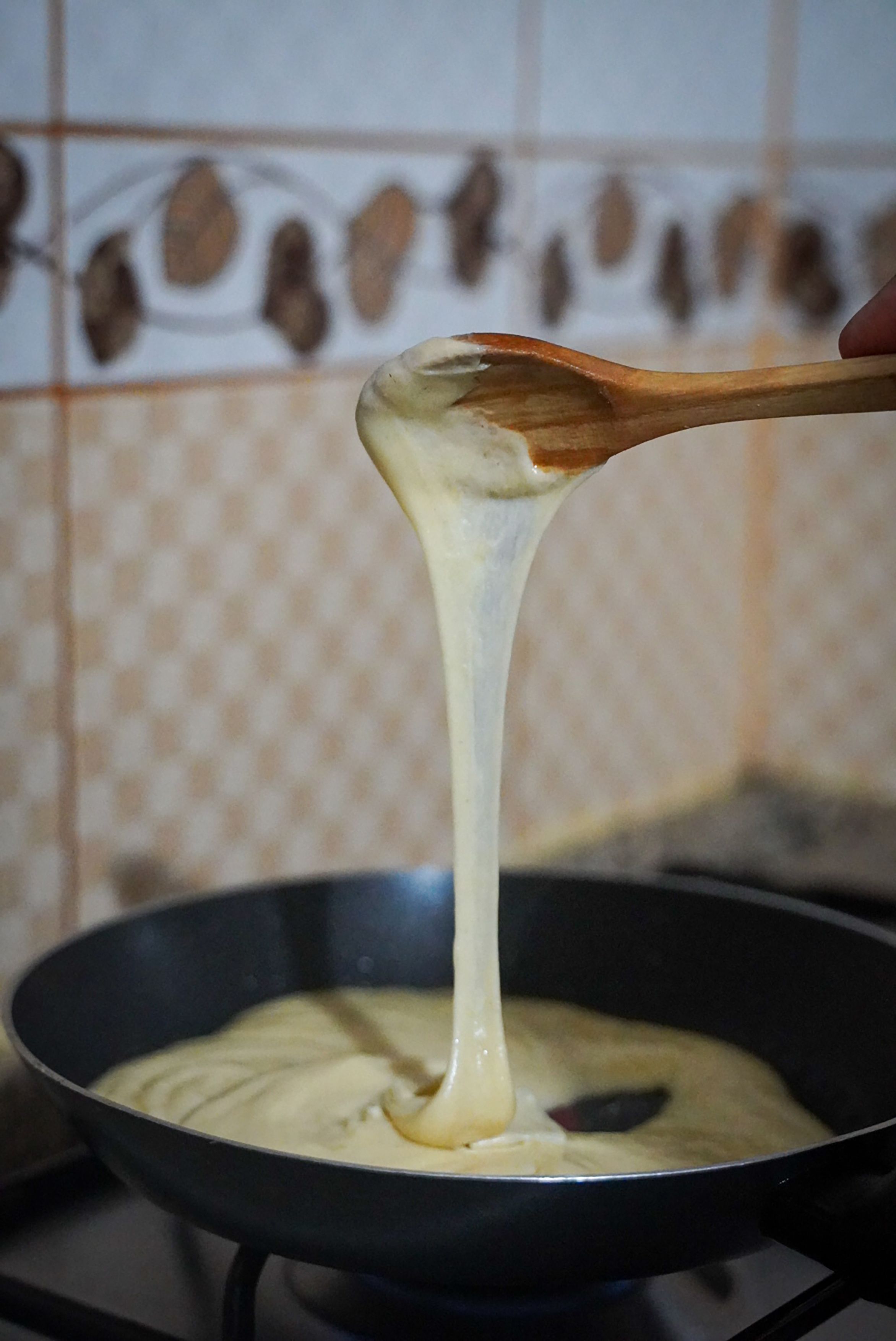
Photo: Yaren Kılıç / Pexels
The diets react (see scores below)
Common Ingredients
- potatoes
- tomme cheese
- butter
- cream
- garlic
- salt
Specific recipes may vary.
Incompatible with 11 of 11 diets
Diet Ratings
Aligot is fundamentally incompatible with ketogenic eating. Its primary ingredient is potatoes, a high-starch vegetable that delivers approximately 15-17g of net carbs per 100g. A typical serving of aligot contains a substantial quantity of mashed potato, easily pushing net carbs to 30-50g per serving — potentially exceeding the entire daily keto carb allowance in one dish. While the tomme cheese, butter, and cream are keto-friendly high-fat ingredients, they cannot offset the overwhelming carbohydrate load from the potatoes. There is no meaningful way to make traditional aligot keto-compatible without replacing the core ingredient entirely (e.g., substituting cauliflower), at which point it is no longer aligot.
Aligot is a traditional French dish that contains multiple animal-derived ingredients: tomme cheese (dairy), butter (dairy), and cream (dairy). These are clear violations of vegan dietary rules, which exclude all animal products. The potatoes and garlic are plant-based, but the dish as traditionally prepared is fundamentally non-vegan. There is no ambiguity here — dairy products are unequivocally excluded under all mainstream vegan frameworks.
Aligot is fundamentally incompatible with a paleo diet. It contains multiple non-paleo ingredients: tomme cheese (dairy), cream (dairy), butter (dairy), and salt (added salt). White potatoes are themselves debated in paleo circles, but the dairy-heavy nature of this dish — cheese and cream are its defining ingredients — makes it a clear avoid regardless of that debate. The dish is essentially a cheese-and-cream-enriched mashed potato, with dairy comprising the bulk of its character. There is no meaningful paleo adaptation possible while retaining the dish's identity.
Aligot is a rich French dish centered on large amounts of cheese, butter, and cream combined with potatoes. While potatoes and garlic are acceptable Mediterranean ingredients, the dish's defining feature is an extremely high proportion of saturated fat from dairy (tomme cheese, butter, and cream together). This contradicts core Mediterranean diet principles: olive oil—not butter or cream—is the primary fat, and dairy is meant to be consumed in moderate, not dominant, amounts. The caloric and saturated fat load of this dish places it firmly in the 'avoid' category.
Some Mediterranean diet interpretations acknowledge that traditional mountain and rural communities (e.g., parts of southern France, northern Italy) have historically consumed richer dairy-based dishes and still showed favorable health outcomes; in this view, an occasional serving of a dairy-heavy dish is acceptable within an otherwise plant-forward diet.
Aligot is fundamentally incompatible with the carnivore diet. Its primary ingredient is potatoes, a starchy plant food that is strictly excluded from all tiers of carnivore eating. Additionally, garlic is a plant-derived ingredient. While the dish does contain animal-derived components — tomme cheese, butter, and cream — these are secondary to the dominant plant-based ingredients. Even the most lenient 'animal-based' carnivore practitioners (e.g., Paul Saladino) do not include potatoes or starchy tubers as a regular staple. The dish is essentially a potato-and-cheese mash, making it a plant-dominant dish that cannot be adapted to carnivore without fundamentally changing its identity.
Aligot contains two dairy ingredients that are explicitly excluded on the Whole30: tomme cheese (a fresh/semi-soft cheese — dairy is excluded, with only ghee/clarified butter as the exception) and cream (dairy). Butter is also excluded (only ghee/clarified butter is permitted). Potatoes, garlic, and salt are all compliant, but the dish is fundamentally built on a cheese-and-cream base that cannot be made Whole30-compatible without completely transforming the recipe into something unrecognizable.
Aligot contains two significant high-FODMAP ingredients that make it unsuitable during the elimination phase. First, garlic is one of the highest-FODMAP foods tested by Monash University, containing large amounts of fructans — even a small clove is high-FODMAP and cannot be made safe by portion reduction in a dish like this. Second, cream in moderate-to-large quantities contains significant lactose, and aligot is cream-heavy by nature. Tomme cheese (a semi-hard aged cheese) is generally low-FODMAP as aging reduces lactose, but the dish's other components override this benefit. Potatoes and butter are low-FODMAP and unproblematic. The garlic alone is disqualifying for the elimination phase.
Aligot is a French dish that combines potatoes with large amounts of full-fat tomme cheese, butter, and heavy cream, making it fundamentally incompatible with DASH diet principles. The dish is very high in saturated fat from the full-fat dairy components (tomme cheese, butter, and cream), which DASH explicitly limits. The added salt further increases sodium content. While potatoes themselves are a DASH-friendly food (rich in potassium), they are overwhelmed here by the fat-laden, calorie-dense additions. DASH specifies low-fat or fat-free dairy, and recommends limiting butter, cream, and full-fat cheeses. This dish violates multiple core DASH principles simultaneously: high saturated fat, high total fat, full-fat dairy, and added sodium.
Aligot is essentially mashed potatoes enriched with cheese, butter, and cream — a triple threat against Zone Diet principles. Potatoes are explicitly listed as an 'unfavorable' high-glycemic carbohydrate in Dr. Sears' Zone system, spiking insulin and working against the hormonal balance the diet targets. The fat profile is dominated by saturated fat from butter, cream, and tomme cheese, with no meaningful monounsaturated fat presence. The protein source (cheese) is high in saturated fat and calorie-dense, making it difficult to hit the 30% protein target without massively overshooting the fat blocks. The dish has virtually no low-glycemic vegetables, no lean protein, and no favorable fat sources. There is no practical way to portion Aligot into a Zone-balanced meal without it dominating the plate with unfavorable macros — the carb load is high-GI, the fat is predominantly saturated, and the protein-to-fat ratio in cheese is unfavorable. This dish conflicts with Zone principles at nearly every level.
Aligot is a French dish built almost entirely around ingredients that anti-inflammatory guidelines recommend limiting or avoiding. The base is mashed potatoes combined with generous amounts of tomme cheese, butter, and heavy cream — all sources of significant saturated fat. Tomme cheese is a full-fat cheese, and the combination of butter and cream means the dish carries a very high saturated fat load, which is consistently linked to elevated inflammatory markers including CRP and IL-6. Garlic is the only genuinely anti-inflammatory component, but its presence in a small amount cannot offset the overwhelmingly pro-inflammatory profile of the other ingredients. The dish contains no omega-3s, no significant antioxidants, no polyphenols, no fiber from whole grains or legumes, and no colorful vegetables. Anti-inflammatory authorities including Dr. Andrew Weil specifically recommend limiting full-fat dairy, butter, and high-fat cheese. This dish represents an extreme version of that pattern rather than an occasional indulgence with partial redeeming qualities.
Aligot is a traditional French dish made by blending boiled potatoes with large quantities of tomme cheese, butter, and cream — resulting in an extremely high-fat, calorie-dense preparation with minimal protein relative to its caloric load. A typical serving is dominated by saturated fat from cheese, butter, and cream, all of which are known to worsen GLP-1 side effects including nausea, bloating, reflux, and prolonged gastric discomfort given the medication's already-slowed gastric emptying. The carbohydrate base (potatoes) is refined-adjacent in glycemic impact when mashed and combined with fat, offering little fiber. Protein contribution is low — tomme cheese provides some, but not enough to justify the fat and calorie burden in a reduced-appetite context where every calorie must count nutritionally. This dish is essentially the opposite of GLP-1-friendly: high saturated fat, low fiber, low protein density per calorie, heavy and difficult to digest, and likely to trigger significant GI side effects even in small portions.
*See how scores were generated at our methodology page.
Nutritional profile
Six traits that cut across every diet.
Fiber & Plants
How much whole-plant food and fiber it delivers.
Healthy Fats
The quality of its fats (unsaturated, omega-3).
Whole / Unprocessed
How close it is to its natural, unprocessed form.
Gut Gentle
How easy it is on digestion (low FODMAP, few irritants).
Low Glycemic
How little it spikes your blood sugar.
Protein Density
How much protein it packs per calorie.
Controversy Index
Higher controversy = more disagreement between diets.