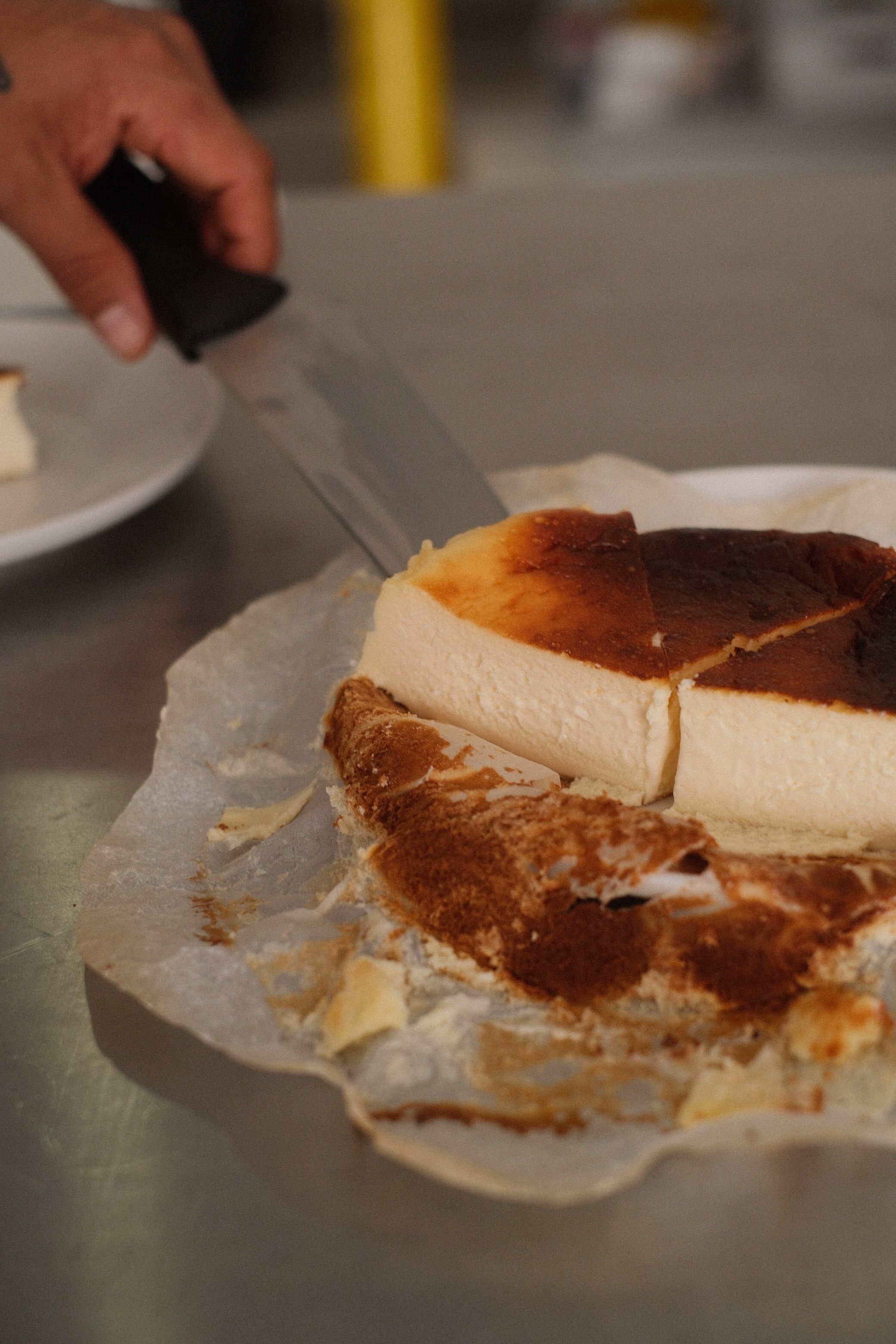
Photo: emmanuel Lozano / Pexels
French
Gateau Basque
The diets react (see scores below)
Common Ingredients
- butter
- sugar
- eggs
- flour
- vanilla
- pastry cream
- cherry jam
- salt
Specific recipes may vary.
Incompatible with 11 of 11 diets
Diet Ratings
Gateau Basque is a traditional French pastry that is fundamentally incompatible with ketogenic dietary principles. It contains multiple high-carb ingredients that would immediately break ketosis: wheat flour forms the base of the cake, sugar is a primary ingredient in both the dough and filling, cherry jam adds additional sugar and high-glycemic fruit carbs, and pastry cream (made with milk, sugar, and flour) compounds the carbohydrate load. A single serving would likely contain 40-60g of net carbs, far exceeding the entire daily keto allowance. The butter and eggs are keto-friendly, but they are completely overwhelmed by the incompatible ingredients. There is no realistic portion size that would make this dish compatible with ketosis.
Gateau Basque contains multiple animal-derived ingredients that disqualify it from a vegan diet. Butter is a dairy product, eggs are an animal product, and pastry cream is traditionally made with milk, eggs, and butter. These are not trace contaminants or processing aids — they are primary structural ingredients in this classic French pastry. There is no meaningful debate within the vegan community about any of these ingredients.
Gateau Basque is a traditional French pastry that is fundamentally incompatible with the Paleo diet. The dish contains multiple core non-Paleo ingredients: flour (a grain product), butter and pastry cream (dairy), refined sugar, and added salt. These are not edge cases or debated items — they are explicitly excluded from the Paleo framework. Flour is a processed grain, dairy in the form of butter and cream is excluded, and refined sugar is a modern processed ingredient unavailable to Paleolithic humans. Nearly every structural ingredient in this dessert violates Paleo principles, leaving only eggs and vanilla as compliant components.
Gateau Basque is a traditional French pastry that directly contradicts core Mediterranean diet principles. It is built around butter as the primary fat rather than olive oil, uses refined white flour, and contains significant added sugar both in the dough and fillings (pastry cream and cherry jam). The combination of high saturated fat from butter, refined carbohydrates, and added sugars places this firmly in the 'avoid' category. While eggs are a moderate-use food in the Mediterranean diet, they are a minor component here compared to the problematic ingredients. This is an occasional indulgence at best, not aligned with Mediterranean dietary patterns.
Gateau Basque is a French pastry that is fundamentally incompatible with the carnivore diet. While it contains two animal-derived ingredients (butter and eggs), the dish is dominated by plant-based and processed components: flour (grain), sugar (processed plant-derived sweetener), vanilla (plant extract), and cherry jam (fruit-based). The primary structure of the dish is a grain-based pastry filled with sugar-laden pastry cream and fruit jam. This is a dessert/snack built around carbohydrates and sugar — precisely what the carnivore diet eliminates entirely. Even the most liberal carnivore practitioners who include dairy and eggs would exclude this dish outright due to the flour, sugar, vanilla, and cherry jam.
Gateau Basque is a traditional French pastry cake that violates Whole30 on multiple fronts. It contains butter (dairy, not ghee), sugar (added sweetener), and flour (grain-based). Beyond the individual excluded ingredients, even if all ingredients were somehow substituted with compliant alternatives, Whole30 Rule 4 explicitly prohibits recreating baked goods, cakes, and pastries — and Gateau Basque is quintessentially a baked cake/pastry. This dish is categorically incompatible with the Whole30 program.
Gateau Basque is a traditional French pastry that contains multiple high-FODMAP ingredients making it unsuitable during the elimination phase. The primary issue is wheat flour, which is high in fructans — a major FODMAP category. A standard serving of this dense pastry cake would contain a significant amount of wheat flour. Additionally, pastry cream is typically made with milk (high lactose) and wheat-based thickeners, adding another FODMAP source. Cherry jam, depending on the type, may contain excess fructose or polyols (cherries are high in sorbitol, a polyol). The combination of fructans from wheat flour, potential lactose from pastry cream, and polyols/excess fructose from cherry jam makes this dish clearly high-FODMAP at any standard serving size. Butter, sugar, eggs, vanilla, and salt are all low-FODMAP, but they cannot offset the multiple high-FODMAP components.
Gateau Basque is a traditional French pastry that is fundamentally incompatible with DASH diet principles. The dish is built on a foundation of butter (high in saturated fat), sugar (high added sugar), refined white flour (not a whole grain), and pastry cream (eggs, butter, sugar, full-fat milk). The cherry jam adds further concentrated sugar. DASH explicitly limits saturated fat, added sugars, and refined grains while emphasizing whole grains, lean proteins, and nutrient-dense foods rich in potassium, calcium, magnesium, and fiber. This pastry offers essentially none of the nutrients DASH prioritizes and is dense in the macronutrients DASH restricts. As a snack, it provides empty calories with high saturated fat and sugar loads, making it a poor fit even in moderation for someone following the DASH eating plan.
Gateau Basque is a traditional French pastry that is fundamentally incompatible with Zone Diet principles. Its primary ingredients — butter, sugar, white flour, pastry cream, and cherry jam — represent a convergence of high-glycemic carbohydrates and saturated fat with virtually no lean protein. The macronutrient profile is the inverse of the Zone's 40/30/30 target: it is dominated by rapidly digested carbohydrates (white flour, sugar, jam) and saturated fat (butter, cream), with minimal protein and no favorable monounsaturated fats. The flour and sugar will spike insulin sharply, exactly what the Zone aims to prevent. There is no lean protein component, no low-glycemic carbohydrate, and no monounsaturated fat. While the Zone is ratio-based rather than exclusionary, this dish offers no realistic path to Zone balance — adding lean protein on the side does not transform the pastry itself. Even a small portion delivers a high-glycemic, high-saturated-fat carb block with essentially zero protein blocks, making it extremely difficult to incorporate without derailing Zone macros entirely.
Gateau Basque is a traditional French pastry built almost entirely on ingredients that are pro-inflammatory by anti-inflammatory diet standards. Butter is a significant source of saturated fat, which is explicitly limited. Refined white flour and added sugar — both present in large quantities as the structural base of the cake, the pastry cream filling, and the cherry jam — are refined carbohydrates that spike blood glucose and drive inflammatory markers like CRP and IL-6. The pastry cream further concentrates butter, sugar, and eggs into a high-saturated-fat, high-sugar filling. Cherry jam, while cherries themselves have anti-inflammatory polyphenols, in jam form is predominantly added sugar with minimal fruit benefit. There are no meaningful anti-inflammatory components: no omega-3 sources, no colorful whole vegetables or fruits, no whole grains, no legumes, no anti-inflammatory spices beyond trace vanilla. Vanilla and eggs provide negligible benefit in this context. This dish is essentially a delivery vehicle for saturated fat and refined sugar — the two most consistently pro-inflammatory dietary patterns across anti-inflammatory nutrition research and frameworks including Dr. Weil's pyramid.
Gateau Basque is a traditional French pastry built almost entirely from butter, sugar, flour, and pastry cream — a combination that fails on nearly every GLP-1 dietary criterion. It is high in saturated fat (butter-heavy dough and cream filling), high in refined sugar (jam filling plus sweetened pastry cream), and made with refined flour offering negligible fiber. Protein content is minimal despite the presence of eggs, which are diluted by large proportions of fat and carbohydrate. Caloric density is high while nutrient density per calorie is very low. The high fat and sugar load is likely to worsen GLP-1 side effects including nausea, bloating, and delayed gastric emptying discomfort. As a snack category item, it provides no meaningful protein or fiber contribution toward daily targets. It represents exactly the type of empty-calorie, high-fat, high-sugar food that is most counterproductive for patients on GLP-1 medications.
*See how scores were generated at our methodology page.
Nutritional profile
Six traits that cut across every diet.
Fiber & Plants
How much whole-plant food and fiber it delivers.
Healthy Fats
The quality of its fats (unsaturated, omega-3).
Whole / Unprocessed
How close it is to its natural, unprocessed form.
Gut Gentle
How easy it is on digestion (low FODMAP, few irritants).
Low Glycemic
How little it spikes your blood sugar.
Protein Density
How much protein it packs per calorie.
Controversy Index
Higher controversy = more disagreement between diets.