Photo: ERIVELTO Martins / Pexels
Georgian
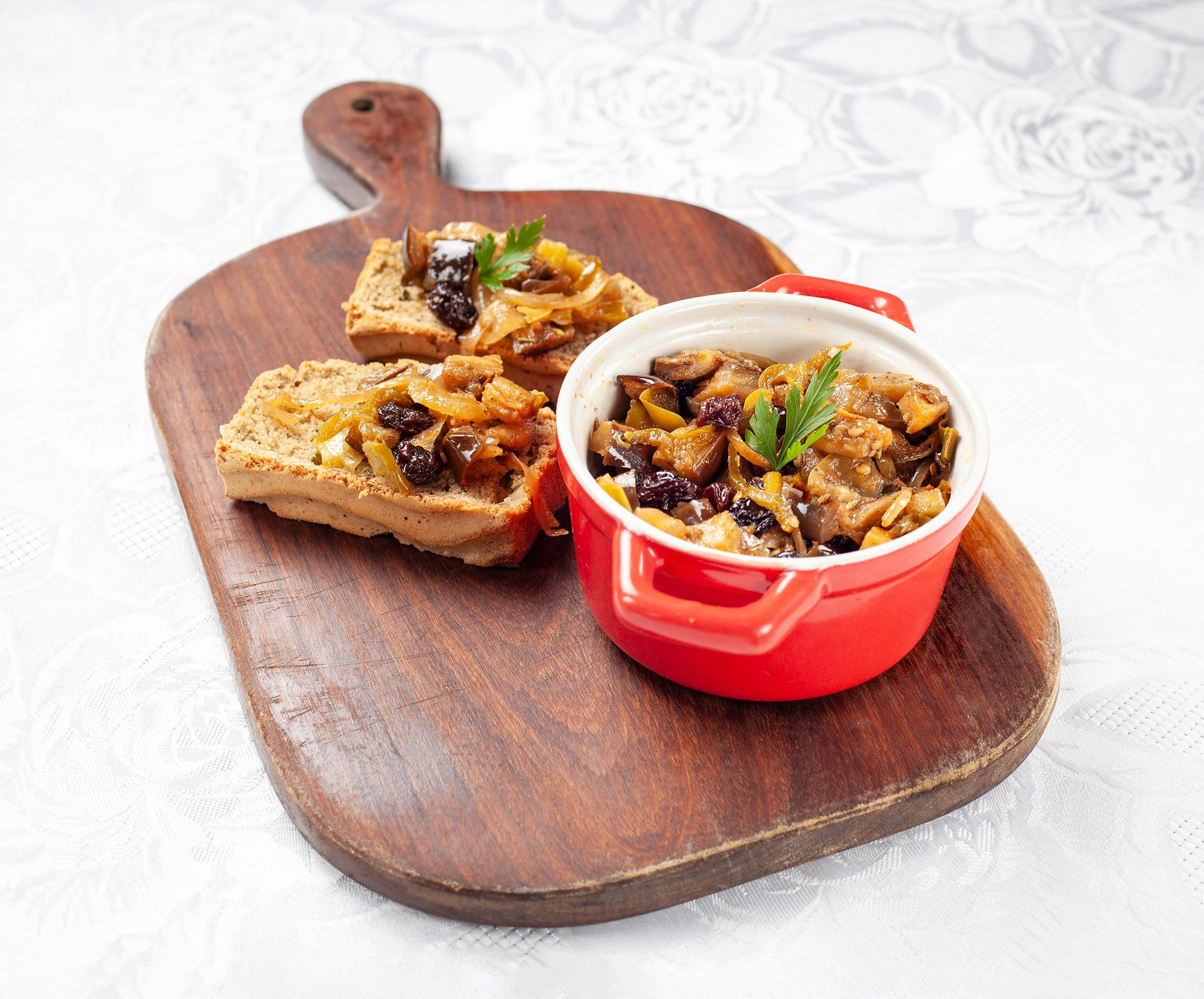
Ajapsandali
The diets react (see scores below)
Common Ingredients
- eggplant
- bell peppers
- tomatoes
- onion
- garlic
- cilantro
- basil
- sunflower oil
Specific recipes may vary.
Incompatible with 3 of 11 diets
Diet Ratings
Ajapsandali is a Georgian vegetable stew combining eggplant, bell peppers, tomatoes, onion, and garlic in sunflower oil. Individually, each vegetable is relatively low-carb, but combined in a typical serving the net carbs accumulate meaningfully. Eggplant (~3g net carbs/100g), bell peppers (~4-5g net carbs/100g), tomatoes (~3-4g net carbs/100g), and onion (~7g net carbs/100g) together in a generous portion can easily reach 10-15g net carbs per serving. A small portion (100-150g) is manageable within a keto daily budget, but a standard side-dish serving could consume a significant fraction of the 20-50g daily limit. Sunflower oil is acceptable but not ideal (high in omega-6s); olive oil would be preferred by many keto practitioners. No grains, added sugars, or high-starch ingredients are present, making this far better than most sides, but portion discipline is essential.
Strict keto practitioners may flag tomatoes and onion as borderline due to their higher sugar content relative to other vegetables, and some clinical keto protocols would recommend reducing or eliminating these to ensure ketosis is maintained. Conversely, lazy keto adherents tracking only daily totals often approve this dish freely in moderate portions.
Ajapsandali is a traditional Georgian vegetable stew consisting entirely of whole plant foods. Every ingredient — eggplant, bell peppers, tomatoes, onion, garlic, cilantro, basil, and sunflower oil — is fully plant-based with no animal products or animal-derived ingredients. The dish is minimally processed, relying on fresh vegetables and herbs cooked together, which aligns well with whole-food plant-based principles. Sunflower oil is the only processed element and is a common, widely accepted cooking fat in vegan diets. This is an excellent example of a naturally vegan dish from Georgian cuisine.
Ajapsandali is a Georgian vegetable stew made from otherwise paleo-approved ingredients — eggplant, bell peppers, tomatoes, onion, garlic, cilantro, and basil — all of which are unprocessed vegetables and herbs fully compatible with a Paleolithic diet. However, the dish is traditionally cooked in sunflower oil, which is a seed oil explicitly excluded from the paleo framework. Seed oils like sunflower oil are high in omega-6 polyunsaturated fatty acids and are a product of industrial processing, making them unavailable to Paleolithic humans. This single ingredient disqualifies the dish as prepared. A simple substitution of sunflower oil with olive oil, avocado oil, or coconut oil would make this dish fully paleo-approved.
Ajapsandali is a Georgian vegetable stew composed entirely of whole, plant-based ingredients — eggplant, bell peppers, tomatoes, onion, garlic, and fresh herbs — which are staples of the Mediterranean diet. The dish is rich in fiber, antioxidants, and phytonutrients. The only concern is the use of sunflower oil rather than extra virgin olive oil, which is the canonical fat in Mediterranean diet principles. Sunflower oil is not traditional to the Mediterranean and is higher in omega-6 fatty acids, though it is still a plant-based fat and not inherently harmful in moderation. The vegetable base is exemplary and fully aligned with Mediterranean ideals.
Some broader interpretations of the Mediterranean diet allow for other plant-based oils like sunflower oil in moderation, particularly in dishes rooted in adjacent culinary traditions (e.g., Eastern Mediterranean, Caucasus). A simple substitution of olive oil would make this dish a near-perfect Mediterranean staple with a score closer to 9-10.
Ajapsandali is a Georgian vegetable stew composed entirely of plant-based ingredients: eggplant, bell peppers, tomatoes, onion, garlic, cilantro, basil, and sunflower oil. Every single ingredient violates carnivore diet principles. There are no animal products whatsoever — no meat, fish, eggs, or animal fats. Sunflower oil is a plant-based seed oil, which is doubly problematic on carnivore due to its high polyunsaturated fatty acid content. This dish is categorically incompatible with the carnivore diet at any tier, including the most lenient 'animal-based' approaches championed by figures like Paul Saladino.
Ajapsandali is a Georgian vegetable stew made entirely from Whole30-compliant ingredients. Eggplant, bell peppers, tomatoes, onion, and garlic are all vegetables explicitly allowed on the program. Cilantro and basil are fresh herbs, fully permitted. Sunflower oil is a natural fat with no excluded ingredients. There are no grains, legumes, dairy, added sugars, alcohol, or any other excluded substances in this dish. It is a whole, minimally processed vegetable preparation that aligns well with the spirit and rules of the Whole30 program.
Ajapsandali contains multiple high-FODMAP ingredients that make it unsuitable during the elimination phase. Garlic and onion are among the highest-FODMAP foods tested by Monash University, both extremely high in fructans at any culinary quantity. These two ingredients alone are sufficient to classify the dish as high-FODMAP. Eggplant is also high-FODMAP at standard serving sizes (Monash rates it as high-FODMAP above approximately 75g, and a typical serving in a vegetable stew would far exceed this). The combination of onion, garlic, and eggplant in a cooked dish where portions are concentrated makes this essentially unavoidable as a high-FODMAP dish. The remaining ingredients — bell peppers, tomatoes, cilantro, basil, and sunflower oil — are all low-FODMAP, but they cannot offset the core high-FODMAP components.
Ajapsandali is a Georgian vegetable stew composed entirely of DASH-ideal ingredients. Eggplant, bell peppers, tomatoes, onion, and garlic are all non-starchy vegetables that align perfectly with the DASH diet's emphasis on 4-5 servings of vegetables per day. These ingredients collectively provide potassium, magnesium, fiber, and antioxidants. Sunflower oil is an unsaturated vegetable oil, which DASH permits in moderation. Fresh herbs (cilantro, basil) add flavor without sodium. The dish contains no red meat, no saturated fat, no added sodium, no refined grains, and no added sugars. It is naturally low in calories and sodium, making it an excellent fit for both standard and low-sodium DASH targets.
Ajapsandali is a Georgian vegetable stew made from eggplant, bell peppers, tomatoes, onion, garlic, and fresh herbs — all of which are favorable Zone carbohydrates. The vegetable base is excellent: low-glycemic, high in polyphenols and fiber, and well-aligned with Sears' emphasis on colorful vegetables. However, two factors pull this into caution territory. First, the dish uses sunflower oil, which is high in omega-6 linoleic acid — precisely the pro-inflammatory fat Sears most strongly discourages. Replacing it with olive oil would make this dish significantly more Zone-compatible. Second, as a pure carbohydrate side with no protein and no monounsaturated fat source, it cannot function as a balanced Zone meal on its own — it needs to be paired with a lean protein and ideally have the oil swapped. As a side component of a Zone-balanced plate, the vegetable blend is excellent, but the sunflower oil is a meaningful negative in Sears' anti-inflammatory framework.
Some Zone practitioners would view the sunflower oil concern as overstated when the quantity is modest, arguing that the anti-inflammatory polyphenol load from the eggplant, peppers, tomatoes, and herbs partially offsets the omega-6 issue. In Sears' later writings (e.g., 'The OmegaRx Zone'), he became increasingly focused on the omega-6 to omega-3 ratio rather than strictly forbidding omega-6 sources, so small amounts of sunflower oil in an otherwise polyphenol-rich dish may be acceptable in moderate Zone practice.
Ajapsandali is a Georgian vegetable stew built almost entirely on anti-inflammatory powerhouses: eggplant (nasunin, chlorogenic acid), bell peppers (vitamin C, capsanthin, quercetin), tomatoes (lycopene, vitamin C), onion (quercetin, inulin), garlic (allicin, organosulfur compounds), cilantro, and basil (polyphenols). Without the sunflower oil, this dish would score 8–9 and earn a clear approve. The single complicating factor is sunflower oil, which is high in omega-6 linoleic acid and is flagged in anti-inflammatory protocols as a pro-inflammatory cooking fat to avoid, especially when heated. However, the vegetable base is so nutrient-dense and polyphenol-rich that the dish remains net beneficial for most people. The score and verdict are pulled down primarily by the oil, and this is further complicated by nightshade debate (eggplant, peppers, tomatoes are all nightshades — approved by mainstream anti-inflammatory nutrition but excluded in AIP and some autoimmune protocols).
Two separate debates apply here. First, on sunflower oil: most anti-inflammatory protocols (Dr. Weil, IF Rating system) recommend avoiding regular sunflower oil due to high omega-6 content and oxidation at heat, but the AHA and mainstream dietitians consider it acceptable; substituting extra virgin olive oil would resolve this concern. Second, on nightshades: Dr. Weil and mainstream anti-inflammatory nutrition endorse eggplant, tomatoes, and bell peppers for their antioxidant content, but AIP and autoimmune-focused practitioners (Dr. Tom O'Bryan) argue solanine and lectins in nightshades may trigger inflammation in sensitive individuals.
Ajapsandali is a Georgian vegetable stew made from eggplant, bell peppers, tomatoes, onion, garlic, and herbs cooked in sunflower oil. On the positive side, it is rich in fiber and micronutrients from the variety of vegetables, low in saturated fat, easy to digest when cooked soft, and hydrating due to the high water content of its ingredients. The herbs and garlic add anti-inflammatory phytonutrients with essentially no caloric cost. However, it contains virtually no protein, which is the top priority for GLP-1 patients. Every small meal should deliver 15-30g of protein, and this dish contributes close to zero. The sunflower oil adds fat calories that, while unsaturated and preferable to saturated fats, still reduce the nutrient density per calorie of an already protein-free dish. The amount of oil used in traditional preparation varies and can be substantial, which risks GI discomfort given slowed gastric emptying on GLP-1 medications. As a standalone dish or primary side, it fails to meet the protein requirement. It scores better when paired with a high-protein main (grilled chicken, fish, legumes) where it functions as a fiber-rich, hydrating vegetable accompaniment in a small portion.
Some GLP-1-focused dietitians would view this dish more favorably as a low-calorie, high-fiber, plant-forward option that supports gut motility and helps counter GLP-1-related constipation, and would approve it freely as a side dish without penalizing it for lacking protein — arguing that protein comes from the main course. Others raise concern about variable oil quantity in traditional preparations, noting that oil-heavy versions can worsen nausea and reflux in patients with slowed gastric emptying.
*See how scores were generated at our methodology page.
Nutritional profile
Six traits that cut across every diet.
Fiber & Plants
How much whole-plant food and fiber it delivers.
Healthy Fats
The quality of its fats (unsaturated, omega-3).
Whole / Unprocessed
How close it is to its natural, unprocessed form.
Gut Gentle
How easy it is on digestion (low FODMAP, few irritants).
Low Glycemic
How little it spikes your blood sugar.
Protein Density
How much protein it packs per calorie.
Controversy Index
Higher controversy = more disagreement between diets.
Diet-Specific Tips
 Keto — 5/10
View tips
- Combined net carbs from multiple vegetables accumulate — portion control is critical
- No grains, added sugars, or starches — clean whole-food ingredients
- Tomatoes and onion are the highest-carb contributors and may concern strict keto followers
- Sunflower oil is high in omega-6 fatty acids; not the preferred fat source on keto
- No meaningful protein or fat content — does not contribute to keto macros beyond oil
- A small serving (~100-150g) is more keto-compatible than a standard side-dish portion
 Vegan — 9/10
View tips
- All ingredients are whole plant foods
- No animal products or animal-derived ingredients
- Minimal processing — fresh vegetables, herbs, and a plant-based oil
- Traditionally prepared without any dairy or meat additions
- Sunflower oil is plant-derived and broadly accepted in vegan cooking
 Mediterranean — 8/10
View tips
- All vegetables — eggplant, peppers, tomatoes, onion, garlic — are core Mediterranean foods
- No animal products or processed ingredients
- Fresh herbs (cilantro, basil) add nutritional value
- Sunflower oil used instead of extra virgin olive oil — the primary deduction
- No added sugars or refined grains
- Preparation method (stewing vegetables) preserves nutritional integrity
 Whole30 — 9/10
View tips
- All vegetables (eggplant, bell peppers, tomatoes, onion, garlic) are Whole30-approved
- Sunflower oil is a compliant natural fat
- Fresh herbs (cilantro, basil) are explicitly allowed
- No excluded ingredients present
- Whole, unprocessed preparation consistent with Whole30 spirit
 DASH — 9/10
View tips
- All ingredients are non-starchy vegetables — core DASH food group
- Sunflower oil is an unsaturated fat, consistent with DASH guidelines
- Naturally very low in sodium — compatible with even the stricter 1,500mg/day DASH target
- Rich in potassium (tomatoes, eggplant, bell peppers) and fiber
- No saturated fat, no added sugar, no processed ingredients
- Fresh herbs provide flavor without sodium, supporting sodium reduction goals
- Portion of oil should be moderate to keep fat within DASH daily limits
 Zone — 6/10
View tips
- All vegetables are low-glycemic and Zone-favorable carbohydrate sources
- Rich in polyphenols from eggplant, bell peppers, tomatoes, and fresh herbs
- Sunflower oil is high in omega-6 and directly opposes Sears' anti-inflammatory fat recommendations
- No protein component — cannot serve as a Zone meal without pairing
- No monounsaturated fat source — olive oil substitution would significantly improve Zone score
- Excellent as a side dish component when paired with lean protein and Zone-favorable fat
 Anti-Inflammatory — 5/10
View tips
- Eggplant contains nasunin and chlorogenic acid with demonstrated anti-inflammatory and antioxidant activity
- Bell peppers and tomatoes are rich in vitamin C, carotenoids, and quercetin — broadly anti-inflammatory
- Garlic and onion provide allicin and quercetin, well-supported anti-inflammatory compounds
- Cilantro and basil add polyphenols and volatile compounds with anti-inflammatory properties
- Sunflower oil is a high omega-6 refined seed oil flagged in anti-inflammatory protocols as pro-inflammatory, especially when heated
- All three nightshade vegetables (eggplant, peppers, tomatoes) are contested in autoimmune-focused anti-inflammatory contexts
- No protein, refined carbohydrates, added sugars, or processed ingredients otherwise
 GLP-1 Friendly — 5/10
View tips
- Negligible protein content — fails the #1 GLP-1 dietary priority
- High fiber from eggplant, bell peppers, and tomatoes — supports gut motility and constipation prevention
- Sunflower oil is unsaturated but adds fat calories; portion of oil matters significantly
- High water content from tomatoes and cooked vegetables — supports hydration
- Soft, cooked texture is easy to digest — positive for GLP-1 GI side effects
- No saturated fat, no refined grains, no added sugar — clean ingredient profile
- Must be paired with a protein source to function appropriately in a GLP-1 meal plan
- Small serving recommended to manage fat and calorie load from oil