Georgian
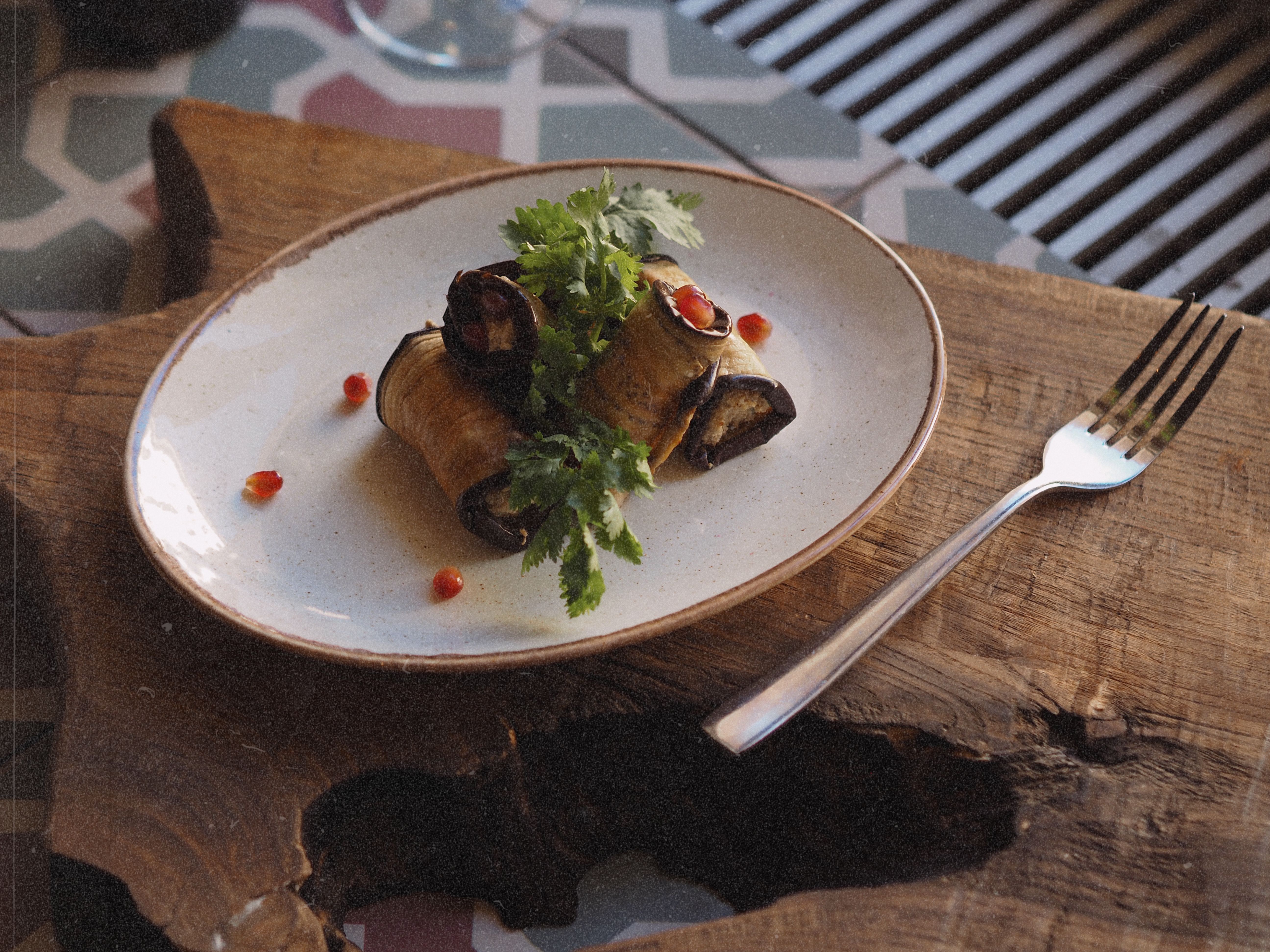
Badrijani Nigvzit
The diets react (see scores below)
Common Ingredients
- eggplant
- walnuts
- garlic
- vinegar
- coriander
- pomegranate seeds
- cilantro
- vegetable oil
Specific recipes may vary.
Incompatible with 3 of 11 diets
Diet Ratings
Badrijani Nigvzit is a Georgian dish of fried or roasted eggplant rolls filled with a walnut-garlic paste, garnished with pomegranate seeds and herbs. The base ingredients are largely keto-compatible: eggplant is relatively low in net carbs (~3-4g per 100g), walnuts are high in fat and fiber with moderate net carbs, garlic and vinegar contribute minimal carbs, and cilantro/coriander are negligible. The primary concern is the pomegranate seeds, which add natural sugars (~9g net carbs per 50g serving). In a typical serving, the pomegranate seeds are a garnish used sparingly, which keeps the dish borderline acceptable, but they do add meaningful sugar. Walnuts in the filling are actually a keto positive — high fat, moderate protein, reasonable net carbs per serving. A standard serving (2-3 rolls) could land around 8-12g net carbs depending on portion size, making it workable with careful portioning but not freely consumable.
Some strict keto practitioners would avoid this dish entirely due to the pomegranate seeds, which contain natural sugars, arguing that any fruit-derived sugar can disrupt ketosis or trigger cravings. Lazy keto adherents, however, may approve it freely given the dominant walnut-and-eggplant base.
Badrijani Nigvzit is a traditional Georgian dish consisting of fried or roasted eggplant slices rolled around a walnut-garlic paste, garnished with pomegranate seeds and fresh cilantro. Every ingredient listed — eggplant, walnuts, garlic, vinegar, coriander, pomegranate seeds, cilantro, and vegetable oil — is entirely plant-based with no animal products or animal-derived ingredients. The dish is built on whole-food components (vegetables, nuts, seeds, fresh herbs) with minimal processing, placing it at the high end of the approval range. It is naturally vegan without any modification required.
Badrijani Nigvzit is a Georgian dish of eggplant rolled with a walnut-garlic paste. Most ingredients are paleo-friendly — eggplant, walnuts, garlic, coriander, pomegranate seeds, and cilantro are all whole, unprocessed foods available to hunter-gatherers. However, the dish is traditionally made with vegetable oil (typically sunflower oil in Georgian cuisine), which is a seed oil explicitly excluded from the paleo diet. Vinegar is a minor gray-area item (most paleo authorities accept apple cider vinegar or wine vinegar in small amounts, but distilled white vinegar is more debated). The vegetable oil is the decisive disqualifying ingredient, pushing this dish into avoid territory. If the vegetable oil were substituted with olive oil or avocado oil, the dish would likely score 8–9.
Badrijani Nigvzit is a Georgian dish of roasted or fried eggplant rolls filled with a walnut-garlic paste, garnished with pomegranate seeds and fresh herbs. The ingredient profile aligns very well with Mediterranean diet principles: eggplant is a staple vegetable in Mediterranean cooking, walnuts are an encouraged nut source rich in healthy fats and omega-3s, garlic and fresh herbs (cilantro, coriander) are celebrated flavor bases, and pomegranate seeds add antioxidant-rich fruit. Vinegar is a traditional condiment with no dietary concerns. The only mild flag is the use of generic 'vegetable oil' rather than extra virgin olive oil, which is the preferred fat in the Mediterranean diet. If a refined seed oil (e.g., sunflower or soybean) is used, this slightly detracts from the ideal fat profile, though it remains a minor issue given the otherwise excellent ingredient list. Overall, this dish is plant-forward, whole-food-based, and very much in the spirit of Mediterranean eating.
The use of unspecified vegetable oil rather than extra virgin olive oil is a point of contention — modern Mediterranean diet clinical guidelines (e.g., PREDIMED protocol) specifically emphasize EVOO as the primary fat; substituting refined seed oils would lower alignment, though traditional Georgian preparation would simply reflect a different culinary tradition.
Badrijani Nigvzit is a Georgian dish composed entirely of plant-based ingredients: eggplant (vegetable), walnuts (nuts), garlic (plant), vinegar (plant-derived), coriander (spice/seed), pomegranate seeds (fruit), cilantro (herb), and vegetable oil (plant oil). There is not a single animal-derived ingredient in this dish. Every component is explicitly excluded on the carnivore diet. This is a complete non-starter under any tier of carnivore eating, including the most lenient 'animal-based' approaches.
Badrijani Nigvzit is a classic Georgian dish of sliced eggplant stuffed or rolled with a walnut-garlic paste, garnished with pomegranate seeds and fresh cilantro. Every ingredient in this preparation is fully Whole30 compliant: eggplant is a vegetable, walnuts are a natural fat/nut, garlic and cilantro are herbs/aromatics, vinegar is explicitly permitted (most types are allowed), coriander is a spice, pomegranate seeds are fruit, and vegetable oil (such as sunflower or similar neutral oil) is an allowed fat. There are no grains, legumes, dairy, added sugars, or any other excluded ingredients present. This is a whole, minimally processed dish that aligns perfectly with the spirit and rules of the Whole30 program.
Badrijani Nigvzit contains two significant high-FODMAP ingredients that make it problematic during the elimination phase. Garlic is one of the highest-FODMAP foods (fructans) and is a core ingredient in this dish — it cannot be omitted without fundamentally changing the recipe. Walnuts are low-FODMAP at a small serving (10 walnut halves per Monash), but this dish is walnut-paste-heavy, meaning a standard serving easily exceeds safe thresholds. Eggplant is low-FODMAP at 75g but becomes high-FODMAP at larger servings (182g+), and as the main structural ingredient, portion control is difficult. Pomegranate seeds are low-FODMAP at 45g (about 1/4 cup), which is a reasonable serving in this context and likely manageable. Vinegar (most types), cilantro, coriander spice, and vegetable oil are all low-FODMAP. The combination of garlic (unavoidable) and likely excess walnuts makes this dish high-FODMAP at any realistic serving size.
Monash University clearly rates garlic as high-FODMAP at any culinary dose, making this dish essentially non-compliant during elimination. Some FODMAP practitioners suggest substituting garlic-infused oil to approximate the flavor while keeping FODMAPs low, but that would be a recipe modification rather than the traditional dish. The walnut quantity per serving also introduces uncertainty — if the walnut paste is spread thinly, it may fall within safe limits, but typical recipes use generous amounts.
Badrijani Nigvzit is a Georgian dish of grilled or roasted eggplant slices rolled around a walnut-garlic-herb paste, topped with pomegranate seeds. The ingredient profile aligns well with DASH principles: eggplant is a low-sodium, fiber-rich vegetable; walnuts provide heart-healthy unsaturated fats, magnesium, and protein; garlic, cilantro, coriander, and vinegar add flavor without sodium; and pomegranate seeds contribute potassium and antioxidants. Vegetable oil (typically sunflower or canola in Georgian cooking) is a DASH-approved fat source. Walnuts are calorie-dense and contain some saturated fat, requiring moderate portion control, but their overall fat profile is cardiovascular-friendly and explicitly supported by DASH guidelines. The dish is naturally low in sodium, contains no added sugar, no red meat, and no tropical oils or full-fat dairy. The main caution is caloric density from walnuts and oil, and the method of preparation — if eggplant is deep-fried rather than roasted or grilled, fat content rises meaningfully. As typically prepared (roasted/grilled eggplant), this dish is a strong DASH fit.
NIH DASH guidelines endorse nuts and vegetable oils as healthy fat sources, supporting this dish's profile. However, some conservative DASH clinicians note that walnuts and added oil together can push total fat and calorie density higher than ideal for weight-managed DASH plans, and would recommend limiting portion size to one or two rolls per serving.
Badrijani Nigvzit is a Georgian dish of grilled or fried eggplant slices rolled around a walnut-garlic paste, garnished with pomegranate seeds and cilantro. From a Zone perspective, the macronutrient profile is interesting but unbalanced on its own: it is predominantly fat (walnuts, vegetable oil) with modest low-glycemic carbohydrates (eggplant, pomegranate seeds) and minimal protein. Eggplant is a favorable Zone carbohydrate — low-glycemic and high in fiber, contributing relatively few net carbs per block. Walnuts are a good fat source with anti-inflammatory omega-3s (ALA), which aligns with Sears' later anti-inflammatory emphasis, though walnuts are higher in omega-6 than ideal Zone fats like almonds or macadamia nuts. Pomegranate seeds add polyphenols that Sears strongly endorses but also add some sugar-based carbs. The vegetable oil is a concern — if it is a seed oil (sunflower, corn), it carries a high omega-6 load that conflicts with Zone's anti-inflammatory framework. The dish lacks meaningful protein, making it difficult to use as a standalone Zone component. As a side dish paired with a lean protein source, it can be incorporated into a Zone meal with careful block counting, but the fat-to-protein ratio is off and the vegetable oil type is ambiguous. The portion of walnuts would need to be measured carefully as fat blocks (3g fat per block in vegetarian-protein context).
Some Zone practitioners following Sears' later anti-inflammatory writings (The Anti-Inflammation Zone, The OmegaRx Zone) would view walnuts more favorably due to their polyphenol content and ALA omega-3s, and would highlight the pomegranate seeds as a high-polyphenol food Sears explicitly recommends. They might score this higher (7) as a polyphenol-rich side dish that contributes favorable Zone carbs and fats when paired correctly with lean protein. Conversely, stricter Zone adherents would penalize the lack of protein and the potential high omega-6 vegetable oil.
Badrijani Nigvzit is a Georgian dish of grilled or pan-fried eggplant rolled with a walnut-garlic paste, garnished with pomegranate seeds and herbs. The ingredient profile is largely anti-inflammatory: walnuts provide omega-3 fatty acids (ALA) and polyphenols; garlic contains allicin and organosulfur compounds with well-documented anti-inflammatory effects; pomegranate seeds are rich in punicalagins and anthocyanins, among the most potent antioxidant compounds in nutrition research; cilantro and coriander contribute polyphenols and flavonoids; and eggplant contains nasunin and chlorogenic acid, both antioxidants. Vinegar (typically wine or apple cider) is generally neutral to mildly beneficial. The main concern is 'vegetable oil,' which is vague — if it refers to refined sunflower, corn, or cottonseed oil used for frying the eggplant (eggplant absorbs oil readily), this introduces a significant omega-6 load. If extra virgin olive oil is used, the dish skews strongly anti-inflammatory. This ambiguity prevents a higher score. The eggplant also merits a note: as a nightshade, it is generally embraced by mainstream anti-inflammatory frameworks for its antioxidant content, but excluded by AIP and some autoimmune-focused practitioners.
The 'vegetable oil' ingredient is the key dividing factor: mainstream anti-inflammatory nutrition (Dr. Weil's pyramid, AHA) would consider this dish healthy regardless of oil type in moderate use, while stricter anti-inflammatory protocols (e.g., Wahls Protocol, AIP-adjacent guidance) would flag both the refined seed oil risk and eggplant's solanine content as potentially pro-inflammatory for sensitive individuals, particularly those with autoimmune conditions.
Badrijani Nigvzit consists of thinly sliced, pan-fried or roasted eggplant rolled around a walnut-garlic paste, garnished with pomegranate seeds and cilantro. The dish has several GLP-1-relevant strengths: eggplant is low-calorie, high-water-content, and reasonably fibrous; the walnut filling provides unsaturated fats and some micronutrient density; pomegranate seeds add antioxidants and a small fiber boost; vinegar and garlic are digestively neutral to mildly beneficial. However, the dish has meaningful drawbacks for GLP-1 patients. Walnuts are calorie-dense and high in fat — even healthy unsaturated fat — which can worsen nausea, bloating, and reflux given slowed gastric emptying. Vegetable oil used in frying or roasting the eggplant adds additional fat load; eggplant absorbs oil aggressively, making the fat content highly preparation-dependent. Critically, this dish provides virtually no protein, which is the top priority for GLP-1 patients at risk of muscle loss. As a side dish it is acceptable in a small portion alongside a high-protein main, but it cannot stand alone nutritionally and its fat content warrants portion caution.
Some GLP-1-focused dietitians may view the walnut-based fat as genuinely beneficial — walnuts are an approved unsaturated fat source and the overall dish is whole-food, minimally processed, and far superior to fried snacks. Others caution that any high-fat food, regardless of fat quality, is poorly tolerated during the active GI side-effect phase of GLP-1 therapy and should be minimized until tolerance is established.
*See how scores were generated at our methodology page.
Nutritional profile
Six traits that cut across every diet.
Fiber & Plants
How much whole-plant food and fiber it delivers.
Healthy Fats
The quality of its fats (unsaturated, omega-3).
Whole / Unprocessed
How close it is to its natural, unprocessed form.
Gut Gentle
How easy it is on digestion (low FODMAP, few irritants).
Low Glycemic
How little it spikes your blood sugar.
Protein Density
How much protein it packs per calorie.
Controversy Index
Higher controversy = more disagreement between diets.
Diet-Specific Tips
 Keto — 5/10
View tips
- Pomegranate seeds add natural sugars and elevate net carbs — primary concern
- Walnuts are keto-friendly: high fat, fiber-rich, moderate net carbs
- Eggplant is a low-carb vegetable suitable for keto in moderate portions
- Garlic, vinegar, coriander, and cilantro contribute negligible net carbs
- Vegetable oil is fine for fat content but seed oils may concern some keto practitioners
- Portion control critical — 2-3 rolls likely manageable, larger servings risky
 Vegan — 9/10
View tips
- All ingredients are whole plant foods
- No animal products or animal-derived ingredients present
- Walnut-garlic paste provides healthy fats and plant protein
- Pomegranate seeds add whole-food nutritional value
- Vegetable oil is the only processed element, keeping the score just below 10
- No cross-contamination concerns for the ingredient category itself
 Mediterranean — 8/10
View tips
- Eggplant is a core Mediterranean vegetable
- Walnuts are an approved nut source with healthy fats
- Garlic and fresh herbs are Mediterranean staples
- Pomegranate seeds add antioxidant-rich fruit element
- Vegetable oil (not specified as olive oil) is a minor concern
- Entirely plant-based with no processed ingredients
- No added sugars or refined grains
 Whole30 — 9/10
View tips
- Eggplant: compliant vegetable
- Walnuts: compliant natural fat/nut
- Garlic and cilantro: compliant aromatics/herbs
- Vinegar: explicitly allowed on Whole30
- Coriander: compliant spice
- Pomegranate seeds: compliant fruit
- Vegetable oil: compliant fat (assuming non-seed oils like sunflower or avocado; label-check recommended for additives)
- No excluded ingredients present
 DASH — 8/10
View tips
- Eggplant is a DASH-approved non-starchy vegetable, high in fiber and potassium
- Walnuts provide magnesium, unsaturated fats, and plant protein — consistent with DASH nut servings (4-5/week)
- Pomegranate seeds add potassium and antioxidants
- No added sodium, processed ingredients, red meat, or full-fat dairy
- Vegetable oil is a DASH-approved fat source
- Caloric density from walnuts and oil warrants portion control
- Preparation method matters: roasted/grilled eggplant is preferred over deep-fried
 Zone — 6/10
View tips
- Eggplant is a favorable, low-glycemic Zone carbohydrate high in fiber
- Walnuts provide fat blocks but are higher in omega-6 than preferred Zone fats (almonds, macadamia, olive oil)
- No meaningful protein source — must be paired with lean protein to complete a Zone meal
- Pomegranate seeds add polyphenols (Zone-positive) but also contribute natural sugars
- Vegetable oil type is ambiguous — seed oils would conflict with Zone anti-inflammatory goals
- As a side dish, macronutrient ratio is fat-heavy and protein-deficient, requiring careful pairing
- Garlic, cilantro, and vinegar are Zone-neutral and contribute negligible macro impact
 Anti-Inflammatory — 7/10
View tips
- Walnuts provide ALA omega-3 fatty acids and anti-inflammatory polyphenols
- Pomegranate seeds are exceptionally rich in punicalagins and anthocyanins
- Garlic contributes allicin and organosulfur compounds with proven anti-inflammatory effects
- Coriander and cilantro add polyphenols and flavonoids
- Eggplant contains nasunin and chlorogenic acid but is a nightshade — relevant for autoimmune-sensitive individuals
- Ambiguous 'vegetable oil' may introduce high omega-6 load if refined seed oil is used; EVOO would be preferable
- Eggplant's oil absorption during frying amplifies the impact of oil quality
 GLP-1 Friendly — 5/10
View tips
- No meaningful protein — fails the #1 GLP-1 dietary priority
- Walnuts provide healthy unsaturated fats but are calorie-dense and fat-heavy, risking nausea and bloating
- Eggplant absorbs cooking oil heavily — fat content is highly preparation-dependent
- Eggplant and pomegranate seeds contribute fiber and high water content, supporting digestion and hydration
- Small portion friendly as a side dish when paired with a high-protein main
- Whole-food ingredients with good micronutrient density — no empty calories
- Vinegar and garlic are well-tolerated and may mildly support digestion