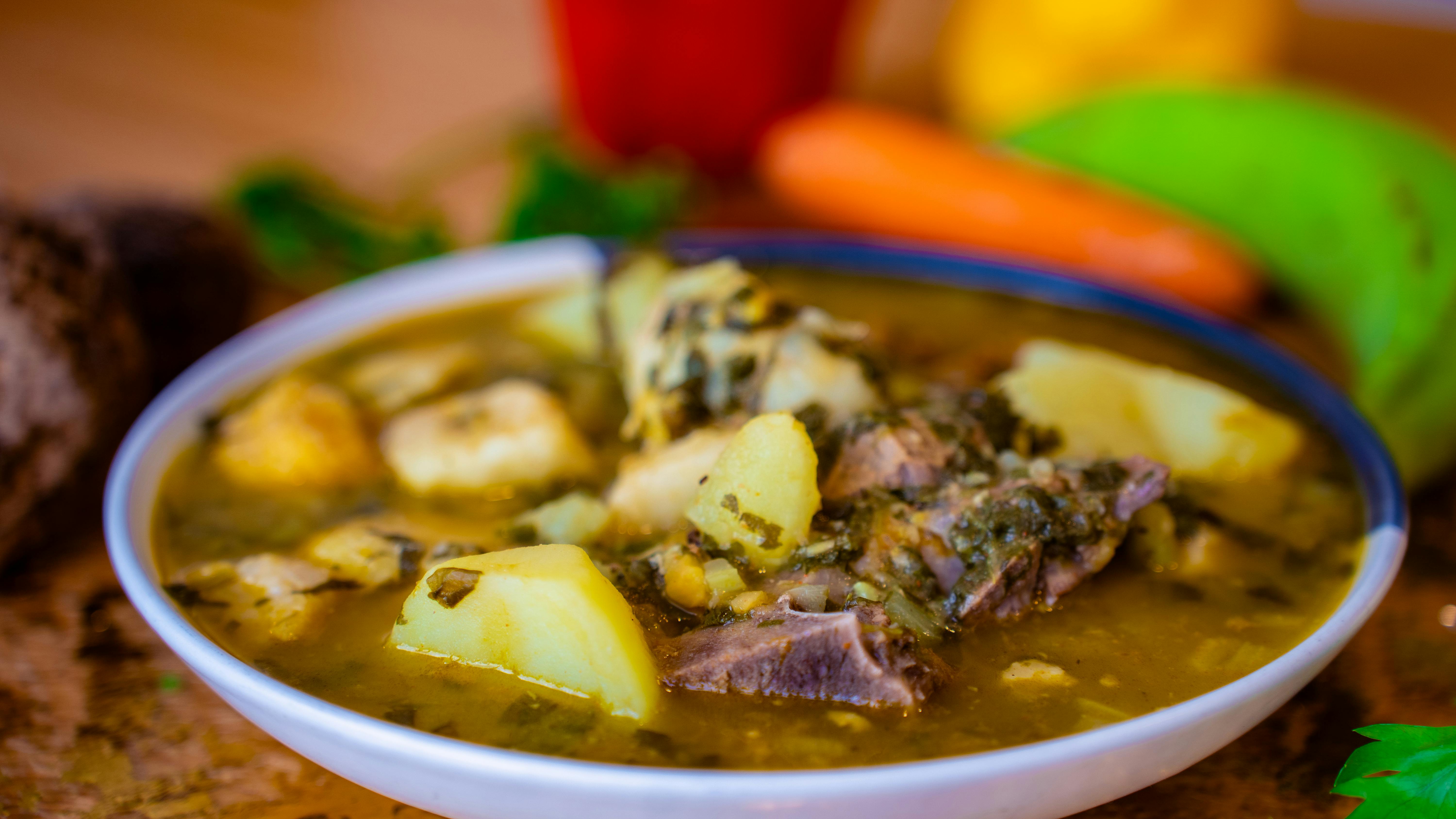
Photo: SAMY PHOTOGRAPHY / Pexels
The diets react (see scores below)
Common Ingredients
- lamb
- tarragon
- tkemali plums
- white wine
- onions
- garlic
- cilantro
- spring onions
Specific recipes may vary.
Incompatible with 4 of 11 diets
Diet Ratings
Chakapuli is a Georgian spring lamb stew that has several keto-friendly elements — lamb is an excellent high-fat protein, and herbs like tarragon, cilantro, spring onions, garlic, and onions add minimal carbs. However, two ingredients raise significant concern: tkemali (sour plum sauce/plums) and white wine. Tkemali plums are inherently high in natural sugars and net carbs, and traditional tkemali sauce often contains added sugar. White wine contributes residual sugars and roughly 3-4g net carbs per 120ml, though most alcohol cooks off. Together, the plums are the primary disqualifying factor — a traditional serving could push net carbs well above keto thresholds. With strict portion control or substitution of tkemali with a low-carb sour alternative (e.g., a small amount of lemon juice), the dish could be adapted. As traditionally prepared, it sits in caution territory.
Some lazy keto and moderate keto practitioners argue that since tkemali is used in relatively small quantities as a souring agent rather than a main ingredient, and the dish is otherwise protein- and fat-rich, a moderate portion could fit within a 50g daily carb allowance. Strict keto adherents, however, would avoid any plum-based ingredient entirely due to its fructose content.
Chakapuli is a traditional Georgian spring stew whose primary protein is lamb, a mammalian meat and unambiguous animal product. No plant-based substitution is present in this recipe. The remaining ingredients (tarragon, tkemali plums, white wine, onions, garlic, cilantro, spring onions) are all plant-derived, but they are entirely secondary to the lamb, which is the dish's defining component. A vegan cannot consume this dish in its traditional form.
Chakapuli is a traditional Georgian spring lamb stew that is largely paleo-friendly, but contains two debated ingredients. Lamb, tarragon, cilantro, spring onions, onions, garlic, and tkemali (sour plum) are all whole, unprocessed foods fully compatible with paleo. However, white wine introduces alcohol, which is a gray-area ingredient in the paleo community — technically derived from fermented fruit but processed and not something hunter-gatherers would have consumed in this form. Tkemali plums are whole fruit and paleo-approved. The combination of an otherwise clean ingredient list with alcohol places this dish in caution territory rather than a full approve.
Some paleo practitioners, including those following Mark Sisson's Primal Blueprint framework, consider moderate consumption of dry wine acceptable given its low sugar content and minimal processing relative to other alcohol. Under this view, and cooking with white wine (where much of the alcohol burns off), Chakapuli could be rated a solid approve. Strict Cordain-school paleo, however, excludes all alcohol as a non-ancestral processed substance.
Chakapuli's primary protein is lamb, which is red meat — limited to a few times per month under Mediterranean diet principles. The dish does feature many positive elements: abundant fresh herbs (tarragon, cilantro, spring onions), aromatic vegetables (onions, garlic), sour plums (tkemali) acting as a fruit/acid component, and white wine, all of which align well with Mediterranean eating patterns. However, the lamb centerpiece places this dish in the 'avoid' category for regular consumption, as red meat contradicts the diet's emphasis on plant-based foods, fish, and poultry as primary proteins. Occasional consumption would be more appropriate.
Some Mediterranean diet researchers, particularly those studying traditional Levantine and Eastern Mediterranean practices, note that lamb has historically been consumed in small quantities as part of herb- and vegetable-forward stews, where the meat functions more as a flavoring than a main component. If the lamb quantity is modest and the dish is consumed occasionally (a few times per month), some practitioners would rate it as 'caution' rather than 'avoid', especially given the rich herb and plant profile.
Chakapuli is a traditional Georgian lamb stew that, while centered on an excellent carnivore protein source (lamb), is heavily laden with plant-based ingredients that disqualify it entirely from the carnivore diet. The dish contains tkemali plums (a sour plum sauce — fruit), tarragon, cilantro (herbs/plant matter), onions, spring onions, garlic (alliums — all plant foods), and white wine (fermented plant product). The lamb itself would score a 10, but the overwhelming presence of multiple plant-derived ingredients makes this dish incompatible with carnivore principles. There is no realistic way to adapt this dish and still call it Chakapuli — the plant ingredients are foundational to the recipe, not optional garnishes.
Chakapuli is a Georgian lamb stew featuring mostly whole, compliant ingredients: lamb, tarragon, onions, garlic, cilantro, and spring onions are all straightforwardly Whole30-approved. Tkemali (Georgian sour plum sauce/plums) is fruit-based and, in its whole or pure plum form, is compliant. However, white wine is a key ingredient in traditional Chakapuli. Alcohol is excluded on Whole30 — cooking with wine does not make it compliant, as the program explicitly prohibits alcohol even in cooking (unlike some other dietary approaches). This single ingredient disqualifies the dish as traditionally prepared. If the white wine is omitted or substituted (e.g., with a splash of compliant vinegar or citrus juice), the dish would be approvable. The dish earns a 'caution' rating rather than 'avoid' because the rest of the recipe is highly compliant and a compliant version is easily achievable with one substitution.
Some community members argue that alcohol cooks off during simmering and thus poses no real concern, but official Whole30 guidelines are unambiguous: alcohol in any form — including as a cooking ingredient — is not permitted during the 30 days. Melissa Urban and the official program make no exception for cooking wine.
Chakapuli contains multiple high-FODMAP ingredients that make it unsuitable during the elimination phase. Garlic is one of the highest-FODMAP foods (fructans) and is a core ingredient. Onions are similarly high in fructans and are included. Spring onions (the white bulb portion) also contain fructans, though green tops are low-FODMAP. Tkemali (sour plum sauce/plums) are stone fruits high in polyols (sorbitol). White wine is generally low-FODMAP at small servings (~150ml). Lamb itself is a safe protein with no FODMAPs. Tarragon, cilantro are low-FODMAP herbs. However, the combination of garlic, onions, spring onion bulbs, and plums creates multiple high-FODMAP hits that cannot be mitigated by portion control — this dish is not suitable for the elimination phase as traditionally prepared.
Chakapuli is a Georgian spring lamb stew featuring lamb, fresh herbs (tarragon, cilantro, spring onions), tkemali (sour plum), white wine, onions, and garlic. The dish has notable DASH-friendly elements: abundant fresh herbs and aromatics rich in potassium and antioxidants, tkemali plums adding fiber and micronutrients, and white wine used in modest cooking quantities. However, lamb is classified as red meat, which DASH guidelines explicitly limit due to its saturated fat content — particularly relevant if fatty cuts (shoulder, ribs) are used rather than leaner leg or loin cuts. The dish contains no added sodium from processed ingredients, which is a significant positive, but lamb's saturated fat still places this in the 'caution' zone. Portion control (a smaller serving of lamb alongside DASH-compliant sides like whole grains or vegetables) can make this dish more compatible with the eating plan.
NIH DASH guidelines categorize red meat as a food to limit due to saturated fat content, recommending no more than 1-2 servings per week. However, updated clinical interpretations note that lean cuts of lamb (leg, loin) have a saturated fat profile closer to lean poultry, and some DASH-oriented dietitians allow moderate lean red meat consumption, particularly when the overall dish is minimally processed and herb-forward as in Chakapuli.
Chakapuli is a Georgian spring stew with a complex Zone profile. The primary concern is lamb, which is higher in saturated fat than Zone-preferred lean proteins like skinless chicken or fish. However, lamb is not categorically excluded — it's an 'unfavorable' protein that requires lean cuts and careful portioning. The dish's strengths are significant: tarragon, cilantro, and spring onions are excellent low-glycemic, polyphenol-rich Zone carb sources. Tkemali (sour plum sauce) adds some natural sugars but is used in modest amounts and the tartness suggests lower sugar content than ripe sweet fruit. Onions and garlic are favorable Zone carbs. White wine contributes minimal carbohydrates in cooking (most alcohol burns off). The fat content from lamb needs monitoring — trimming visible fat and using lean cuts (leg of lamb) brings this dish closer to Zone compliance. The herb-forward, vegetable-rich nature of the stew is Zone-friendly in principle, but the dish lacks a Zone-ideal lean protein and the lamb fat makes the 30% fat target from saturated sources a concern. With lean lamb, proper portioning (~3 oz cooked), and pairing with additional non-starchy vegetables, this can fit into a Zone meal.
Some Zone practitioners following Sears' later anti-inflammatory work (Toxic Fat, The Mediterranean Zone) may rate this more favorably, noting that lamb from grass-fed sources contains beneficial omega-3s and conjugated linoleic acid, and that the polyphenol density from tarragon, cilantro, garlic, and tkemali plums aligns well with his Mediterranean Zone evolution. In that context, this dish could approach a score of 6-7 with lean cuts.
Chakapuli is a traditional Georgian spring stew with a genuinely mixed anti-inflammatory profile. On the positive side, it is rich in herbs — tarragon, cilantro, and spring onions all contribute polyphenols and antioxidants. Garlic is one of the most well-supported anti-inflammatory alliums. Tkemali (sour plum sauce) provides polyphenols and organic acids from whole fruit. White wine used in cooking contributes minimal resveratrol and largely cooks off. The primary concern is lamb as the protein source. Lamb is red meat, classified under 'limit' in anti-inflammatory frameworks due to saturated fat content and potential to raise arachidonic acid and inflammatory markers (CRP, IL-6) with regular consumption. However, lamb is less processed and lower in omega-6 than many red meat alternatives, and the quantity per serving in a stew context is typically moderate. The dish avoids seed oils, refined carbohydrates, added sugars, and processed ingredients — all meaningful positives. Overall, this is a whole-food, herb-forward dish that is better than average for a red meat preparation, but the lamb prevents an 'approve' rating under standard anti-inflammatory guidelines.
Some anti-inflammatory practitioners, particularly those following a Mediterranean or ancestral whole-foods approach, would rate grass-fed lamb more favorably, noting its relatively balanced omega-3 to omega-6 ratio compared to grain-fed beef and its richness in zinc and conjugated linoleic acid (CLA). The dense herb profile of Chakapuli — especially tarragon and garlic — could be viewed as meaningfully offsetting the modest inflammatory load of the lamb in a real dietary context.
Chakapuli is a traditional Georgian spring lamb stew slow-cooked with tarragon, tkemali (sour plum), white wine, onions, garlic, and fresh herbs. It offers a meaningful protein source from lamb and genuine benefits from the herb-forward, low-fat cooking method — no frying, no heavy cream or butter. The aromatics (tarragon, cilantro, spring onions, garlic) are GLP-1 friendly and easy to digest. However, several factors temper the rating: (1) Lamb is a moderately fatty red meat — even lean cuts contain more saturated fat than chicken breast, fish, or turkey, which is a concern for GLP-1 patients managing nausea and slow gastric emptying. A fattier cut like shoulder (common in Chakapuli) amplifies this. (2) White wine is used in cooking — most alcohol cooks off, but residual ethanol content is a minor concern; the volume used is typically small enough that this is not a strong negative. (3) Tkemali plums add fiber and micronutrients but also moderate sugar. (4) The dish is low in the kind of dense fiber (legumes, whole grains) that GLP-1 patients particularly need. Overall, this is a much better choice than fried or heavily processed dishes, and considerably better than fatty red meat preparations with cream or cheese sauces — but it falls short of an approve rating due to the saturated fat load of lamb and modest fiber content.
Some GLP-1-focused dietitians consider lean lamb acceptable as a protein source given its complete amino acid profile and iron content, and would rate a herb-braised preparation like Chakapuli more favorably than the average red meat dish. Others remain cautious about any red meat on GLP-1 medications due to slower gastric emptying amplifying fat-related GI side effects, particularly in the early weeks of treatment.
*See how scores were generated at our methodology page.
Nutritional profile
Six traits that cut across every diet.
Fiber & Plants
How much whole-plant food and fiber it delivers.
Healthy Fats
The quality of its fats (unsaturated, omega-3).
Whole / Unprocessed
How close it is to its natural, unprocessed form.
Gut Gentle
How easy it is on digestion (low FODMAP, few irritants).
Low Glycemic
How little it spikes your blood sugar.
Protein Density
How much protein it packs per calorie.
Controversy Index
Higher controversy = more disagreement between diets.
Diet-Specific Tips
 Keto — 4/10
View tips
- Tkemali plums are high in natural sugars and net carbs, the primary keto concern
- White wine adds residual sugars, though cooking reduces carb content
- Lamb is an ideal keto protein with favorable fat content
- Fresh herbs (tarragon, cilantro, spring onions, garlic) are negligible in net carbs
- Traditional recipe is not keto-optimized but could be modified
- Portion size is critical — smaller servings reduce carb load from plums and wine
 Paleo — 6/10
View tips
- Lamb is a clean, paleo-approved protein
- Tarragon, cilantro, garlic, onions, and spring onions are all whole herbs and vegetables — fully approved
- Tkemali (sour plums) are whole fruit — paleo approved
- White wine is the primary concern — alcohol is a gray-area ingredient in paleo, rated caution
- No grains, legumes, dairy, seed oils, or refined sugar present
- Cooking with wine reduces alcohol content but does not eliminate the debate around its inclusion
 Whole30 — 5/10
View tips
- White wine is an excluded ingredient on Whole30 — alcohol is not permitted even in cooking
- Lamb is a fully compliant protein
- Tarragon, cilantro, garlic, onions, and spring onions are all approved herbs and aromatics
- Tkemali plums are fruit-based and compliant in their pure/whole form
- A compliant version is easily made by omitting or substituting the white wine
 DASH — 5/10
View tips
- Lamb is red meat — DASH advises limiting red meat due to saturated fat
- No processed or high-sodium ingredients — favorable for DASH sodium targets
- Rich in fresh herbs and aromatics providing potassium and antioxidants
- Tkemali plums contribute fiber and beneficial plant compounds
- White wine used in cooking — alcohol is not emphasized in DASH but small cooking quantities are generally acceptable
- Saturated fat content depends heavily on cut of lamb chosen
- Lean lamb cuts (leg/loin) significantly improve DASH compatibility
 Zone — 5/10
View tips
- Lamb is higher in saturated fat than Zone-preferred lean proteins; lean cuts required
- Tarragon, cilantro, spring onions, and garlic are excellent low-glycemic Zone carb sources
- Tkemali (sour plums) adds moderate carbohydrates but in small culinary quantities
- Herb-dominant, vegetable-rich composition aligns with Zone's anti-inflammatory focus
- White wine in cooking contributes negligible final carbohydrate load
- No high-glycemic carbohydrates, processed ingredients, or trans fats
- Portioning of lamb (lean, ~3 oz) is critical to manage saturated fat and hit protein block targets
- Polyphenol density from multiple herbs is a Zone positive per Sears' later writings
 Anti-Inflammatory — 5/10
View tips
- Lamb is red meat — classified as 'limit' in anti-inflammatory frameworks due to saturated fat and potential to elevate inflammatory markers
- Abundant herbs (tarragon, cilantro, garlic) provide strong anti-inflammatory polyphenols and organosulfur compounds
- Tkemali plums contribute fruit-based polyphenols and antioxidants
- No refined carbohydrates, seed oils, added sugars, or processed ingredients
- White wine used in cooking is minimal and largely evaporated — low concern
- Whole-food, traditional preparation with no artificial additives
 GLP-1 Friendly — 5/10
View tips
- Lamb is a moderate-to-high saturated fat protein source — less ideal than poultry or fish for GLP-1 patients
- Herb-forward, braised preparation is far preferable to fried or cream-based cooking methods
- White wine cooking is a minor alcohol concern; residual ethanol after cooking is low
- Good micronutrient density from tarragon, cilantro, garlic, spring onions
- Tkemali plums add fiber and antioxidants but also some natural sugar
- Low overall fiber — no legumes or whole grains to support GLP-1 digestion needs
- Portion sensitivity matters: a small serving of lean lamb is significantly more tolerable than a large fatty portion
- Cut of lamb is critical — leg or loin is leaner; shoulder or ribs would lower the score further