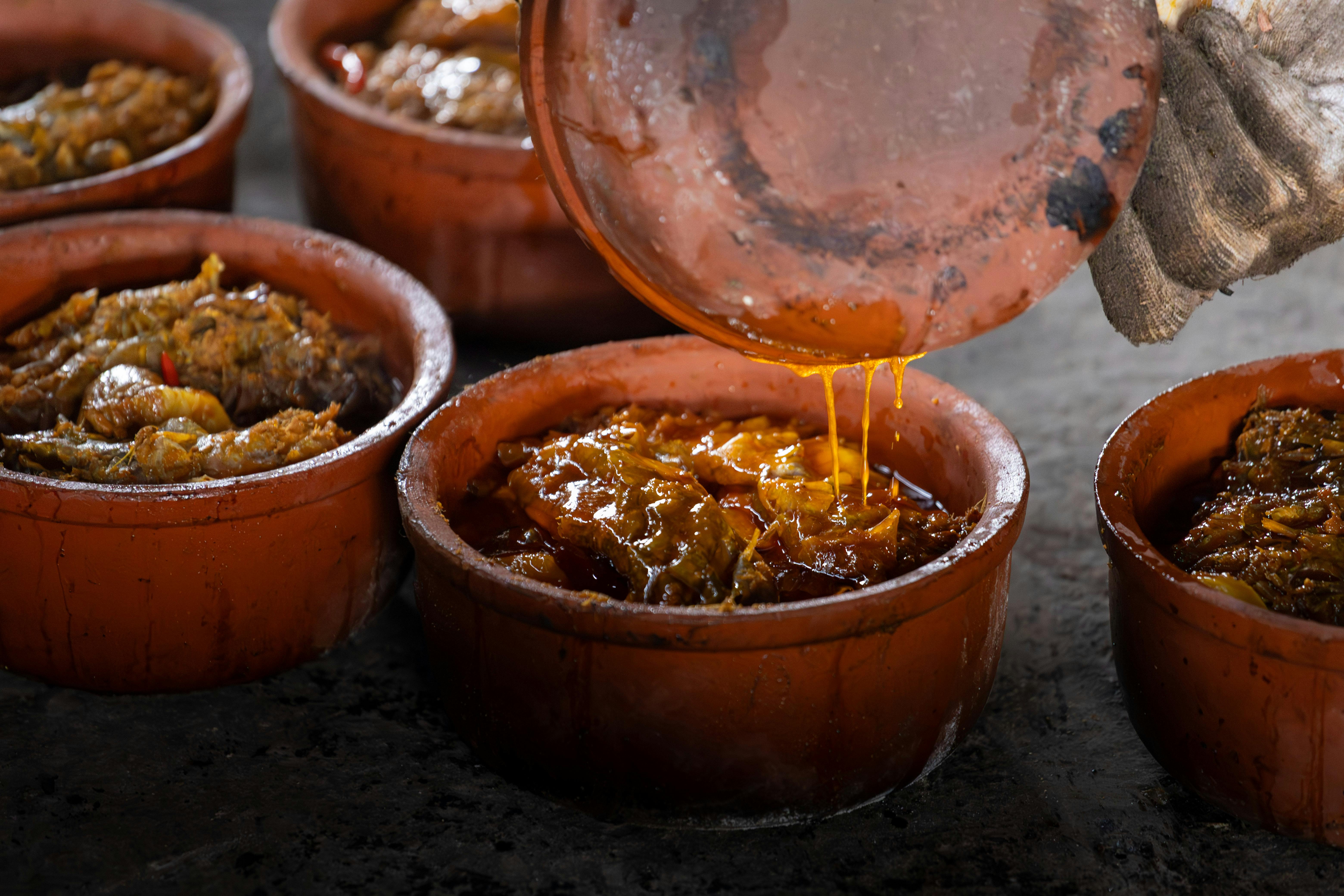
Photo: Hồng Quang Official / Pexels
Georgian
Chakhokhbili
The diets react (see scores below)
Common Ingredients
- chicken
- tomatoes
- onions
- garlic
- cilantro
- basil
- coriander
- chili
Specific recipes may vary.
Incompatible with 3 of 11 diets
Diet Ratings
Chakhokhbili is a Georgian braised chicken dish that is naturally grain-free and sugar-free, which is a strong start for keto. The chicken provides quality protein and fat, and the herbs (cilantro, basil, coriander) are negligible in carbs. However, the tomatoes and onions are the concern: tomatoes carry roughly 3-4g net carbs per 100g, and onions contribute 7-8g net carbs per 100g. Traditional Chakhokhbili uses a generous amount of both — often a large quantity of tomatoes as the braising base and significant onion — meaning a standard serving could realistically deliver 10-18g net carbs. This is manageable within a keto day if portion-controlled and other meals are very low-carb, but it is not a freely consumable dish. The protein-to-fat ratio also leans protein-heavy (chicken without added fat), which some keto practitioners flag as suboptimal without supplementing fat.
Strict keto practitioners argue that tomatoes and onions should be minimized or avoided altogether due to their cumulative carb load and glycemic impact, making a tomato-heavy braised dish like this a borderline avoid rather than a caution. Conversely, 'lazy keto' or carb-cycling keto adherents may freely approve this dish as it contains no grains, added sugars, or starchy vegetables.
Chakhokhbili is a traditional Georgian braised chicken dish. Chicken is an animal product and is categorically excluded from a vegan diet. While the accompanying ingredients — tomatoes, onions, garlic, cilantro, basil, coriander, and chili — are all fully plant-based, the primary protein and defining ingredient is chicken, making this dish entirely incompatible with vegan dietary standards.
Chakhokhbili is a Georgian braised chicken dish featuring entirely paleo-approved ingredients. Chicken is an unprocessed animal protein, and all accompanying ingredients — tomatoes, onions, garlic, cilantro, basil, coriander, and chili — are whole vegetables, herbs, and spices that would have been available to hunter-gatherers. There are no grains, legumes, dairy, refined sugars, seed oils, or processed additives present. This is a clean, whole-food dish that aligns strongly with paleo principles.
Chakhokhbili is a Georgian chicken stew built on a foundation of tomatoes, onions, garlic, and fresh herbs — ingredients that align very well with Mediterranean principles. The vegetable-rich, herb-forward profile is excellent, and the dish uses no refined grains, added sugars, or heavy saturated fats. The main limiting factor is the chicken as the primary protein: poultry is accepted in the Mediterranean diet but categorized as a moderate food (a few servings per week), not a daily staple. The absence of olive oil as the cooking fat (traditional Chakhokhbili is often made with the chicken's own rendered fat or butter) is a mild concern, though this can easily be adapted. Overall, this is a clean, whole-food dish that fits comfortably within Mediterranean eating patterns when consumed in moderation.
Some Mediterranean diet practitioners, particularly those referencing traditional Southern European and Eastern Mediterranean culinary habits, would rate this closer to an 'approve' given its abundant vegetables, fresh herbs, and tomato base — arguing the chicken component is modest enough that the dish is effectively plant-forward. Adapting the recipe to use olive oil as the primary fat would push it firmly toward approval.
Chakhokhbili is a Georgian chicken stew that is fundamentally incompatible with the carnivore diet. While chicken is an acceptable animal protein, the dish is built around multiple plant-based ingredients: tomatoes and onions form the base of the stew, garlic adds flavor, and cilantro, basil, coriander, and chili are used as aromatics and spices. Every single non-protein component of this dish is plant-derived. The tomatoes and onions are not merely trace seasonings — they are structural, load-bearing ingredients that define the dish. Removing them would mean the dish no longer exists in any recognizable form. All plant foods are excluded on the carnivore diet without exception, making this dish a clear avoid.
Chakhokhbili is a Georgian braised chicken dish made entirely from whole, unprocessed ingredients — chicken, tomatoes, onions, garlic, cilantro, basil, coriander, and chili. Every component is explicitly allowed on Whole30: meat, vegetables, fresh herbs, and spices are all compliant. There are no grains, legumes, dairy, added sugars, or any other excluded ingredients in this traditional preparation. It is a clean, whole-food meal that aligns perfectly with the Whole30 program's intent.
Chakhokhbili contains two major high-FODMAP ingredients that make it unsuitable during the elimination phase: onions and garlic. Both are among the highest-fructan foods tested by Monash University and must be avoided entirely during elimination — there is no safe serving size. Even a small amount of cooked onion or garlic clove releases fructans into the dish, and since these are foundational aromatics in Chakhokhbili (not incidental garnishes), they cannot simply be omitted without fundamentally changing the dish. The remaining ingredients are largely low-FODMAP: chicken is a safe protein, ripe tomatoes are low-FODMAP at standard servings (up to ~65g canned or ~75g fresh), fresh herbs like cilantro and basil are low-FODMAP in culinary amounts, ground coriander is low-FODMAP, and chili is low-FODMAP in small amounts. However, the onion and garlic disqualify the dish as traditionally prepared.
Chakhokhbili is a Georgian braised chicken dish featuring lean poultry simmered with fresh tomatoes, onions, garlic, and an array of fresh herbs and spices. This composition aligns strongly with DASH diet principles: chicken (especially skinless) is an NIH-endorsed lean protein, tomatoes and onions are DASH-recommended vegetables rich in potassium and fiber, and the herbs and spices (cilantro, basil, coriander, chili) add flavor without sodium, supporting the DASH strategy of using herbs instead of salt. There is no added sodium in the base recipe, no saturated fat from tropical oils or full-fat dairy, and no red meat or processed ingredients. The dish is naturally low in saturated fat and sodium while providing potassium, magnesium, and fiber from the vegetable base. The primary concern is preparation method — if skin-on chicken is used, saturated fat increases moderately, and if salt is added liberally during cooking, sodium rises. As traditionally prepared without added salt, this dish is an excellent DASH-compatible meal.
Chakhokhbili is a Georgian braised chicken dish that aligns very well with Zone Diet principles. The primary protein is chicken (ideally skinless), which is one of the leanest, most Zone-favorable proteins available. The dish is built around tomatoes and onions — both low-glycemic vegetables rich in polyphenols — which provide the carbohydrate block without spiking insulin. Garlic, cilantro, basil, coriander, and chili are all anti-inflammatory herbs and spices that Sears would actively encourage due to their polyphenol content. The dish is naturally low in fat, which means a small addition of olive oil for cooking (or avocado on the side) would complete the 30% fat requirement easily. There are no high-glycemic carbohydrates, no refined grains, no added sugars, and no trans fats. The macro profile maps cleanly to Zone blocks: chicken = protein blocks, tomatoes/onions = carb blocks, cooking oil = fat blocks. This dish requires minimal adjustment to hit the 40/30/30 target — primarily ensuring the chicken portion is appropriately sized (~3 oz cooked) and a small amount of monounsaturated fat is included in preparation.
Chakhokhbili is a Georgian braised chicken dish with a remarkably strong anti-inflammatory ingredient profile. Chicken (lean poultry) is explicitly in the 'moderate' category and fits well within anti-inflammatory guidelines. The dish is built around tomatoes, which are rich in lycopene and other antioxidants, and onions, which contain quercetin — a well-researched anti-inflammatory flavonoid. Garlic is a cornerstone anti-inflammatory ingredient, with allicin shown to reduce CRP and other inflammatory markers. The herb blend of cilantro, basil, and coriander all contribute polyphenols and antioxidants. Chili pepper contains capsaicin, which has demonstrated anti-inflammatory effects in research. The dish is naturally low in refined carbohydrates, added sugars, and saturated fat. It is typically cooked without heavy oils or cream, relying instead on the tomatoes and chicken's own juices for braising liquid. This is a whole-food, herb-rich, vegetable-forward preparation of lean protein — a near-ideal anti-inflammatory meal structure.
Chakhokhbili is a Georgian braised chicken dish that aligns well with GLP-1 dietary priorities. The base is lean chicken (typically bone-in pieces, skin often removed before eating) slow-cooked in a tomato-onion sauce with aromatic herbs. Tomatoes and onions contribute fiber, antioxidants, and high water content — supporting hydration and digestion. The cooking method is braising rather than frying, making it easy to digest and low in added fat. Cilantro, basil, coriander, and garlic are all GLP-1-friendly. The chili component is the main variable — traditional recipes use mild amounts, but spicier preparations could worsen nausea or reflux in sensitive patients. Protein content per serving is solid if a meaningful portion of chicken is included. Overall, this is a nutrient-dense, high-protein, moderate-fiber, low-fat dish well-suited to GLP-1 patients.
The primary source of variation in guidance here relates to the chili content and whether the chicken skin is left on — some GLP-1 clinicians would flag spiced tomato-based stews as a reflux risk for patients already experiencing GI side effects, and bone-in skin-on chicken preparations would reduce the lean protein advantage. Individual GI tolerance to herb-heavy, aromatic dishes also varies meaningfully among GLP-1 patients, particularly in the early weeks of treatment.
*See how scores were generated at our methodology page.
Nutritional profile
Six traits that cut across every diet.
Fiber & Plants
How much whole-plant food and fiber it delivers.
Healthy Fats
The quality of its fats (unsaturated, omega-3).
Whole / Unprocessed
How close it is to its natural, unprocessed form.
Gut Gentle
How easy it is on digestion (low FODMAP, few irritants).
Low Glycemic
How little it spikes your blood sugar.
Protein Density
How much protein it packs per calorie.
Controversy Index
Higher controversy = more disagreement between diets.
Diet-Specific Tips
 Keto — 5/10
View tips
- Chicken is keto-friendly protein with no carbs
- Tomatoes contribute meaningful net carbs as the primary braising liquid
- Onions add additional net carbs and must be portion-watched
- No grains, added sugars, or starchy vegetables present
- Herbs and spices (cilantro, basil, coriander, chili) are negligible in carbs
- Dish is protein-forward; may benefit from added fat (e.g., butter or olive oil) for better keto macros
- Standard serving likely 10-18g net carbs depending on tomato/onion quantity
 Paleo — 7/10
View tips
- Chicken is a fully paleo-approved animal protein
- Tomatoes, onions, and garlic are whole vegetables with no paleo concerns
- Cilantro, basil, coriander, and chili are all natural herbs and spices — clearly approved
- No grains, legumes, dairy, or seed oils present
- No added salt or refined sugar listed in ingredients
- Minimal processing — a traditional braise using whole, unprocessed ingredients
 Mediterranean — 6/10
View tips
- Chicken is a moderate/caution-tier protein in the Mediterranean diet — acceptable but not a daily staple
- Rich in Mediterranean-compatible vegetables: tomatoes, onions, garlic
- Generous use of fresh herbs (cilantro, basil, coriander) aligns well with Mediterranean flavor principles
- No refined grains, added sugars, or highly processed ingredients
- Traditional preparation may use rendered chicken fat or butter rather than olive oil — a minor concern
- Dish is whole-food and minimally processed overall
 Whole30 — 7/10
View tips
- Chicken is a fully compliant Whole30 protein
- Tomatoes, onions, and garlic are allowed vegetables
- Cilantro, basil, coriander, and chili are compliant herbs and spices
- No grains, legumes, dairy, or added sugars present
- Traditional preparation is naturally Whole30-friendly
- Whole, unprocessed ingredients throughout
 DASH — 8/10
View tips
- Lean chicken is a DASH-approved protein source; skinless preparation keeps saturated fat low
- Fresh tomatoes and onions provide potassium, fiber, and antioxidants — core DASH vegetables
- Herbs and spices (cilantro, basil, coriander, chili) replace sodium as flavor enhancers — a key DASH strategy
- No processed ingredients, added sugars, tropical oils, or high-sodium additives in the base recipe
- Saturated fat increases if skin-on chicken is used; score assumes skinless preparation
- Sodium content depends entirely on cooking salt added — naturally very low without added salt
 Zone — 8/10
View tips
- Chicken is a top-tier Zone lean protein source
- Tomatoes and onions are favorable low-glycemic carbohydrates
- Abundant polyphenols from herbs (cilantro, basil) and spices (coriander, chili) align with Sears' anti-inflammatory emphasis
- No high-glycemic carbs, refined grains, or added sugars
- Naturally low in fat — requires intentional addition of monounsaturated fat (e.g., olive oil) to reach 30% fat target
- Portion control of chicken ensures proper protein block sizing (~25g protein per meal)
- Anti-inflammatory ingredient profile is ideal for Zone's eicosanoid-balancing goals
 Anti-Inflammatory — 8/10
View tips
- Lean poultry protein — fits anti-inflammatory 'moderate' category
- Tomatoes provide lycopene and antioxidants
- Garlic is a potent anti-inflammatory ingredient (allicin reduces CRP)
- Onions contribute quercetin, a well-researched anti-inflammatory flavonoid
- Chili pepper contains capsaicin with demonstrated anti-inflammatory properties
- Cilantro, basil, and coriander add polyphenols and antioxidants
- No refined carbohydrates, added sugars, or pro-inflammatory oils
- Whole-food, minimally processed preparation
 GLP-1 Friendly — 8/10
View tips
- Lean braised chicken provides strong protein per serving — GLP-1 priority #1
- Tomato-onion base adds fiber and high water content — supports digestion and hydration
- Braising method avoids frying — easy to digest, low in added fat
- Garlic, cilantro, basil, coriander are GLP-1-friendly aromatics
- Chili is a caution flag — spice level should be kept mild to avoid worsening nausea or reflux
- Skin-on chicken would lower the score — skin removal recommended
- No refined grains, added sugars, or high-fat ingredients in traditional preparation
- High nutrient density per calorie — well-suited to reduced appetite context