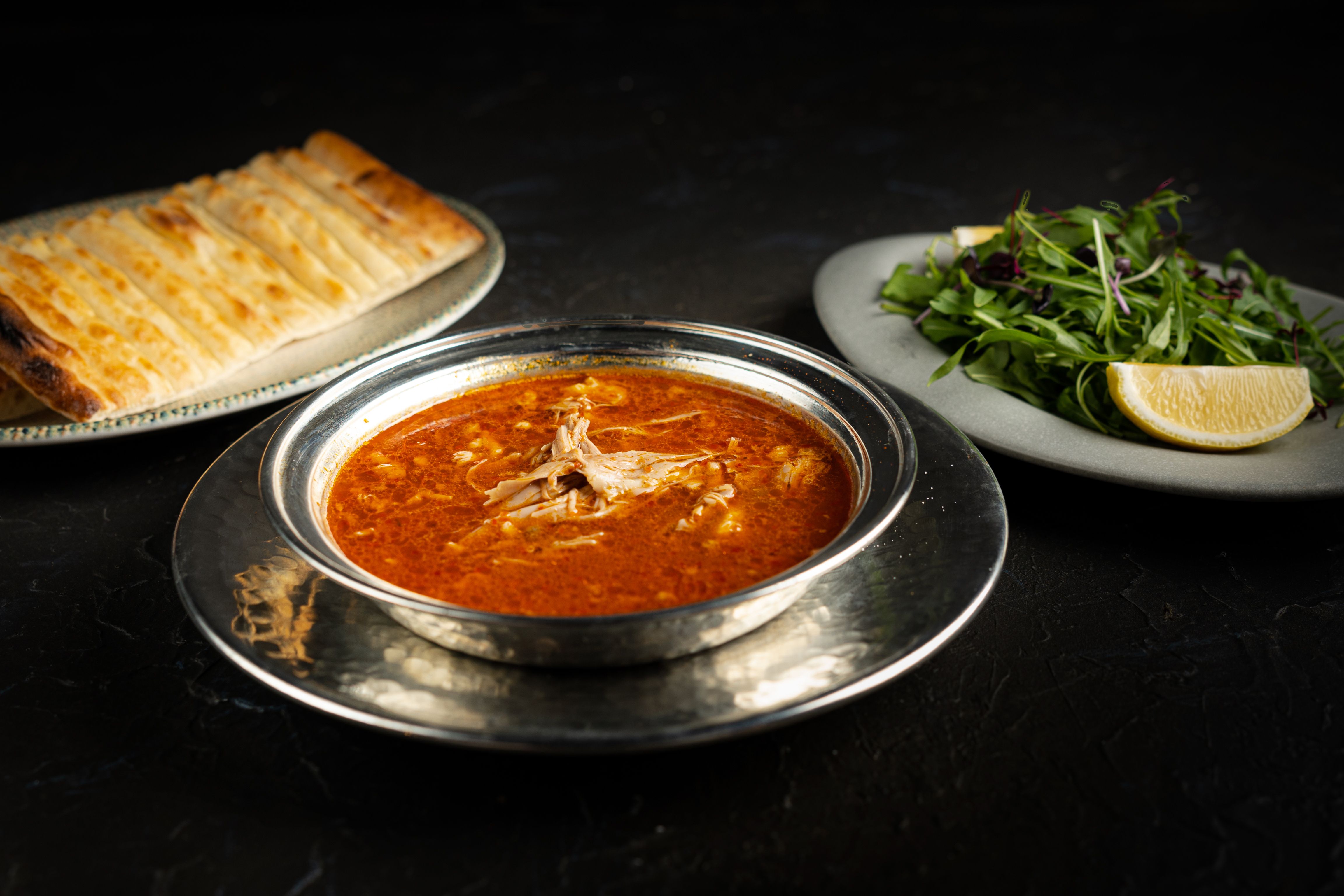
The diets react (see scores below)
Common Ingredients
- beef
- rice
- walnuts
- tkemali
- onions
- garlic
- cilantro
- coriander
Specific recipes may vary.
Incompatible with 7 of 11 diets
Diet Ratings
Kharcho is fundamentally incompatible with a ketogenic diet. The dish contains rice as a primary ingredient, which is a high-carb grain that alone can deliver 30-45g of net carbs per serving — instantly exceeding or maxing out the daily keto limit. Tkemali (Georgian sour plum sauce) adds additional sugar and fruit-derived carbohydrates. Together, these two ingredients make the dish a clear keto violation. The beef and walnuts are keto-friendly, and the aromatics (onion, garlic, cilantro, coriander) are acceptable in small amounts, but they cannot offset the disqualifying carb load from rice and tkemali. Even a modest bowl would likely deliver 40-60g of net carbs, making ketosis impossible to maintain.
Kharcho is a traditional Georgian beef soup. Beef is an animal product and is the primary protein in this dish, making it incompatible with a vegan diet. There is no ambiguity here — beef is clearly animal-derived flesh. While the remaining ingredients (rice, walnuts, tkemali plum sauce, onions, garlic, cilantro, coriander) are all plant-based, the presence of beef as a core ingredient is disqualifying.
Kharcho contains rice, which is a grain and is excluded from the paleo diet under all mainstream interpretations. While the majority of ingredients — beef, walnuts, onions, garlic, cilantro, coriander, and tkemali (sour plum sauce) — are paleo-compatible, rice is a core, non-optional component of this dish. Its presence as a primary carbohydrate source makes the dish non-paleo as traditionally prepared. There is no standard version of Kharcho made without rice.
Kharcho is a traditional Georgian beef and rice soup. The primary protein is beef, which the Mediterranean diet limits to a few times per month, making it a foundational concern. White rice is a refined grain, less preferred than whole grains. However, the dish does include several Mediterranean-friendly elements: walnuts (a prized nut in Mediterranean eating), onions, garlic, cilantro, coriander, and tkemali (a sour plum sauce that adds a fruit-based acid component similar to lemon or tomato in Mediterranean cooking). Despite these positives, the combination of red meat as the primary protein with white rice pushes this dish into 'avoid' territory for regular consumption. It could theoretically be adapted (lamb occasionally appears in Mediterranean cuisine, and the vegetable/nut components are excellent), but as traditionally prepared with beef, it contradicts core Mediterranean principles.
Some Mediterranean diet interpreters note that red meat in moderate portion sizes within a nutrient-rich, vegetable- and herb-forward soup context is more acceptable than red meat consumed as a main protein — the ratio of plant ingredients (walnuts, aromatics, tkemali) to meat matters. A small-portion kharcho served occasionally would not be categorically excluded by more flexible Mediterranean practitioners.
Kharcho is a Georgian beef and rice soup that is almost entirely incompatible with the carnivore diet. While beef is an approved carnivore food, it is outnumbered by a heavy array of plant-based ingredients: rice (a grain), walnuts (a nut), tkemali (a sour plum sauce — fruit-based), onions, garlic, cilantro, and coriander (plant spices/aromatics). The foundational character of this dish is defined by its plant ingredients, particularly the tkemali and walnuts, which are central to its flavor profile. Only the beef component is carnivore-compliant; the rest of the dish is categorically excluded under all tiers of the carnivore diet.
Kharcho contains rice, which is an excluded grain on Whole30. Regardless of how compliant the other ingredients are (beef, walnuts, onions, garlic, cilantro, and coriander are all fine; tkemali is a sour plum sauce that may have added sugar but is otherwise plant-based), the presence of rice makes this dish non-compliant. Rice is explicitly listed among the excluded grains for the 30-day program.
Kharcho contains multiple high-FODMAP ingredients that make it unsuitable during the elimination phase. Onions and garlic are among the highest-FODMAP foods tested by Monash University, both rich in fructans, and are structural ingredients in this dish — not optional garnishes. Tkemali (Georgian sour plum sauce) is made from plums/cherry plums, which are stone fruits high in polyols (sorbitol). These three ingredients alone make this dish a clear 'avoid' during elimination. Beef, rice, walnuts (at small servings), cilantro, and coriander are individually low-FODMAP, but the onion-garlic-tkemali combination is impossible to avoid in an authentic Kharcho preparation.
Kharcho is a Georgian beef and rice soup with a generally acceptable DASH profile, but requires moderation due to several factors. Beef is a red meat that DASH limits — particularly fatty cuts, which are common in traditional Kharcho. Walnuts are DASH-friendly (heart-healthy unsaturated fats, magnesium), and the vegetable/herb base (onions, garlic, cilantro, coriander) aligns well with DASH principles. Tkemali (Georgian sour plum sauce) adds flavor without saturated fat, though commercial versions may contain added sodium. Rice is acceptable in whole-grain form but traditional Kharcho uses white rice. The primary concern is red meat (beef): DASH recommends limiting red meat to ≤2 servings/week, and Kharcho as a hearty soup typically features beef prominently. Sodium content depends heavily on preparation — homemade versions with minimal added salt can be moderate, but restaurant versions may be high. Overall, this dish is conditionally acceptable in DASH if prepared with lean beef cuts, minimal added salt, and consumed in limited frequency.
NIH DASH guidelines categorically limit red meat and prefer poultry or fish as protein sources; some DASH clinicians would flag Kharcho as a dish to avoid regularly due to beef content. However, updated clinical interpretations note that lean cuts of beef in moderate portions (e.g., lean stew beef, trimmed) fit within the DASH framework when consumed within the 1-2 weekly red meat allowance, and the walnut and herb components positively offset cardiovascular risk.
Kharcho is a Georgian beef and rice soup with a complex macro profile that creates both Zone-friendly and Zone-challenging elements. The beef provides adequate protein but is higher in saturated fat than lean Zone proteins like skinless chicken or fish — though lean cuts (e.g., chuck or round) can mitigate this. Walnuts contribute healthy polyunsaturated and monounsaturated fats, which align with Zone anti-inflammatory principles, though walnuts are higher in omega-6 than ideal Zone fats like olive oil or macadamias. The primary Zone concern is rice: white rice is a high-glycemic carb that Sears classifies as 'unfavorable,' and in traditional Kharcho it serves as a bulk ingredient, potentially skewing the carb block count significantly and spiking glycemic load. Tkemali (sour plum sauce) adds some sugar but is used in modest amounts and provides polyphenols. Onions, garlic, and cilantro are Zone-favorable low-glycemic aromatics. The dish could be adapted into Zone compliance by reducing rice portion substantially and increasing vegetable content, but as traditionally prepared, the rice-to-protein ratio and beef fat content make precise Zone block balancing difficult without significant modification.
Some Zone practitioners following Sears' later anti-inflammatory work (e.g., 'The Mediterranean Zone') would view the walnuts and tkemali polyphenols more favorably, and acknowledge that the small rice portions used in some Kharcho recipes may not meaningfully disrupt Zone ratios if the serving size is controlled. Additionally, the soup format naturally dilutes glycemic impact. A strict early-Zone reading, however, would flag rice as an 'unfavorable' carb requiring careful block management.
Kharcho is a Georgian beef and walnut soup with a genuinely mixed anti-inflammatory profile. On the positive side, walnuts are one of the best plant-based sources of omega-3 fatty acids (ALA) and provide anti-inflammatory polyphenols — a meaningful ingredient here, not just a garnish. Garlic and onions contain quercetin and allicin, which are well-documented anti-inflammatory compounds. Cilantro and coriander are antioxidant-rich spices aligned with anti-inflammatory principles. Tkemali (Georgian sour plum sauce) contributes polyphenols from plums and anti-inflammatory herbs. Rice is a neutral whole grain (if white rice, mildly inflammatory at high quantities; if brown, slightly better). The major limiting factor is beef as the primary protein: anti-inflammatory guidelines consistently place red meat in the 'limit' category due to saturated fat content and its association with elevated inflammatory markers (CRP, IL-6) with regular consumption. The overall dish is far from a processed or junk food — it's a traditional whole-foods preparation — but beef prevents it from reaching 'approve' territory. Eaten occasionally, Kharcho is a reasonable moderate choice, especially given the high-quality anti-inflammatory supporting cast.
Some anti-inflammatory practitioners (including followers of Dr. Weil's broader whole-foods philosophy) might rate this more favorably, arguing that the walnut omega-3s, garlic, onion, and polyphenol-rich tkemali sufficiently offset modest red meat amounts in a traditional preparation. Conversely, stricter anti-inflammatory protocols (such as those targeting autoimmune conditions) would emphasize the saturated fat and arachidonic acid load from beef and push this toward a lower score, recommending substitution with lamb or fish.
Kharcho is a traditional Georgian beef and rice soup with a sour-spicy flavor profile from tkemali (sour plum sauce) and spices. It has several redeeming GLP-1 qualities — it is a soup (easy to consume in small portions, high water content supporting hydration), contains garlic and onions (fiber, micronutrients), and provides moderate protein from beef. However, it raises several concerns for GLP-1 patients: (1) Beef is a fatty red meat — depending on the cut used (typically fatty cuts like short ribs or chuck), saturated fat content can be significant, worsening nausea and GI side effects. (2) Walnuts add healthy omega-3 fats but also increase total fat per serving, which slows digestion further on top of GLP-1's already slowed gastric emptying. (3) Rice is a refined carbohydrate with low fiber density, contributing empty starch calories. (4) The spice profile (garlic, coriander, cilantro) is generally well-tolerated, but traditional recipes can be moderately spicy and sour, which may aggravate reflux or nausea in sensitive GLP-1 patients. The soup format is a genuine positive — broth-based soups are among the most GLP-1-friendly meal formats. With leaner beef (e.g., sirloin or round), reduced walnuts, and brown rice substituted for white rice, this dish could score higher.
Some GLP-1-focused dietitians would rate this more favorably, arguing that the broth-based format, portion control inherent to soups, and the presence of walnuts (a source of beneficial omega-3 fats) outweigh the saturated fat concern — particularly if the dish is prepared with leaner cuts and skimmed of surface fat. Others are more cautious, noting that fatty beef combined with nuts in a single dish creates a high total fat load per serving that is likely to worsen nausea and bloating, especially in the early weeks of GLP-1 therapy.
*See how scores were generated at our methodology page.
Nutritional profile
Six traits that cut across every diet.
Fiber & Plants
How much whole-plant food and fiber it delivers.
Healthy Fats
The quality of its fats (unsaturated, omega-3).
Whole / Unprocessed
How close it is to its natural, unprocessed form.
Gut Gentle
How easy it is on digestion (low FODMAP, few irritants).
Low Glycemic
How little it spikes your blood sugar.
Protein Density
How much protein it packs per calorie.
Controversy Index
Higher controversy = more disagreement between diets.
Diet-Specific Tips
 DASH — 5/10
View tips
- Beef (red meat) is limited on DASH — frequency and cut leanness are critical
- Walnuts are DASH-approved: provide unsaturated fats, magnesium, and protein
- White rice is less preferred than whole grains on DASH
- Onions, garlic, cilantro, and coriander are DASH-compatible aromatic ingredients
- Tkemali may contribute sodium if using commercial sauce — homemade preferred
- Sodium content of the soup overall depends on preparation; homemade low-sodium versions score higher
- No tropical oils, full-fat dairy, added sugars, or heavily processed ingredients present
 Zone — 5/10
View tips
- Rice is a high-glycemic 'unfavorable' Zone carb that can skew carbohydrate blocks and raise glycemic load
- Beef protein is acceptable but higher in saturated fat than ideal Zone lean proteins — lean cuts recommended
- Walnuts provide healthy fats and polyphenols but are omega-6 dominant compared to preferred Zone fats (olive oil, macadamia)
- Tkemali, garlic, onions, cilantro, and coriander are Zone-favorable low-glycemic, polyphenol-rich ingredients
- Soup format and broth dilution may moderately reduce glycemic impact per serving
- Dish can be Zone-adapted by reducing rice and using leaner beef cuts, but traditional preparation is difficult to balance without modification
 Anti-Inflammatory — 5/10
View tips
- Beef (primary protein) — red meat classified as 'limit' due to saturated fat and pro-inflammatory arachidonic acid
- Walnuts — excellent source of plant-based omega-3 (ALA) and polyphenols; strongly anti-inflammatory
- Garlic and onions — allicin, quercetin; well-documented anti-inflammatory compounds
- Cilantro and coriander — antioxidant-rich spices consistent with anti-inflammatory principles
- Tkemali (sour plum sauce) — polyphenol-rich, beneficial condiment
- Rice — neutral carbohydrate; white rice mildly less favorable than whole grain alternatives
- No processed ingredients, trans fats, or added sugars — whole-foods preparation
 GLP-1 Friendly — 5/10
View tips
- Beef is a fatty red meat — saturated fat content depends heavily on cut; fatty cuts worsen GLP-1 GI side effects
- Walnuts contribute healthy omega-3 fats but increase total fat per serving, compounding slowed gastric emptying
- White rice is low-fiber, low-nutrient-density starch — a missed opportunity for fiber
- Broth-based soup format is a genuine positive: high water content, easy to consume in small portions, supports hydration
- Tkemali and spice blend may irritate reflux or nausea in sensitive patients
- Moderate protein contribution from beef, but not a high-protein-density dish overall
- Dish is improvable: lean beef cut + brown rice + reduced walnuts would significantly improve GLP-1 compatibility