The diets react (see scores below)
Common Ingredients
- wheat flour
- pork
- beef
- onions
- garlic
- cilantro
- black pepper
- water
Specific recipes may vary.
Incompatible with 7 of 11 diets
Diet Ratings
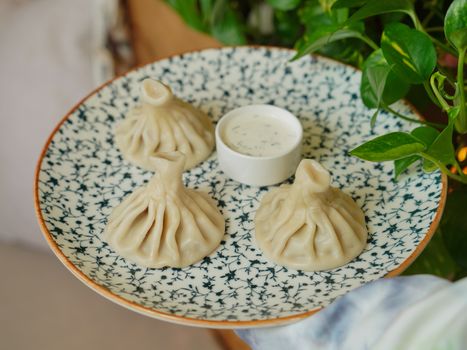
Khinkali are Georgian dumplings made with wheat flour dough as the primary structural component. The thick wheat flour wrapper is the defining feature of this dish and is entirely incompatible with a ketogenic diet. Each dumpling contains a significant amount of refined wheat flour, making the net carb content extremely high. A typical serving of 4-6 khinkali could easily contain 40-60g of net carbs from the dough alone, far exceeding the daily keto limit. The meat filling (pork, beef, onions, garlic, cilantro) would otherwise be keto-friendly, but the dish cannot be separated from its wheat dough wrapper in its traditional form.
Khinkali are Georgian dumplings filled with a mixture of pork and beef, both of which are animal flesh and strictly prohibited on a vegan diet. There is no ambiguity here — this dish is fundamentally built around meat as its primary filling ingredient. The dough itself (wheat flour and water) is plant-based, but the filling disqualifies the dish entirely under any interpretation of veganism.
Khinkali are Georgian dumplings where wheat flour dough is the foundational, structural element of the dish — not a minor additive. Wheat flour is a grain and one of the clearest 'avoid' foods in all paleo frameworks. The filling ingredients (pork, beef, onions, garlic, cilantro, black pepper) are largely paleo-compliant, but the dish cannot exist without its wheat dough wrapper. There is no version of traditional khinkali that is paleo-compatible. The dish as a whole must be rated on its actual composition, which is grain-based at its core.
Khinkali are Georgian dumplings filled primarily with pork and beef — two red meats combined — wrapped in refined wheat flour dough. This dish conflicts with Mediterranean diet principles on multiple fronts: red meat (pork and beef together) should be limited to a few times per month, refined white flour dough is a processed grain that the diet discourages, and there is no olive oil, vegetables, legumes, or other Mediterranean staples present. The dish is calorie-dense, saturated-fat-heavy, and anchored in ingredients the Mediterranean diet explicitly minimizes. While the aromatics (onion, garlic, cilantro) are fine, they do not redeem the overall profile.
Khinkali are Georgian dumplings that are fundamentally incompatible with the carnivore diet. The dish is built around a wheat flour dough wrapper, which is a grain-based plant product and one of the most strictly excluded foods on any tier of carnivore eating. Beyond the flour, the filling contains multiple plant-derived ingredients: onions, garlic, cilantro, and black pepper — all forbidden on carnivore. While the pork and beef filling components are carnivore-approved proteins, they are entirely inseparable from the plant-based dough and seasonings in this dish as traditionally prepared. There is no meaningful carnivore-compatible version of khinkali without reconstructing the dish entirely.
Khinkali are Georgian dumplings made with wheat flour dough wrapped around a spiced meat filling. Wheat flour is a grain and is explicitly excluded on the Whole30 program. Beyond being a grain-based food, khinkali also fall squarely into the 'no recreating baked goods/junk food' rule as a dumpling/pasta-style dish — the official Whole30 program explicitly lists pasta and noodles as excluded, and dumplings are fundamentally in the same category. The meat filling ingredients (pork, beef, onions, garlic, cilantro, black pepper) are all individually compliant, but the wheat flour wrapper makes this dish entirely off-limits.
Khinkali contains multiple high-FODMAP ingredients that make it unsuitable during the elimination phase. Wheat flour (the dumpling wrapper) is high in fructans and is a primary ingredient — there is no realistic way to reduce the portion enough to make the fructan load acceptable. Onions and garlic are both high-FODMAP at any meaningful quantity: onions are one of the highest fructan-containing foods, and garlic is among the worst FODMAP offenders per Monash University. These three ingredients alone — wheat flour, onions, and garlic — each independently disqualify the dish. The pork, beef, cilantro, black pepper, and water are all low-FODMAP, but they cannot offset the major FODMAP sources in the wrapper and aromatics.
Khinkali are Georgian meat-filled dumplings made with wheat flour dough and a mixed pork-beef filling. From a DASH perspective, several factors limit their compatibility. The combination of pork and beef as primary proteins introduces saturated fat, which DASH guidelines advise limiting. Red meat (both pork and beef) is specifically flagged as a food to limit in DASH. The wheat flour dough is refined (not whole grain), providing limited fiber compared to DASH-preferred whole grains. However, the ingredient list is relatively clean — no added salt is listed, which is notable since traditional khinkali seasoning relies mostly on black pepper, cilantro, and onion/garlic rather than heavy sodium additions. Onions, garlic, and cilantro are DASH-positive aromatics. The dish is not fried and is typically boiled or steamed, which avoids added fats. Portion control is key: 2-3 khinkali as part of a balanced meal with vegetables would be more acceptable than a large serving. The mixed red meat content and refined flour are the primary concerns, placing this squarely in the 'caution' zone.
NIH DASH guidelines categorically limit red meat and refined grains, placing khinkali in a cautionary category. However, updated clinical interpretations note that unprocessed lean red meat in moderate portions may be acceptable within an overall DASH-compliant dietary pattern, and the absence of added sodium or processed ingredients in traditional khinkali distinguishes it from more problematic red meat preparations like cured sausages or fast-food burgers.
Khinkali are Georgian dumplings with a wheat flour dough wrapper filled with ground pork and beef, onions, garlic, and herbs. From a Zone perspective, the dish presents several challenges. The wheat flour dough is a high-glycemic refined carbohydrate — exactly the type of 'unfavorable' carb that Zone discourages. The mixed pork-beef filling is a moderate-fat protein source rather than a lean protein, introducing more saturated fat than Zone ideally recommends. However, the onions, garlic, and cilantro are favorable low-glycemic Zone ingredients, and the overall dish is not inherently catastrophic — it does provide protein and some carbs in one package. With careful portioning (limiting to 2-3 dumplings rather than 6-8), it could be incorporated into a Zone meal if balanced with a large side of low-glycemic vegetables and a small amount of monounsaturated fat. The macro ratio as typically served skews heavily toward carbohydrates (dough-dominant) and saturated fat, making it hard to hit the 40/30/30 target without significant modification. It falls squarely in 'unfavorable' Zone territory — usable occasionally with discipline, but not a natural Zone building block.
Khinkali are Georgian dumplings filled with a spiced pork-and-beef mixture wrapped in refined wheat dough. The dish has a mixed inflammatory profile. On the positive side, garlic, onions, cilantro, and black pepper all contain meaningful anti-inflammatory compounds (allicin, quercetin, polyphenols, piperine), and the preparation is clean — no processed additives, seed oils, trans fats, or added sugars. However, the dish carries several pro-inflammatory signals: (1) The wrapper is made from refined white flour, a refined carbohydrate with a high glycemic load and negligible fiber. (2) The protein base combines pork and beef, both of which are red meats that the anti-inflammatory framework recommends limiting due to saturated fat content and arachidonic acid. (3) The fat content from the meat mixture is typically substantial, as khinkali traditionally contain rich, fatty fillings with broth inside. There are no omega-3 sources, antioxidant-rich vegetables, or anti-inflammatory oils present. As an occasional meal with otherwise strong dietary habits, khinkali is not a problematic choice, but it is not a dish that actively supports an anti-inflammatory pattern. A leaner filling or whole-grain/legume-based variation would score significantly better.
Khinkali are Georgian dumplings made with a wheat flour dough wrapper filled with a seasoned pork-beef mixture, onions, garlic, and herbs. They provide moderate protein from the meat filling (roughly 8-12g per 2-3 dumplings), but several factors make them problematic for GLP-1 patients. The refined wheat flour wrapper adds significant refined carbohydrates with minimal fiber. The pork-beef blend is typically a fattier grind — traditional khinkali filling uses a higher-fat meat ratio to keep the filling juicy and produce the characteristic broth inside, meaning saturated fat content per serving is notable. The dense dough-plus-meat combination is relatively heavy and slow to digest, which compounds GLP-1-related delayed gastric emptying and increases the risk of bloating, fullness discomfort, and nausea. Portion size is a real concern: the dish is designed to be eaten multiple pieces at a time, but even 2-3 khinkali constitute a heavy, carb-forward, moderate-fat load. On the positive side, the spice profile is mild (black pepper, cilantro, garlic) so it is unlikely to worsen reflux, and the filling does contain real protein and aromatics with some nutritional value. It is not fried or ultra-processed. Acceptable as an occasional small-portion indulgence, but not a GLP-1-friendly staple.
Some GLP-1-focused dietitians would be more permissive with dishes like khinkali if consumed as a very small portion (1-2 pieces) as part of a protein-forward meal strategy, arguing the real meat filling provides meaningful protein and the absence of frying or added sugars keeps it above fast food alternatives. Others would rate it closer to avoid given the refined flour wrapper, higher saturated fat from the pork-beef blend, and the gastric heaviness risk for patients already struggling with GLP-1 GI side effects.
*See how scores were generated at our methodology page.
Nutritional profile
Six traits that cut across every diet.
Fiber & Plants
How much whole-plant food and fiber it delivers.
Healthy Fats
The quality of its fats (unsaturated, omega-3).
Whole / Unprocessed
How close it is to its natural, unprocessed form.
Gut Gentle
How easy it is on digestion (low FODMAP, few irritants).
Low Glycemic
How little it spikes your blood sugar.
Protein Density
How much protein it packs per calorie.
Controversy Index
Higher controversy = more disagreement between diets.
Diet-Specific Tips
 DASH — 4/10
View tips
- Contains both pork and beef — red meats that DASH guidelines recommend limiting
- Refined wheat flour dough rather than whole grain — lower fiber and nutrient density
- No added sodium listed — traditional seasoning relies on herbs and spices, a DASH positive
- Boiled/steamed preparation avoids added fats from frying
- Garlic, onion, and cilantro are DASH-compatible aromatics
- Portion control critical — red meat servings should be kept small (<6 oz/day per DASH)
- Unprocessed ingredients overall — no cured meats, preservatives, or high-sodium sauces
 Zone — 4/10
View tips
- Wheat flour dough wrapper is a refined, high-glycemic 'unfavorable' carbohydrate in Zone terminology
- Mixed pork-beef filling provides protein but with higher saturated fat than Zone's lean protein preference
- Dish is carbohydrate-heavy as typically served, making 40/30/30 ratio difficult to achieve
- Favorable aromatics (onions, garlic, cilantro) contribute negligible Zone carb blocks
- Portioning to 2-3 dumplings with a large vegetable side could partially compensate for macro imbalance
- No monounsaturated fat source present; fat profile is dominated by saturated animal fat
 Anti-Inflammatory — 4/10
View tips
- Red meat (pork + beef) combination — anti-inflammatory guidelines recommend limiting red meat due to saturated fat and arachidonic acid
- Refined wheat flour wrapper — high glycemic, low fiber, pro-inflammatory at regular consumption
- Garlic, onions, cilantro, and black pepper provide meaningful anti-inflammatory phytonutrients
- No processed additives, trans fats, seed oils, or added sugars — clean whole-food preparation
- High saturated fat content from fatty pork-beef filling
- No omega-3 sources, colorful vegetables, or anti-inflammatory oils present
 GLP-1 Friendly — 4/10
View tips
- Refined wheat flour wrapper adds low-fiber carbohydrates
- Pork-beef blend is typically higher-fat, elevating saturated fat per serving
- Dense dough-and-meat structure is slow to digest, compounding GLP-1 delayed gastric emptying
- Moderate protein per piece but low protein density relative to calorie load
- Mild spice profile is GI-friendly — no reflux or nausea trigger from seasoning
- Not fried and not ultra-processed — a relative positive
- Portion sensitivity is high: traditional serving of multiple pieces creates heavy caloric and fat load
- Low fiber content across the entire dish