Photo: Christina Voinova / Pexels
The diets react (see scores below)
Common Ingredients
- flour
- beef
- pork
- onion
- garlic
- blue fenugreek
- coriander
- yeast
Specific recipes may vary.
Incompatible with 9 of 11 diets
Diet Ratings
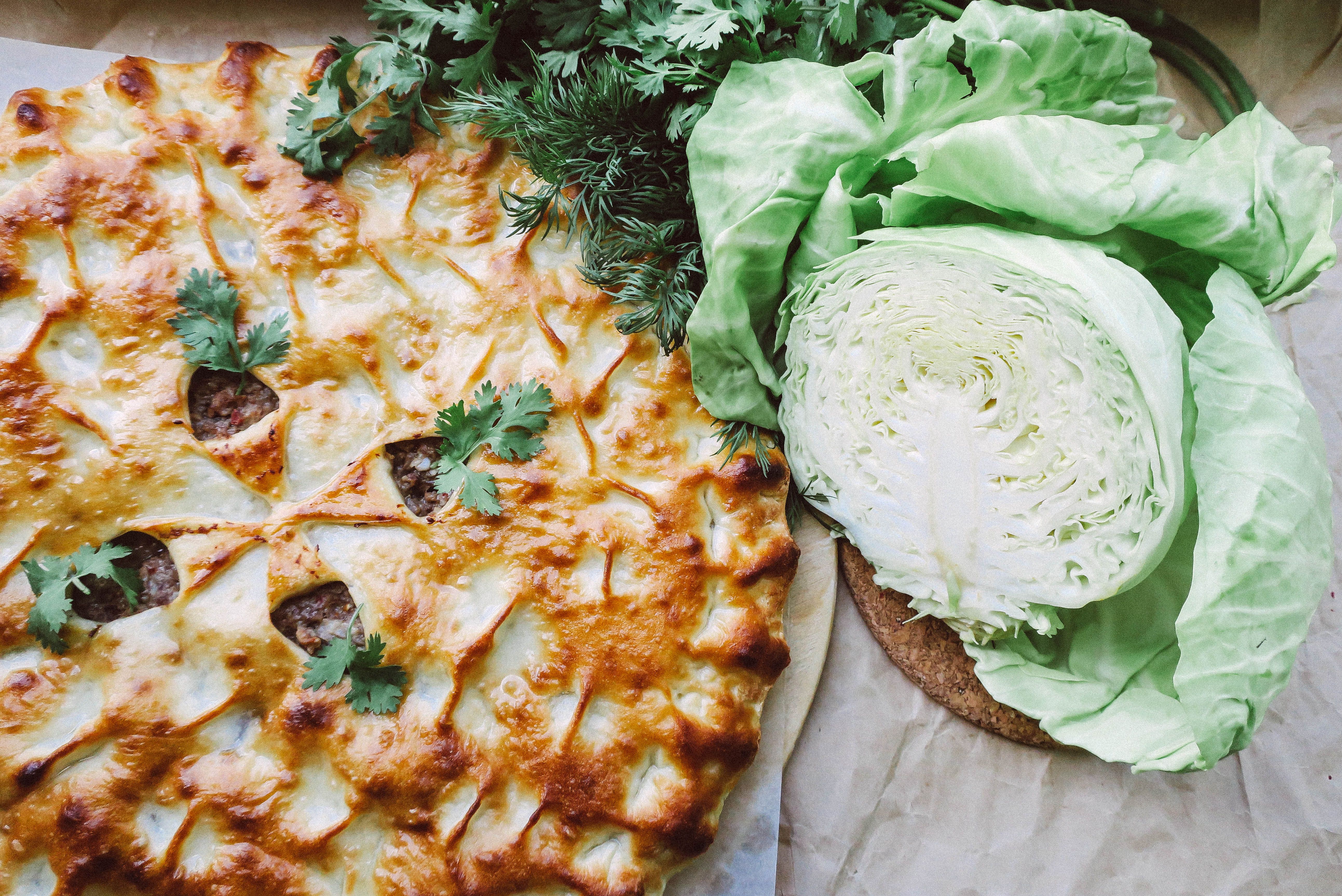
Kubdari is a Georgian stuffed bread — a yeast-leavened wheat flour dough filled with spiced beef and pork. While the meat filling (beef, pork, onion, garlic, spices) is largely keto-friendly, the dish is fundamentally defined by its thick wheat flour bread casing, which is the primary structural component. Wheat flour is a high-carb grain product, and yeast-leavened bread is among the most incompatible foods for a ketogenic diet. A single serving of Kubdari would easily deliver 40-60g or more of net carbs from the dough alone, far exceeding the entire daily keto carb budget. There is no reasonable portion size that makes this dish keto-compatible without fundamentally deconstructing it.
Kubdari is a traditional Georgian meat-filled bread containing both beef and pork as primary ingredients. These are unambiguous animal products that are strictly excluded from a vegan diet. There is no plant-based version of this dish in its traditional form. While the remaining ingredients (flour, onion, garlic, blue fenugreek, coriander, yeast) are all fully plant-based, the meat filling makes this dish entirely incompatible with veganism.
Kubdari is a Georgian meat-filled bread that fundamentally relies on wheat flour and yeast to create its dough exterior. These are core non-paleo ingredients — grains are explicitly excluded from the Paleolithic diet due to their anti-nutrient content (lectins, phytates, gluten) and their absence from the pre-agricultural human diet. While the filling ingredients (beef, pork, onion, garlic, blue fenugreek, coriander) are entirely paleo-compliant and nutritious, the dish as a whole cannot be considered paleo because the bread encasing is inseparable from the dish's identity. Removing the dough would fundamentally change it into a different dish entirely.
Kubdari is a Georgian meat-filled bread that conflicts with Mediterranean diet principles on multiple fronts. It combines two problematic elements: refined white flour dough (a refined grain) and a filling of both beef and pork (red meats), which are the most restricted protein sources in the Mediterranean framework. Red meat is limited to just a few times per month, and pork combined with beef in a single dish represents a significant concentration of saturated fat. The refined flour bread wrapping adds refined carbohydrates with minimal fiber. While the aromatics (onion, garlic, coriander, blue fenugreek) are Mediterranean-friendly, they are minor components. This dish is fundamentally structured around two categories the Mediterranean diet most strongly discourages.
Kubdari is a Georgian meat-stuffed bread that is fundamentally incompatible with the carnivore diet. While the filling contains beef and pork (carnivore-approved proteins), the dish is built around a flour-and-yeast bread dough, making it essentially a meat pie. Flour and yeast are plant-derived and explicitly excluded from the carnivore diet. Additionally, the filling includes multiple plant-based ingredients: onion, garlic, blue fenugreek, and coriander — all of which are plants/spices that carnivore excludes. The bread component alone is disqualifying, and the plant-based spices and aromatics compound the incompatibility. There is no meaningful way to adapt this dish without completely deconstructing it.
Kubdari is a traditional Georgian meat-filled bread. The dish contains flour (a grain) and yeast, making it a leavened bread product. This disqualifies it on two fronts: (1) wheat flour is a grain, explicitly excluded on Whole30, and (2) even if compliant ingredients were used, Kubdari is fundamentally a stuffed bread, which falls squarely into the 'no recreating baked goods/bread' rule. The beef, pork, onion, garlic, blue fenugreek, and coriander filling would otherwise be compliant, but the bread component is a hard disqualifier.
Kubdari is a Georgian meat-filled bread with multiple high-FODMAP ingredients that make it unsuitable during the elimination phase. The dough is made from wheat flour, which is high in fructans — a major FODMAP trigger. The filling contains both onion and garlic, two of the highest-FODMAP foods in the Monash system due to their dense fructan content. These three ingredients alone would make Kubdari a clear avoid. The yeast used in the dough does not reduce fructan content the way a long sourdough fermentation process might. While beef and pork are FODMAP-free proteins, and blue fenugreek and coriander (used as spices in typical quantities) are low-FODMAP, the combination of wheat flour, onion, and garlic as core structural components of the dish means there is no realistic portion size at which Kubdari would be low-FODMAP.
Kubdari is a Georgian stuffed bread filled with a mixture of beef and pork, which presents multiple DASH diet concerns. The combination of red meat (beef) and pork — both explicitly limited on DASH — along with refined white flour dough creates a dish high in saturated fat and lacking in the fiber, potassium, magnesium, and calcium that DASH emphasizes. Pork in particular (especially as used in traditional Kubdari, often fattier cuts) contributes significant saturated fat and likely sodium from seasoning. The dough is made from refined flour rather than whole grain, offering little fiber. While the spices (blue fenugreek, coriander, garlic, onion) are DASH-friendly, they cannot offset the core concerns: dual red/processed meat filling, refined carbohydrate wrapper, high saturated fat load, and likely elevated sodium from seasoning. This dish fundamentally conflicts with DASH's directive to limit red meat, saturated fat, and refined grains.
Kubdari is a Georgian stuffed bread — essentially a meat-filled flatbread. The core issue for the Zone Diet is the bread component made from white flour and yeast, which is a high-glycemic carbohydrate that Zone classifies as 'unfavorable.' The filling of beef and pork is a mixed protein source — not the lean protein Zone prefers (skinless chicken, fish, egg whites), and the pork adds saturated fat. The onion, garlic, and spices (blue fenugreek, coriander) are Zone-favorable ingredients with polyphenol benefits. However, the dominant macro profile skews heavily toward high-GI carbs from the bread dough and saturated fat from the mixed meat, making it difficult to hit the 40/30/30 target without significant modification. A single serving likely delivers too many unfavorable carb blocks and an unbalanced fat profile. It is not categorically impossible to include in a Zone approach (one could eat a small portion alongside a large salad with lean protein), but as a stand-alone dish it works against Zone ratios. Scored 4 — usable only with careful portioning and dietary context.
Kubdari is a Georgian stuffed bread combining several ingredients with mixed anti-inflammatory profiles. On the positive side, garlic, coriander, and blue fenugreek (a traditional Georgian spice related to fenugreek, containing anti-inflammatory compounds including diosgenin and flavonoids) contribute meaningful anti-inflammatory phytochemicals. Onion provides quercetin, a well-documented anti-inflammatory flavonoid. However, the dish has several limiting factors: it features both beef and pork as primary proteins, which are red and processed-adjacent meats that anti-inflammatory frameworks recommend limiting due to saturated fat content and pro-inflammatory arachidonic acid. The refined wheat flour used in the bread dough represents a refined carbohydrate that can promote inflammatory signaling at regular consumption. The combination of red meat filling wrapped in refined-flour dough makes this a dish that leans toward the 'limit' category in anti-inflammatory eating, though it is not in the 'avoid' tier because it lacks trans fats, added sugars, processed additives, or seed oils, and does contain genuinely beneficial spices. Occasional consumption is acceptable, but it should not be a dietary staple for those following an anti-inflammatory protocol.
Kubdari is a traditional Georgian stuffed bread filled with a spiced beef and pork mixture. The combination of refined white flour dough (low fiber, high refined carbohydrate), fatty mixed meat filling (beef and pork together typically yield a high saturated fat content), and the bread-heavy format makes this a poor fit for GLP-1 patients. The dough encasing significantly increases portion size required for satiety while delivering minimal nutritional density per calorie. High fat content from the pork and likely fatty beef cuts will worsen GLP-1 side effects including nausea, bloating, and slowed gastric emptying. The refined flour shell offers negligible fiber. Protein is present but diluted by the surrounding dough and fat load, making it far less protein-dense per calorie than lean alternatives. This dish is heavy, greasy by nature, and difficult to portion-control in small servings — all significant strikes against GLP-1 compatibility.
*See how scores were generated at our methodology page.
Nutritional profile
Six traits that cut across every diet.
Fiber & Plants
How much whole-plant food and fiber it delivers.
Healthy Fats
The quality of its fats (unsaturated, omega-3).
Whole / Unprocessed
How close it is to its natural, unprocessed form.
Gut Gentle
How easy it is on digestion (low FODMAP, few irritants).
Low Glycemic
How little it spikes your blood sugar.
Protein Density
How much protein it packs per calorie.
Controversy Index
Higher controversy = more disagreement between diets.
Diet-Specific Tips
 Zone — 4/10
View tips
- White flour dough is high-glycemic and classified as an 'unfavorable' carbohydrate in Zone terminology
- Beef and pork combination provides adequate protein blocks but is not the preferred lean protein source
- Saturated fat from mixed beef/pork filling conflicts with Zone's preference for monounsaturated fats
- Onion, garlic, coriander, and blue fenugreek are Zone-favorable polyphenol and anti-inflammatory ingredients
- The bread-to-filling ratio makes it structurally difficult to balance Zone macros without portion restriction
- As a stuffed bread, the dominant caloric load comes from carbohydrates, not the intended 40/30/30 split
 Anti-Inflammatory — 4/10
View tips
- Beef and pork are red meats high in saturated fat and arachidonic acid — anti-inflammatory frameworks recommend limiting both
- Refined wheat flour (white flour) is a refined carbohydrate associated with increased inflammatory markers
- Garlic provides allicin and organosulfur compounds with well-documented anti-inflammatory properties
- Blue fenugreek contains diosgenin and flavonoids with anti-inflammatory activity
- Coriander provides anti-inflammatory polyphenols and antioxidants
- Onion contributes quercetin, a potent anti-inflammatory flavonoid
- No trans fats, seed oils, added sugars, or artificial additives present
- Overall profile is pro-inflammatory at its core (meat + refined carb combination) but partially offset by beneficial spices