Photo: Shameel mukkath / Pexels
Georgian
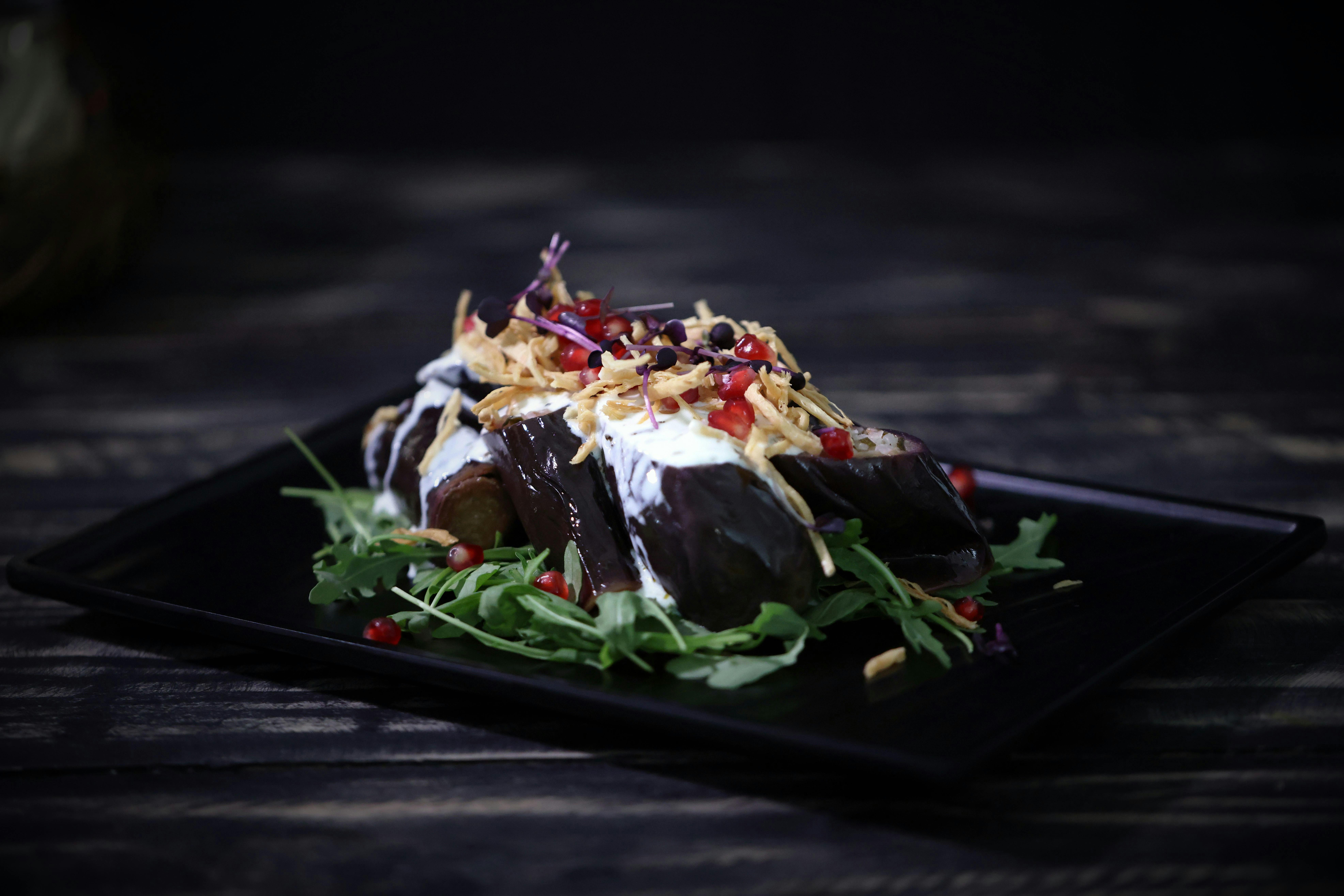
Nigvziani Badrijani
The diets react (see scores below)
Common Ingredients
- eggplant
- walnuts
- garlic
- cilantro
- pomegranate seeds
- vinegar
- blue fenugreek
- sunflower oil
Specific recipes may vary.
Incompatible with 3 of 11 diets
Diet Ratings
Nigvziani Badrijani is a Georgian dish of fried eggplant rolls stuffed with a walnut-garlic paste. Most ingredients are keto-friendly: eggplant is a low-carb vegetable, walnuts are high in healthy fats, garlic and herbs add minimal carbs, vinegar and blue fenugreek are negligible. The primary concern is the pomegranate seeds, which add meaningful sugar and net carbs (roughly 8-9g net carbs per 100g of pomegranate seeds). In a traditional serving, a small garnish of pomegranate seeds is used, likely adding 3-6g net carbs to the dish. Combined with eggplant (~3-4g net carbs per 100g) and the overall dish size, a single serving could approach or exceed 10-12g net carbs, which is manageable within a daily keto budget but requires portion awareness. Sunflower oil is not ideal (high omega-6) but does not affect ketosis. The walnut paste base is excellent for keto due to its high fat content.
Strict keto practitioners may flag pomegranate seeds entirely, as some protocols treat any fruit-derived sugar as off-limits regardless of portion size. Others in the lazy keto camp would approve this freely given the small garnish quantity and the dish's overall high-fat walnut base.
Nigvziani Badrijani is a traditional Georgian dish of fried or roasted eggplant rolls filled with a walnut-herb paste. Every ingredient listed is entirely plant-based: eggplant, walnuts, garlic, cilantro, pomegranate seeds, vinegar, blue fenugreek (utskho suneli), and sunflower oil. There are no animal products or animal-derived ingredients present. The dish is predominantly whole-food in nature, with walnuts providing healthy fats and protein, and the spice profile is rich and complex. The only mild processing consideration is the sunflower oil, but this is a minor factor and does not affect vegan compliance. This scores very highly as a nutrient-dense, whole-food vegan dish.
Nigvziani Badrijani is a classic Georgian dish of walnut-stuffed eggplant rolls. Most ingredients are paleo-compliant — eggplant, walnuts, garlic, cilantro, pomegranate seeds, and blue fenugreek are all hunter-gatherer-available whole foods. However, sunflower oil is a seed oil explicitly excluded from the paleo diet, and vinegar (particularly distilled or wine vinegar commonly used in this dish) is a fermented, processed condiment that falls outside strict paleo guidelines. The sunflower oil alone is sufficient to disqualify the dish, as it is a refined omega-6-heavy seed oil strongly opposed by all major paleo authorities. If the sunflower oil were replaced with olive oil, avocado oil, or walnut oil, and a paleo-acceptable acid substitute (e.g., lemon juice) were used, the dish would likely score in the approve range.
Nigvziani Badrijani is a Georgian dish of eggplant rolls stuffed with a walnut-garlic-herb paste, garnished with pomegranate seeds. Nearly every ingredient aligns well with Mediterranean diet principles: eggplant is a staple Mediterranean vegetable, walnuts are an excellent nut source rich in healthy fats, garlic and fresh herbs (cilantro) are encouraged aromatics, pomegranate seeds are a nutrient-dense fruit, and vinegar is a traditional condiment. The one notable deviation is the use of sunflower oil rather than extra virgin olive oil as the primary fat. Sunflower oil is not the canonical Mediterranean fat, though it is a vegetable-based unsaturated oil. Overall, this dish is plant-forward, whole-food based, and free of red meat, refined grains, or added sugars, making it a strong fit.
Some Mediterranean diet purists would score this slightly lower due to the use of sunflower oil instead of extra virgin olive oil, which is the prescribed primary fat in Mediterranean dietary guidelines. However, traditional Georgian and broader Eastern Mediterranean/Middle Eastern culinary practices do incorporate other vegetable oils, and some modern interpretations accept any minimally processed plant-based oil in moderation.
Nigvziani Badrijani is a traditional Georgian dish consisting entirely of plant-derived ingredients. Every single component — eggplant, walnuts, garlic, cilantro, pomegranate seeds, vinegar, blue fenugreek, and sunflower oil — is explicitly excluded from the carnivore diet. There are no animal products whatsoever in this dish. It violates every tier of carnivore eating, from the most liberal to the strictest Lion Diet protocol.
Nigvziani Badrijani is a classic Georgian dish of fried or roasted eggplant slices rolled around a walnut-herb paste. Every ingredient listed is fully compliant with Whole30 rules: eggplant is a vegetable, walnuts are a natural fat/nut, garlic and cilantro are herbs/aromatics, pomegranate seeds are fruit, vinegar (non-malt) is explicitly allowed, blue fenugreek is a compliant spice common in Georgian cooking, and sunflower oil is a natural fat. There are no excluded ingredients — no grains, legumes, dairy, added sugar, or any other prohibited substance. This is a whole-food, vegetable-forward dish that aligns well with the spirit of the program.
Nigvziani Badrijani (walnut-stuffed eggplant rolls) contains multiple high-FODMAP ingredients that make it problematic during the elimination phase. Garlic is a significant fructan source and must be avoided entirely during elimination — it cannot be made safe at any reasonable cooking quantity in this dish. Walnuts are low-FODMAP at a small serving (10 walnut halves per Monash), but as the primary filling ingredient in this dish, the total quantity per serving likely exceeds the safe threshold. Eggplant is moderate-FODMAP: Monash rates it as low-FODMAP at 75g but high-FODMAP at larger servings due to fructans, and as the main structural ingredient (each roll is a full eggplant slice), portion control is difficult. Pomegranate seeds are low-FODMAP at 45g (about 1/4 cup) per Monash, which is plausible in a garnish role and likely safe. Blue fenugreek (used in Georgian cuisine as a spice) has limited Monash testing data, though fenugreek seeds in small spice quantities are generally considered low-FODMAP by practitioners. Sunflower oil and vinegar are low-FODMAP. Cilantro is low-FODMAP. The combination of garlic (unavoidable high-FODMAP ingredient central to the dish's flavor profile) and likely excess walnuts and eggplant makes this dish unsuitable during elimination.
Monash University has not specifically tested Nigvziani Badrijani as a dish, and some clinical FODMAP practitioners suggest that garlic-forward recipes could theoretically be adapted using garlic-infused oil — but the traditional preparation uses raw or cooked garlic cloves directly, making elimination-phase compliance nearly impossible without fundamentally altering the dish. Walnut and eggplant portions may be manageable in very small servings, but the garlic issue alone is disqualifying for strict elimination.
Nigvziani Badrijani (walnut-stuffed eggplant rolls) is highly compatible with the DASH diet. The dish is built around eggplant, a fiber-rich, low-sodium vegetable, combined with walnuts that provide heart-healthy unsaturated fats, magnesium, and plant protein. Garlic, cilantro, and blue fenugreek add flavor without sodium, reducing reliance on salt. Pomegranate seeds contribute potassium, antioxidants, and a small amount of natural sugar. Vinegar adds acidity with negligible nutritional concerns. Sunflower oil is a DASH-approved vegetable oil (high in unsaturated fat, no tropical oils). The dish is naturally low in sodium, contains no red meat, no saturated fat sources of concern, and no added sugar — ticking nearly all DASH boxes. The main caution is the caloric density of walnuts and sunflower oil, requiring portion awareness, and the sodium content can rise depending on how much salt is added during preparation.
NIH DASH guidelines don't specifically address traditional Georgian dishes, so this assessment is extrapolated from ingredient-level analysis. Some DASH-oriented clinicians might flag the caloric density of walnuts (a whole-food fat source) as requiring careful portioning for weight-conscious patients, though most updated DASH interpretations support nuts as a key food group within the recommended 4-5 servings of nuts/seeds/legumes per week.
Nigvziani Badrijani is a Georgian dish of eggplant slices filled with a walnut-garlic-herb paste, garnished with pomegranate seeds. From a Zone perspective, the macronutrient profile is carb-and-fat heavy with essentially no protein, making it an incomplete Zone component that requires pairing with a lean protein source. The eggplant is a favorable low-glycemic vegetable, and garlic, cilantro, and vinegar are Zone-friendly. Walnuts provide fat but are predominantly polyunsaturated (omega-6 heavy) rather than the preferred monounsaturated fats (olive oil, avocado, almonds) — this is a minor concern given Zone's anti-inflammatory emphasis on limiting omega-6 oils. Pomegranate seeds offer polyphenols and anti-inflammatory benefits that Sears strongly endorses, but also add some glycemic load. The sunflower oil is the most problematic ingredient — it is high in omega-6 linoleic acid, which Sears explicitly discourages as pro-inflammatory. As a side dish paired with lean protein (chicken, fish), the portion can be balanced into a Zone meal, but the dish alone is protein-deficient and the fat sources are suboptimal. Caution is warranted primarily due to the omega-6-heavy fat profile (walnuts + sunflower oil) and the absence of protein.
Some Zone practitioners, particularly those following Sears' later anti-inflammatory framework, would note that walnuts contain some omega-3 ALA and that pomegranate polyphenols are highly valued. The dish could be viewed more favorably if the sunflower oil is replaced with olive oil, which Sears explicitly recommends. In that version, the fat quality improves significantly, potentially raising the score to a 6-7 as a side component.
Nigvziani Badrijani is a classic Georgian dish of fried eggplant rolls stuffed with a walnut-garlic-herb paste, garnished with pomegranate seeds. The ingredient profile is largely anti-inflammatory: walnuts provide omega-3 fatty acids (ALA) and polyphenols; garlic has well-documented anti-inflammatory properties (allicin); pomegranate seeds are rich in punicalagins and anthocyanins with strong antioxidant activity; cilantro and blue fenugreek are beneficial aromatic herbs; and eggplant contains nasunin and chlorogenic acid, both antioxidants. Vinegar (likely wine vinegar) is neutral to mildly beneficial. The primary concern is sunflower oil, which is high in omega-6 linoleic acid and typically used for pan-frying the eggplant — eggplant also absorbs oil heavily during frying, meaning the dish can accumulate a meaningful amount. Regular use of refined sunflower oil for frying is flagged under anti-inflammatory guidelines due to high omega-6 content and oxidative instability at heat. If the dish were prepared with extra virgin olive oil or the eggplant were roasted/grilled instead of fried, the profile would shift to a clear approve. As traditionally prepared with sunflower oil, the dish earns a 'caution' rating — excellent base ingredients partially offset by the cooking fat.
Most mainstream anti-inflammatory diet authorities (including Dr. Weil's framework) would flag refined sunflower oil used for frying as pro-inflammatory due to high omega-6 content and heat-induced oxidation. However, some nutrition researchers — particularly those aligned with AHA guidelines — consider sunflower oil acceptable in the context of an otherwise plant-rich dish, arguing that the overall polyphenol and fiber load from walnuts, eggplant, garlic, and pomegranate more than compensates for moderate omega-6 exposure.
Nigvziani Badrijani is a Georgian dish of fried or roasted eggplant slices rolled around a walnut-garlic-herb paste, garnished with pomegranate seeds. Its strengths for GLP-1 patients include moderate fiber from eggplant, beneficial unsaturated fats and some plant protein from walnuts, and high nutrient density from garlic, cilantro, and blue fenugreek. Pomegranate seeds add antioxidants and a small fiber boost. However, the dish has meaningful drawbacks: walnuts are calorie-dense and high in fat, making portion control critical; eggplant is traditionally fried in sunflower oil, adding significant fat that can worsen GLP-1 GI side effects (nausea, bloating, reflux); and the dish provides negligible protein as a standalone serving, failing the #1 priority for GLP-1 patients. If the eggplant is roasted or grilled rather than fried and oil is minimized, the dish becomes more acceptable as a small side. As prepared in its traditional form with pan-frying, the fat load is a real concern. It works best as a small-portion accompaniment to a high-protein main, not as a primary dish.
Some GLP-1-focused dietitians may view this more favorably when eggplant is oven-roasted, citing the anti-inflammatory omega-3 profile of walnuts and the dish's strong micronutrient density as justifying inclusion. Others flag that walnut-heavy preparations can trigger nausea in GLP-1 patients sensitive to high-fat foods, even from unsaturated sources, making individual GI tolerance the key variable.
*See how scores were generated at our methodology page.
Nutritional profile
Six traits that cut across every diet.
Fiber & Plants
How much whole-plant food and fiber it delivers.
Healthy Fats
The quality of its fats (unsaturated, omega-3).
Whole / Unprocessed
How close it is to its natural, unprocessed form.
Gut Gentle
How easy it is on digestion (low FODMAP, few irritants).
Low Glycemic
How little it spikes your blood sugar.
Protein Density
How much protein it packs per calorie.
Controversy Index
Higher controversy = more disagreement between diets.
Diet-Specific Tips
 Keto — 5/10
View tips
- Pomegranate seeds are the primary carb concern, adding fruit sugars (~8-9g net carbs/100g); used as garnish so impact is moderate
- Walnuts provide excellent high-fat, low-net-carb base for the stuffing
- Eggplant is relatively low in net carbs (~3-4g/100g) and acceptable in moderate portions
- Sunflower oil is suboptimal for keto due to high omega-6 content but does not affect ketosis
- Garlic, vinegar, cilantro, and blue fenugreek contribute negligible carbs
- Portion control is key — one or two rolls is manageable; larger servings risk exceeding carb limits
 Vegan — 9/10
View tips
- All ingredients are fully plant-based with no animal products
- Walnuts provide protein and healthy fats — nutritionally strong profile
- Blue fenugreek (utskho suneli) is a plant-derived spice native to Georgian cuisine
- Pomegranate seeds add whole-fruit nutrition
- Sunflower oil is minimally processed and plant-derived
- No hidden animal-derived ingredients typical in Georgian cuisine (e.g., no dairy, no meat broth)
 Mediterranean — 8/10
View tips
- Eggplant is a classic Mediterranean vegetable, core to dishes like baba ganoush and caponata
- Walnuts provide healthy unsaturated fats and are an encouraged nut source
- Pomegranate seeds add fruit-based antioxidants and natural sweetness
- Garlic, cilantro, and vinegar are whole-food, low-calorie flavor enhancers
- Sunflower oil deviates from extra virgin olive oil as the ideal Mediterranean fat
- No red meat, processed ingredients, refined grains, or added sugars
- Entirely plant-based dish aligning with the emphasis on plant-forward eating
 Whole30 — 7/10
View tips
- Eggplant: compliant vegetable
- Walnuts: compliant natural fat/nut
- Garlic and cilantro: compliant herbs/aromatics
- Pomegranate seeds: compliant fruit
- Vinegar: explicitly allowed (assuming non-malt, e.g., wine vinegar typical in Georgian cooking)
- Blue fenugreek: compliant spice
- Sunflower oil: compliant natural fat
- No excluded ingredients present
 DASH — 8/10
View tips
- Eggplant is a DASH-approved high-fiber vegetable
- Walnuts provide magnesium, unsaturated fat, and plant protein — core DASH foods
- No added salt or high-sodium ingredients listed
- Sunflower oil is a DASH-approved vegetable oil
- Pomegranate seeds add potassium and antioxidants
- No red meat, full-fat dairy, or tropical oils
- Caloric density from walnuts and oil requires portion control
- Sodium content depends heavily on salt added during preparation
 Zone — 5/10
View tips
- Eggplant is a favorable low-glycemic Zone vegetable — positive
- No protein source present — dish is incomplete as a Zone meal without pairing with lean protein
- Walnuts are high in omega-6 polyunsaturated fat, not the preferred monounsaturated fat (almonds, olive oil)
- Sunflower oil is high in omega-6 linoleic acid — explicitly discouraged in Zone/Sears anti-inflammatory framework
- Pomegranate seeds contribute polyphenols strongly endorsed by Sears, but add modest glycemic load
- Garlic, cilantro, and vinegar are Zone-neutral to positive ingredients
- As a side dish paired with lean protein, portions can be managed to approximate Zone ratios
 Anti-Inflammatory — 6/10
View tips
- Walnuts: excellent source of ALA omega-3s and anti-inflammatory polyphenols
- Garlic: well-established anti-inflammatory via allicin and organosulfur compounds
- Pomegranate seeds: high in punicalagins and anthocyanins, strong antioxidant and anti-inflammatory evidence
- Eggplant: contains nasunin and chlorogenic acid; nightshade but broadly considered anti-inflammatory for general population
- Blue fenugreek and cilantro: beneficial aromatic herbs with anti-inflammatory properties
- Sunflower oil: high omega-6, heat-unstable when refined — key downside under anti-inflammatory guidelines
- Eggplant absorbs significant oil during frying, amplifying the omega-6 concern
 GLP-1 Friendly — 4/10
View tips
- No meaningful protein source — fails GLP-1 protein priority #1
- Walnuts provide unsaturated fats but are calorie-dense; portion sensitivity is high
- Traditional preparation involves frying eggplant in sunflower oil — high fat per serving worsens GLP-1 GI side effects
- Eggplant offers moderate fiber and is easy to digest when cooked
- Garlic, cilantro, blue fenugreek, and pomegranate seeds add micronutrient and antioxidant value
- Vinegar may support blood sugar response marginally
- Best role: very small side portion alongside a high-protein main; avoid fried preparation