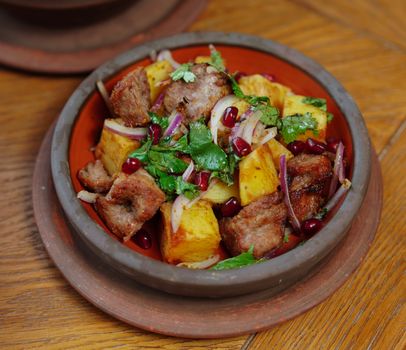
The diets react (see scores below)
Common Ingredients
- pork
- potatoes
- onions
- garlic
- black pepper
- cilantro
- vegetable oil
- salt
Specific recipes may vary.
Incompatible with 8 of 11 diets
Diet Ratings
Ojakhuri is a Georgian pan-fried dish of pork and potatoes. While pork itself is keto-friendly (high fat, zero carbs), potatoes are the dominant second ingredient and are a starchy vegetable with very high net carbs — a medium potato contains roughly 30-35g net carbs. A standard serving of Ojakhuri with potatoes would almost certainly exceed the entire daily 20-50g net carb limit on its own, making this dish fundamentally incompatible with ketosis. The onions, garlic, and other seasonings add minor additional carbs. There is no meaningful modification possible while keeping the dish recognizable as Ojakhuri.
Ojakhuri is a traditional Georgian pan-fried dish whose primary protein is pork, a clear animal product that is entirely incompatible with a vegan diet. There is no ambiguity here: pork is animal flesh and is excluded under all definitions of veganism. The remaining ingredients (potatoes, onions, garlic, black pepper, cilantro, vegetable oil, salt) are all plant-based, but the presence of pork as the central ingredient makes this dish unequivocally non-vegan.
Ojakhuri contains multiple non-paleo ingredients that make it incompatible with the diet. Vegetable oil (a seed oil) and added salt are clear violations under paleo rules. White potatoes are debated but generally discouraged in strict paleo (Cordain-school). The pork, onions, garlic, black pepper, and cilantro are all paleo-approved, but the combination of vegetable oil and salt alone is enough to place this dish firmly in 'avoid' territory. To make a paleo-friendly version, one would need to substitute the vegetable oil with animal fat, coconut oil, or avocado oil, eliminate the added salt, and optionally swap white potatoes for sweet potatoes.
Ojakhuri is a Georgian pork and potato fry-up that conflicts with Mediterranean diet principles on multiple fronts. Pork is a red meat that the Mediterranean diet limits to only a few times per month, making it a poor choice as a primary protein. The dish is fried in vegetable oil rather than extra virgin olive oil, removing a key Mediterranean health benefit. Potatoes, while a vegetable, are a starchy refined-like carbohydrate that are not emphasized in Mediterranean eating. There are no legumes, whole grains, or significant plant diversity to offset the red meat centerpiece. The overall dish profile — red meat plus fried starchy vegetables in non-olive oil — is essentially the opposite of Mediterranean dietary priorities.
Ojakhuri is a traditional Georgian pork and potato dish that is fundamentally incompatible with the carnivore diet. While pork itself is an approved animal protein, the dish is built around potatoes — a starchy plant food that is strictly excluded from carnivore. Additional plant-based ingredients include onions, garlic, cilantro, black pepper, and vegetable oil, all of which are prohibited. The vegetable oil (likely sunflower or similar) is a seed/plant-derived oil that carnivore practitioners universally reject in favor of animal fats. The dish's core identity is a meat-and-potato combination, making it impossible to approve in its traditional form. Only the pork component would be salvageable on a carnivore diet.
Ojakhuri is a traditional Georgian pan-fried dish of pork, potatoes, and onions seasoned with garlic, black pepper, cilantro, and salt. Every ingredient listed is fully compliant with Whole30 rules: pork and potatoes are whole, unprocessed foods; onions, garlic, cilantro, black pepper, and salt are all permitted herbs, vegetables, and seasonings; and vegetable oil (such as sunflower or avocado oil) is an allowed fat. There are no grains, legumes, dairy, added sugars, or other excluded ingredients. The dish is a straightforward savory meat-and-vegetable preparation, well within the spirit of the program.
Ojakhuri contains two high-FODMAP ingredients that are central to the dish and cannot be reduced to safe levels without fundamentally altering the recipe. Onions are among the highest-FODMAP foods tested by Monash University, containing significant fructans at any meaningful culinary quantity — even 1/4 of a medium onion exceeds safe thresholds. Garlic cloves are similarly high-FODMAP at any culinary dose due to dense fructan content. Both are structural flavor components of Ojakhuri, not garnishes. The remaining ingredients are low-FODMAP: plain pork is safe, potatoes are low-FODMAP at standard servings (Monash approves up to 1 medium potato), black pepper and salt are fine, cilantro is low-FODMAP, and vegetable oil is safe. However, the onion and garlic content alone is sufficient to make this dish inappropriate during the FODMAP elimination phase without significant modification.
Ojakhuri is a Georgian pan-fried dish centered on pork (typically fatty cuts such as shoulder or belly) and potatoes fried in oil, which presents multiple conflicts with DASH principles. Pork as the primary protein is classified as red meat, which DASH limits due to saturated fat and sodium content. Traditional preparation involves salting the meat and potatoes liberally, and the frying process adds significant fat. The combination of high saturated fat from pork, high sodium from salting, and fried potatoes (a starchy, high-calorie component) makes this dish poorly aligned with DASH. While the dish does include garlic, onions, and cilantro (DASH-positive aromatics), these represent a negligible nutritional contribution relative to the problematic core ingredients. There is no low-fat dairy, whole grain, legume, or fiber-rich component to offset the DASH concerns.
Ojakhuri is a traditional Georgian dish of fried pork and potatoes, and it presents significant challenges for Zone Diet compliance. The two primary ingredients — pork and potatoes — both require careful scrutiny. Potatoes are explicitly listed as a high-glycemic 'unfavorable' carbohydrate in Dr. Sears' Zone framework, alongside bananas and corn, making them a poor carbohydrate block choice. The dish is built around potatoes as the primary carb source, not low-glycemic vegetables. The protein source (pork) is typically a fattier cut in this dish, contributing saturated fat above Zone recommendations. Vegetable oil (likely a seed oil high in omega-6) adds inflammatory fat rather than the preferred monounsaturated fats. The dish lacks the colorful, fiber-rich vegetables that the Zone strongly favors. While a Zone practitioner could theoretically eat a very small portion with heavily modified sides, as served, this dish structurally conflicts with Zone principles: high-glycemic carbs dominate, fat is saturated and pro-inflammatory, and there are no favorable low-GI vegetables to balance the meal. The score of 3 reflects that this is nearly in 'avoid' territory due to the potato-dominant, high-GI carb base and inflammatory fat profile, but stops short of avoid because lean pork cuts exist and garlic/onions provide minor Zone-favorable polyphenols.
Some Zone practitioners apply the 'unfavorable but usable' principle to potatoes — Sears acknowledges that unfavorable carbs can be eaten in very small, controlled block portions. A practitioner might argue that a small portion of ojakhuri (emphasizing the pork, reducing potato quantity significantly, and pairing with a large green salad) could be worked into a Zone meal. Additionally, if lean pork loin is used, the protein quality improves. However, as traditionally prepared, the dish's structure makes Zone balance very difficult without fundamental recipe modification.
Ojakhuri is a Georgian pan-fried dish combining pork, potatoes, onions, garlic, cilantro, and vegetable oil. From an anti-inflammatory perspective, it presents a mixed profile. On the positive side, garlic and cilantro are recognized anti-inflammatory herbs with meaningful antioxidant and antimicrobial properties. Onions contribute quercetin, a beneficial flavonoid. Black pepper enhances bioavailability of anti-inflammatory compounds. Potatoes, while starchy, are a whole food with some antioxidants (especially if skin-on). However, pork — particularly when pan-fried — is a red meat that anti-inflammatory frameworks advise limiting due to saturated fat content and potential to elevate inflammatory markers like IL-6 and CRP. The cooking method (pan-frying) typically involves higher temperatures and significant oil, which can generate pro-inflammatory oxidation products depending on the oil used. 'Vegetable oil' is an ambiguous ingredient — if it refers to refined sunflower, corn, or soybean oil, these are high in omega-6 fatty acids and are specifically flagged for avoidance or limitation in most anti-inflammatory protocols due to oxidation at high heat. If a more neutral or cold-pressed oil (like canola) is used, the concern is somewhat reduced. The dish lacks anti-inflammatory emphases like omega-3 sources, colorful antioxidant-rich vegetables, or whole grains. Overall, Ojakhuri is an occasional comfort food acceptable in moderation but not aligned with core anti-inflammatory principles.
Some mainstream nutrition perspectives, including AHA guidance, view lean pork as an acceptable protein not dramatically different from poultry in saturated fat content, and would not single out this dish as particularly problematic. Additionally, Dr. Weil's framework does allow moderate red meat consumption, so infrequent enjoyment of Ojakhuri would not necessarily conflict with a broadly anti-inflammatory lifestyle. The concern centers primarily on frequency and the type of oil used.
Ojakhuri is a traditional Georgian pan-fried pork and potato dish that is poorly suited for GLP-1 patients. The primary protein is pork, typically using fatty cuts (shoulder or loin) cooked in vegetable oil, making the dish high in saturated fat and total fat per serving. High-fat meals significantly worsen GLP-1 side effects including nausea, bloating, and reflux due to slowed gastric emptying. Potatoes as the primary carbohydrate are starchy and low in fiber relative to their caloric load, offering little nutritional benefit per calorie. The dish is also pan-fried or sautéed in oil, adding further fat load. Protein content exists but comes packaged with high fat, undermining its value. Portion control is difficult because the dish is dense, heavy, and calorically concentrated — exactly the profile that triggers GI distress on GLP-1 medications. The garlic, onion, and black pepper are fine, but do not offset the core concerns.
Some GLP-1-aware dietitians may note that if the dish is prepared with a lean pork tenderloin, minimal oil, and a smaller potato portion, it could be partially rehabilitated into a 'caution' range — the protein content and whole-food ingredients are not inherently problematic. The disagreement centers on preparation variability: traditional Ojakhuri is a high-fat dish, but a modified home version could reduce fat significantly, making individual tolerance and cooking method the key variables.
*See how scores were generated at our methodology page.
Nutritional profile
Six traits that cut across every diet.
Fiber & Plants
How much whole-plant food and fiber it delivers.
Healthy Fats
The quality of its fats (unsaturated, omega-3).
Whole / Unprocessed
How close it is to its natural, unprocessed form.
Gut Gentle
How easy it is on digestion (low FODMAP, few irritants).
Low Glycemic
How little it spikes your blood sugar.
Protein Density
How much protein it packs per calorie.
Controversy Index
Higher controversy = more disagreement between diets.
Diet-Specific Tips
 Whole30 — 5/10
View tips
- Pork is a compliant Whole30 protein
- Potatoes are explicitly allowed on Whole30
- All seasonings (garlic, black pepper, cilantro, salt) are compliant
- Vegetable oil is generally compliant (specific type such as sunflower or avocado recommended; label-check advised to confirm no additives)
- No grains, legumes, dairy, or added sugars present
- Dish is a whole-food savory preparation, fully in the spirit of the program
 Zone — 5/10
View tips
- Potatoes are explicitly 'unfavorable' high-glycemic carbs in Zone methodology — a primary ingredient here
- No favorable low-GI vegetables present to balance the carbohydrate profile
- Vegetable oil likely high in omega-6, pro-inflammatory — opposite of Zone's monounsaturated fat preference
- Pork cuts in this dish are typically fatty, contributing excess saturated fat
- Dish lacks the 8-serving vegetable foundation Zone recommends
- Garlic and onions provide minor polyphenol benefit but insufficient to offset structural issues
- Would require fundamental reformulation (swap potatoes for zucchini/peppers, use lean pork loin, use olive oil) to become Zone-compatible
 Anti-Inflammatory — 4/10
View tips
- Pork is a red meat limited by anti-inflammatory guidelines due to saturated fat and pro-inflammatory potential
- Pan-frying at high heat can generate oxidative compounds, especially with refined vegetable oils high in omega-6
- 'Vegetable oil' likely refers to a refined seed oil (sunflower or corn), which most anti-inflammatory protocols flag for avoidance
- Garlic and cilantro contribute meaningful anti-inflammatory and antioxidant properties
- Onions provide quercetin, a beneficial anti-inflammatory flavonoid
- Potatoes are a whole food but a high-glycemic starch with limited anti-inflammatory benefit
- No omega-3 sources, colorful antioxidant vegetables, or other anti-inflammatory anchors present
- Acceptable occasionally in the context of an otherwise anti-inflammatory diet